

Vietnamese readers gain a broader perspective on life through philosophical movements
- Socially Responsible Enterprise
- 10:23 22/04/2026
DNHN - Recently, the "Story of Concept" booktalk series was held in Hanoi by a group of young scholars from Inbook Bookstore, organized by MA Duong Quynh Anh (University of Sussex) at Inbook Hanoi.
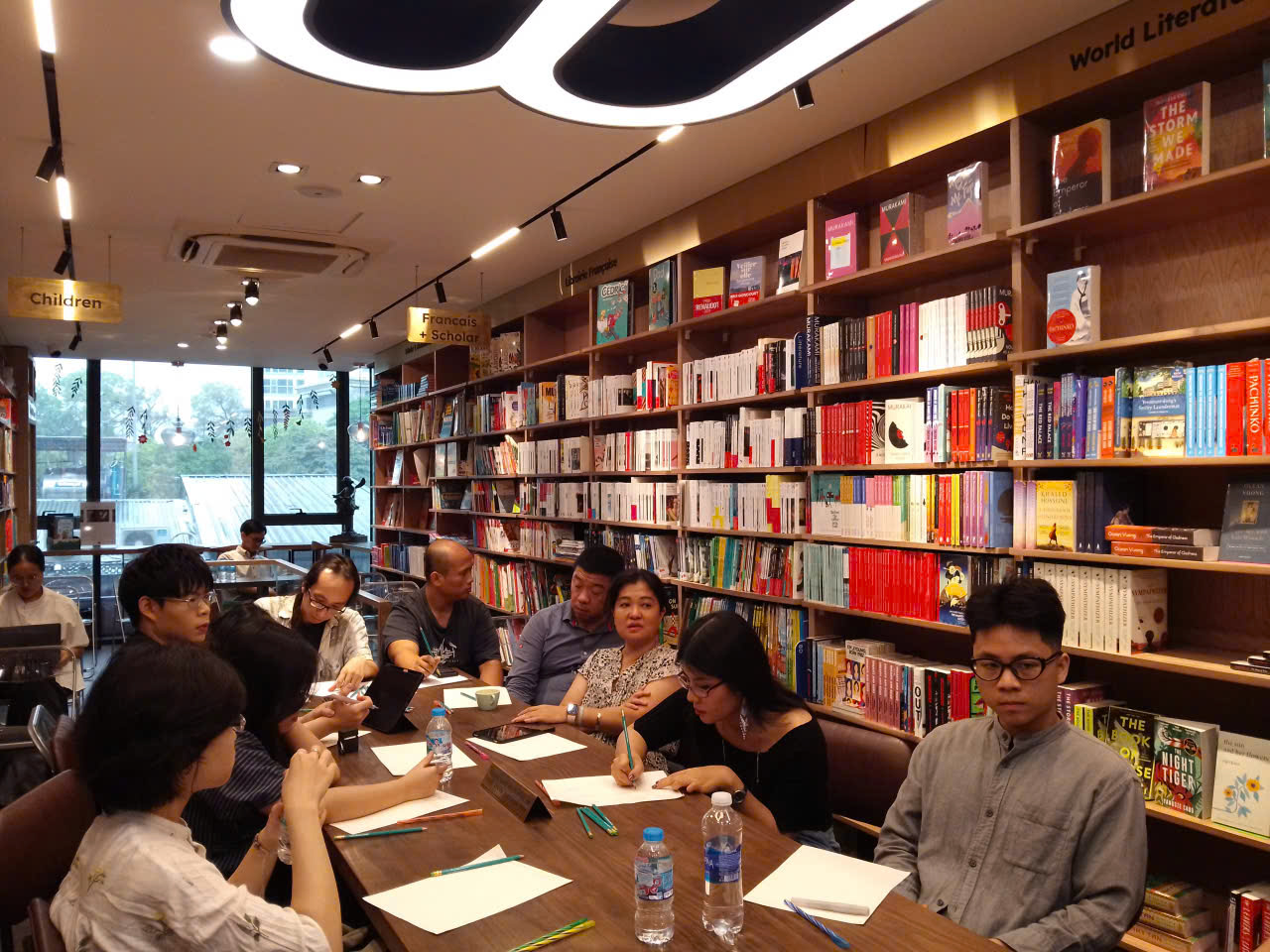
"Story of Concept" began with a youthful academic spirit, wishing to delve deep into the transformation of concepts to better connect books in the social sciences. It is necessary to distinguish this from "applying theory to life," because applying books is purely technical, whereas here, the goal is to build a panoramic view of the world, thereby seeing the impacts on oneself.
There is a special state that has been frequently mentioned since the 20th century, when World Wars and genocides shook not only the physical environment but also the conceptual superstructures of the world. It can be described as a sense of being taken aback: when humanity has not yet formed an explanation for what has happened, is happening, and will happen, and when people first grasp the fear coming from the specific chaos of civilization - something once thought to help humanity escape from nature. It is a type of extremely opaque disturbance that, for example, when the oil supply is disrupted, people suddenly realize that “oh, it is real!” - truer than the consciousness of truth they had before when watching the news. What surprises people by their helplessness is a lack of an awareness close to a physical law: the departure of meaning comes before its absence.
When concepts are transformed and no longer retain their original forms, human discussion becomes fragmented. In previous times, we had philosophers who could discuss together what the soul is, what faith is, and the essential nature of love. But today, when these same questions are raised, they are scrutinized through various different social science disciplines and become increasingly fragmented. This is the source of the feeling of information overload and disorientation for humans when receiving knowledge, especially for readers who are no longer general readers but are not specialized researchers either. If the world of books has always been this way, then life reflects exactly that. For a long time, many young people have felt the urge to "leave the city for the countryside" to escape, perhaps not just from the urban environment, but from the noisy voices of the modern era.

A question was raised but perhaps not yet satisfactorily answered in the program (and will continue into another program): why in the modern era do people always feel insecure and restless to a greater or lesser degree? Are we living in a "disaster" according to the theory of Maurice Blanchot? The reference to Maurice Blanchot’s concept of "The Writing of the Disaster" (French original title: L'Écriture du désastre) is crucial. For Blanchot, the "disaster" is not necessarily a single catastrophic event, but a state of being where the horizon of meaning has collapsed. It is "that which escapes the very possibility of experience." The restless "topicality" of modern life - the constant stream of news and "problems" - is a distraction that masks this deeper ontological void. The modern era makes us always feel as if life constantly has "problems." And that "problem" always carries a sense of topicality. Because the human mind favors details, it often notices a passerby, a slip of the tongue, and thousands of colorful objects. To satisfy this, the contemporary world immediately provides tons of information that we cannot possibly digest. We are often invited to be angry, to condemn, to empathize. We are also often told by the world around us that we have problems, many shortcomings, many things that need improvement - and that we need to buy the products of that world immediately.
However, the discussing readers do not aim for the pessimism of the contemporary world like Continental philosophy during and immediately after the two World Wars. In times of insecurity, people find their way to reading, writing, and unique expressions such as art and personal contemplation. These actions aim to revive the vitality of language and art, which are increasingly viewed through a skewed lens in the age of consumerism. After all, that is the root of the subtle motivations of knowledge - not just considering knowledge as something external to be "added on."
Discussions based on theoretical foundations, bolstered by increasingly high-quality books available in Vietnamese translation or foreign language books present in Vietnam, will open up the restoration of the original spirit of reading culture. The "Story of Concept" represents a manifestation of Intellectual Autonomy. It reflects a generation that is no longer satisfied with "technical" applications of theory but is seeking a "panoramic view" to navigate a world that feels increasingly fragmented and "opaque." Every great thing begins with the smallest steps.
Xuan Nguyen
Related news
- Vietnam sets sights on double-digit growth as APEC 2027 preparations gather pace
- Vietnam businesses face global test: reform at home, earn trust abroad
- Vietnam firms warned: transform within, build trust abroad or fall behind
- VCBC Chairman Steve Bui: Incentives have run their course — Vietnam enters an institutional race to attract the next generation of FDI
- Vietnamese Journalism in the Age of AI: How can reporters survive in the profession?
- Dr. Samuel Feldberg warns of risks that could reshape the global economic order and shares strategic advice for Vietnamese businesses
- VINASME organizes training program on risk control for sustainable business development amid uncertainty
- Vietnam’s International Financial Center looks beyond tax incentives to compete
- Expert Lại Thiên Phong: Localizing digital transformation – a new growth driver for Vietnam
- Are Vietnamese firms overlooking their most valuable “gold mine”?
- Iran Conflict and the “Double Shock” to the Global and Vietnamese Economies
- After 8 years and trillions sent abroad, are uST investors caught in a risky no-exit situation?
- When Cryptocurrency leaves the "Grey Zone": How are Vietnamese investors seeking profits?
- When the tech unicorn dream is undermined by reckless fundraising structures
- From New Year messages of World Leaders to the “new rules” of the Global economy in 2026
- Connecting Leaders, Shaping the Future: Strategic Leadership Planning Meeting – CorporateConnections Hanoi A
- Sunlight - Unilever Vietnam Recognized for Outstanding Contributions to the National Initiative Supporting Women Entrepreneurs
- Deputy Prime Minister Nguyễn Chí Dũng: “The country’s major challenges weigh heavily on my mind — and we must resolve them together.
- Unitsky String Technologies signs cooperation agreements with three Vietnamese partners, opening a new direction for smart mobility and sustainable development
- Before the D‑day to abolish flat‑rate tax: Fear of technology and costs leave small traders struggling to adapt
Đọc thêm Socially Responsible Enterprise

His Eminence Drukpa Thuksey Rinpoche Attends the Grand prayer of Gratitude during the Vu Lan Festival at Tay Thien
The Amitayus Grand Prayer of Wisdom – Gratitude is taking place from August 12 to 19 at the Grand Mandala Stupa of Tay Thien, featuring the participation of the Drukpa Lineage Sangha from India and Vietnamese Monks and Nuns.
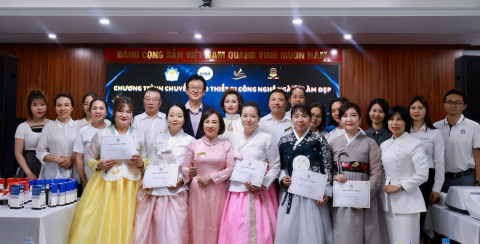
Korean Association supports Hanoi Industrial Vocational College for beauty education with equipment donation and “four-party partnership” workforce model
As the global labor market undergoes rapid transformation driven by technological advancements, artificial intelligence (AI), and the evolution of service industries, vocational education is facing new challenges and expectations.
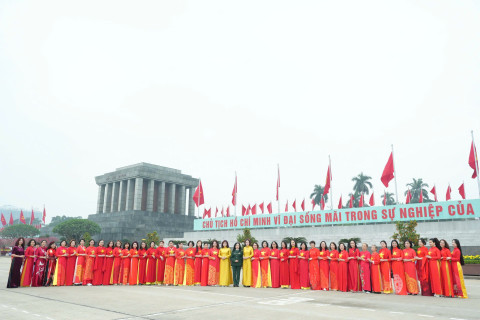
Vietnam - ASEAN Women Entrepreneurs Council offers incense to mark 80 years since President Ho Chi Minh’s historic New Year message
On the morning of the first day of the Lunar New Year (Spring Binh Ngo 2026), a ceremony was held at the historic Ba Dinh Square in Hanoi.

When artists do business – livelihood is no poetry!
A series of indictments, arrests, and bankruptcies among artists has sounded a serious alarm.

Hanoi’s economy grows 7.92% in first nine months of 2025, FDI surges nearly threefold
Hanoi maintained robust growth momentum in the first nine months of 2025 with GRDP up 7.92% year-on-year, driven by strong services and construction sectors.

Vietnam’s strong gdp growth fails to ease labor market distress
As the year draws to a close, the pressing challenge for businesses and policymakers is how to rebuild worker morale, retain top talent, and stabilize employment amid lingering uncertainty.
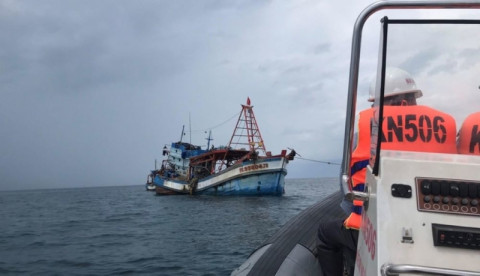
Vietnam ramps up efforts to lift EU “Yellow Card” on Illegal fishing
Prime Minister Pham Minh Chinh has called for intensified and coordinated efforts to have the European Commission’s “yellow card” on Vietnam’s fisheries removed within this year.

Quang Tri calls for investment in wind power plant project worth over VND 1,100 billion
The People’s Committee of Quang Tri Province has officially announced the Hưng Bắc Wind Power Plant Project as part of its investment invitation portfolio.

Hanoi receives two million visitors during the four-day National Day holidays
From August 30 to September 2, Hanoi received around 2.08 million visitors during the four-day National Day holidays , three times higher than the figure in the same period last year, the municipal Department of Tourism reported.

Ca Mau gradually makes its mark on the national tourism map
By 2025, Ca Mau aims to attract 8.4 million visitors and achieve a total revenue exceeding 8,585 billion VND, contributing to the province's double-digit growth target.