

When the tech unicorn dream is undermined by reckless fundraising structures
- Business
- 18:29 18/02/2026
DNHN - A green transport technology project in Belarus, thousands of kilometers from Vietnam has continued to attract capital from a significant number of Vietnamese investors.
Promises of a globally scalable “green mobility platform for the community and humanity,” with a potential billion-dollar valuation, have been enough for many to accept substantial risk. Yet between the unicorn dream and the fundraising structures behind it, where exactly does the line of risk lie?
The uST (Unitsky String Technologies Inc) technology has been introduced as a next-generation green transport solution designed to reduce congestion through elevated string-rail systems that are lightweight, land-efficient, and energy-optimized. The company developing the technology has announced the establishment of a testing center and received recognition as a scientific organization from Belarusian scientific authorities in 2022. These elements helped build investor confidence that the platform is grounded in real research and led by credible scientists what social-media campaigns frequently describe as a “planet-saving solution.” Such messaging has significantly influenced many Vietnamese investors’ decisions to commit funds over the past eight years.

In technology investment, the strongest appeal often lies not only in visible prototypes or pilot projects but in the growth narrative itself. Markets have previously seen companies doubted in their early stages later evolve into corporations valued at hundreds of billions of dollars. Frequently cited examples such as Tesla and Amazon, create a lasting psychological effect among investment communities: enter early and the rewards may be enormous; hesitate and the opportunity could disappear forever.
Such narratives are repeatedly used in early-stage technology fundraising campaigns, where projects are framed within global infrastructure ambitions and positioned for future billion-dollar capitalizations.
A key issue is that most Vietnamese investors have entered the uST ecosystem not through professional investment channels but through intermediary fundraising structures, foreign funds, and individual promoters. Prominent among these are community-based fundraising models such as Sky World Community (SWC), and fund structures including SkyWay Capital and SkyWay Invest Group, along with several overseas entities operating under the SkyWay brand. These structures typically promote early-stage participation opportunities promising ownership of future technological value.
Following controversies surrounding certain representative funds that allegedly failed to transfer capital fully to the operating company, the Belarusian scientist Anatoli Unitsky and project representatives appeared repeatedly in online briefings to reassure investor communities. Leadership simultaneously introduced new strategies and incentives aimed at attracting additional investors and strengthening company reserve funds.
Earlier public materials and warnings issued by Vietnamese authorities indicated that some fundraising mechanisms operated through multi-level referral networks. Participants were encouraged to recruit new investors and receive tiered commissions, with portions of contributed capital allocated to community-development and brokerage systems before reaching the project’s investment structure. The gap between funds contributed by investors and the amount actually directed to technology development represents a central risk, one that was often not transparently documented in publicly available materials.
Under pressure from the investor community, the company recently announced the termination of cooperation with several fundraising entities and declared that investment would instead be accepted directly through the corporate structure. Additional plans, including investor compensation mechanisms and updated IPO and commercialization roadmaps, were also disclosed.

Despite the existence of real scientists, real engineering teams, and real pilot projects within the technology ecosystem, a major challenge has arisen from the way certain fundraising representatives operated, transferring only a small proportion of collected funds to the operating company. This has caused investor anxiety and significantly affected the public reputation of the uST and SkyWay brands in Vietnamese media.
Financial expert Vu Huyen Van notes that when technology unicorn concepts are marketed to retail investors through community networks, the growth narrative is often emphasized while financial structures and capital-control mechanisms receive less attention. Early-stage technology investment already carries a high probability of failure, she explains; when additional layers of intermediaries collect fees and commissions, the level of risk increases significantly. Without independently audited capital-use reports and formal fund-supervision mechanisms, investors have little ability to determine how their money is actually being deployed.
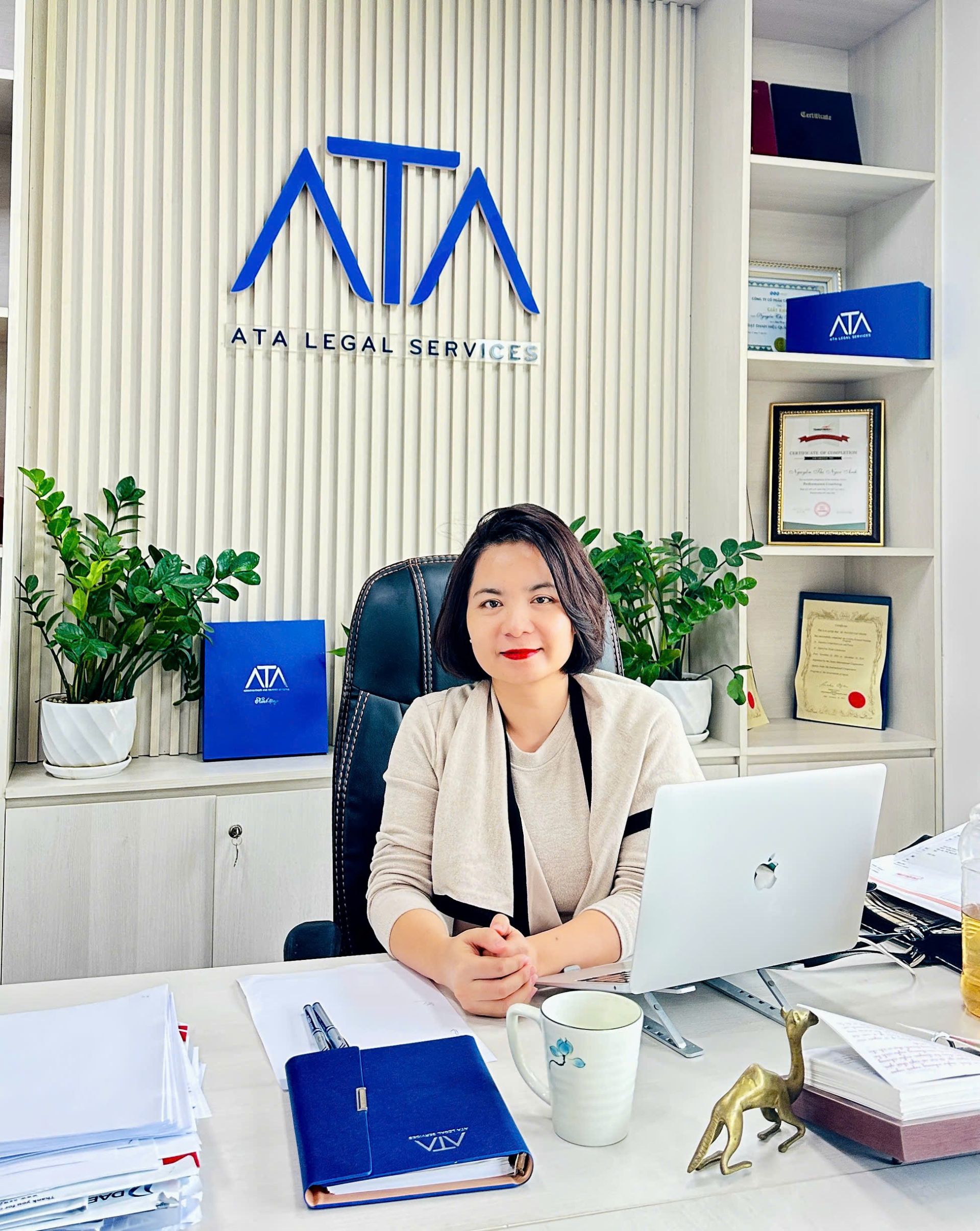
Legal expert Ngoc Anh adds that crowdfunding platforms such as Kickstarter and Indiegogo have long existed globally and operate within established legal frameworks. Vietnam, however, currently lacks a specific legal regime directly governing crowdfunding activities. In practice, many fundraising initiatives resembling crowdfunding invite contributions with promises of future company formation, share issuance, stock listings, and eventual investor profits, often attracting thousands of participants and raising hundreds of billions of Vietnamese dong. Contributions are frequently treated as “donations” or informal transfers, leaving investors with minimal legal documentation regarding ownership rights or responsibilities of project sponsors should projects fail.
This model is inherently risky, as no independent entity typically verifies the accuracy or feasibility of project information.
Authorities and media organizations in Vietnam have issued multiple warnings regarding fundraising structures associated with the SkyWay and uST ecosystem, emphasizing that certain funds involved have not been licensed to operate or raise capital within Vietnam. Such warnings effectively signal that investors participating through these channels are assuming significant risk. Decisions should therefore not rely solely on technology narratives, the perceived dedication of project founders, or success stories of global unicorns.
At present, many investors continue to rely heavily on future profit commitments without current legal protection mechanisms. Any cross-border capital contributions direct or indirect, through unlicensed platforms should be regarded as high-risk transactions, even when investors receive electronic certificates bearing seals of foreign legal entities.
Beyond carefully reviewing subscription documents, contracts, receiving entities, ownership clauses, and disclosure practices, investors are advised to consult independent legal counsel and financial experts before making decisions. Investment choices should be based on legal safeguards and transparent capital-flow structures rather than community pressure or psychological influence from long-standing investor networks.
For the uST technology ecosystem, sustainable development in the Vietnamese market will depend not on expanding crowdfunding networks but on standardizing legal compliance and ensuring investor protections. When fundraising mechanisms become transparent and funds are subject to regulatory oversight, the technology itself can be evaluated more fairly.
Technology investment always requires vision and ambition. But vision cannot substitute for legal safeguards. When regulatory frameworks are absent and fundraising structures operate recklessly, individual investors are the first to bear the risks. Responsible media warnings therefore remain an essential safety principle, helping Vietnamese investors make informed decisions before committing capital to promising but uncertain technology unicorn projects.
By Mariana Nguyen
Vietnamese version: https://doanhnghiephoinhap.vn/khi-giac-mo-ky-lan-cong-nghe-bi-cac-quy-huy-dong-von-lam-au-127586.html
Related news
Đọc thêm Business
Vietnamese firms face Halal, logistics hurdles in UAE push
Vietnamese businesses seeking to enter the UAE and wider Middle East need stronger preparation in Halal compliance, market research and partner networks as logistics and information gaps weigh on exports, experts said.
Vietnam financial center eyes November 2026 launch
Vietnam is preparing to launch the first transactions at its International Financial Center in November 2026, with authorities reviewing eligible products and removing regulatory bottlenecks.

Vietnam targets 20 internationally certified hospitals in medical tourism push
A 2026-2030 plan would link healthcare and tourism services across eight destinations while safeguarding access for domestic patients.
Vietnam sets sights on double-digit growth as APEC 2027 preparations gather pace
Strong nine-month growth, rising investment and deeper financial integration are strengthening Vietnam’s outlook, while external risks and implementation challenges keep the policy focus firmly on resilience.
Vietnam businesses face global test: reform at home, earn trust abroad
Vietnamese companies must transform their leadership, teams and cultural outlook — then build trusted international networks — or risk losing ground to better-prepared global rivals.
Vietnam firms warned: transform within, build trust abroad or fall behind
Vietnamese companies must transform their leadership, teams and cultural outlook — then build trusted international networks — or risk losing ground to better-prepared global rivals.
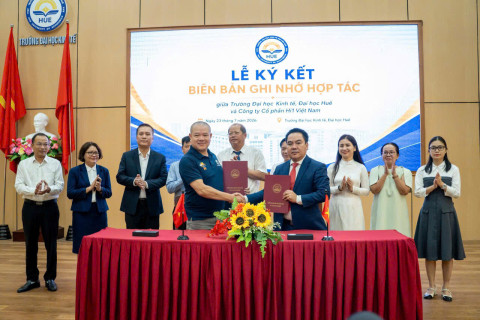
Hi1 and the digital brand ambassador mission: bringing millions of Vietnamese products onto digital platforms with 10,000 Hue students
As millions of OCOP products, local specialty goods and Vietnamese heritage brands continue to struggle to establish a meaningful presence in the digital marketplace, a groundbreaking new cooperation model has just been launched in Hue.
VCBC Chairman Steve Bui: Incentives have run their course — Vietnam enters an institutional race to attract the next generation of FDI
VCBC Chairman Steve Bui analyzes Vietnam's next-generation FDI strategy, stressing that the country must now compete on institutional quality, innovation, and stronger linkages between foreign and domestic enterprises.

Vietnamese Journalism in the Age of AI: How can reporters survive in the profession?
Few professions have faced a transformation as profound as journalism is experiencing today.
Businesses under pressure: Capital and talent shortages threaten competitiveness
The Vietnam Institute of Economics and World Affairs (VIEWA) recently held a working session with the Vietnam Association of Small and Medium Enterprises (VINASME) as part of a policy research and business support initiative.