

Iran Conflict and the “Double Shock” to the Global and Vietnamese Economies
- Business
- 23:39 17/03/2026
DNHN - The outbreak of conflict in Iran since late February 2026 is sending significant shockwaves through the global economy.
It is driving up oil prices, strengthening the US dollar, unsettling financial markets, and raising the risk of disruptions to global energy supply chains.
In this context, Business and Integration Magazine spoke with Dr. Can Van Luc, Chief Economist at the Joint Stock Commercial Bank for Investment and Development of Vietnam (BIDV), on the potential impacts on the global economy and Vietnam.
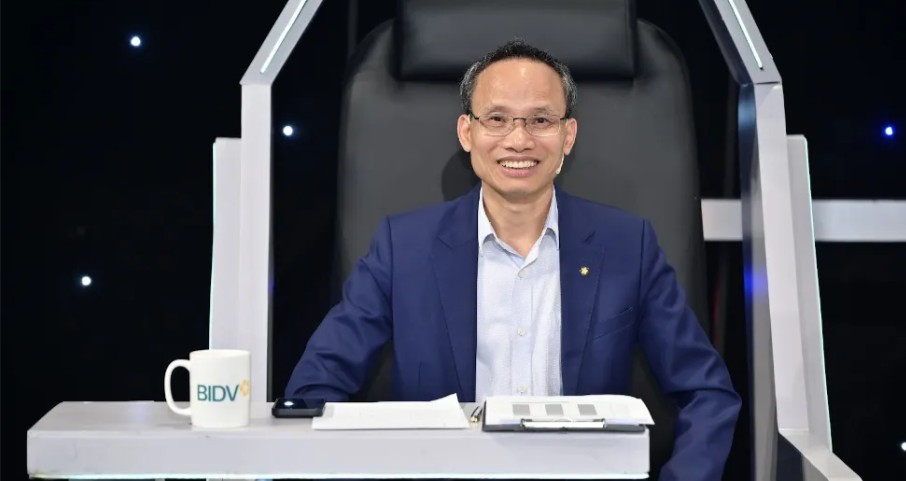
Reporter: Many international organizations have described the conflict in Iran as a new shock to the global economy. In your view, where are the initial impacts most evident?
Dr. Can Van Luc: Market reactions have been swift. Immediately after the conflict broke out in late February, investor sentiment turned markedly cautious. Global geopolitical risk indices surged to their highest levels since 2001, comparable to the period of the Gulf War.
In such times, financial markets tend to follow a familiar pattern: capital flows out of riskier assets into safe havens. As a result, the US dollar strengthens, while gold and government bonds become preferred destinations for global capital.
What makes this conflict particularly significant is its location in a region critical to global energy security. The Strait of Hormuz alone accounts for around 20% of global oil and liquefied natural gas shipments. Any disruption there immediately affects energy markets.
Reporter: How has the oil market responded since the conflict began?
Dr. Can Van Luc: The oil market reacted sharply. Within days of the outbreak, Brent crude prices surged to as high as USD 115.6 per barrel on March 2, 2026, nearly doubling from the beginning of the year.
Prices later eased somewhat as some countries released strategic reserves to stabilize the market. However, the overall trend remains upward amid escalating tensions. According to our estimates, by mid-March 2026, Brent crude had risen nearly 70% year-to-date and about 45% compared to pre-conflict levels.
At the same time, the US dollar appreciated by about 2.1% year-to-date due to increased demand for safe-haven assets. Gold prices briefly climbed to USD 5,400 per ounce before correcting to around USD 5,050. Global equity markets also declined as investors became more cautious amid growing uncertainties.
Reporter: What scenarios has your research team outlined for the global economy if the conflict persists?
Dr. Can Van Luc: We developed three scenarios based on the scale and duration of the conflict.
In the baseline scenario, if the conflict is contained and resolved within about one-month, global oil prices may spike in the short term before stabilizing, averaging around USD 80–83 per barrel in 2026 about 15–20% higher than the previous year. In this case, global inflation could rise by 0.4–0.6 percentage points, while global growth may decline by 0.2–0.3 percentage points from initial forecasts.
In a more adverse scenario, if the conflict persists and oil shipments through the Strait of Hormuz are disrupted for several months, oil prices could reach USD 115–120 per barrel at times. Global inflation could increase by 0.6–1 percentage point, while global growth may fall by 0.4–0.7 percentage points.
In the worst-case scenario, if the conflict escalates and involves multiple countries, severe disruptions to global energy supply could push oil prices to USD 120–140 per barrel. Global inflation could rise by as much as 1.2–1.7 percentage points, and global GDP could decline by 0.8–1 percentage point.
Reporter: For a highly open economy like Vietnam, where will the most immediate impacts be felt?
Dr. Can Van Luc: The most immediate impact is on the energy sector. While domestic refineries meet about 68% of demand, Vietnam still relies significantly on imported fuel. Total demand for petroleum and gas stands at around 26.65 million tons annually, with domestic supply covering only about 54.4%.
According to customs data, Vietnam imported approximately 27.7 million tons of energy products in 2025, worth over USD 16.7 billion, of which the Middle East accounted for around 39%. This highlights Vietnam’s strong linkage to global energy supply chains, particularly the Middle East.
As oil prices rise, multiple sectors face cascading effects. Transport, aviation, logistics, and tourism are directly impacted by higher fuel costs, while energy-intensive industries such as chemicals, fertilizers, steel, construction materials, and electronics face increased input costs.
Trade with the Middle East is also affected. In 2025, the region imported about USD 1.74 billion worth of agro-forestry-fishery products from Vietnam, accounting for over 2% of the sector’s exports. Rising logistics, insurance, and cold storage costs could erode profit margins. However, disruptions in global supply chains may also create opportunities for Vietnamese firms to expand into Europe and Africa.
Reporter: Beyond energy, how will macro-financial factors such as exchange rates and capital flows be affected?
Dr. Can Van Luc: As the US dollar strengthens, many emerging-market currencies, including the Vietnamese dong, face depreciation pressure. In our baseline scenario, the USD/VND exchange rate could rise by 2–3% in 2026, with potentially larger fluctuations if the conflict escalates.
A weaker currency increases import costs and affects portfolio investment flows. At the same time, heightened uncertainty tends to make businesses and investors more cautious in their investment and expansion decisions.
Reporter: How might these factors affect Vietnam’s economic growth this year?
Dr. Can Van Luc: Under the baseline scenario, Vietnam’s export growth in 2026 could decline by 0.5–1 percentage point compared to a no-conflict scenario. Registered FDI inflows may also decrease slightly in the short term by around 0.5–1 percentage point, largely due to investor caution.
Taken together, Vietnam’s GDP growth could be reduced by approximately 0.6–0.8 percentage points. Inflationary pressures would also increase due to higher fuel and transport costs. If energy prices remain elevated for an extended period, inflation control targets could face additional challenges.
Fuel currently accounts for about 4% of Vietnam’s CPI basket, while transportation makes up around 9.67%, meaning global oil price fluctuations transmit relatively quickly into domestic inflation through transport, logistics, and production costs.
Reporter: What is the most important message for policymakers and the business community in this context?
Dr. Can Van Luc: The key is to remain calm and proactive. Geopolitical shocks often trigger strong short-term market reactions but do not necessarily lead to prolonged crises.
For the government, immediate priorities include ensuring stable energy supply, controlling inflation, and maintaining macroeconomic stability. In the longer term, strengthening energy security through diversified supply sources, increased strategic reserves, and the development of renewable energy is essential.
For businesses, enhancing risk management capabilities, particularly regarding energy, exchange rates, and supply chains is critical. As global supply chains are being restructured, economies like Vietnam, with stability and adaptability, still have opportunities to attract new investment flows.
Reporter: Thank you very much.
By: Dr. Nguyễn Thúy Lan
Vietnamese version: https://doanhnghiephoinhap.vn/chien-su-iran-va-cu-soc-kep-doi-voi-kinh-te-toan-cau-va-viet-nam-129922.html
Related news
Đọc thêm Business

Vietnam businesses face global test: reform at home, earn trust abroad
Vietnamese companies must transform their leadership, teams and cultural outlook — then build trusted international networks — or risk losing ground to better-prepared global rivals.
Vietnam firms warned: transform within, build trust abroad or fall behind
Vietnamese companies must transform their leadership, teams and cultural outlook — then build trusted international networks — or risk losing ground to better-prepared global rivals.
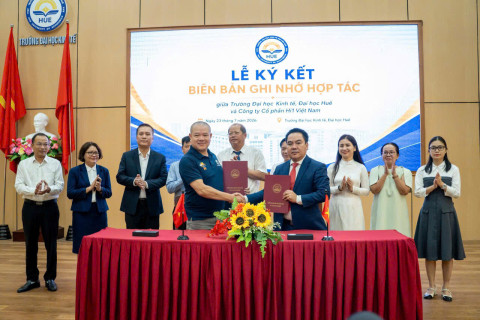
Hi1 and the digital brand ambassador mission: bringing millions of Vietnamese products onto digital platforms with 10,000 Hue students
As millions of OCOP products, local specialty goods and Vietnamese heritage brands continue to struggle to establish a meaningful presence in the digital marketplace, a groundbreaking new cooperation model has just been launched in Hue.
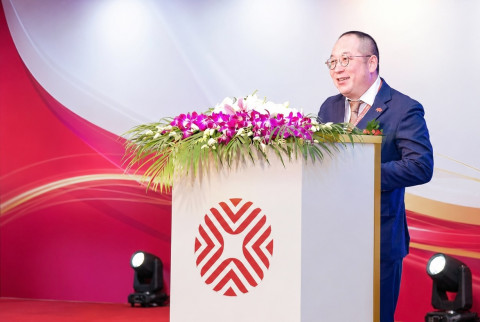
VCBC Chairman Steve Bui: Incentives have run their course — Vietnam enters an institutional race to attract the next generation of FDI
VCBC Chairman Steve Bui analyzes Vietnam's next-generation FDI strategy, stressing that the country must now compete on institutional quality, innovation, and stronger linkages between foreign and domestic enterprises.
Vietnamese Journalism in the Age of AI: How can reporters survive in the profession?
Few professions have faced a transformation as profound as journalism is experiencing today.

Businesses under pressure: Capital and talent shortages threaten competitiveness
The Vietnam Institute of Economics and World Affairs (VIEWA) recently held a working session with the Vietnam Association of Small and Medium Enterprises (VINASME) as part of a policy research and business support initiative.
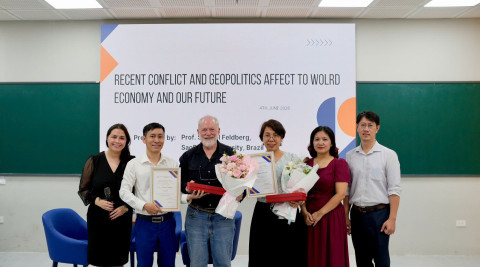
Dr. Samuel Feldberg warns of risks that could reshape the global economic order and shares strategic advice for Vietnamese businesses
Geopolitical tensions, technological transformation, trade fragmentation, and financial uncertainty are reshaping the global economy at an unprecedented pace.

VINASME organizes training program on risk control for sustainable business development amid uncertainty
In the context of a rapidly changing economy, increasing competition, and accelerating digital transformation, risk management capability has become a critical factor determining the resilience and sustainable growth of businesses, particularly SMEs.
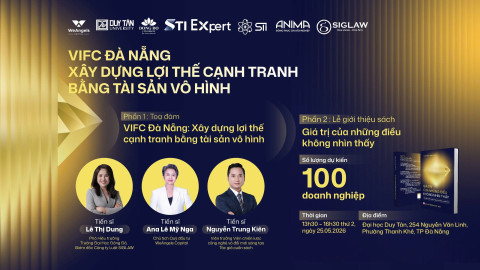
Vietnam’s International Financial Center looks beyond tax incentives to compete
What makes a city an international financial center? Is it skyscrapers, massive capital flows, or generous tax incentives?

CEO Nguyễn Tất Tùng: only by anchoring in culture and preserving national identity can Vietnamese entrepreneurs reach the world
In a setting imbued with the rich cultural essence of Kinh Bắc, the 15th anniversary celebration of Dragon Travel was far more than a typical corporate event.