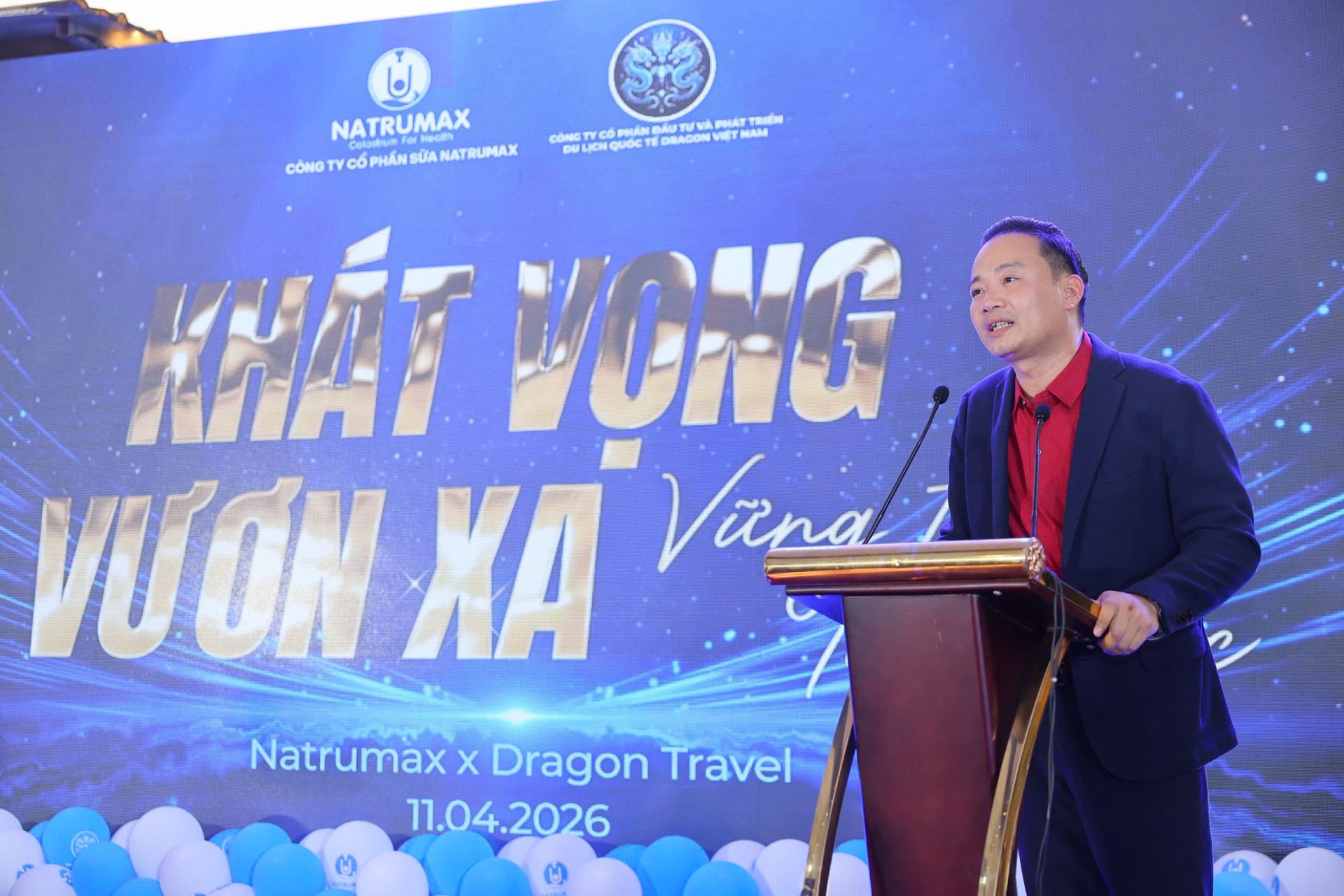
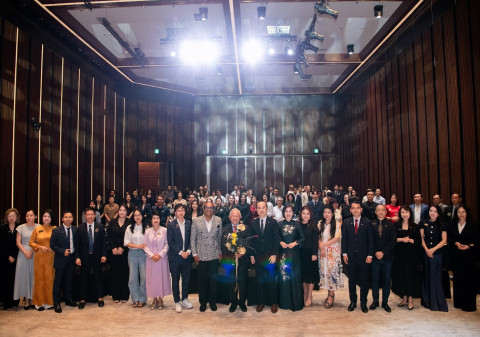
DNHN - In a setting imbued with the rich cultural essence of Kinh Bắc, the 15th anniversary celebration of Dragon Travel was far more than a typical corporate event.
From the incense-offering ritual at Bạch Kê Mother Goddess Temple, to the melodies of Bắc Ninh (quan họ) folk songs, and a charity auction of cultural artifacts that raised nearly VND 400 million for the restoration of a historical site, the program became a gathering point for entrepreneurs united in preserving and promoting cultural values and national identity.
Amid the context of Politburo Resolution No. 68-NQ/TW on private sector development and Resolution No. 80-NQ/TW on the development of Vietnamese culture. both setting new expectations for Vietnamese enterprises, Business & Integration Magazine spoke with Mr. Nguyễn Tất Tùng, CEO of Dragon Travel, an entrepreneur who has chosen a development path rooted in cultural depth and national spirit.
CEO Nguyễn Tất Tùng: Dragon travel’s culture-driven development strategy – winning travelers through compelling storytelling.
Reporter: Your company’s 15th anniversary celebration featured many elements quite different from a typical corporate event, from spiritual rituals to restoration activities for the temple. Is this also the development philosophy your business pursues?
Entrepreneur Nguyễn Tất Tùng: I believe that if a business, especially in tourism only focuses on selling services, it will be very difficult to differentiate itself. But if that business understands its responsibility in preserving culture and history, and focuses on emotional experiences, then its mission becomes far greater.
We chose to begin the event with an incense-offering ritual not to create superficial distinction, but to remind ourselves of a fundamental truth: all development has a spiritual dimension, gratitude, which is the moral foundation of a patriotic entrepreneur.
When the business community contributed VND 400 million right at the event to restore Bạch Kê Temple, what mattered was not the number, but the meaning. It was a return to our roots, a very practical way for businesses to connect with culture and history, and to develop culture in the most sustainable way.
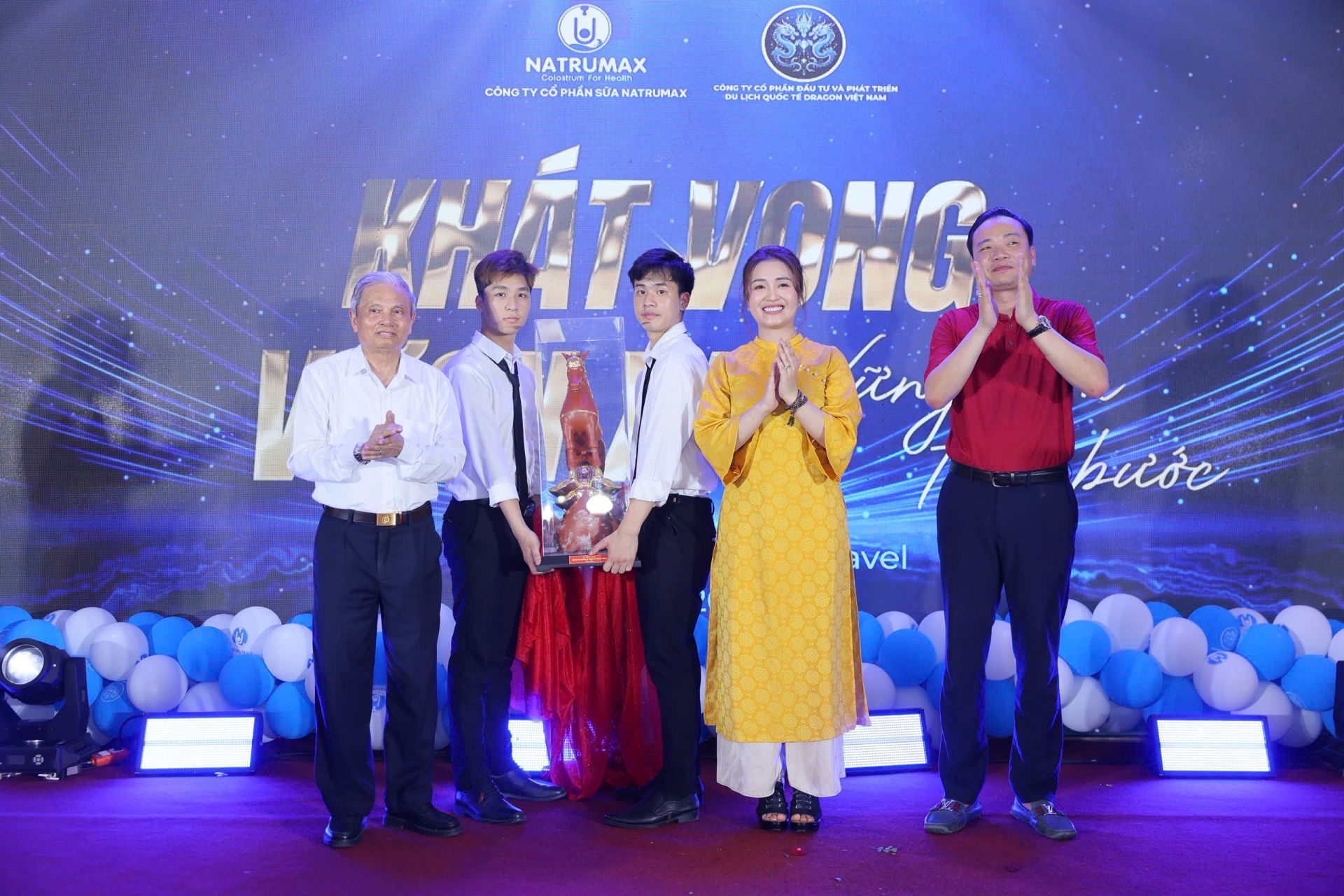
Former Minister of Information and Communications Lê Doãn Hợp presented a Ceramic Horse statue to commemorate Dragon Travel’s 15th anniversary.
Reporter: Resolution 68-NQ/TW emphasizes the role of the private sector. How do you view Dragon Travel’s position in the economy?
Entrepreneur Nguyễn Tất Tùng: If viewed narrowly, we are a tourism company. But in a broader sense, we are part of a much larger value chain, connecting cultures, promoting trade, and building bridges between people and nations.
We are always driven by the question of how Vietnam can integrate most effectively into the global economy, and how to bring Vietnamese culture and national pride to the world. Today’s Vietnamese entrepreneurs are highly capable and resilient, constantly learning and adapting in a volatile global landscape.
The spirit of Resolution 68 is that businesses should not only grow but also contribute to national development. For us, that contribution is not just economic, it is also about enhancing Vietnam’s image in the eyes of the world. That is the patriotism of a national entrepreneur. Tourism, when tied to culture, is a long-term investment in the national brand. This is also our “aspiration to reach further.”
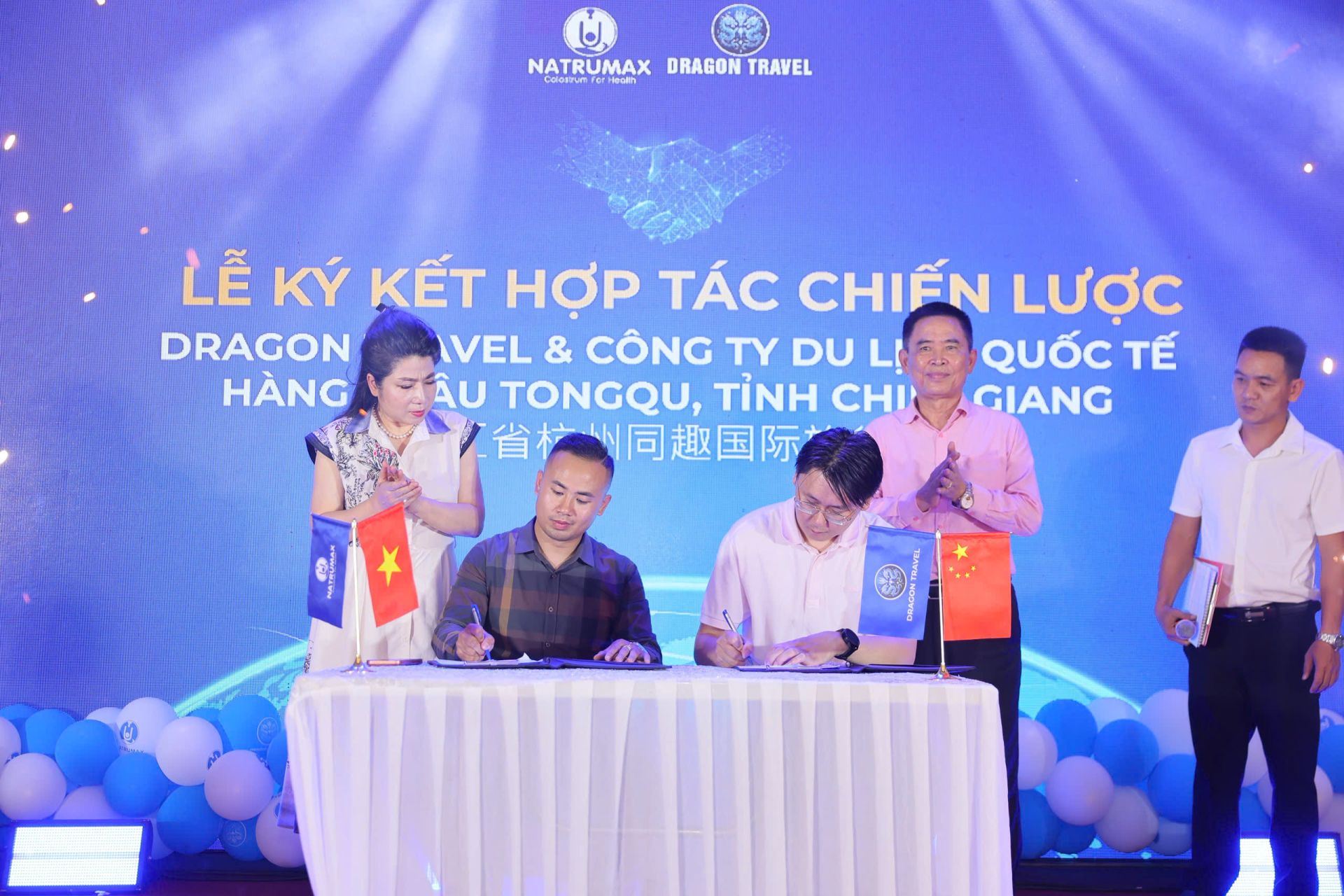
Dragon Travel signed a strategic cooperation agreement with TongQu International Travel (China) to promote trade connections between business communities in both countries.
Reporter: You have repeatedly mentioned telling “Vietnam’s story” to the world in a different way. How exactly is Dragon Travel doing this?
Nguyễn Tất Tùng: We do not want visitors to simply take photos and leave, only to forget after a while. What we aim for is for them to understand why a place matters, why certain heritage sites exist, and why Vietnamese people are proud of their history.
When a tourist stands before a heritage site and admires it, that is normal. But if they understand the people, the stories, and the sacrifices behind it, then that is meaningful tourism. We are striving to do exactly that turn every journey into a truly inspiring cultural experience.
Reporter: What is Dragon Travel’s biggest differentiator compared to other travel companies?
Nguyễn Tất Tùng: The difference lies in our development axis.
While many companies focus on pricing, destinations, or services, we focus on cultural value especially spiritual culture and regional identity.
Hạ Long, Hà Nội, or Vietnam’s coastal regions are not just destinations; they are “living cultural spaces.” If leveraged properly, each place can become a compelling and unique national brand story.
We do not sell tours. We design meaningful experiences. And when the experience is deep enough, customers return. A 90% return rate over the past 15 years is the clearest evidence of that.
In particular, Dragon Travel connects business communities to Vietnam and promotes trade between Vietnam and other countries through unique cultural tourism events. We have built an ecosystem of Vietnamese and international business communities sharing a common goal of cultural integration and business development.
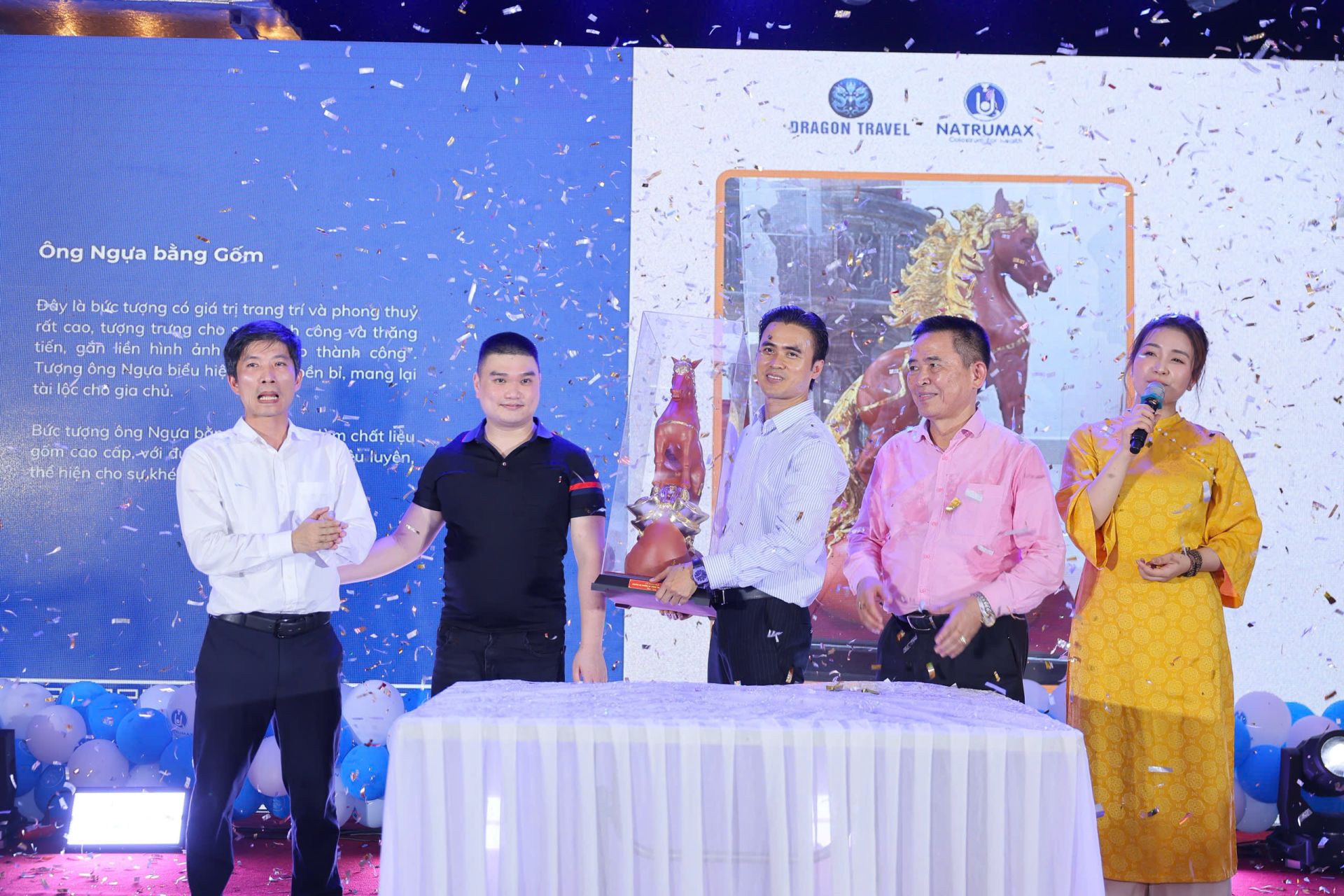
Entrepreneurs contributed to temple restoration during a cultural artifact auction organized by Dragon Travel.
Reporter: With Resolution 80-NQ/TW emphasizing the role of Vietnamese culture, what should tourism businesses do to contribute meaningfully?
Nguyễn Tất Tùng: Only by anchoring in culture and preserving national identity can Vietnamese entrepreneurs reach the global stage. Tourism businesses have a great advantage, we are the ones directly “telling” Vietnam’s story to the world. But to tell it correctly, we must understand it deeply. This requires significant investment in human development.
Tour guides need more than skills; they need historical knowledge, national pride, and the sensitivity to convey stories effectively.
We must also develop distinctive tourism products, unique enough not to blend into the regional landscape.
Reporter: As an entrepreneur developing tourism tied to national culture, what recommendations do you have for Vietnam’s tourism sector to truly become a key economic pillar?
Nguyễn Tất Tùng: If tourism is to become a true spearhead economic sector, it cannot be the responsibility of businesses alone. It requires coordinated efforts across the entire system, from infrastructure and policies to people.
From airports and destinations to every citizen, everyone contributes to the visitor experience.
We need to focus on developing unique tourism products, especially those linked to historical sites, spiritual culture, and historical narratives, because these are assets no other country can replicate.
At the same time, we must invest heavily in human resource development, not only in professional skills but also in deep cultural and historical understanding. A tour guide is not just a guide, but a storyteller of a nation.
More broadly, tourism should be viewed as a connector, not only connecting people, but also trade, businesses, and international cooperation opportunities.
If we can achieve this, Vietnam’s tourism will not only grow in scale but also elevate in value.
Reporter: Finally, how do you define patriotism in business for a national entrepreneur?
Nguyễn Tất Tùng: Patriotism in business is measured by the value of products, the results achieved, and the choices a company makes every day.
If a business creates experiences that help international visitors better understand and admire Vietnam, that is patriotism. If a business grows while preserving its identity, that is patriotism. If a business expresses gratitude and contributes to the community building wherever it operates, that is also a very practical form of patriotism.
I believe entrepreneurs today are not just doing business; we are contributing to building the national brand. And that is a great responsibility. For national entrepreneurs, it is also a noble mission.
What we are doing is not only a mission, but a strategic direction how a business chooses sustainable development: aligning business with culture, and profit with social responsibility.
Strong nine-month growth, rising investment and deeper financial integration are strengthening Vietnam’s outlook, while external risks and implementation challenges keep the policy focus firmly on resilience.
Vietnamese companies must transform their leadership, teams and cultural outlook — then build trusted international networks — or risk losing ground to better-prepared global rivals.
Vietnamese companies must transform their leadership, teams and cultural outlook — then build trusted international networks — or risk losing ground to better-prepared global rivals.
As millions of OCOP products, local specialty goods and Vietnamese heritage brands continue to struggle to establish a meaningful presence in the digital marketplace, a groundbreaking new cooperation model has just been launched in Hue.
VCBC Chairman Steve Bui analyzes Vietnam's next-generation FDI strategy, stressing that the country must now compete on institutional quality, innovation, and stronger linkages between foreign and domestic enterprises.
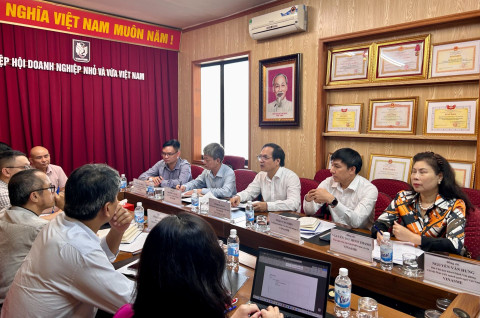
The Vietnam Institute of Economics and World Affairs (VIEWA) recently held a working session with the Vietnam Association of Small and Medium Enterprises (VINASME) as part of a policy research and business support initiative.
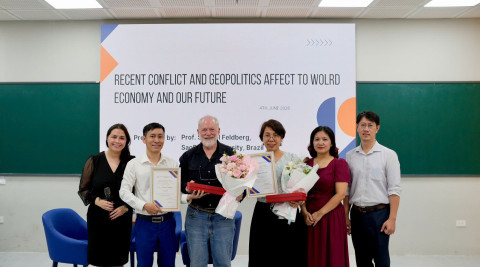
Geopolitical tensions, technological transformation, trade fragmentation, and financial uncertainty are reshaping the global economy at an unprecedented pace.
In the context of a rapidly changing economy, increasing competition, and accelerating digital transformation, risk management capability has become a critical factor determining the resilience and sustainable growth of businesses, particularly SMEs.