

Vietnamese Journalism in the Age of AI: How can reporters survive in the profession?
- Business
- 21:48 20/06/2026
DNHN - Few professions have faced a transformation as profound as journalism is experiencing today.
In a remarkably short period of time, artificial intelligence has begun performing tasks once considered the exclusive domain of reporters and editors. AI can write news articles, summarize lengthy reports, generate videos and podcasts, design infographics, analyze datasets, and even imitate the writing styles of well-known journalists.

For many in the profession, this rapid evolution has triggered an uncomfortable question: Is journalism heading toward obsolescence?
Yet history suggests otherwise. The media industry has repeatedly confronted existential fears whenever a new technology emerged. Newspapers feared radio. Radio feared television. Television feared the internet. The internet feared social media. Every technological revolution has unsettled journalists, but journalism itself has never disappeared. What vanished instead were the business models and newsroom practices that no longer fit the realities of a new era.
Today, many media organizations around the world are once again being forced into painful restructuring, including workforce reductions and newsroom downsizing. But the challenge is not that journalism is dying. The challenge is that journalism is being compelled to rediscover its most fundamental value.
The true value of journalism has never resided behind a computer screen. It lies in the ability to engage with real people, real communities, and real-world experiences.
AI cannot attend a boardroom meeting and sense the tension in the room. It cannot earn the trust of a whistleblower. It cannot spend years cultivating relationships that lead to exclusive insights. It cannot understand the unspoken emotions behind a political decision or a business leader’s strategic gamble.
In that sense, artificial intelligence is not replacing journalists. It is forcing journalism to return to what has always made it indispensable.
The reality of modern communications is stark. A corporation can now livestream its own events directly to the public. Industry experts can build personal media channels with hundreds of thousands of followers. AI systems can aggregate dozens of information sources and generate a coherent news summary within minutes.
If the primary value of a journalist is merely to relay information, technology has already won that competition. This is not merely a Vietnamese phenomenon.
Across developed markets, major news organizations are aggressively redesigning their operations and redefining the role of reporters.
Among the most influential voices in this debate is Jim VandeHei, co-founder of Axios, who recently introduced the concept of the “Super Journalist.”

According to VandeHei, the future belongs not to mass content producers but to journalists who possess deep expertise, trusted networks, contextual intelligence, and the ability to create value that AI cannot replicate.
Knowledge, credibility, and community influence are becoming the defining assets of modern journalism.
For Vietnam’s media industry, this represents perhaps the greatest challenge of all: survival through relationships, expertise, and trust.
Journalists hoping to thrive in the coming decade cannot continue operating under yesterday’s assumptions.
The profession is evolving from a model centered on information delivery toward one focused on value creation.
That value begins with expertise. An economic reporter can no longer simply cover businesses. They must understand the realities entrepreneurs face, from taxation and finance to digital transformation, artificial intelligence, green growth strategies, ESG standards, supply-chain disruptions, legal frameworks, and geopolitical risks affecting Vietnam's economy.
An education journalist must look beyond school events and understand how workforce development is evolving for a digital economy. A technology reporter must do more than introduce new products; they must analyze how emerging technologies reshape industries, labor markets, and society over the long term.
In the AI era, continuous learning is no longer a competitive advantage. It is a survival requirement.

Knowledge alone, however, is insufficient. Modern journalists must also develop technological fluency, not to become software engineers, but to leverage technology as a productivity amplifier.
Reporters increasingly need to use AI tools to conduct research, process large volumes of information, analyze datasets, design visual content, create podcasts, edit videos, and publish across multiple platforms.
A journalist who masters these capabilities can now accomplish work that previously required an entire production team. The future newsroom will not reward those who resist technology. It will reward those who learn how to collaborate with it. Perhaps the most significant transformation lies in an area rarely discussed in traditional journalism: business thinking.
Historically, many journalists focused solely on producing content while viewing commercial activities as someone else's responsibility.
That mindset is becoming increasingly unsustainable.
Media scholar Jeff Jarvis has argued that journalism’s future does not depend on competing against technology. Instead, it depends on using technology to serve communities more effectively.
Journalists, he suggests, must become organizers of knowledge and facilitators of social connections rather than mere transmitters of information.
Similarly, Australian media commentator Margaret Simons has emphasized that journalism's greatest challenge today is not content production but the creation of durable relationships with audiences.

Readers no longer seek information alone. They seek participation. They want access to professional communities, expert networks, specialized knowledge, and meaningful connections.
This shift fundamentally changes how journalists create value. A modern journalist must understand not only how to write stories but also how those stories generate value for readers, businesses, institutions, and society.
This does not mean journalists become salespeople. It means they understand how sustainable value is created. They can help disseminate knowledge, share management best practices, highlight successful development models, and connect stakeholders who might otherwise never meet. Increasingly, outstanding journalists are becoming ecosystem builders. They organize industry forums. They cultivate expert communities. They connect investors with entrepreneurs, businesses with technology specialists, universities with labor markets, and local governments with development resources.
In this emerging model, journalists are no longer merely storytellers. They become architects of connections.
This evolution may be particularly significant for Vietnam. The country is aggressively promoting innovation, science and technology development, digital transformation, and private-sector growth. Vietnamese businesses increasingly require more than information. They need access to experts, investors, policymakers, technologies, and international opportunities. This is where journalism can create entirely new forms of value.
The newsroom of 2026–2030 may look very different from its predecessors. It may not merely produce news. It may operate industry forums, professional training programs, research initiatives, innovation networks, business matchmaking platforms, and international collaboration projects.

Such institutions would serve as connectors within broader economic and social ecosystems. The profession of journalism is not disappearing. What may disappear is the model of the journalist whose sole skill is writing articles while lacking technological capability, industry expertise, or the ability to build meaningful networks.
The reporters who flourish in the coming decade will be lifelong learners. They will embrace technology, understand business realities, cultivate trusted relationships, and place national development and community interests at the center of their work.
Perhaps this is what the Vietnamese journalist of 2026–2030 will look like. To remain relevant, reporters will need to become more than writers. They will become creators of value, curators of knowledge, builders of communities, trusted partners to businesses, and active contributors to Vietnam's development journey in the digital age.
By Dr. Nguyen Thuy Lan
Vietnamese Version: https://doanhnghiephoinhap.vn/bao-chi-viet-nam-trong-thoi-dai-ai--lam-sao-phong-vien-co-the-ton-tai-voi-nghe-viet-bao-140646.html
Related news
- Vietnam financial center eyes November 2026 launch
- Vietnam targets 20 internationally certified hospitals in medical tourism push
- Vietnam sets sights on double-digit growth as APEC 2027 preparations gather pace
- Vietnam businesses face global test: reform at home, earn trust abroad
- Vietnam firms warned: transform within, build trust abroad or fall behind
- VCBC Chairman Steve Bui: Incentives have run their course — Vietnam enters an institutional race to attract the next generation of FDI
- Vietnamese Journalism in the Age of AI: How can reporters survive in the profession?
- Dr. Samuel Feldberg warns of risks that could reshape the global economic order and shares strategic advice for Vietnamese businesses
- VINASME organizes training program on risk control for sustainable business development amid uncertainty
- Vietnam’s International Financial Center looks beyond tax incentives to compete
- Expert Lại Thiên Phong: Localizing digital transformation – a new growth driver for Vietnam
- Are Vietnamese firms overlooking their most valuable “gold mine”?
- Iran Conflict and the “Double Shock” to the Global and Vietnamese Economies
- After 8 years and trillions sent abroad, are uST investors caught in a risky no-exit situation?
- When Cryptocurrency leaves the "Grey Zone": How are Vietnamese investors seeking profits?
- When the tech unicorn dream is undermined by reckless fundraising structures
- From New Year messages of World Leaders to the “new rules” of the Global economy in 2026
- Connecting Leaders, Shaping the Future: Strategic Leadership Planning Meeting – CorporateConnections Hanoi A
- Sunlight - Unilever Vietnam Recognized for Outstanding Contributions to the National Initiative Supporting Women Entrepreneurs
- Deputy Prime Minister Nguyễn Chí Dũng: “The country’s major challenges weigh heavily on my mind — and we must resolve them together.
Đọc thêm Business
Vietnamese firms face Halal, logistics hurdles in UAE push
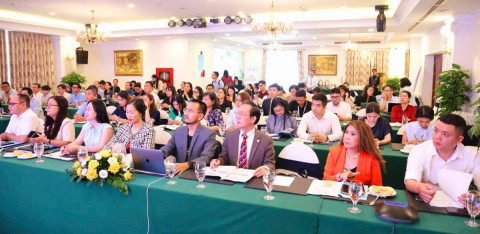
Vietnamese businesses seeking to enter the UAE and wider Middle East need stronger preparation in Halal compliance, market research and partner networks as logistics and information gaps weigh on exports, experts said.

Vietnam financial center eyes November 2026 launch
Vietnam is preparing to launch the first transactions at its International Financial Center in November 2026, with authorities reviewing eligible products and removing regulatory bottlenecks.

Vietnam targets 20 internationally certified hospitals in medical tourism push
A 2026-2030 plan would link healthcare and tourism services across eight destinations while safeguarding access for domestic patients.
Vietnam sets sights on double-digit growth as APEC 2027 preparations gather pace
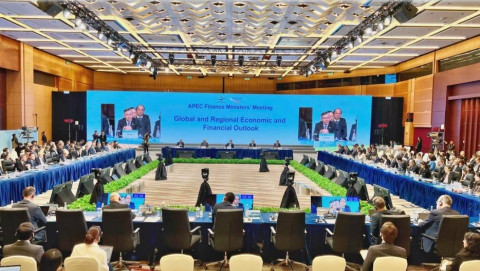
Strong nine-month growth, rising investment and deeper financial integration are strengthening Vietnam’s outlook, while external risks and implementation challenges keep the policy focus firmly on resilience.

Vietnam businesses face global test: reform at home, earn trust abroad
Vietnamese companies must transform their leadership, teams and cultural outlook — then build trusted international networks — or risk losing ground to better-prepared global rivals.
Vietnam firms warned: transform within, build trust abroad or fall behind
Vietnamese companies must transform their leadership, teams and cultural outlook — then build trusted international networks — or risk losing ground to better-prepared global rivals.

Hi1 and the digital brand ambassador mission: bringing millions of Vietnamese products onto digital platforms with 10,000 Hue students
As millions of OCOP products, local specialty goods and Vietnamese heritage brands continue to struggle to establish a meaningful presence in the digital marketplace, a groundbreaking new cooperation model has just been launched in Hue.

VCBC Chairman Steve Bui: Incentives have run their course — Vietnam enters an institutional race to attract the next generation of FDI
VCBC Chairman Steve Bui analyzes Vietnam's next-generation FDI strategy, stressing that the country must now compete on institutional quality, innovation, and stronger linkages between foreign and domestic enterprises.

Businesses under pressure: Capital and talent shortages threaten competitiveness
The Vietnam Institute of Economics and World Affairs (VIEWA) recently held a working session with the Vietnam Association of Small and Medium Enterprises (VINASME) as part of a policy research and business support initiative.
Dr. Samuel Feldberg warns of risks that could reshape the global economic order and shares strategic advice for Vietnamese businesses
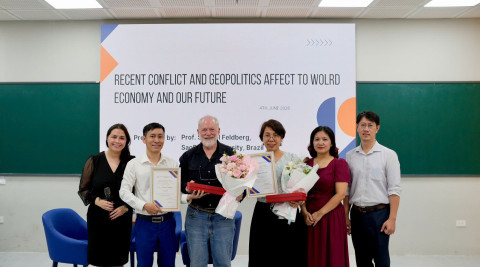
Geopolitical tensions, technological transformation, trade fragmentation, and financial uncertainty are reshaping the global economy at an unprecedented pace.