

Dr. Samuel Feldberg warns of risks that could reshape the global economic order and shares strategic advice for Vietnamese businesses
- Business
- 11:42 06/06/2026
DNHN - Geopolitical tensions, technological transformation, trade fragmentation, and financial uncertainty are reshaping the global economy at an unprecedented pace.
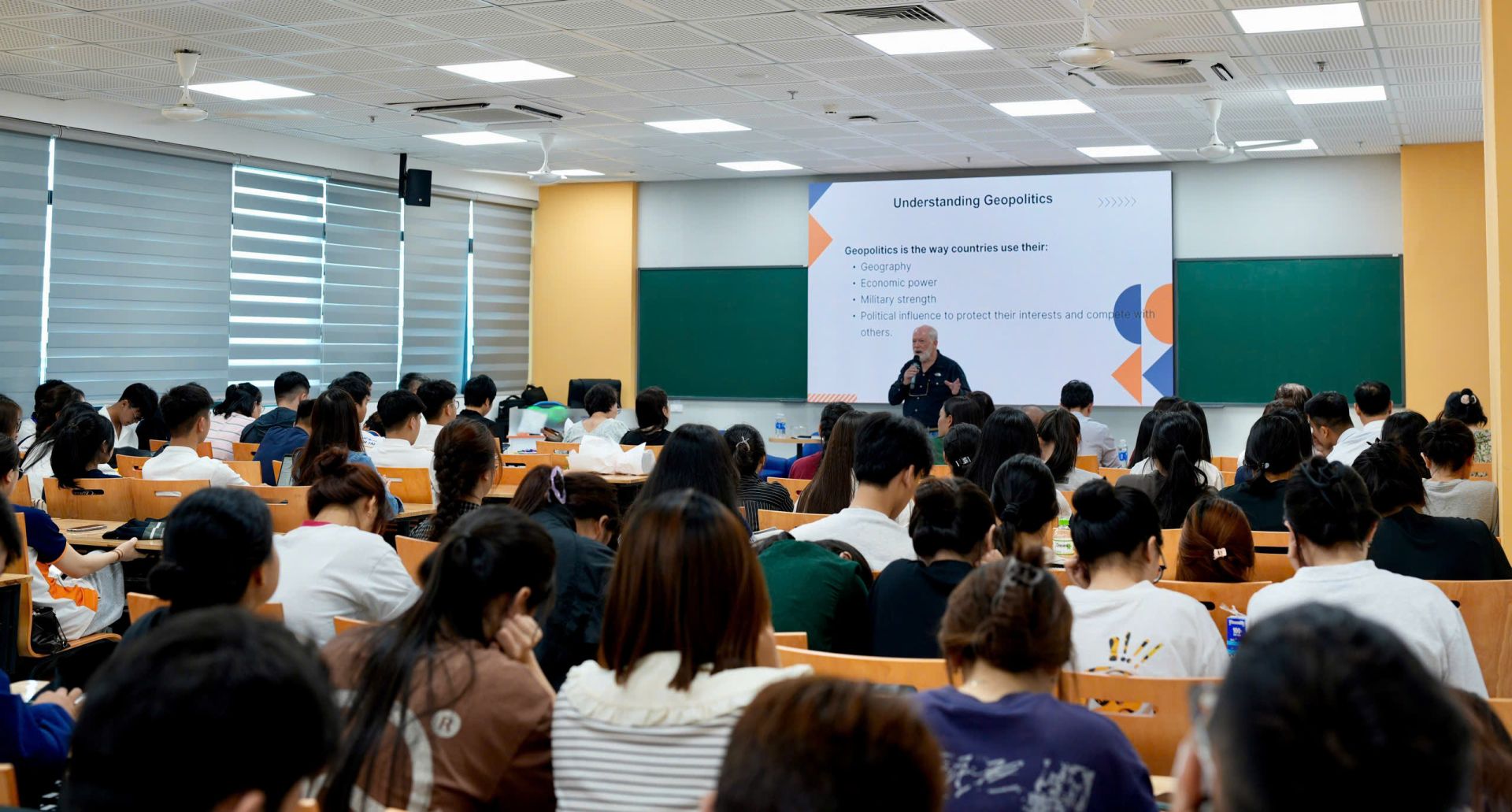
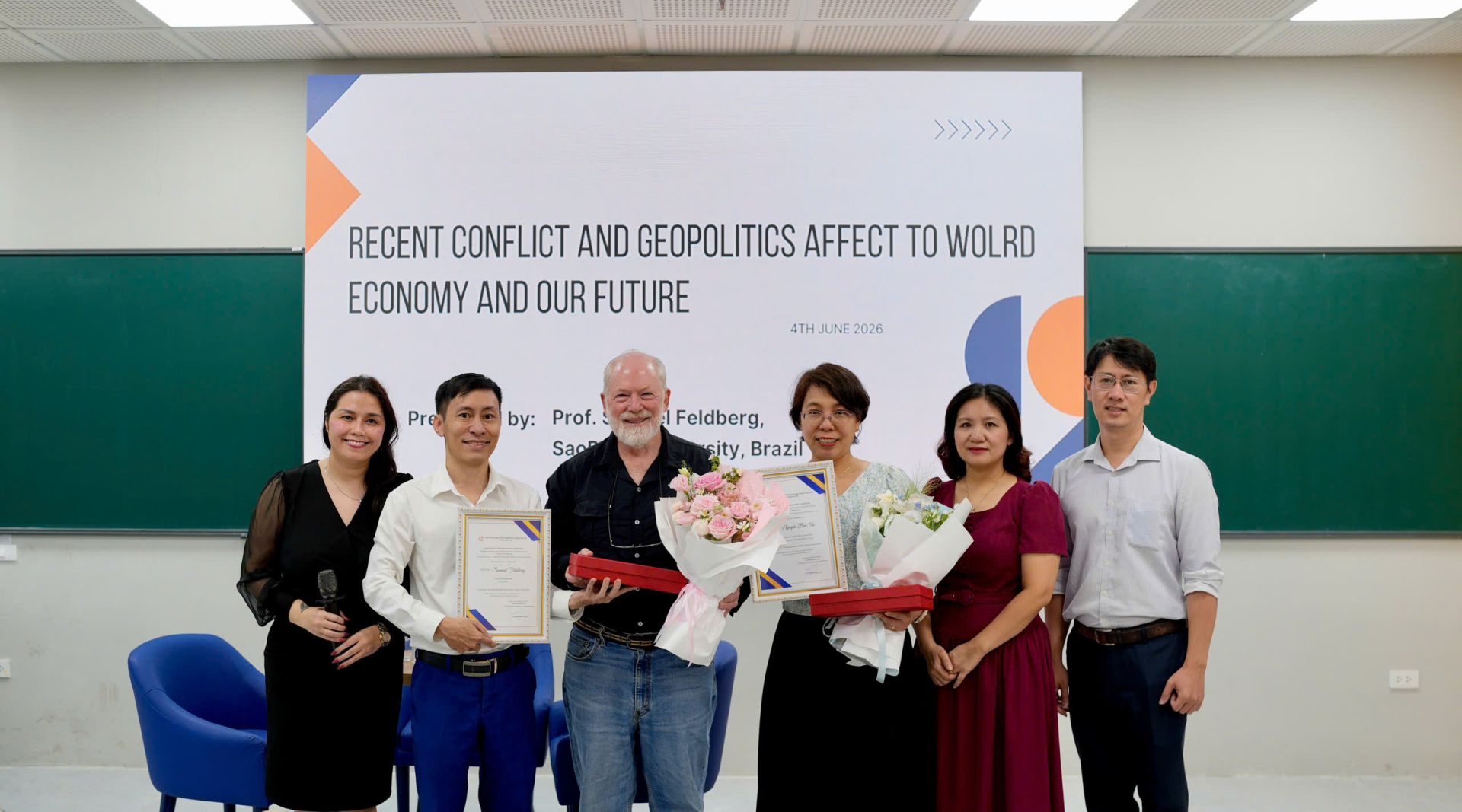
Against this backdrop, the University of Transport Technology (UTT), in partnership with the Embassy of Israel in Vietnam, organized an international seminar titled “Challenges Facing the Global Economy in the Current Context.”
The event featured Dr. Samuel Feldberg, lecturer at the University of São Paulo (Brazil) and the University of Córdoba (Spain), and a recognized expert in geopolitics and international economics. The seminar was also attended by Ms. Nguyen Bao An, International Cooperation Officer at the Embassy of Israel in Vietnam, alongside UTT leaders, faculty members from the Faculty of Business Administration, representatives from the Department of Science, Technology and International Cooperation, and a large number of lecturers and students.
During the seminar, participants raised a range of strategic questions concerning the future of the global economy, international trade, and business resilience. Dr. Feldberg’s responses not only helped explain current economic shifts but also offered valuable insights into Vietnam’s role and opportunities in an increasingly uncertain global landscape.
Following the event, Business and Integration Magazine conducted an exclusive interview with Dr. Feldberg.
Reporter: From a geopolitical and global economic perspective, what are the three biggest risks that could reshape the world economic order over the next five years?
Dr. Samuel Feldberg: I believe there are three major risks.
The first is the restructuring of global trade.
What we are witnessing today is not simply a trade dispute between the United States and China. Rather, it is a challenge to the entire multilateral economic system that was established after World War II. Economic alliances are being reconfigured. International cooperation mechanisms are weakening. The world appears to be moving toward a more fragmented structure consisting of competing economic blocs.
For Vietnam, this development presents both opportunities and challenges. However, whenever a single market accounts for an excessively large share of a country's exports, it becomes a strategic vulnerability that policymakers and businesses must closely monitor.
The second risk is global financial instability.
Following the pandemic, worldwide debt levels have reached historic highs. A liquidity shock, sovereign debt crisis, or major asset-market disruption in one large economy could quickly trigger ripple effects across the global financial system.
The third risk is technological and AI fragmentation.
Technology is increasingly becoming a geopolitical instrument. In the future, countries may be forced to align themselves with different technological ecosystems and standards.
Such fragmentation could have direct implications for supply chains, manufacturing networks, and the competitive advantages of emerging economies.
Reporter: Geopolitical conflicts and rising protectionism are having significant impacts on global supply chains. What strategies should Vietnamese businesses adopt?
Dr. Samuel Feldberg: Vietnam is currently in a unique position.
International investment continues to flow into the country, reflecting strong confidence from global businesses in Vietnam’s investment environment and long-term growth potential.
However, to fully capitalize on these opportunities, I believe Vietnamese companies should focus on three key strategies.
First, they should strive to become core suppliers to multinational corporations.
Major global companies such as Samsung, Intel, LG, and Foxconn have established substantial operations in Vietnam. Yet many of their Tier-1 suppliers remain foreign firms. If Vietnamese companies can integrate more deeply into these value chains, the country will significantly increase its domestic value creation.
Second, businesses should diversify their export markets.
Overreliance on a single market creates unnecessary risk. Vietnam’s extensive network of free trade agreements opens considerable opportunities across Europe, Japan, South Korea, India, and the Middle East.
Third, companies should proactively embrace green transformation.
Environmental, Social, and Governance (ESG) standards are no longer merely a trend; they are gradually becoming a prerequisite for accessing developed markets. Businesses that prepare early will gain a substantial competitive advantage in the years ahead.
Reporter: In today’s highly uncertain business environment, what is the single most important factor that determines whether a company can survive and thrive?
Dr. Samuel Feldberg: If I had to choose only one factor, it would be adaptability.
Capital is necessary. Technology is an important tool. People are a critical resource. But all of these elements are only effective when a company possesses the ability to adapt to changing business conditions.
History shows that the companies that endure over the long term are not necessarily the largest. More often, they are the most flexible.
In a rapidly changing world, the capacity to learn, adjust, and reorganize is often more valuable than simply possessing abundant resources.
Reporter: Many business leaders are concerned that the global economy may be entering a prolonged period of stagnation. What is your view?
Dr. Samuel Feldberg: I believe it is important to approach the issue with balance.
There is no doubt that the world faces significant challenges, including geopolitical tensions, inflationary pressures, rising public debt, and climate change. However, economic history teaches us that many disruptions are cyclical in nature.
Trade disputes eventually come to an end.
Inflation is ultimately brought under control.
Economies gradually find new equilibrium points.
The greatest danger for businesses is not volatility itself, but misunderstanding the nature of that volatility. If companies assume that every current difficulty is permanent, they risk missing major opportunities that are emerging at the same time.
That said, we should not underestimate long-term structural challenges such as population aging, labor market pressures, climate change, and technological competition.
Reporter: If you could deliver only one message to Vietnam’s business community, what would it be?
Dr. Samuel Feldberg: Believe in your products.
Believe in the competitiveness of Vietnamese enterprises.
And always be prepared to learn, innovate, and adapt.
The world will continue to change, and new challenges will inevitably emerge.
Yet history shows that periods of disruption often create the greatest opportunities. The key is having the vision to recognize those opportunities and the capability to seize them.
Reporter: Thank you very much, Doctor.
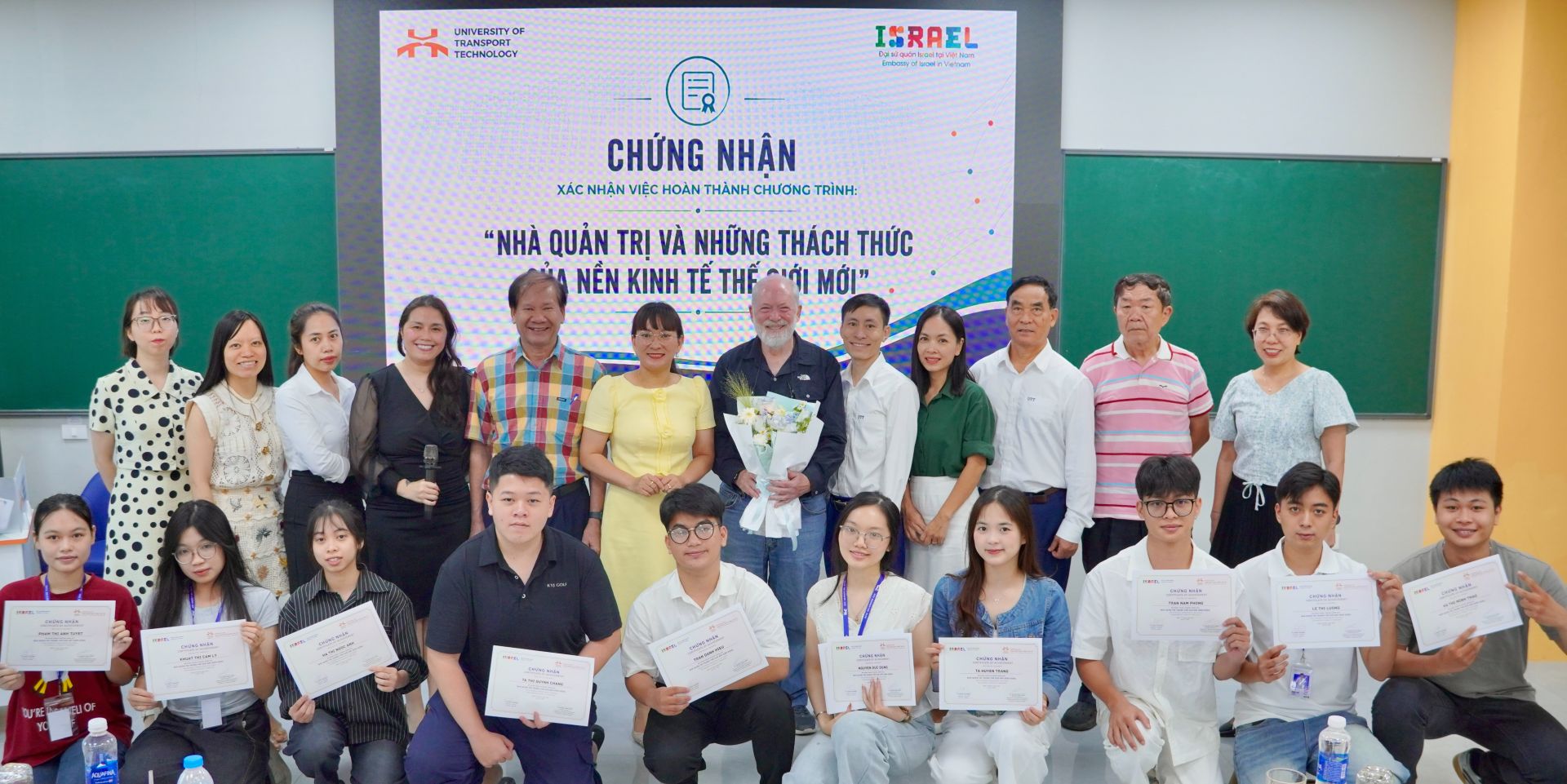
Reporter: At the conclusion of the seminar, Dr. Samuel Feldberg and representatives of the University of Transport Technology presented symbolic certificates of completion to participants who attended the international program on global economic challenges.
Many students shared that the seminar not only provided them with updated knowledge about global economic developments but also helped them better understand the skills and competencies required for future success.
Through international cooperation initiatives such as this event, the University of Transport Technology continues to advance its vision of building a modern, globally connected educational environment that closely links academic training with real-world business practice.
In a world where change has become the new normal, perhaps the most valuable lesson is the ability to prepare for multiple possible futures rather than assuming that tomorrow will look like today.
By Dr. Nguyen Thuy Lan
Related news
- Vietnam Emerges as a Standout Destination for Autumn Travel
- 2026 Autumn Economic Forum promoted on Seoul screens
- Margin lending drives HSC earnings as brokerage revenue tumbles
- Bepharco appoints 2002-born executive as CEO
- Vietnam financial center eyes November 2026 launch
- Vietnam targets 20 internationally certified hospitals in medical tourism push
- Vietnam sets sights on double-digit growth as APEC 2027 preparations gather pace
- Vietnam businesses face global test: reform at home, earn trust abroad
- Vietnam firms warned: transform within, build trust abroad or fall behind
- VCBC Chairman Steve Bui: Incentives have run their course — Vietnam enters an institutional race to attract the next generation of FDI
- Vietnamese Journalism in the Age of AI: How can reporters survive in the profession?
- Dr. Samuel Feldberg warns of risks that could reshape the global economic order and shares strategic advice for Vietnamese businesses
- VINASME organizes training program on risk control for sustainable business development amid uncertainty
- Vietnam’s International Financial Center looks beyond tax incentives to compete
- Expert Lại Thiên Phong: Localizing digital transformation – a new growth driver for Vietnam
- Are Vietnamese firms overlooking their most valuable “gold mine”?
- Iran Conflict and the “Double Shock” to the Global and Vietnamese Economies
- After 8 years and trillions sent abroad, are uST investors caught in a risky no-exit situation?
- When Cryptocurrency leaves the "Grey Zone": How are Vietnamese investors seeking profits?
- When the tech unicorn dream is undermined by reckless fundraising structures
Đọc thêm Business
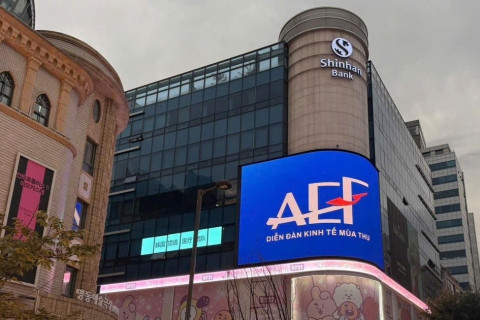
2026 Autumn Economic Forum promoted on Seoul screens
Ho Chi Minh City (HCMC) is taking Vietnamese economic ambitions abroad, using one of Seoul’s most prominent commercial districts to court investors and build international attention for the flagship autumn economic forum.

Khanh Hoa targets 23.7 million tourists in 2026
Khanh Hoa expects more than 23.7 million visitors and VND80.2 trillion in tourism revenue in 2026, increases of 44.8% and 19.7% year-on-year, respectively.
Vietnamese firms face Halal, logistics hurdles in UAE push
Vietnamese businesses seeking to enter the UAE and wider Middle East need stronger preparation in Halal compliance, market research and partner networks as logistics and information gaps weigh on exports, experts said.
Vietnam financial center eyes November 2026 launch
Vietnam is preparing to launch the first transactions at its International Financial Center in November 2026, with authorities reviewing eligible products and removing regulatory bottlenecks.

Vietnam targets 20 internationally certified hospitals in medical tourism push
A 2026-2030 plan would link healthcare and tourism services across eight destinations while safeguarding access for domestic patients.
Vietnam sets sights on double-digit growth as APEC 2027 preparations gather pace
Strong nine-month growth, rising investment and deeper financial integration are strengthening Vietnam’s outlook, while external risks and implementation challenges keep the policy focus firmly on resilience.
Vietnam businesses face global test: reform at home, earn trust abroad
Vietnamese companies must transform their leadership, teams and cultural outlook — then build trusted international networks — or risk losing ground to better-prepared global rivals.
Vietnam firms warned: transform within, build trust abroad or fall behind
Vietnamese companies must transform their leadership, teams and cultural outlook — then build trusted international networks — or risk losing ground to better-prepared global rivals.
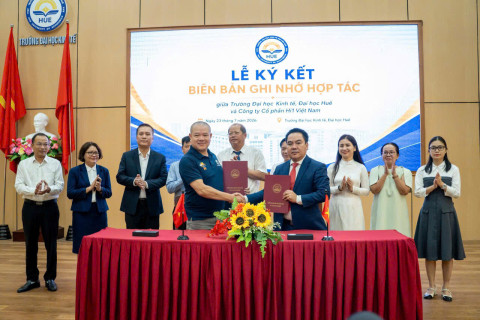
Hi1 and the digital brand ambassador mission: bringing millions of Vietnamese products onto digital platforms with 10,000 Hue students
As millions of OCOP products, local specialty goods and Vietnamese heritage brands continue to struggle to establish a meaningful presence in the digital marketplace, a groundbreaking new cooperation model has just been launched in Hue.
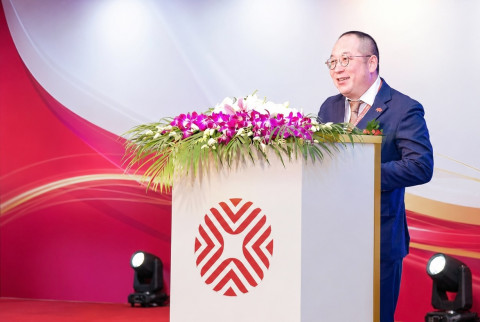
VCBC Chairman Steve Bui: Incentives have run their course — Vietnam enters an institutional race to attract the next generation of FDI
VCBC Chairman Steve Bui analyzes Vietnam's next-generation FDI strategy, stressing that the country must now compete on institutional quality, innovation, and stronger linkages between foreign and domestic enterprises.