

Vietnam exports $120,000 worth of specialty coffee to US
- Business
- 15:42 13/11/2026
A company in Vietnam's Central Highlands province of Dak Lak has exported more than 3.4 tons of specialty coffee to the U.S., marking a step toward higher-value exports as the country seeks to move beyond its traditional reliance on raw coffee beans.
Aeroco Coffee Co., Ltd. shipped a 20-foot container carrying more than 3.4 tons of finished specialty coffee products worth nearly US$120,000 to the U.S. on Nov. 11, according to the Dak Lak provincial government's online portal.
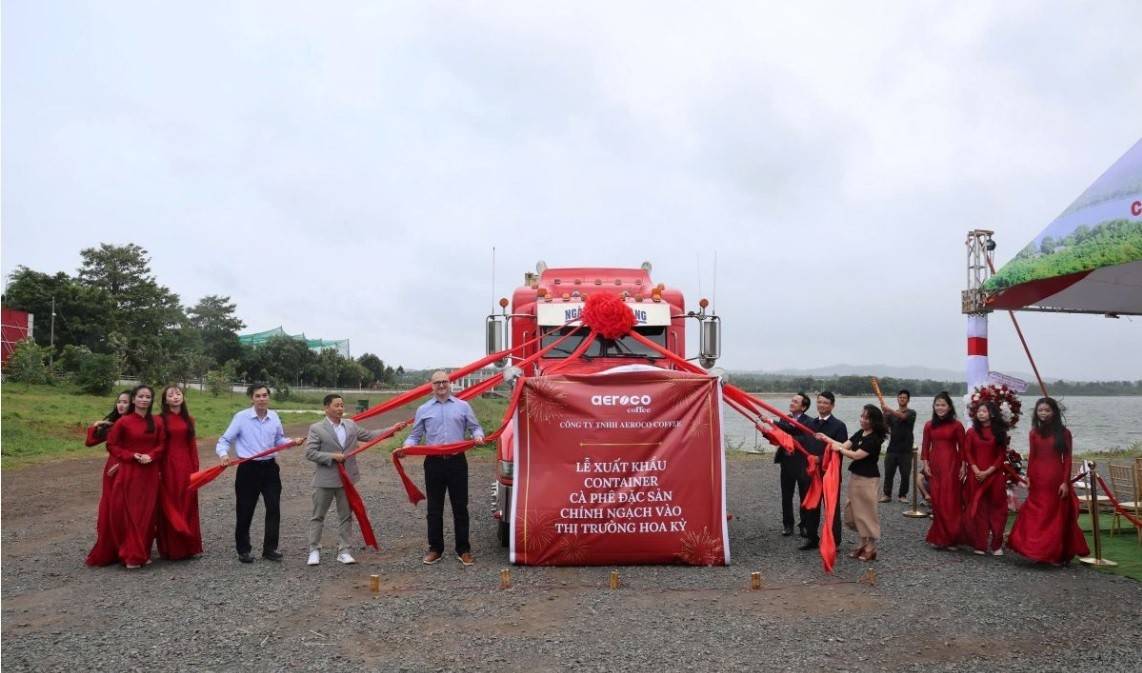
The shipment was dispatched at a ceremony organized by the Ea Kao Ward People's Committee in coordination with the company.
Although modest compared with Vietnam's annual coffee exports, which amount to millions of tons, the shipment highlights efforts by local producers to increase export value through processing, quality control and direct access to overseas markets.
The products are made primarily from Fine Robusta coffee grown in Ea Kao, an area in Dak Lak known for its coffee cultivation.
The shipment also marks the company's transition from introducing and testing its products in the U.S. to fulfilling commercial orders.
Le Dinh Tu, director of Aeroco Coffee, said the export would create opportunities to expand the company's international market presence while requiring it to maintain consistent product quality, comply with standards and strengthen relationships with overseas partners.
Petko Andreev, director of Aeroco USA LLC, the importing company, described the shipment as an important step from product evaluation to commercial operations in the American market.
The shipment comes as Vietnam's coffee industry seeks to increase the value of its exports rather than relying primarily on higher production volumes.
According to figures from the Vietnam Coffee and Cocoa Association cited by the Ministry of Industry and Trade, the country's coffee exports in the 2025-2026 crop year are projected to reach approximately 1.8 million tons, generating $8.5 billion in revenue.
Against that backdrop, a shipment of just over 3.4 tons represents a negligible share of the country's total coffee exports.
Its significance, however, lies in the type of product being exported.
Unlike traditional shipments of unroasted green coffee beans, Aeroco's products are finished specialty coffee intended for a market segment with more demanding quality requirements.
Producing such coffee requires investment throughout the supply chain, from selecting suitable varieties and managing growing areas to harvesting, processing, roasting, packaging and distribution.
Consistent quality, traceability and branding are also essential to establishing a presence in premium international markets.
These activities can help Vietnamese businesses retain a larger share of the value generated from coffee production instead of depending mainly on raw material exports.
However, gaining initial access to the U.S. market does not guarantee a stable export business.
Maintaining consistent quality across harvests, securing reliable supplies and attracting repeat orders will be crucial to the company's longer-term prospects.
Aeroco plans to pursue further trade promotion activities in Chicago, Florida, Texas and California to identify potential partners and expand its customer base.
The company also intends to strengthen partnerships with coffee growers to develop a larger and more reliable supply of raw materials.
These plans have yet to be fully implemented, and their success will depend on customer demand, distribution capacity and the company's ability to maintain long-term commercial relationships.
Securing a stable supply of high-quality coffee beans will be particularly important if the company seeks to increase export volumes.
Specialty coffee quality depends on more than roasting and grinding. Coffee varieties, cultivation conditions, harvesting methods, post-harvest processing and storage all influence the characteristics and consistency of the finished product.

Expanding specialty coffee exports therefore requires close cooperation between processors and farmers, supported by common production standards, quality control procedures and reliable purchasing arrangements.
Do Duc Ha, chairman of the Ea Kao Ward People's Committee, said the shipment could provide useful experience for local producers and cooperatives seeking to improve product quality, meet international standards and establish stronger links with coffee growers.
He also viewed the export as an opportunity for local businesses to develop more integrated production and distribution models.
Such models could allow benefits from higher-value coffee exports to extend beyond individual companies to farmers, cooperatives and other participants in the supply chain.
Vietnam is among the world's largest coffee exporters, with Robusta accounting for most of its production.
However, fluctuations in raw coffee prices and growing competition in international markets have increased pressure on the industry to improve the value of its products.
Expanding exports of specialty coffee, roasted and ground coffee, and other processed products offers one way to achieve that goal.
For producers, moving into higher-value market segments can create opportunities to build brands, strengthen relationships with international buyers and capture more revenue from each kilogram of coffee exported.
The shift also requires greater investment in production standards, processing technology and supply chain management.
Aeroco's shipment from Ea Kao represents an early example of this approach, but its longer-term significance will depend on whether the company can turn an initial commercial order into sustained business.
For Vietnam's coffee industry, the broader challenge is to replicate such models on a larger scale while maintaining consistent quality and ensuring that more of the value generated by exports remains within the country.
Reliable raw material supplies, repeat orders and long-term relationships with overseas buyers will ultimately determine whether specialty coffee can become a more substantial contributor to Vietnam's coffee export earnings.
Business & Integration - Vietnamese version: Hơn 3,4 tấn cà phê đặc sản Đắk Lắk xuất khẩu chính ngạch sang Hoa Kỳ; reported by Tran Linh
Related news
- Mandarin orange, mandarin ambitions
- Vietravel Airlines Reinforces Its Board as It Pushes Into Southern China
- Vietnam’s spice exports on track to hit $2.4 billion in 2026
- Vietnam ranks third in Southeast Asia in digital, AI competitiveness
- Better data key to unlocking SME credit
- VINASME calls for data-driven lending to improve SME access to credit
- Vietnam Makes It 10 Straight as Khanh Hoa Drives Golf Tourism Momentum
- Nine banks plan subsidiaries at Vietnam’s international financial center
- Ho Chi Minh City: A Story in Every Rhythm
- A democratic congress could reshape U.S. foreign policy, but President Donald Trump still holds the keys
- Vietnamese exporters face green standards hurdle in EU market
- Vietnam Police Sports Association Teams Up with 90,000-Strong Business Network to Boost Athletics
- Vietnam Foodexpo to host largest edition with over 500 businesses
- Vietnam seeks innovation-led growth amid shifting global economic landscape
- Vietnam PM proposes four initiatives to drive economic growth
- Autumn Economic Forum seeks new growth engines in AI era
- Vietnam Demands Results from Diplomacy
- HCMC pushes open innovation towards commercial gains
- Vietnam Emerges as a Standout Destination for Autumn Travel
- 2026 Autumn Economic Forum promoted on Seoul screens
Đọc thêm Business

Vietnam’s spice exports on track to hit $2.4 billion in 2026
Exports of black pepper, cinnamon and star anise are all posting solid growth, putting Vietnam’s spice industry on course for a turnover of $2.4 billion in 2026.

Over $480 million pledged at COP31 to accelerate methane emissions reductions
More than $480 million in new climate financing has been announced at COP31 to accelerate efforts to reduce methane emissions and other powerful climate pollutants.
Vietnam raises foreign commercial borrowing ceiling to 10 billion USD for 2026
The Vietnamese Government has raised the ceiling for medium- and long-term foreign commercial borrowing by enterprises and credit institutions to 10 billion USD in 2026.

Better data key to unlocking SME credit
Transparent financial data and standardized credit profiles could help small and medium-sized enterprises access bank financing, while enabling lenders to assess repayment capacity without relaxing credit standards.

VINASME calls for data-driven lending to improve SME access to credit
Business capacity, cash flow and repayment ability should play a greater role in credit assessment, alongside collateral, VINASME Chairman Nguyen Van Than told a conference in Hanoi on November 11.

Nine banks plan subsidiaries at Vietnam’s international financial center
Nine Vietnamese banks are moving to set up wholly owned subsidiaries at the Vietnam International Financial Center (VIFC), but must meet licensing requirements before they can begin operations.

Ho Chi Minh City seminar to examine green energy and industrial cost savings
Rooftop solar, direct power purchase agreements and energy storage will be the focus of a November 25 seminar in Ho Chi Minh City, with discussions centering on investment efficiency and cost optimization for industrial enterprises.
Polish food firms seek Vietnamese partners at HCMC event
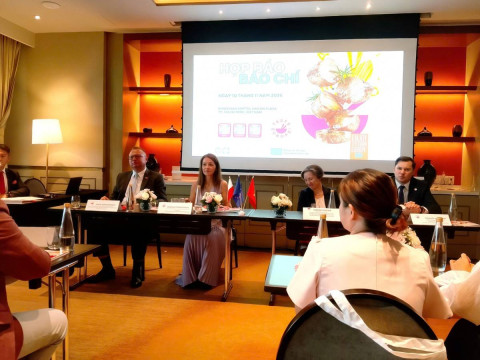
Polish food companies showcased their products and met Vietnamese buyers in HCMC on Nov. 10, seeking partnerships to expand their presence in the local market.
Vietnamese exporters face green standards hurdle in EU market
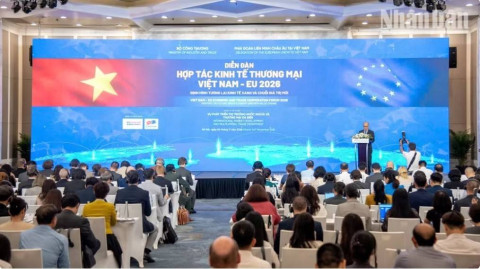
The Vietnam-EU Economic and Trade Cooperation Forum 2026 opened in Hanoi on Nov. 4 as bilateral ties entered a new phase. Beyond EVFTA opportunities, emissions cuts, supply chain transparency and technology transfer are becoming essential to Vietname
Asiago PDO Cheese and French Charcuterie Showcased in Hanoi: Bringing the Best of European Culinary Heritage to Vietnam
Industry representatives engage in discussions at the B2B Networking Event on October 30.