

Vietnam raises foreign commercial borrowing ceiling to 10 billion USD for 2026
- Business
- 10:19 13/11/2026
The Vietnamese Government has raised the ceiling for medium- and long-term foreign commercial borrowing by enterprises and credit institutions to 10 billion USD in 2026.
Enterprises and credit institutions in Vietnam will have greater room to mobilise capital from international markets following the Government's decision to increase the ceiling for foreign commercial borrowing under the self-borrowing, self-repayment mechanism for 2026.

Under Decision No. 2184/QD-TTg, signed on November 11, 2026, the annual ceiling for medium- and long-term foreign commercial borrowing has been raised to 10 billion USD, up nearly 3.9 billion USD from the previously approved level.
The decision, which took effect on the date of signing, amends Clause 3, Article 1 of Decision No. 352/QD-TTg dated February 27, 2026, concerning the public debt borrowing and repayment plan for 2026.
Under the original plan, the ceiling for medium- and long-term foreign commercial borrowing by enterprises and credit institutions under the self-borrowing, self-repayment mechanism was set at approximately 6.124 billion USD annually.
The revised ceiling represents an increase of around 3.876 billion USD, equivalent to 63.3%.
The Government has also adjusted the permitted growth rate of short-term foreign debt from the previously planned 19-20% to a maximum of 27% compared with the outstanding debt balance at the end of 2025.
According to the decision, the adjustments were made following proposals submitted by the State Bank of Vietnam (SBV) and the Ministry of Finance concerning foreign commercial borrowing limits for 2026.
The revised ceiling applies to aggregate foreign borrowing under the national foreign debt management plan and does not constitute a direct credit allocation to individual enterprises or credit institutions.
Borrowers must continue to comply with prevailing regulations on borrowing conditions, loan registration, capital utilisation, reporting obligations and foreign exchange management.
The higher ceiling is expected to facilitate access to international financing as demand for capital to support investment, production expansion and financial restructuring remains substantial.
For enterprises generating stable foreign currency revenues, overseas borrowing could help diversify financing sources, extend debt maturities and provide access to potentially more favourable borrowing costs than those available through certain domestic financing channels.
However, the expansion of borrowing capacity also entails greater exposure to financial risks, particularly those associated with exchange rate movements, international interest rates and debt maturity structures.
As foreign commercial loans under the mechanism are not guaranteed by the Government, borrowers remain solely responsible for repaying principal, interest and all associated expenses.
Exchange rate fluctuations represent a major concern for enterprises borrowing in foreign currencies while earning most of their revenues in Vietnamese dong.
An appreciation of the currency in which a loan is denominated could significantly increase repayment obligations, even when the borrower's underlying business performance remains unchanged.
International interest rate volatility poses another challenge, especially for loans carrying floating interest rates.
Changes in global financial conditions and benchmark interest rates could raise borrowing costs over the loan's duration, potentially affecting corporate cash flows and financial stability.
Enterprises may also face refinancing risks if loan maturities are not aligned with the cash flow generation schedules of their investment projects.
Where repayment obligations fall due before a project generates sufficient revenue, borrowers could be required to secure replacement financing under less favourable market conditions.
Against this backdrop, the expanded borrowing ceiling is expected to provide additional financing options rather than encourage enterprises to increase debt indiscriminately.
Financial management considerations require borrowers to ensure that their repayment capacity remains consistent with their borrowing commitments.
Enterprises are therefore expected to carefully assess interest expenses, potential exchange rate fluctuations, arrangement and guarantee fees, hedging costs and foreign currency liabilities throughout the life of their loans.
Businesses without stable foreign currency revenue streams may need to consider appropriate exchange rate hedging instruments during the loan negotiation process to mitigate potential currency risks.
At the same time, debt maturity schedules should be structured to avoid excessive repayment obligations becoming due within a short period.
For credit institutions, the higher foreign borrowing ceiling could create additional opportunities to mobilise funds for business operations and strengthen financing capacity.
Nevertheless, foreign borrowing activities must remain consistent with prudential requirements, foreign currency liquidity management and asset quality standards prescribed by the SBV.
The adjustment under Decision No. 2184/QD-TTg is therefore expected to expand financing opportunities for Vietnamese enterprises and credit institutions while underscoring the importance of prudent debt management.
With the annual ceiling increasing from approximately 6.1 billion USD to 10 billion USD, borrowers will need to place greater emphasis on controlling exchange rate exposure, selecting appropriate debt maturities and ensuring the efficient utilisation of borrowed funds.
The revised framework maintains the principle that expanded access to international capital must be accompanied by corresponding repayment capacity, with financial risks and obligations remaining the responsibility of individual borrowers.
Business & Integration - Vietnamese version: Mở thêm gần 3,9 tỷ USD dư địa vay nước ngoài cho doanh nghiệp; reported by Tran Linh
Related news
- Vietnam ranks third in Southeast Asia in digital, AI competitiveness
- Better data key to unlocking SME credit
- VINASME calls for data-driven lending to improve SME access to credit
- Vietnam Makes It 10 Straight as Khanh Hoa Drives Golf Tourism Momentum
- Nine banks plan subsidiaries at Vietnam’s international financial center
- Ho Chi Minh City: A Story in Every Rhythm
- A democratic congress could reshape U.S. foreign policy, but President Donald Trump still holds the keys
- Vietnamese exporters face green standards hurdle in EU market
- Vietnam Police Sports Association Teams Up with 90,000-Strong Business Network to Boost Athletics
- Vietnam Foodexpo to host largest edition with over 500 businesses
- Vietnam seeks innovation-led growth amid shifting global economic landscape
- Vietnam PM proposes four initiatives to drive economic growth
- Autumn Economic Forum seeks new growth engines in AI era
- Vietnam Demands Results from Diplomacy
- HCMC pushes open innovation towards commercial gains
- Vietnam Emerges as a Standout Destination for Autumn Travel
- 2026 Autumn Economic Forum promoted on Seoul screens
- Margin lending drives HSC earnings as brokerage revenue tumbles
- Bepharco appoints 2002-born executive as CEO
- Vietnam financial center eyes November 2026 launch
Đọc thêm Business
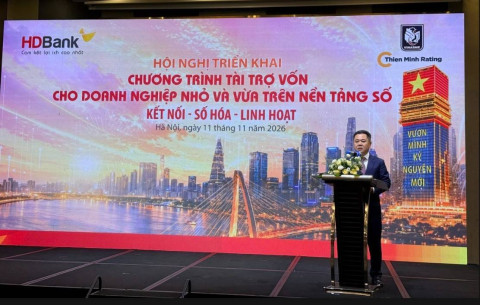
Better data key to unlocking SME credit
Transparent financial data and standardized credit profiles could help small and medium-sized enterprises access bank financing, while enabling lenders to assess repayment capacity without relaxing credit standards.

VINASME calls for data-driven lending to improve SME access to credit
Business capacity, cash flow and repayment ability should play a greater role in credit assessment, alongside collateral, VINASME Chairman Nguyen Van Than told a conference in Hanoi on November 11.

Nine banks plan subsidiaries at Vietnam’s international financial center
Nine Vietnamese banks are moving to set up wholly owned subsidiaries at the Vietnam International Financial Center (VIFC), but must meet licensing requirements before they can begin operations.

Ho Chi Minh City seminar to examine green energy and industrial cost savings
Rooftop solar, direct power purchase agreements and energy storage will be the focus of a November 25 seminar in Ho Chi Minh City, with discussions centering on investment efficiency and cost optimization for industrial enterprises.

Polish food firms seek Vietnamese partners at HCMC event
Polish food companies showcased their products and met Vietnamese buyers in HCMC on Nov. 10, seeking partnerships to expand their presence in the local market.
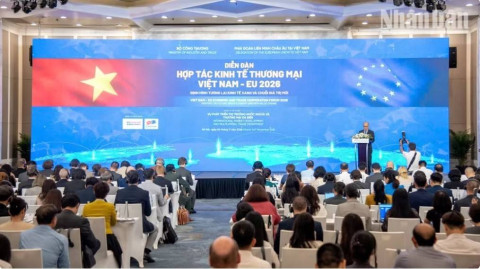
Vietnamese exporters face green standards hurdle in EU market
The Vietnam-EU Economic and Trade Cooperation Forum 2026 opened in Hanoi on Nov. 4 as bilateral ties entered a new phase. Beyond EVFTA opportunities, emissions cuts, supply chain transparency and technology transfer are becoming essential to Vietname

Asiago PDO Cheese and French Charcuterie Showcased in Hanoi: Bringing the Best of European Culinary Heritage to Vietnam
Industry representatives engage in discussions at the B2B Networking Event on October 30.
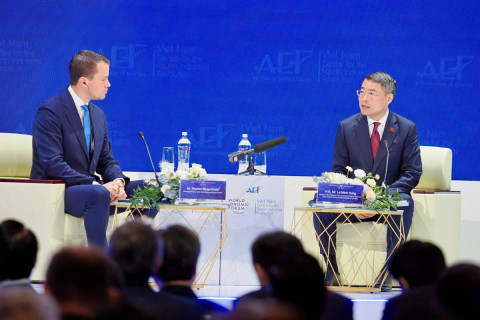
Vietnam seeks innovation-led growth amid shifting global economic landscape
Prime Minister of Vietnam Le Minh Hung has outlined Vietnam's strategy to strengthen economic resilience, accelerate innovation and enhance the competitiveness of domestic enterprises as global supply chains undergo significant restructuring.
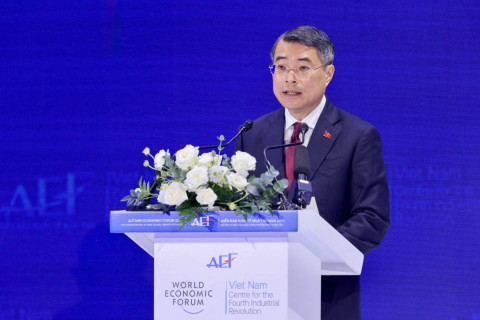
Vietnam PM proposes four initiatives to drive economic growth
Prime Minister Le Minh Hung has proposed four areas of cooperation with international partners to boost innovation, develop high-tech talent, test emerging technologies and attract long-term investment.

Sacombank names banking veteran Nguyen Xuan Ai Quoc as deputy chief — with profits tipped to surge 111%
The seasoned financier, a son of late film star Tham Thuy Hang, joins as the Vietnamese lender targets rapid growth and a major debt recovery.