

Vietnamese exporters face green standards hurdle in EU market
- Business
- 11:55 05/11/2026
The Vietnam-EU Economic and Trade Cooperation Forum 2026 opened in Hanoi on Nov. 4 as bilateral ties entered a new phase. Beyond EVFTA opportunities, emissions cuts, supply chain transparency and technology transfer are becoming essential to Vietname
Vietnamese exporters need to meet tougher environmental and supply chain standards to make full use of tariff cuts under the Vietnam-European Union Free Trade Agreement (EVFTA). The challenge is a key focus at the Vietnam-EU Economic and Trade Cooperation Forum 2026, which opened in Hanoi on November 4 under the theme Shaping the Future of a Green Economy and Value Chains.
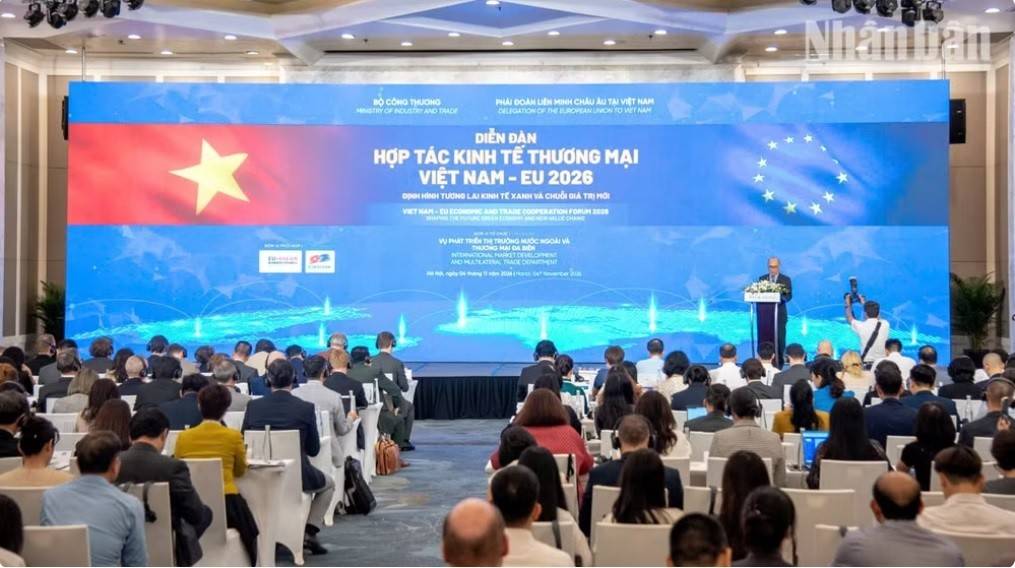
The Ministry of Industry and Trade organized the forum along with the EU Delegation in Vietnam and the EU-ASEAN Business Council (EU-ABC) to connect businesses and discuss trade and investment policies. It followed the upgrading of bilateral ties to a comprehensive strategic partnership.
As estimated by Deputy Minister of Industrial and Trade Luong Hoang Thai, Vietnam's total trade in the first 10 months was estimated at US$1,010.6 billion, up 32.3% year-on-year; exports reached $499 billion, up 27.4%. General trade with the EU exceeded US$65.48 billion and continuing to grow since the EVFTA took effect. Besides, overall processed industrial goods accounted for 87.4% of export, as documented from the ministry's Import-Export Department.
Overall, the EVFTA has helped Vietnamese goods gain greater access to the bloc's 27 member states; but, exporters now need to focus on quality, technology and higher-value production rather than their volume alone, Mr. Luong Hoang Thai asserted. As the Ministry of Industry and Trade had identified green supply chains, green power and circular economy technologies the priorities for industrial production advance, the European enterprises could support these efforts through technology tranfer, management expertise, workforce training and long-term investment.
Green standards raise the bar
EU Ambassador to Vietnam Julien Gurrier said the bloc considers Vietnam a key regional partner. He welcomes its goal of becoming a developed, high-income country in 2045 and achieving net-zero emissions by 2050. The EVFTA remains a pillar of bilateral economic ties, making Vietnam the EU's largest trading partner in the ASEAN and its 16th largest globally, he said.
Ambassador Julien Gurrier also have an inclination for Vietnam to become a stable, transparent and predictable environment to make better use of the EVFTA into real-life business. It is also the fair market access, intellectual property protected, and technology know-how from Vietnam could help European business - especially the SMEs - build up confidences for general business lines.
For exporters, EU rules on emissions and environmental responsibility are becoming a more immediate challenge.
The EU's Carbon Border Adjustment Mechanism (CBAM) entered its definitive phase on January 1, 2026, covering iron, steel, aluminum, cement, fertilizers, electricity and hydrogen. Importers subject to the CBAM must report embedded emissions and meet related financial obligations. Reliable production emissions data is therefore increasingly important: without measurement, monitoring and reporting systems, Vietnamese suppliers risk buyers using EU default values, potentially increasing costs and weakening competitiveness.
The European Commission has also published guidance for the definitive phase, including instructions for producers outside the EU, to help suppliers prepare emissions data and work with importers.
Thus, cleaner productions is increasingly a condition for securing orders and retaining contracts and not just a way to improve manufacturers' and importers' image.
Investment beyond capital
Vietnam's established manufacturing base and export capacity give it an edge in attracting European investment, said Noel Clehane, Vice President of the EU-ASEAN Business Council (EU-ABC). European investment, as asserted by Mr. Clehane, can bring advanced technology, management expertise and workforce training as well as capital, helping local companies move into higher-value production.
EU-ABC representatives identified clean production, energy transition, sustainable logistics and green finance as promising areas for cooperation as sustainability become more closely tied to market access and competitiveness.
These priorities also featured in the joint statement issued after Vietnamese leaders' visit to Europe in October 2026. It highlighted cooperation in technology, innovation, green transition, circular economy platform, strategic infrastructure and critically raw materials.
For Vietnamese businesses, attracting European capital and joining the bloc's supply chains will depend on turning those priorities into viable projects. That requires transparent information, compliance with standards, protection of intellectual property and commitments to environmental requirements.
SMEs, meanwhile, need financing, technology and management support to keep pace. If only big enterprises can meet the new standards, then opportunities to connect local suppliers with European companies would remain limited.
The forum's long-term impact will depend on whether policy discussions lead to joint projects that have bring green tech into factory, and strengthen Vietnamese suppliers' role in the global value chains.
The EVFTA has widened access to Europe. Vietnamese companies' ability to compete there will increasingly depend on how they produce, not just what they sell.
Business & Integration - Vietnamese version: Doanh nghiệp Việt trước sức ép xanh hóa chuỗi cung ứng vào EU; reported by Phuong Ngan
Related news
- Buon Ma Thuot Coffee Festival 2027 targets 1.3 million visitors
- National Assembly of Vietnam passes SME Development Law
- AgriS receives First-Class Labor Medal
- VINASME opens Southern Representative Office to build SME competitiveness
- Vietnam takes APEC baton from China, eyes ‘new era of self-reliance’ for 2027
- Vietnam–UAE CEPA: Tariff Gains Yet to Translate into Market Share
- Vietnam urges Trump to speed up reciprocal trade deal
- AgriS and its chairwoman to receive First-class Labor Orders
- Mr. To Lam at FrancoTech 2026: Francophone cooperation must move from potential to concrete action
- Mandarin orange, mandarin ambitions
- Vietravel Airlines Reinforces Its Board as It Pushes Into Southern China
- Vietnam’s spice exports on track to hit $2.4 billion in 2026
- Vietnam ranks third in Southeast Asia in digital, AI competitiveness
- Better data key to unlocking SME credit
- VINASME calls for data-driven lending to improve SME access to credit
- Vietnam Makes It 10 Straight as Khanh Hoa Drives Golf Tourism Momentum
- Nine banks plan subsidiaries at Vietnam’s international financial center
- Ho Chi Minh City: A Story in Every Rhythm
- A democratic congress could reshape U.S. foreign policy, but President Donald Trump still holds the keys
- Vietnamese exporters face green standards hurdle in EU market
Đọc thêm Business

VINASME opens Southern Representative Office to build SME competitiveness
The association is shifting from supporting businesses to developing their long-term capacity, backed by a shared digital platform and five breakthrough priorities for 2027–2032.
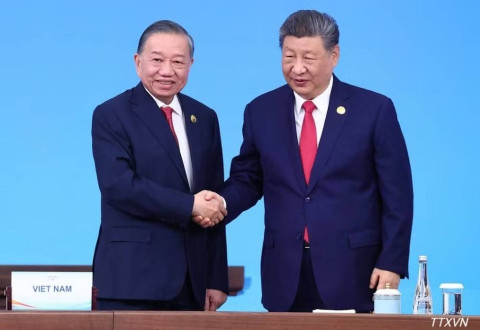
Vietnam takes APEC baton from China, eyes ‘new era of self-reliance’ for 2027
Hanoi unveils theme and three priorities as it prepares to host the forum for the third time, with leaders’ week set for Phu Quoc

VIFC-HCMC courts international capital at Singapore FinTech Festival
At a Singapore workshop, the city’s new financial center outlined four priority product groups and signed a letter of intent with SLEI to broaden Vietnamese businesses’ access to long-term capital.

Vietnam tops ASEAN consumer sentiment despite rising cost concerns
Vietnamese consumers remain the most optimistic in ASEAN with an ACSI score of 63, but rising living costs and gaps in long-term financial security are making them more cautious, savings-minded and investment-oriented
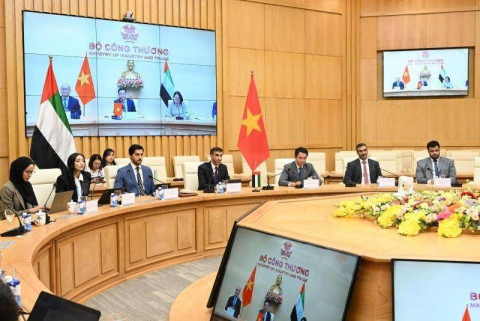
Vietnam–UAE CEPA: Tariff Gains Yet to Translate into Market Share
Nine months into the CEPA, Vietnamese goods enjoy major tariff advantages in the UAE yet hold under 1% of its import market. The greatest potential lies in using the incentives, meeting rules of origin and building distribution networks.
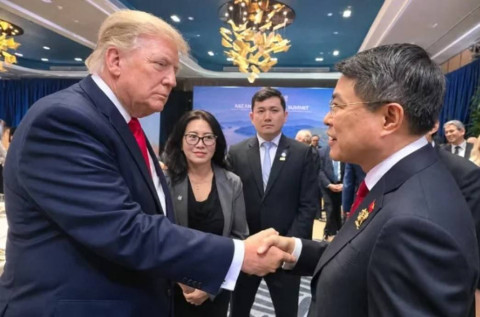
Vietnam urges Trump to speed up reciprocal trade deal
Both sides have held seven formal negotiation rounds and agreed on most of the core content, but no signing date has been set.

Vietnam’s spice exports on track to hit $2.4 billion in 2026
Exports of black pepper, cinnamon and star anise are all posting solid growth, putting Vietnam’s spice industry on course for a turnover of $2.4 billion in 2026.

Vietnam exports $120,000 worth of specialty coffee to US
A company in Vietnam's Central Highlands province of Dak Lak has exported more than 3.4 tons of specialty coffee to the U.S., marking a step toward higher-value exports as the country seeks to move beyond its traditional reliance on raw coffee beans.
Over $480 million pledged at COP31 to accelerate methane emissions reductions
More than $480 million in new climate financing has been announced at COP31 to accelerate efforts to reduce methane emissions and other powerful climate pollutants.
Vietnam raises foreign commercial borrowing ceiling to 10 billion USD for 2026
The Vietnamese Government has raised the ceiling for medium- and long-term foreign commercial borrowing by enterprises and credit institutions to 10 billion USD in 2026.