

Vietnam seeks innovation-led growth amid shifting global economic landscape
- Business
- 21:10 28/10/2026
Prime Minister of Vietnam Le Minh Hung has outlined Vietnam's strategy to strengthen economic resilience, accelerate innovation and enhance the competitiveness of domestic enterprises as global supply chains undergo significant restructuring.
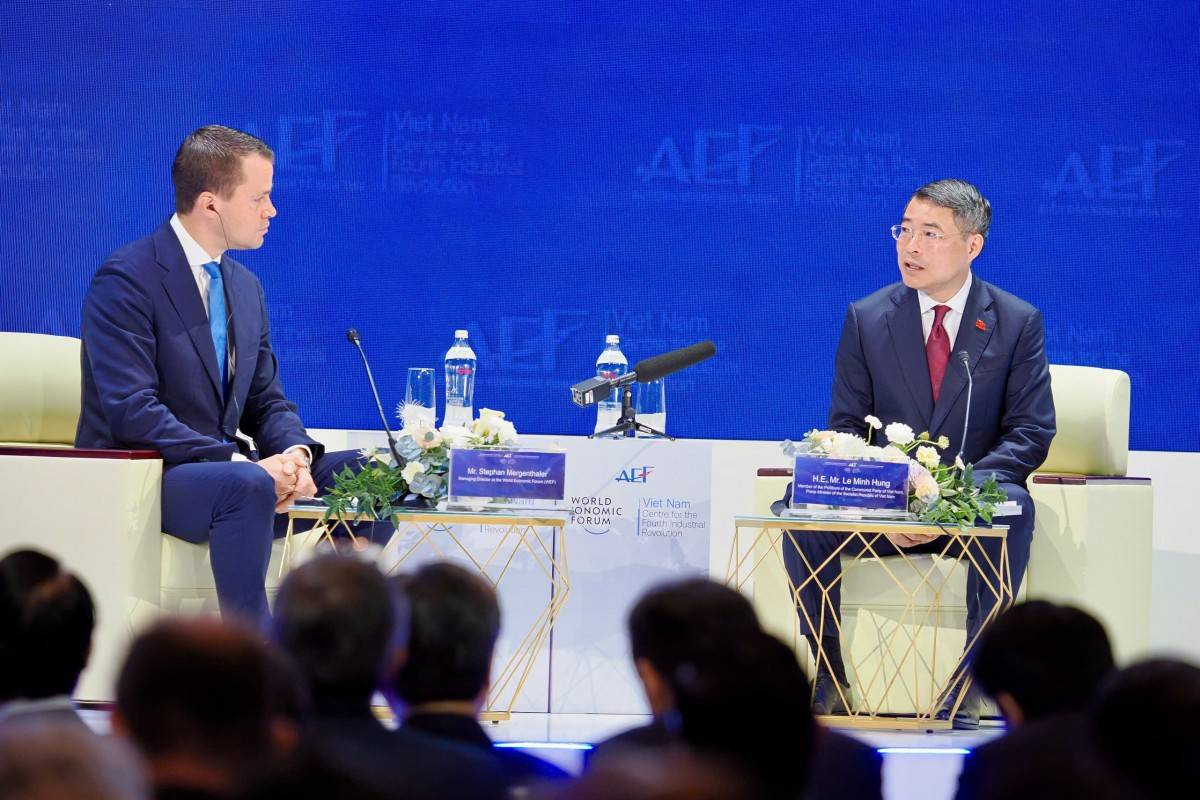
Speaking at a dialogue with the World Economic Forum (WEF) Executive Director Stephan Mergenthaler during the 2026 Autumn Economic Forum on October 28, Prime Minister Le Minh Hung emphasized that geopolitical fragmentation, technological competition and changes in global investment flows are reshaping the international economic landscape.
These developments present challenges for Vietnam but also create opportunities to upgrade its growth model and strengthen its global position in global value chains, he said.
The Prime Minister identified three priorities: maintaining macroeconomic stability, deepening international economic integration and transforming external pressures into new growth opportunities through technological invention, institutional reform and private sector development.
As multinational corporations increasingly prioritize supply chain stability, predictability and reliable partnerships, Vietnam is seeking to strengthen its investment environment while developing greater economic capacity.
A central component of this strategy is the transition from a growth model dependent on capital, labor and natural resources toward one driven by productivity, science, and innovation.
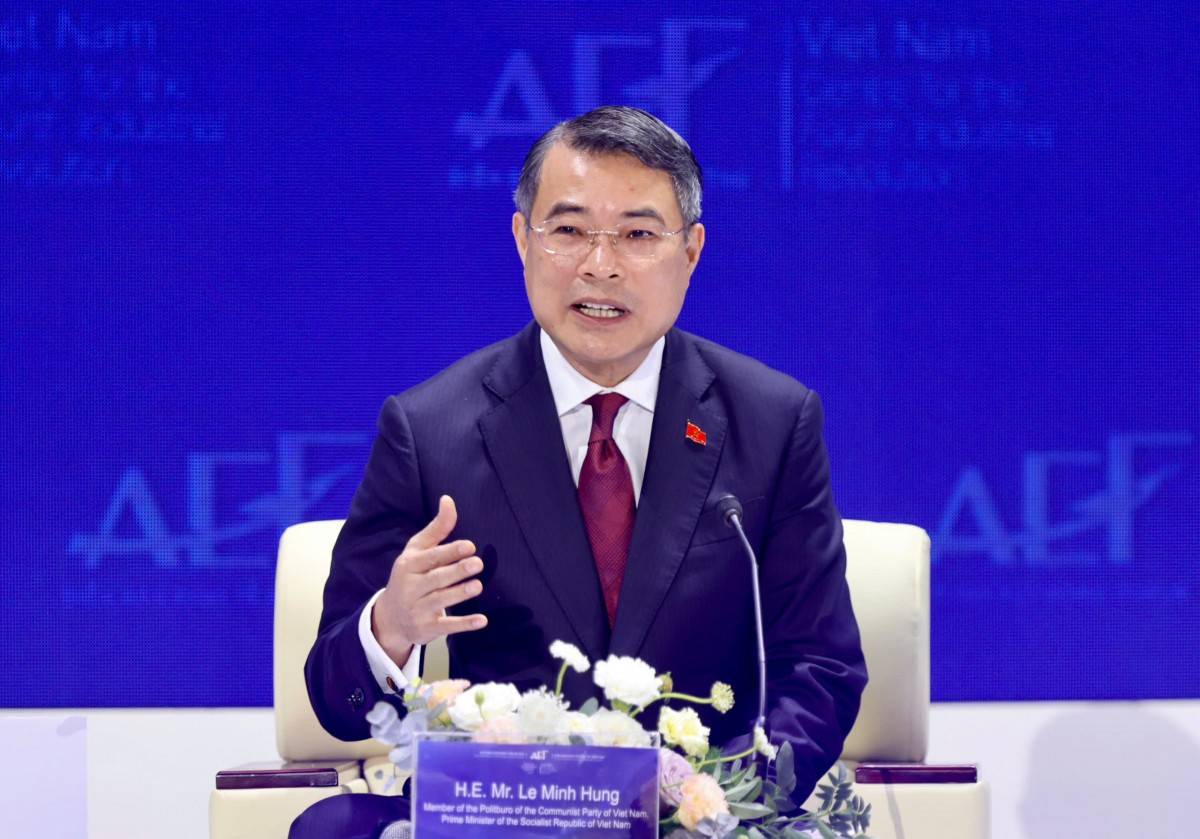
Four drivers of economic transformation
Prime Minister Le Minh Hung identified four areas expected to support productivity growth and economic competitiveness: strategic technologies, the digital economy and entrepreneurship, private and state-owned enterprises, and green transititon.
In strategic technologies, Vietnam is prioritizing semiconductors and artificial intelligence, with a target of training 50,000 semiconductors by 2030.
The country also aims to rank among the world's 40 most innovative economies by 2030. It currently stands 43rd among 139 economies in the Global Innovation Index and has approximately 4,000 innovative startups.
The Government plans to expand regulatory sandboxes, improve digital infrastructure and strengthen cooperation among universities, research institutions and businesses to accelerate technology adoption.
The private sector is expected to serve as a key driver of economic growth, while state-owned enterprises will continue to play a strategic role in essential industries.
Meanwhile, the green transition is increasingly viewed as an opportunity to improve corporate competitiveness, attract sustainable investment and support Vietnam's commitment to achieving net-zero emissions by 2050.
To unlock these growth drivers, Prime Minister Le Minh Hung emphasized the need to remove institutional bottlenecks, streamline administrative procedures and reduce compliance costs.
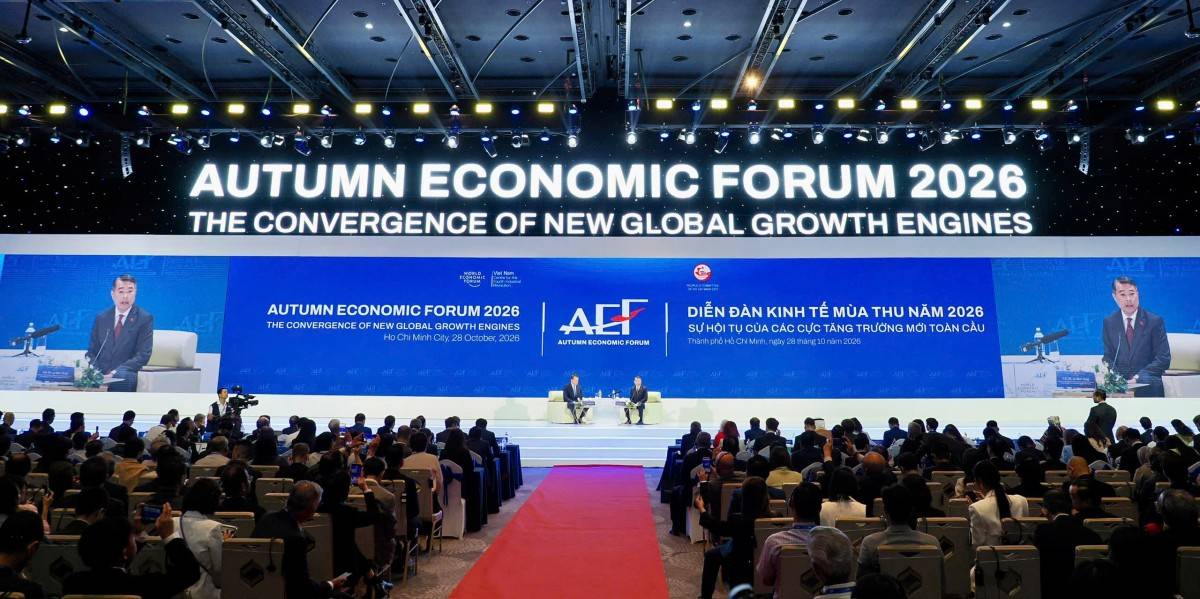
Moving beyond investment volume
Vietnam is also seeking to improve quality of foreign direct investment (FDI), placing greater emphasis on technology transfer, domestic supply chain development and higher value-added production.
Prime Minister Le Minh Hung said the contribution of foreign investment should be assessed not only by capital commitments but also by impact on the technological capabilities and competitiveness of Vietnamese enterprises.
The Government is prioritizing high-tech and environmentally sustainable projects while encouraging foreign investors to establish research and development centers and strengthen partnerships with domestic suppliers.
A key objective is to increase the number of Vietnamese enterprises capable of becoming first- and second-tier suppliers in global production networks.
Vietnam's foreign trade exceeded US$930 billion in 2025 and is projected to reach approximately US$1 trilion in 2026, according to figures presented at the forum. Its extensive network of free trade agreements, covering market representing approx. 90% of global GDP, provides a foundation for expanding market access and attracting investment.
Looking toward 2035, Vietnam aims to consolidate its position as a high-tech manufacturing hub, an innovation center and a reliable partner in international supply chains.
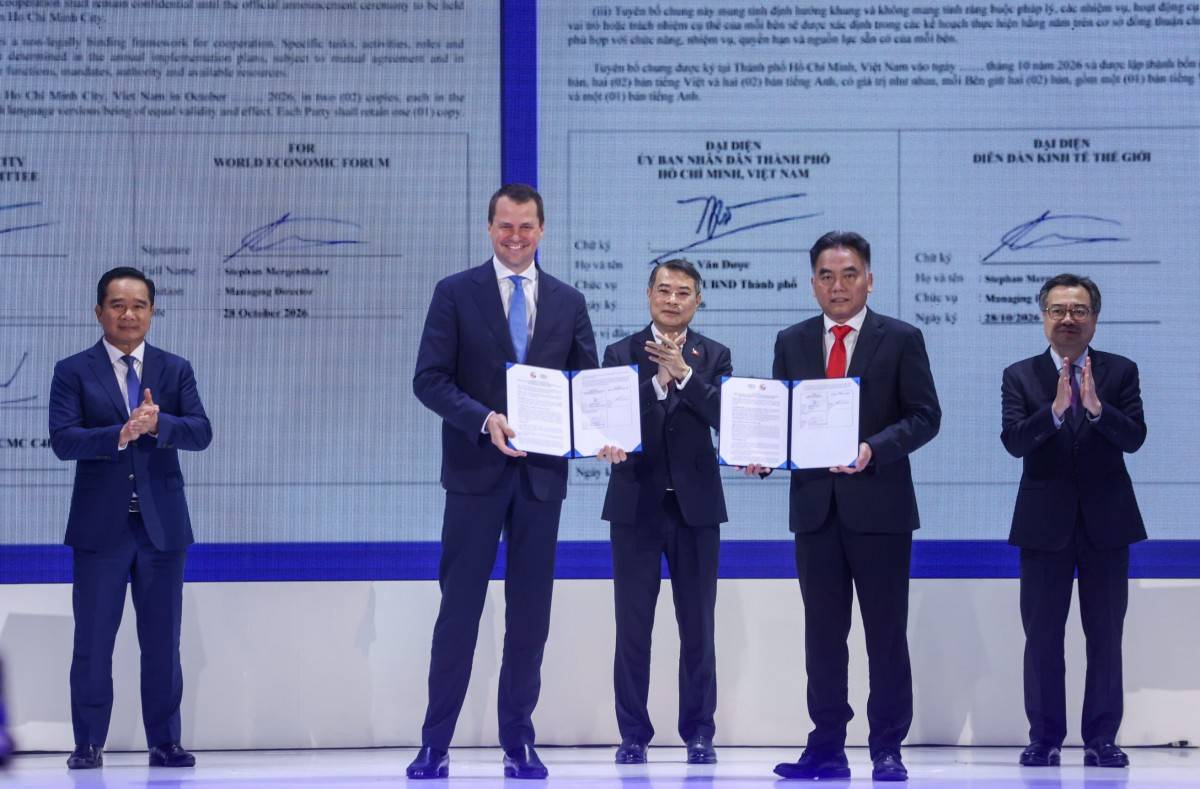
Also at the forum, the Ho Chi Minh City People's Committee and the WEF announced a cooperation declaration. The first ten official members of the Vietnam International Financial Center in Ho Chi Minh City were also introduced, alongside investment approvals for several projects.
Strengthening economic resilience though integration
Prime Minister Le Minh Hung reaffirmed Vietnam's commitment to an independent and self-reliant economy supported by diversified international partnerships and deeper global integration. He emphasized that economic integration should contribute to stronger domestic value creation and fostering mutually beneficial investment partnerships.
Vietnam's long-term strategy goes beyond attracting international capital and expanding manufacturing to strengthen domestic value creation and mutually beneficial investment partnerships. Though institutional reform, technological innovation and international cooperation, it aims to build a productive, resilient economy that adapts to global changes and contributes to new regional and international growth.
Business & Integration - Vietnamese version: Thủ tướng Lê Minh Hưng: Việt Nam chủ động thích ứng với kinh tế toàn cầu; reported by Uyen Nhi
Related news
- Vietnam seeks innovation-led growth amid shifting global economic landscape
- Vietnam PM proposes four initiatives to drive economic growth
- Autumn Economic Forum seeks new growth engines in AI era
- Vietnam Demands Results from Diplomacy
- HCMC pushes open innovation towards commercial gains
- Vietnam Emerges as a Standout Destination for Autumn Travel
- 2026 Autumn Economic Forum promoted on Seoul screens
- Margin lending drives HSC earnings as brokerage revenue tumbles
- Bepharco appoints 2002-born executive as CEO
- Vietnam financial center eyes November 2026 launch
- Vietnam targets 20 internationally certified hospitals in medical tourism push
- Vietnam sets sights on double-digit growth as APEC 2027 preparations gather pace
- Vietnam businesses face global test: reform at home, earn trust abroad
- Vietnam firms warned: transform within, build trust abroad or fall behind
- VCBC Chairman Steve Bui: Incentives have run their course — Vietnam enters an institutional race to attract the next generation of FDI
- Vietnamese Journalism in the Age of AI: How can reporters survive in the profession?
- Dr. Samuel Feldberg warns of risks that could reshape the global economic order and shares strategic advice for Vietnamese businesses
- VINASME organizes training program on risk control for sustainable business development amid uncertainty
- Vietnam’s International Financial Center looks beyond tax incentives to compete
- Expert Lại Thiên Phong: Localizing digital transformation – a new growth driver for Vietnam
Đọc thêm Business
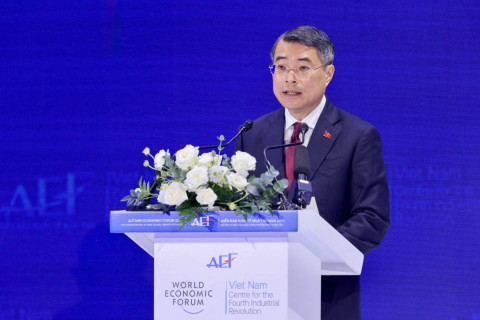
Vietnam PM proposes four initiatives to drive economic growth
Prime Minister Le Minh Hung has proposed four areas of cooperation with international partners to boost innovation, develop high-tech talent, test emerging technologies and attract long-term investment.
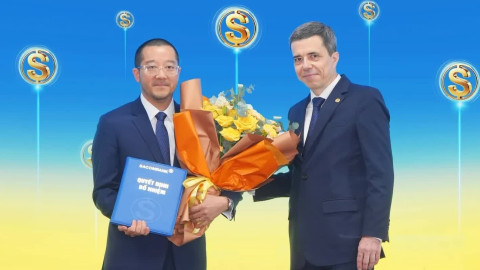
Sacombank names banking veteran Nguyen Xuan Ai Quoc as deputy chief — with profits tipped to surge 111%
The seasoned financier, a son of late film star Tham Thuy Hang, joins as the Vietnamese lender targets rapid growth and a major debt recovery.
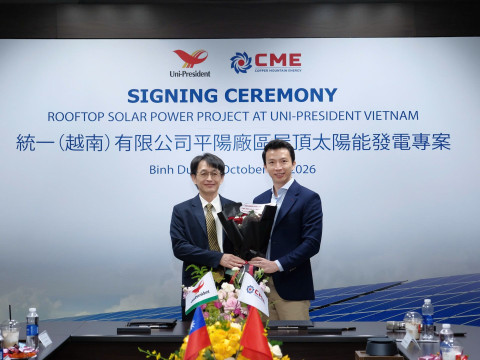
CME Solar Partners with Uni-President Vietnam to Deploy a 6,601 kWp Rooftop Solar Project
The 6,601 kWp rooftop solar project is expected to supply 8,656 MWh of clean electricity per year to Uni-President Vietnam, helping the company optimize energy costs and reduce CO₂ emissions.
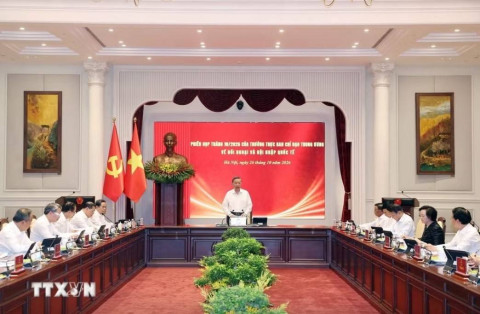
Vietnam Demands Results from Diplomacy
Top leaders of Vietnam order international pledges turned into jobs, productive capacity and markets—with institutions held to account for delivery.
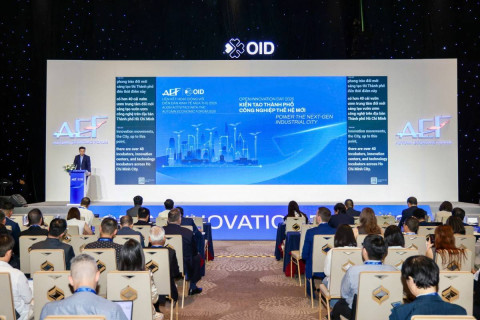
HCMC pushes open innovation towards commercial gains
Ho Chi Minh City is seeking to turn research and technology partnerships into measurable gains for businesses as it builds a next-generation industrial ecosystem.
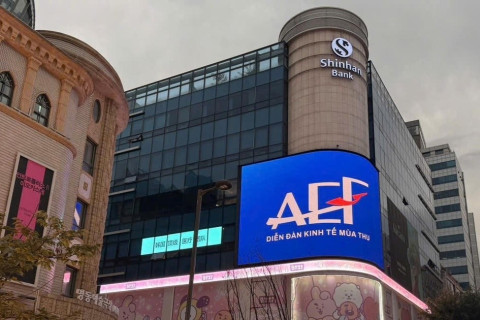
2026 Autumn Economic Forum promoted on Seoul screens
Ho Chi Minh City (HCMC) is taking Vietnamese economic ambitions abroad, using one of Seoul’s most prominent commercial districts to court investors and build international attention for the flagship autumn economic forum.

Khanh Hoa targets 23.7 million tourists in 2026
Khanh Hoa expects more than 23.7 million visitors and VND80.2 trillion in tourism revenue in 2026, increases of 44.8% and 19.7% year-on-year, respectively.
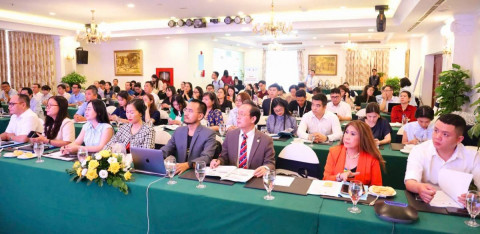
Vietnamese firms face Halal, logistics hurdles in UAE push
Vietnamese businesses seeking to enter the UAE and wider Middle East need stronger preparation in Halal compliance, market research and partner networks as logistics and information gaps weigh on exports, experts said.
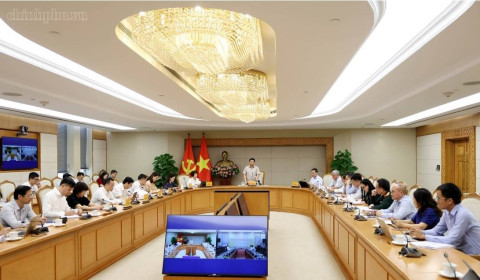
Vietnam financial center eyes November 2026 launch
Vietnam is preparing to launch the first transactions at its International Financial Center in November 2026, with authorities reviewing eligible products and removing regulatory bottlenecks.

Vietnam targets 20 internationally certified hospitals in medical tourism push
A 2026-2030 plan would link healthcare and tourism services across eight destinations while safeguarding access for domestic patients.