

Nine banks plan subsidiaries at Vietnam’s international financial center
- Business
- 08:51 11/11/2026
Nine Vietnamese banks are moving to set up wholly owned subsidiaries at the Vietnam International Financial Center (VIFC), but must meet licensing requirements before they can begin operations.
Vietcombank, MB, Techcombank, and several other banks are advancing plans to establish subsidiary banks within Vietnam’s International Financial Center (VIFC). These capital contribution proposals are driven by the need to meet licensing requirements and the capacity to provide international financial services to businesses.
The subsidiaries would operate as separate legal entities, offering businesses access to international capital, payments and financial services. Approval of the investment plans is only the first step.
Banks draw up plans
As of early November 2026, Vietcombank, MB, Techcombank, HDBank, MSB, SHB, TPBank, LPBank and Nam A Bank had either approved plans or were seeking shareholder approval to establish subsidiaries at the center.
Each subsidiary would be a single-member limited liability commercial bank, wholly owned by its parent.
MB’s board approved its plan on Oct. 29 under Resolution No. 92/NQ-MB-HĐQT. The proposed subsidiary, MB Global Bank, would have charter capital of VND3 trillion or the equivalent in foreign currency.
Techcombank is seeking shareholder feedback. Its board approved the shareholder list finalization on Oct. 22, with Nov. 3, 2026 set as the record date.
Vietcombank and TPBank also plan to invest VND3 trillion each in their subsidiaries.
MSB has announced plans for a wholly owned subsidiary to expand its financial ecosystem. It aims to access international capital, finance green and renewable energy projects, and develop foreign exchange derivatives.
Capital alone is not enough
Approval from shareholders or a board of directors does not amount to an operating license.
Under Article 12 of Decree 329/2025/NĐ-CP, a parent bank must have actual charter capital of at least twice the statutory minimum. Its non-performing loan ratio must not exceed 3%, or a lower limit set by the State Bank of Vietnam governor.
The parent must also have an A or B rating, qualify as a large-scale bank and have been profitable for the five consecutive years before applying.
It must commit to supporting the subsidiary’s finances, technology, management and operations.
The requirements mean banks need more than capital: they must also demonstrate asset quality, management capacity and a viable business plan.
Businesses await services
The center in Ho Chi Minh City announced its first 10 member companies on Oct. 28. They have combined registered and committed charter capital of US$33.63 million and plan to raise and invest around $2.7 billion by 2027.
The $2.7 billion is a projection, not money already disbursed.
The companies are targeting education, infrastructure, logistics, energy and financial technology. Once licensed, the banks are expected to help meet financing and service needs in these sectors.
At an Oct. 28 meeting, Deputy Prime Minister Nguyen Van Thang called for obstacles involving accounts, foreign exchange, capital transfers and payments to be resolved, with the aim of completing the first transaction by November 2026.
Operations must comply with licensing and financial safety requirements.
For businesses, the test will be whether the subsidiaries improve access to financial services, lower transaction costs and make it easier to raise capital. Those outcomes will show whether plans to join the center have translated into actual operations.
Business & Integration - Vietnamese version: 9 ngân hàng xúc tiến lập ngân hàng con tại Trung tâm Tài chính quốc tế; reported by Bao Ngan
Related news
- Vietnam Makes It 10 Straight as Khanh Hoa Drives Golf Tourism Momentum
- Nine banks plan subsidiaries at Vietnam’s international financial center
- Ho Chi Minh City: A Story in Every Rhythm
- A democratic congress could reshape U.S. foreign policy, but President Donald Trump still holds the keys
- Vietnamese exporters face green standards hurdle in EU market
- Vietnam Police Sports Association Teams Up with 90,000-Strong Business Network to Boost Athletics
- Vietnam Foodexpo to host largest edition with over 500 businesses
- Vietnam seeks innovation-led growth amid shifting global economic landscape
- Vietnam PM proposes four initiatives to drive economic growth
- Autumn Economic Forum seeks new growth engines in AI era
- Vietnam Demands Results from Diplomacy
- HCMC pushes open innovation towards commercial gains
- Vietnam Emerges as a Standout Destination for Autumn Travel
- 2026 Autumn Economic Forum promoted on Seoul screens
- Margin lending drives HSC earnings as brokerage revenue tumbles
- Bepharco appoints 2002-born executive as CEO
- Vietnam financial center eyes November 2026 launch
- Vietnam targets 20 internationally certified hospitals in medical tourism push
- Vietnam sets sights on double-digit growth as APEC 2027 preparations gather pace
- Vietnam businesses face global test: reform at home, earn trust abroad
Đọc thêm Business
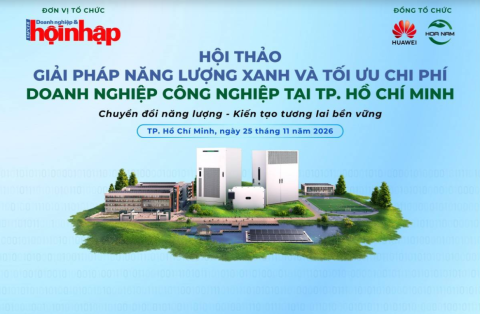
Ho Chi Minh City seminar to examine green energy and industrial cost savings
Rooftop solar, direct power purchase agreements and energy storage will be the focus of a November 25 seminar in Ho Chi Minh City, with discussions centering on investment efficiency and cost optimization for industrial enterprises.

Polish food firms seek Vietnamese partners at HCMC event
Polish food companies showcased their products and met Vietnamese buyers in HCMC on Nov. 10, seeking partnerships to expand their presence in the local market.
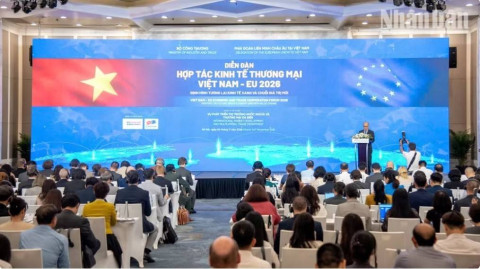
Vietnamese exporters face green standards hurdle in EU market
The Vietnam-EU Economic and Trade Cooperation Forum 2026 opened in Hanoi on Nov. 4 as bilateral ties entered a new phase. Beyond EVFTA opportunities, emissions cuts, supply chain transparency and technology transfer are becoming essential to Vietname
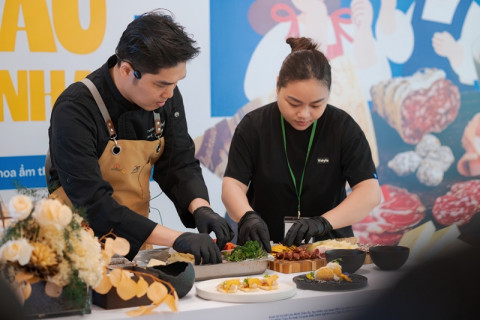
Asiago PDO Cheese and French Charcuterie Showcased in Hanoi: Bringing the Best of European Culinary Heritage to Vietnam
Industry representatives engage in discussions at the B2B Networking Event on October 30.
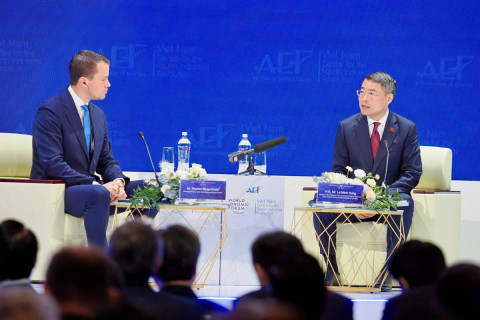
Vietnam seeks innovation-led growth amid shifting global economic landscape
Prime Minister of Vietnam Le Minh Hung has outlined Vietnam's strategy to strengthen economic resilience, accelerate innovation and enhance the competitiveness of domestic enterprises as global supply chains undergo significant restructuring.
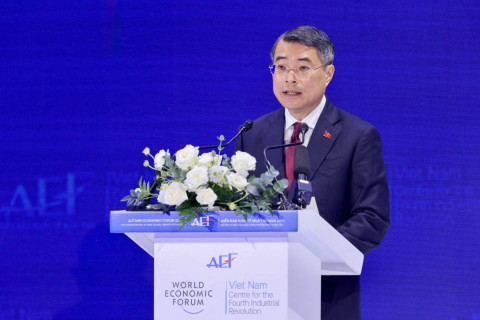
Vietnam PM proposes four initiatives to drive economic growth
Prime Minister Le Minh Hung has proposed four areas of cooperation with international partners to boost innovation, develop high-tech talent, test emerging technologies and attract long-term investment.
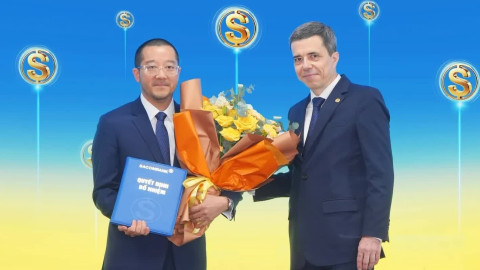
Sacombank names banking veteran Nguyen Xuan Ai Quoc as deputy chief — with profits tipped to surge 111%
The seasoned financier, a son of late film star Tham Thuy Hang, joins as the Vietnamese lender targets rapid growth and a major debt recovery.
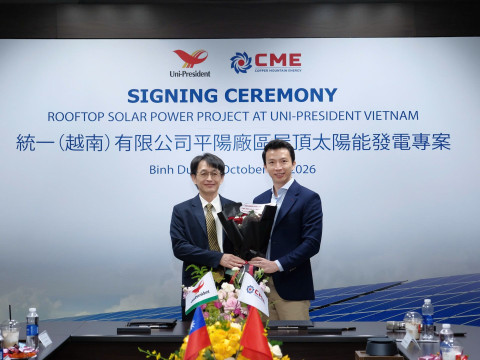
CME Solar Partners with Uni-President Vietnam to Deploy a 6,601 kWp Rooftop Solar Project
The 6,601 kWp rooftop solar project is expected to supply 8,656 MWh of clean electricity per year to Uni-President Vietnam, helping the company optimize energy costs and reduce CO₂ emissions.
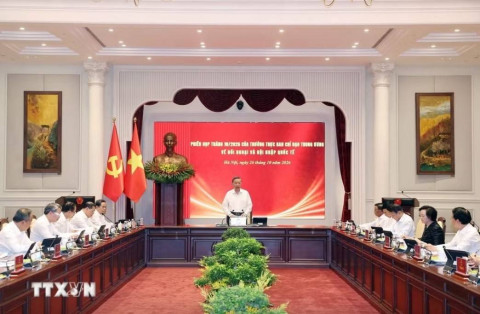
Vietnam Demands Results from Diplomacy
Top leaders of Vietnam order international pledges turned into jobs, productive capacity and markets—with institutions held to account for delivery.
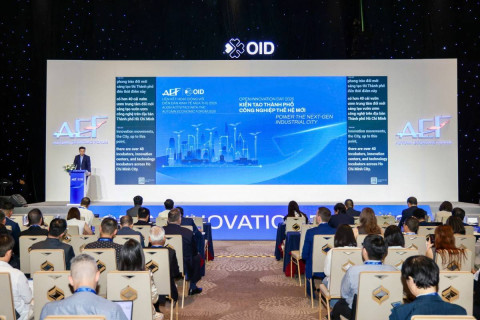
HCMC pushes open innovation towards commercial gains
Ho Chi Minh City is seeking to turn research and technology partnerships into measurable gains for businesses as it builds a next-generation industrial ecosystem.