

Over $480 million pledged at COP31 to accelerate methane emissions reductions
- Business
- 11:14 13/11/2026
More than $480 million in new climate financing has been announced at COP31 to accelerate efforts to reduce methane emissions and other powerful climate pollutants.
Methane has emerged as a major priority for climate finance at the 31st Conference of the Parties to the United Nations Framework Convention on Climate Change (COP31), taking place from November 9 to 20, 2026, in Antalya, Türkiye.

At a high-level meeting on methane and non-CO2 greenhouse gases on November 12, funding partners announced more than $480 million in new financial commitments to accelerate programmes aimed at reducing methane emissions and other pollutants that contribute significantly to global warming.
The significance of the announcement lies not only in the scale of the financial commitments but also in how the funding will be allocated. Rather than being spread across numerous sectors, the resources will prioritise industries capable of delivering relatively rapid emissions reductions, particularly energy, agriculture and waste management.
According to the Climate and Clean Air Coalition (CCAC), the more than $480 million in funding has been mobilised from philanthropic organisations and will primarily support methane mitigation measures in these three sectors. Part of the funding will also be directed towards controlling black carbon emissions, promoting clean cooking, developing sustainable transport and introducing climate-friendly cooling technologies.
The CCAC is a voluntary partnership comprising more than 200 governments, intergovernmental organisations, businesses, scientific institutions and civil society organisations. Its activities focus on reducing short-lived climate pollutants, including methane, black carbon, tropospheric ozone and hydrofluorocarbons (HFCs).
The newly announced financing represents a continuation of efforts under the Global Methane Pledge, an initiative launched in 2021 to strengthen international cooperation in controlling emissions of this potent greenhouse gas.
When the initiative was established, participating organisations and funding institutions pledged approximately $300 million to support its implementation. Since then, more than $530 million has been disbursed, reflecting the continued expansion of financial resources dedicated to methane mitigation.
The growing attention methane receives from climate finance providers stems largely from its atmospheric characteristics. Compared with many carbon dioxide mitigation measures, which may require considerable time to deliver their full climate benefits, reducing methane emissions can help slow atmospheric warming over a relatively short period.
Speaking at COP31, Simon Stiell, Executive Secretary of the United Nations Framework Convention on Climate Change (UNFCCC), described methane mitigation as one of the fastest, most effective and cost-efficient approaches to limiting global temperature increases in the near term.
According to Stiell, approximately 70% of methane emissions from the oil and gas industry could be eliminated using existing technologies, with a substantial proportion of these reductions achievable at low or virtually zero net cost.
This characteristic makes methane an attractive target for climate finance. In the oil and gas sector, many mitigation measures can also help businesses recover otherwise lost gas, conserve energy and improve operational efficiency, generating economic benefits alongside environmental gains.
In addition to the more than $480 million in new commitments, COP31 also saw the announcement of an additional $25 million for the CCAC's National Action and Planning programme, which supports countries in developing and implementing policies to control highly potent climate pollutants.
The additional financing will enable the programme to expand to seven countries: Côte d'Ivoire, Ethiopia, Fiji, Morocco, Pakistan, the Philippines and Uzbekistan.
The programme had previously been implemented in Brazil, Cambodia, Indonesia, Kazakhstan, Mexico, Nigeria and South Africa.
With the latest contribution, total announced financing for the programme has reached $50 million, supporting its objective of assisting 30 developing countries by 2030.
Notably, the funding is not intended solely for direct investment in emissions reduction projects. It will also help participating countries establish dedicated institutional structures, access technical expertise and prepare project portfolios capable of meeting investors' requirements.
This is considered an important component of efforts to improve the effectiveness of climate finance. In practice, many countries have established emissions reduction targets but lack projects with sufficiently developed data, technologies, financial arrangements and implementation mechanisms to absorb investment capital.
Business & Integration - Vietnamese version: Hơn 480 triệu USD hướng vào các giải pháp cắt giảm methane; reported by Linh Tran
Related news
- Mandarin orange, mandarin ambitions
- Vietravel Airlines Reinforces Its Board as It Pushes Into Southern China
- Vietnam’s spice exports on track to hit $2.4 billion in 2026
- Vietnam ranks third in Southeast Asia in digital, AI competitiveness
- Better data key to unlocking SME credit
- VINASME calls for data-driven lending to improve SME access to credit
- Vietnam Makes It 10 Straight as Khanh Hoa Drives Golf Tourism Momentum
- Nine banks plan subsidiaries at Vietnam’s international financial center
- Ho Chi Minh City: A Story in Every Rhythm
- A democratic congress could reshape U.S. foreign policy, but President Donald Trump still holds the keys
- Vietnamese exporters face green standards hurdle in EU market
- Vietnam Police Sports Association Teams Up with 90,000-Strong Business Network to Boost Athletics
- Vietnam Foodexpo to host largest edition with over 500 businesses
- Vietnam seeks innovation-led growth amid shifting global economic landscape
- Vietnam PM proposes four initiatives to drive economic growth
- Autumn Economic Forum seeks new growth engines in AI era
- Vietnam Demands Results from Diplomacy
- HCMC pushes open innovation towards commercial gains
- Vietnam Emerges as a Standout Destination for Autumn Travel
- 2026 Autumn Economic Forum promoted on Seoul screens
Đọc thêm Business

Vietnam’s spice exports on track to hit $2.4 billion in 2026
Exports of black pepper, cinnamon and star anise are all posting solid growth, putting Vietnam’s spice industry on course for a turnover of $2.4 billion in 2026.

Vietnam exports $120,000 worth of specialty coffee to US
A company in Vietnam's Central Highlands province of Dak Lak has exported more than 3.4 tons of specialty coffee to the U.S., marking a step toward higher-value exports as the country seeks to move beyond its traditional reliance on raw coffee beans.
Vietnam raises foreign commercial borrowing ceiling to 10 billion USD for 2026
The Vietnamese Government has raised the ceiling for medium- and long-term foreign commercial borrowing by enterprises and credit institutions to 10 billion USD in 2026.

Better data key to unlocking SME credit
Transparent financial data and standardized credit profiles could help small and medium-sized enterprises access bank financing, while enabling lenders to assess repayment capacity without relaxing credit standards.
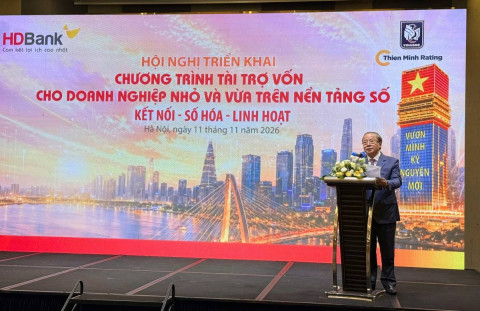
VINASME calls for data-driven lending to improve SME access to credit
Business capacity, cash flow and repayment ability should play a greater role in credit assessment, alongside collateral, VINASME Chairman Nguyen Van Than told a conference in Hanoi on November 11.

Nine banks plan subsidiaries at Vietnam’s international financial center
Nine Vietnamese banks are moving to set up wholly owned subsidiaries at the Vietnam International Financial Center (VIFC), but must meet licensing requirements before they can begin operations.

Ho Chi Minh City seminar to examine green energy and industrial cost savings
Rooftop solar, direct power purchase agreements and energy storage will be the focus of a November 25 seminar in Ho Chi Minh City, with discussions centering on investment efficiency and cost optimization for industrial enterprises.

Polish food firms seek Vietnamese partners at HCMC event
Polish food companies showcased their products and met Vietnamese buyers in HCMC on Nov. 10, seeking partnerships to expand their presence in the local market.
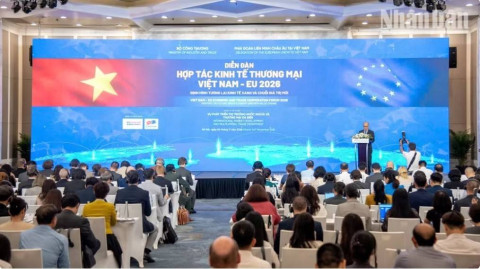
Vietnamese exporters face green standards hurdle in EU market
The Vietnam-EU Economic and Trade Cooperation Forum 2026 opened in Hanoi on Nov. 4 as bilateral ties entered a new phase. Beyond EVFTA opportunities, emissions cuts, supply chain transparency and technology transfer are becoming essential to Vietname

Asiago PDO Cheese and French Charcuterie Showcased in Hanoi: Bringing the Best of European Culinary Heritage to Vietnam
Industry representatives engage in discussions at the B2B Networking Event on October 30.