

A democratic congress could reshape U.S. foreign policy, but President Donald Trump still holds the keys
- Enterprise
- 20:55 09/11/2026
DNHN - Democrats take control of Congress, potentially reshaping Trump's foreign policy on China, Russia, Iran, NATO, and global trade through 2028.
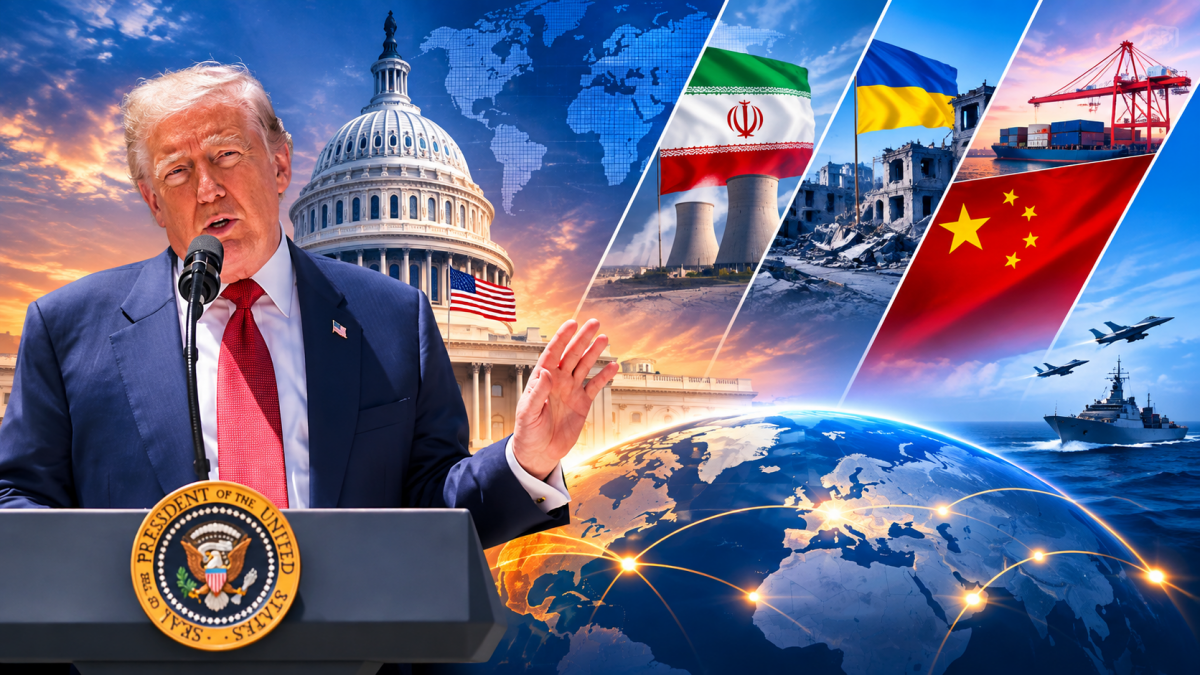
The Democratic Party’s victories in the November 3 midterm elections, securing control of both the U.S. House of Representatives and the Senate, mark a significant turning point in American politics. Beyond delivering a major rebuke to President Donald Trump and his Republican Party, the results could reshape the political constraints surrounding Washington’s foreign policy at a particularly volatile moment in international affairs.
The United States is simultaneously confronting an increasingly dangerous conflict with Iran, Russia’s ongoing war against Ukraine, intensifying strategic competition with China, uncertainty among traditional allies, and growing instability in global trade.
A Democratic-controlled Congress will not automatically reverse President Trump’s foreign policy. The president retains substantial constitutional authority over diplomacy, military operations, and national security. Nevertheless, congressional control over legislation, funding, oversight, and appointments gives Democrats important tools to challenge the administration’s decisions.
The central question is whether this new political balance will encourage a more restrained and predictable American foreign policy or create another period of confrontation between Washington and the rest of the world.
Iran: Can Washington Move from Military Confrontation to Diplomacy?
The war involving the United States, Israel, and Iran may become the most immediate foreign policy test for the Trump administration following the election.
The conflict began with U.S. and Israeli strikes against Iran on February 28, 2026, and has since developed into a broader regional confrontation. Despite diplomatic efforts, a lasting agreement remains elusive.
The Strait of Hormuz has become a particularly critical flashpoint. Any sustained disruption to shipping through this strategic waterway could threaten global energy supplies, increase oil prices, and impose additional costs on American households and businesses.
Developments reported on November 5 indicate that tanker incidents continue in the region, while Qatar is facilitating discussions between Washington and Tehran. Major disagreements remain over Iran’s nuclear program, sanctions, and maritime security.
For President Trump, the choices are increasingly difficult.
Further military escalation could deepen congressional opposition, increase the financial burden on American taxpayers, and create additional economic pressure through higher energy prices. Alternatively, negotiations could offer an opportunity to limit the conflict, restore maritime stability, and secure a diplomatic achievement before the end of his presidency.
Democratic lawmakers are likely to demand greater transparency regarding the legal basis, objectives, and financial costs of the war. They may also seek to use congressional funding and oversight powers to constrain military operations that lack sufficient authorization.
A limited agreement between Washington and Tehran could eventually focus on nuclear restrictions, international monitoring, maritime security, and a possible easing of selected sanctions.
Such an outcome would not resolve every disagreement between the two countries. However, it could serve American interests more effectively than an open-ended military confrontation.
The most important measure of success should not be the scale of military operations, but whether the United States can protect its national security, prevent Iran from acquiring nuclear weapons, preserve freedom of navigation, and avoid another prolonged regional war.
Russia and Ukraine: A Democratic Congress Could Strengthen Kyiv’s Position
Russia’s war against Ukraine remains one of the most consequential challenges to European security and the international order.
President Trump has emphasized negotiations to end the conflict, but his approach has sometimes placed considerable pressure on Kyiv to accept a settlement. European governments, meanwhile, remain concerned that an agreement without credible security guarantees could leave Ukraine vulnerable to renewed Russian aggression.
A Democratic-controlled Congress could change the political environment surrounding U.S. policy toward Ukraine.
Democratic lawmakers have generally been more supportive of continued security assistance to Kyiv and maintaining economic pressure on Moscow. With control of congressional committees and budgetary processes, they could seek additional assistance for Ukraine, stronger sanctions against Russia, and greater scrutiny of any concessions made during negotiations.
This could strengthen Ukraine’s bargaining position while reassuring European allies that Washington remains committed to European security and NATO.
A new round of U.S.-facilitated trilateral discussions involving Russia and Ukraine is scheduled for November 10–11 in Abu Dhabi. The talks are expected to address a possible end to the war, postwar security arrangements, humanitarian measures, and de-escalation.
Three broad scenarios are possible.
First, Washington could secure a ceasefire framework that includes meaningful security guarantees for Ukraine while providing limited, negotiated concessions to Russia.
Second, Congress could expand assistance to Ukraine while the administration continues diplomatic efforts. This might improve Kyiv’s negotiating position but also prolong the conflict.
Third, negotiations could fail, leaving the war unresolved and further straining relations among Washington, Moscow, and European capitals.
For the United States, the long-term objective should be a durable peace rather than a diplomatic announcement achieved at Ukraine’s expense. Any sustainable settlement must respect Ukraine’s participation, establish credible monitoring arrangements, and provide security guarantees strong enough to discourage renewed aggression.
China: Competition Will Continue but Economic Escalation May Become More Difficult
China remains America's most consequential long-term strategic competitor.
The relationship extends far beyond tariffs and trade deficits. It encompasses semiconductors, artificial intelligence, defense technologies, critical minerals, energy security, supply chains, and influence across the Indo-Pacific.
A Democratic-controlled Congress should not be mistaken for a return to a conciliatory American policy toward Beijing. Many Democrats share Republican concerns about China's technological ambitions, military expansion, industrial policies, and strategic influence.
The difference may lie more in methods than in objectives.
Democratic lawmakers are generally more inclined to coordinate with allies, strengthen multilateral trade arrangements, and use common standards to address unfair competition and supply-chain vulnerabilities.
At the same time, the political consequences of tariffs for American consumers and businesses could encourage greater caution in Washington.
A prolonged trade war can increase import costs, disrupt supply chains, and undermine business confidence. A more sustainable approach would protect strategically important American industries while avoiding unnecessary economic confrontation.
The likely direction is therefore not the end of U.S.-China competition, but a more selective approach: limiting escalation in areas where cooperation remains possible while maintaining firm safeguards in technology, national security, and critical infrastructure.
NATO and Traditional Allies: An Opportunity to Rebuild Strategic Confidence
America's European and Indo-Pacific allies will be closely watching the implications of the election.
In recent years, uncertainty surrounding Washington's commitments to NATO, Ukraine, and regional security partnerships has encouraged allies to reconsider their dependence on American leadership.
Democratic control of Congress could provide an additional institutional voice supporting NATO, transatlantic cooperation, and continued engagement with traditional partners.
However, it would be unrealistic to expect an immediate restoration of trust.
President Trump retains substantial authority over diplomatic and military decisions, and he may continue pressing European governments to increase defense spending and assume greater responsibility for regional security.
The difference is that allies will have another influential channel through which to engage Washington: Congress.
For Japan, South Korea, Australia, and other Indo-Pacific partners, congressional support for long-term security commitments could help provide greater policy continuity amid intensifying competition with China.
Israel, Energy Security and Artificial Intelligence
The new Congress could also intensify debate over U.S. military assistance to Israel, particularly in light of the humanitarian consequences of the conflict in Gaza.
Democratic lawmakers hold differing views on the issue. Some remain strong supporters of Israel's security, while others increasingly favor conditions on military assistance, greater transparency, and stronger accountability for military operations.
Energy security will also remain a major priority. Washington must balance affordable energy, domestic industrial competitiveness, and environmental responsibilities.
Meanwhile, artificial intelligence, cybersecurity, data protection, and advanced technologies are becoming central elements of national security and international competition.
Congressional oversight and legislation could play a growing role in determining how these technologies are regulated and how the United States maintains its competitive advantage.
Why Vietnam and Southeast Asia Matter
The political changes in Washington also carry important implications for Vietnam and the broader Southeast Asian region.
The United States remains one of Vietnam's most important export markets. The bilateral relationship extends beyond trade to investment, technology, education, supply-chain development, and strategic cooperation.
A Democratic-controlled Congress may subject Trump's trade policies to greater scrutiny, but this does not necessarily mean lower tariffs or a more favorable trade environment for Vietnam.
Concerns about trade deficits, product origin, illegal transshipment, and competition with Chinese goods are likely to remain important across both political parties.
Vietnamese businesses should therefore prepare for continued scrutiny of supply chains and product-origin documentation. Improving transparency, strengthening domestic manufacturing capabilities, and increasing value-added production will be essential to maintaining access to the American market.
At the same time, the changing political environment could create opportunities for Vietnam to attract investment, expand technology cooperation, and diversify its international economic partnerships.
Vietnam should continue pursuing an independent and balanced foreign policy, maintaining constructive relations with Washington, Beijing, and other major powers rather than becoming entangled in their strategic rivalry.
A stable United States, working constructively with its allies and partners, would contribute to a more predictable environment for trade, investment, and security across Southeast Asia.
The Road to 2028: Three Possible Futures for America
The remaining two years of Trump's presidency could develop along three broad paths.
The first is pragmatic cooperation. The White House and Congress find common ground on essential economic and national security priorities, reduce unnecessary international tensions, and focus on American competitiveness, jobs, technology, and long-term growth.
The second is domestic political confrontation combined with selective diplomatic pragmatism. Congressional investigations and legislative disputes intensify, but the administration pursues diplomatic achievements involving Iran, Ukraine, or China to strengthen the president's political legacy.
The third is deepening institutional and international instability. Persistent conflict between Congress and the White House produces legislative paralysis, budgetary uncertainty, and unpredictable foreign policy. America's allies become less confident in Washington, while strategic competitors seek to exploit divisions within the United States.
The third scenario would be damaging not only to America but also to the global economy and international security.
America's Strength Depends on More Than Presidential Power
The Democratic victory in the 2026 midterms is a reminder that American democracy retains the capacity to adjust its political balance through elections.
For President Trump, the result represents a significant political setback, but not the end of his ability to govern. He remains president and retains substantial executive authority. His administration will, however, face a more demanding Congress and greater scrutiny of its decisions.
For Democrats, the victory brings an equally significant responsibility. Voters have not simply given them an opportunity to oppose the president; they have entrusted them with a role in addressing the country's economic, social, and security challenges.
Using congressional power solely for partisan confrontation would squander that opportunity. Using it to strengthen accountability, protect American interests, and promote a more sustainable international strategy could benefit the country as a whole.
Ultimately, America's global leadership cannot rest on military power, economic size, or the international role of the dollar alone. It also depends on institutional stability, the rule of law, public confidence, reliable alliances, and the ability to correct policy mistakes.
The most important question after the 2026 midterms is therefore not simply whether Democrats or Republicans control Congress.
It is whether the United States can overcome domestic political divisions and place its long-term national interests above short-term partisan victories.
The answer will shape not only the final years of Trump's presidency and the 2028 election, but also the future of international security, global trade, and the balance of power in the years ahead.
Researcher in Economics, Finance, and International Affairs
Related news
- A democratic congress could reshape U.S. foreign policy, but President Donald Trump still holds the keys
- Vietnamese exporters face green standards hurdle in EU market
- Vietnam Police Sports Association Teams Up with 90,000-Strong Business Network to Boost Athletics
- Vietnam Foodexpo to host largest edition with over 500 businesses
- Vietnam seeks innovation-led growth amid shifting global economic landscape
- Vietnam PM proposes four initiatives to drive economic growth
- Autumn Economic Forum seeks new growth engines in AI era
- Vietnam Demands Results from Diplomacy
- HCMC pushes open innovation towards commercial gains
- Vietnam Emerges as a Standout Destination for Autumn Travel
- 2026 Autumn Economic Forum promoted on Seoul screens
- Margin lending drives HSC earnings as brokerage revenue tumbles
- Bepharco appoints 2002-born executive as CEO
- Vietnam financial center eyes November 2026 launch
- Vietnam targets 20 internationally certified hospitals in medical tourism push
- Vietnam sets sights on double-digit growth as APEC 2027 preparations gather pace
- Vietnam businesses face global test: reform at home, earn trust abroad
- Vietnam firms warned: transform within, build trust abroad or fall behind
- VCBC Chairman Steve Bui: Incentives have run their course — Vietnam enters an institutional race to attract the next generation of FDI
- Vietnamese Journalism in the Age of AI: How can reporters survive in the profession?
Đọc thêm Enterprise

Stavian Chemical marks second consecutive year on the Fortune Southeast Asia 500 list
Participating in the Fortune Southeast Asia 500 Summit 2026 as a Partner Sponsor, Stavian Group continued to strengthen its presence at one of the region's leading business and economic forums.

Vietnam Foodexpo to host largest edition with over 500 businesses
Vietnam Foodexpo 2026 will bring together more than 500 Vietnamese and international businesses in Ho Chi Minh City from Nov. 11 to 14 for its largest edition yet.
Margin lending drives HSC earnings as brokerage revenue tumbles
For investors, HSC’s nine-month results point to resilient earnings but a more concentrated revenue mix, with strong margin-lending growth offsetting double-digit declines in securities brokerage revenue and keeping profit broadly stable.

DatVietVAC secures HoSE listing approval as first-half profit climbs
The producer behind the “Say Hi” entertainment franchise plans to list 111.4 million DVV shares in early November at an expected reference price of VND 54,800.

List of Vietnam’s 25 Best Workplaces 2025
Great Place To Work® has officially announced the 25 companies featured in the Best Workplaces in Vietnam™ 2025 ranking.
The ambitions of major enterprises in 2025
Major enterprises such as Dabaco, FPT, and KBC have set ambitious plans for 2025, demonstrating flexibility and sharpness in their business strategies.
What do domestic businesses need to overcome difficulties?
Strong and synchronized government support policies are crucial in helping Vietnamese enterprises navigate the current challenging period.
ACV achieved net profit surpassing VND 11,560 billion in 2024
Vietnam Airports Corporation (ACV) has recently announced its 2024 business results, reporting a net profit exceeding VND 11,560 billion, marking a 37% growth compared to the previous year.

Increasing taxes on pick-up trucks: The need to hear public opinion
The proposed tax increase on pick-up trucks is sparking debate. Many representatives argue that this decision could impact workers, businesses, and the domestic automotive market.
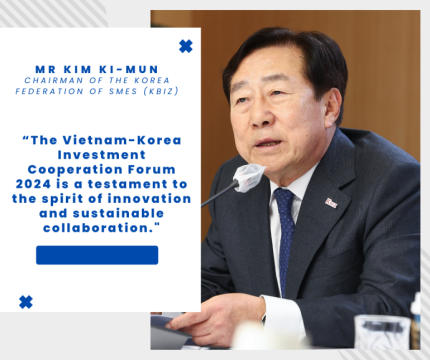
"The Vietnam-Korea Investment Cooperation Forum 2024 is a testament to the spirit of innovation and sustainable collaboration."
For Mr. Kim Ki-mun, Chairman of KBIZ, the Vietnam-Korea Investment Cooperation Forum 2024, scheduled for November 21, is not merely an event but also a testament to the spirit of innovation and sustainable collaboration between nations.