

Better data key to unlocking SME credit
- Business
- 08:43 12/11/2026
Transparent financial data and standardized credit profiles could help small and medium-sized enterprises access bank financing, while enabling lenders to assess repayment capacity without relaxing credit standards.
Speaking at the “Funding SMEs on Digital Platforms” conference in Hanoi on November 11, representatives from the State Bank of Vietnam (SBV) and Thien Minh Credit Rating Joint Stock Company highlighted information quality as a key link between businesses and lenders. Despite outstanding SME loans exceeding VND 4.1 trillion, many businesses still struggle to demonstrate their financial position and cash flow.
Credit growth, persistent information gaps
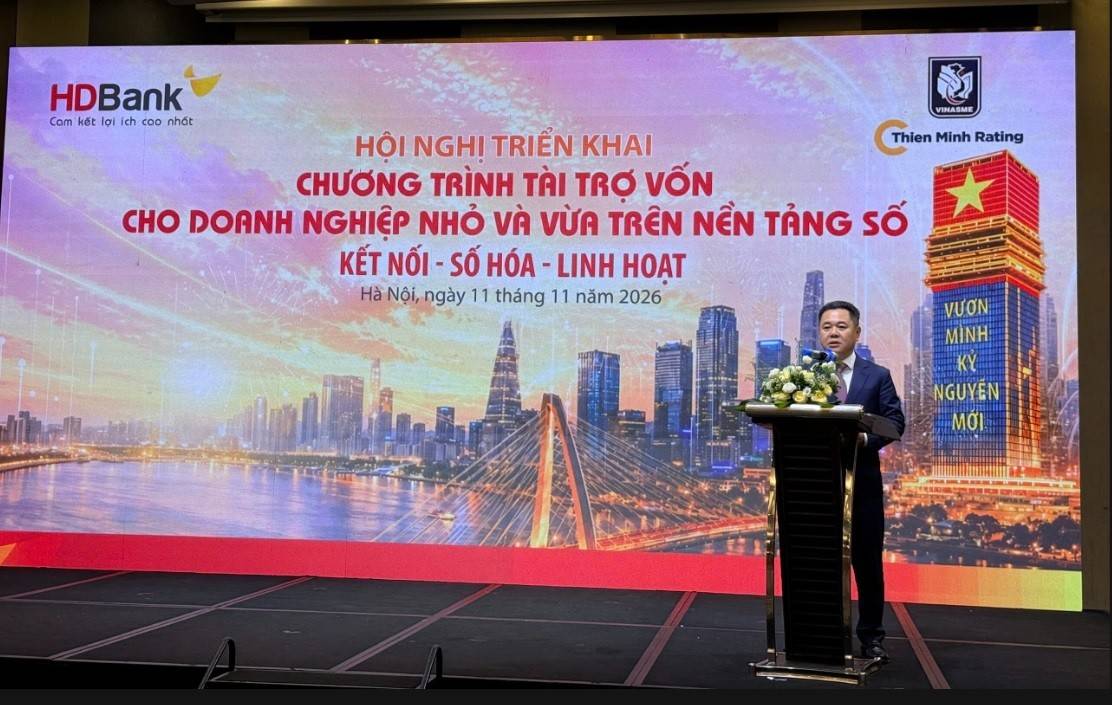
SBV Deputy Governor Nguyen Ngoc Canh said outstanding loans to SMEs stood at more than VND 4.1 trillion as of September 30, 2026, up approximately 14 per cent from the end of 2025. This exceeded the economy’s overall credit growth of 11.59 per cent.
SMEs accounted for approximately 20 per cent of total outstanding loans and 36 per cent of lending to businesses. Under credit programs supporting economic growth and SMEs, 20 commercial banks had announced preferential programs and products totaling approximately VND 416,000 billion, with VND 56,700 billion disbursed.
Access to capital nevertheless remains constrained, Mr. Canh acknowledged. Some businesses provide incomplete financial reports and insufficiently transparent cash flow information, while their production and business plans do not adequately demonstrate feasibility or repayment capacity.
Banks, meanwhile, face increasingly demanding information requirements under risk management standards. Unsecured lending requires a clear picture of a borrower’s finances, operating history, and repayment sources.
Addressing these gaps requires changes on both sides, according to the Deputy Governor. The SBV encourages lenders to place greater weight on business plans, cash flow, credit history, and business data, within their risk control capabilities. Enterprises must also take the initiative in improving financial transparency.
Data-driven appraisal, unchanged credit standards
Greater use of business data in credit appraisal does not mean lowering lending conditions or standards, Mr. Canh emphasized.
Banks must continue to assess financial capacity, the feasibility of plans for using borrowed funds, repayment ability, and risk management requirements. Data must be obtained and used lawfully, with customer consent and safeguards for information security and confidentiality.
For businesses, preparing a credit application should begin with day-to-day management. Mr. Canh urged enterprises to record economic transactions fully, use official payment accounts and payment methods, and provide banks with accurate information.
Sound cash flow management and financial transparency also support operational efficiency and competitiveness. Complete records give businesses a stronger basis for explaining revenue, expenses, and financing needs.
The Deputy Governor said the SBV Governor had assigned the Vietnam National Credit Information Center to develop a pilot project analyzing cash flow data for credit information activities. The project would be based on an assessment of connectivity with, and use of, legitimate data sources.
He also called for effective implementation of the collaboration between the Vietnam Association of Small and Medium Enterprises (VINASME), HDBank, and Thien Minh Rating. The parties should regularly review results, identify obstacles, and make adjustments, with a view to developing a model that can be replicated.
Reusable profiles to reduce repeated verification
From an independent assessment perspective, Thien Minh Rating representatives said SME financing difficulties extend beyond a lack of collateral. Unstandardized financial statements, limited credit histories, and fragmented records increase the time and cost of approaching banks.
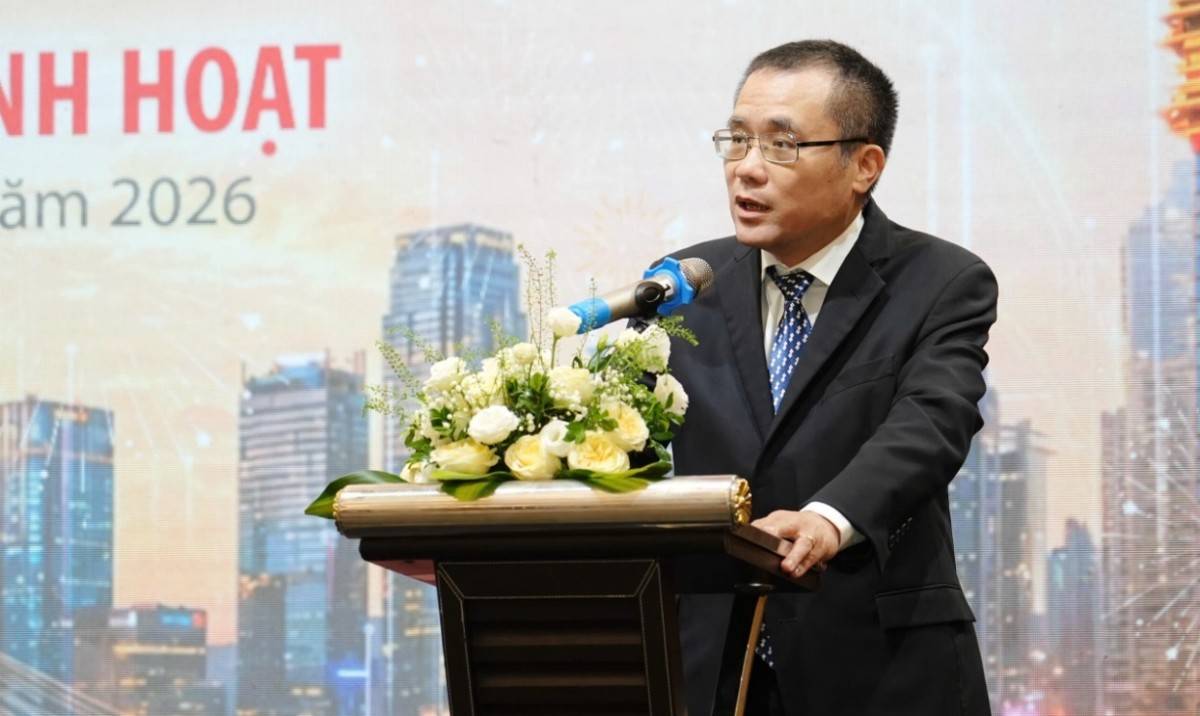
Businesses often have to submit and verify the same information again when working with another financial institution. Thien Minh Rating proposes standardizing data and conducting independent assessments to create credit profiles that can be reused with banks and other partners.
Its OmniHub platform combines digital profiles, data analytics, and credit rating expertise. Businesses can begin by verifying a digital profile through a QR code, then choose an independent risk assessment or credit rating according to their needs.
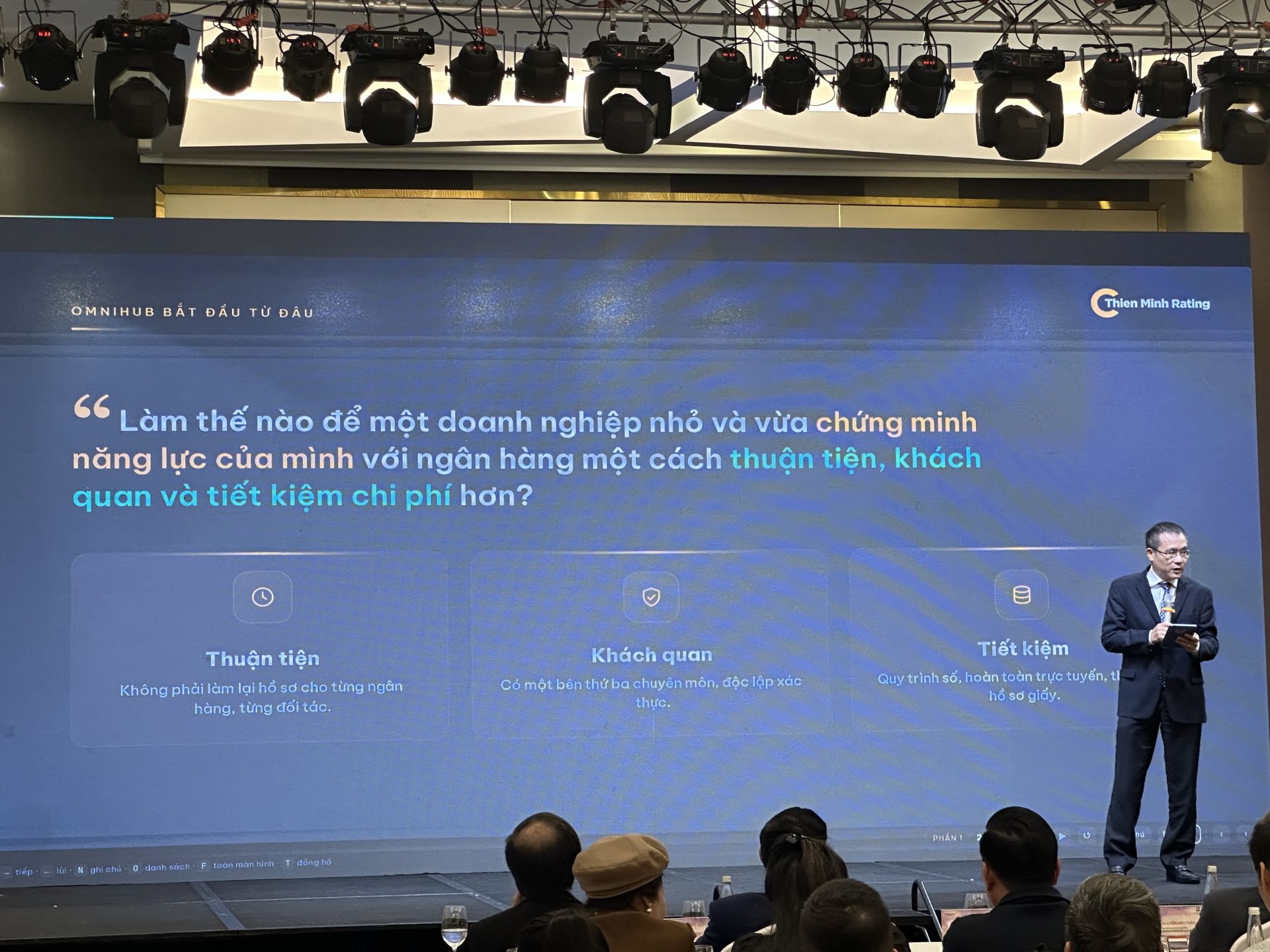
Thien Minh Rating describes the profile as a “passport of credibility”, intended to help businesses demonstrate their capabilities through standardized, verifiable information. For banks, the assessment offers an additional reference for appraisal, risk identification, and the design of financing solutions.
The platform does not replace a bank’s own appraisal, the company representative stressed. Credit approval and lending terms remain the bank’s responsibility.
Businesses retain control of data sharing
Data protection is a core requirement in OmniHub’s operation, according to Thien Minh Rating. Businesses must know how their information is used, who can access it, and the scope of any sharing.
Under the mechanism outlined by the company, only banks authorized by a business may view its profile and assessment results, within the agreed scope. Thien Minh Rating said it is committed to using data for the specified purposes and within permitted limits, in compliance with personal data protection laws.
The collaboration assigns distinct roles to each participant. VINASME connects the business community and helps enterprises prepare information; Thien Minh Rating provides the platform and independent assessments; and HDBank conducts appraisal and considers lending in accordance with regulations.
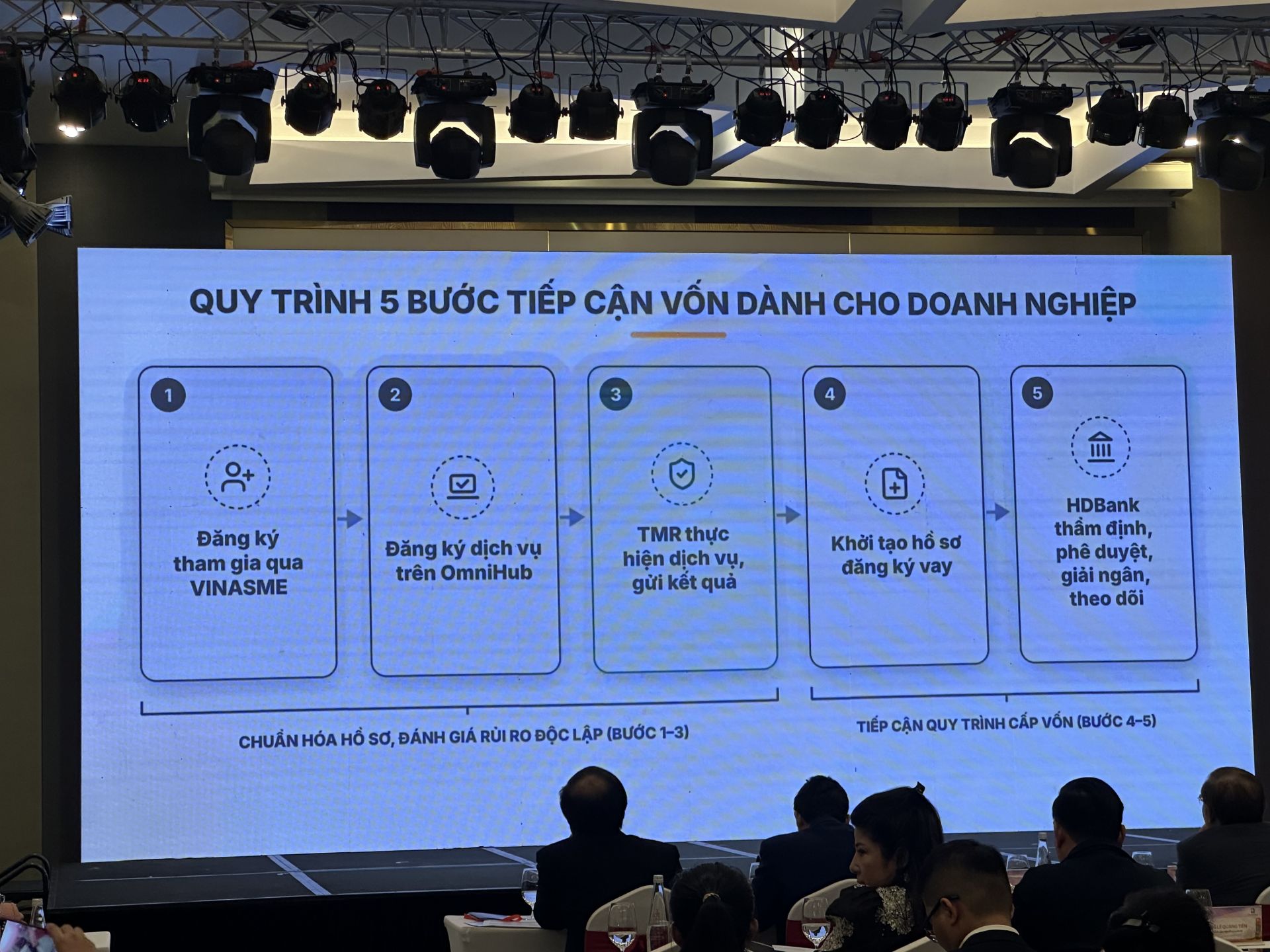
Information quality remains the common thread between regulatory requirements and the proposed credit rating solution. For SMEs, a profile grounded in actual operations, financing plans, and repayment capacity can clarify their case for credit. For banks, reliable data can broaden the basis for assessing borrowers while preserving lending safeguards.
Business & Integration - Vietnamese version: Minh bạch dòng tiền để mở cơ hội vay vốn cho doanh nghiệp nhỏ và vừa; reported by Bao Loan, illustrated by Tran Linh, additional photo reports by Hung Dung
Related news
- Vietnam ranks third in Southeast Asia in digital, AI competitiveness
- Better data key to unlocking SME credit
- VINASME calls for data-driven lending to improve SME access to credit
- Vietnam Makes It 10 Straight as Khanh Hoa Drives Golf Tourism Momentum
- Nine banks plan subsidiaries at Vietnam’s international financial center
- Ho Chi Minh City: A Story in Every Rhythm
- A democratic congress could reshape U.S. foreign policy, but President Donald Trump still holds the keys
- Vietnamese exporters face green standards hurdle in EU market
- Vietnam Police Sports Association Teams Up with 90,000-Strong Business Network to Boost Athletics
- Vietnam Foodexpo to host largest edition with over 500 businesses
- Vietnam seeks innovation-led growth amid shifting global economic landscape
- Vietnam PM proposes four initiatives to drive economic growth
- Autumn Economic Forum seeks new growth engines in AI era
- Vietnam Demands Results from Diplomacy
- HCMC pushes open innovation towards commercial gains
- Vietnam Emerges as a Standout Destination for Autumn Travel
- 2026 Autumn Economic Forum promoted on Seoul screens
- Margin lending drives HSC earnings as brokerage revenue tumbles
- Bepharco appoints 2002-born executive as CEO
- Vietnam financial center eyes November 2026 launch
Đọc thêm Business

Vietnam raises foreign commercial borrowing ceiling to 10 billion USD for 2026
The Vietnamese Government has raised the ceiling for medium- and long-term foreign commercial borrowing by enterprises and credit institutions to 10 billion USD in 2026.

VINASME calls for data-driven lending to improve SME access to credit
Business capacity, cash flow and repayment ability should play a greater role in credit assessment, alongside collateral, VINASME Chairman Nguyen Van Than told a conference in Hanoi on November 11.
Nine banks plan subsidiaries at Vietnam’s international financial center
Nine Vietnamese banks are moving to set up wholly owned subsidiaries at the Vietnam International Financial Center (VIFC), but must meet licensing requirements before they can begin operations.

Ho Chi Minh City seminar to examine green energy and industrial cost savings
Rooftop solar, direct power purchase agreements and energy storage will be the focus of a November 25 seminar in Ho Chi Minh City, with discussions centering on investment efficiency and cost optimization for industrial enterprises.

Polish food firms seek Vietnamese partners at HCMC event
Polish food companies showcased their products and met Vietnamese buyers in HCMC on Nov. 10, seeking partnerships to expand their presence in the local market.
Vietnamese exporters face green standards hurdle in EU market
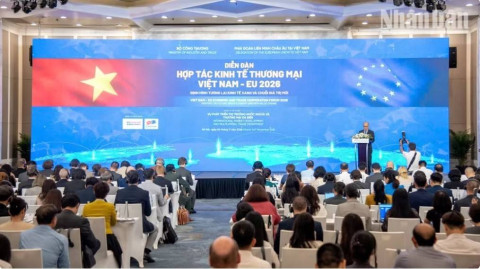
The Vietnam-EU Economic and Trade Cooperation Forum 2026 opened in Hanoi on Nov. 4 as bilateral ties entered a new phase. Beyond EVFTA opportunities, emissions cuts, supply chain transparency and technology transfer are becoming essential to Vietname

Asiago PDO Cheese and French Charcuterie Showcased in Hanoi: Bringing the Best of European Culinary Heritage to Vietnam
Industry representatives engage in discussions at the B2B Networking Event on October 30.

Vietnam seeks innovation-led growth amid shifting global economic landscape
Prime Minister of Vietnam Le Minh Hung has outlined Vietnam's strategy to strengthen economic resilience, accelerate innovation and enhance the competitiveness of domestic enterprises as global supply chains undergo significant restructuring.
Vietnam PM proposes four initiatives to drive economic growth
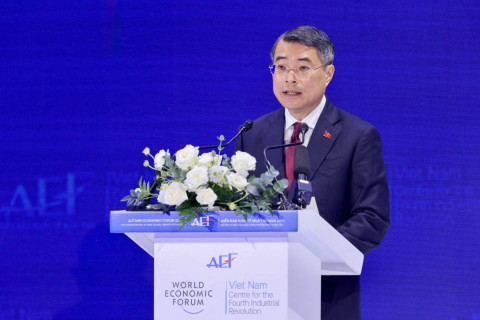
Prime Minister Le Minh Hung has proposed four areas of cooperation with international partners to boost innovation, develop high-tech talent, test emerging technologies and attract long-term investment.

Sacombank names banking veteran Nguyen Xuan Ai Quoc as deputy chief — with profits tipped to surge 111%
The seasoned financier, a son of late film star Tham Thuy Hang, joins as the Vietnamese lender targets rapid growth and a major debt recovery.