

Textile and garment exports to Africa: Modest value compared to potential
- Business
- 10:39 04/05/2022
DNHN - To avoid being scammed, paying due attention to business practices and language is important to help garment exporters conquer the African market.
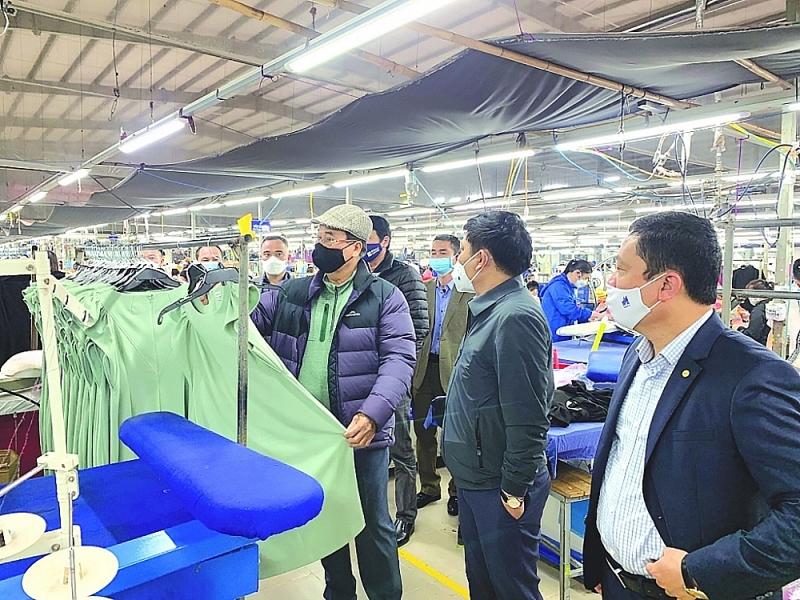
South Africa, Nigeria, Kenya in great demand
According to the Trade Promotion Department (Ministry of Industry and Trade), Africa has a large population and high consumer demand while intra-regional production has not yet developed.
In many African countries, the textile industry is still underdeveloped despite having an abundant source of raw cotton. This continent will become a promising consumer market for textiles, leather and footwear products due to the improved income of the people, diverse tastes and fashion preferences.
Notably, African countries, especially South Africa, Nigeria, and Kenya have great demand for textiles, garments, and footwear.
Mr. Le Hoang Tai, Deputy Director of the Trade Promotion Department, said that although Vietnam is one of the eight major textile and garment exporting countries in the world, the export value of this group of goods to Africa is still quite modest.
Talking to a reporter from Customs News, a representative of the Vietnam Textile and Apparel Association said that in 2021, Africa will import US$0.05 billion from Vietnam of textiles and garments, down 80.77% over the same period in 2020.
Meanwhile this market exports to Vietnam US$0.01 billion of textiles and garments, down 85.72% over the same period in 2020.
“Vietnam can increase exports of textiles, garments and footwear to Africa because this item has competitive advantages such as lower labor costs than many Asian countries, while sewing skills are good and productivity and quality are high. Notably, in addition to exporting to this market, Vietnamese enterprises can consider the possibility of investing in some major markets in Africa to take advantage of cheap and available labor and raw materials for the production of textiles and garments to serve the needs of the host country and for export," said Mr. Le Hoang Tai.
From the perspective of textile enterprises, Ms. Nguyen Thi Tuyet Mai, Deputy Secretary General of the Vietnam Textile and Apparel Association (VITAS), said that despite being affected by the Covid-19 pandemic, the African market for Vietnamese textile and garment products is still very large.
The region's economy has grown rapidly in recent years, leading to an increase in people's consumption demands, including textile products. Meanwhile, there are now 43 of 55 African countries participating in the World Trade Organization (WTO), so these countries have gradually removed non-tariff barriers as well as reduced import taxes.
Another factor mentioned by Ms. Nguyen Thi Tuyet Mai is that people in many African countries have sympathy for the people and achievements of Vietnam's socio-economic development. This is also an advantage for Vietnamese goods and Vietnamese textiles and garments to increase market share in this region.
“Hopefully African businesses can participate in investing in stages in the green and sustainable production chain of Vietnamese fashion products for cooperation and development. In contrast, Vietnamese textile and garment enterprises can also increase imports of raw cotton from West Africa, Central Africa, as well as research and invest in production in African countries to take advantage of raw material sources of these countries,” said Mai.
Be careful to avoid being scammed
Although the export potential of Vietnam's goods and textiles and garments to the African market is still large, the representative of the Vietnam Trade Office in many African countries recommends that Vietnamese enterprises need to be cautious in trade with African partners. Transaction fraud has occurred. The subject accepts any import offer from a Vietnamese enterprise or the subject offers to export to Vietnam at a low price, then asks to pay a fee/deposit.
In addition, in cooperation with the enterprise in Africa, Vietnamese enterprises need to pay attention to business practices, time, and especially language so that they can adjust their plans accordingly.
Mr. Tran Hung Cuong, a representative of the Vietnam Trade Office in Nigeria, said that in exporting to Nigeria, the phenomenon of fraud in business transactions in Nigeria and in West Africa is still common.
The forms of fraud of the subjects are quite diverse, which can be fraudulent in bidding on the import and export of goods. Notably, scammers often sign export contracts for Vietnamese enterprises, and deliver 1-2 contracts on time with good product quality to create trust. From the third contract, the subject asked the Vietnamese enterprise to transfer a deposit of 30-50% of the contract value, appropriate this amount and not deliver the goods.
In addition, businesses also face difficulties in payment when most West African countries use a form of payment with a certain level of risk. Thorough verification of partners is necessary to avoid risks when signing export and import contracts. Businesses should also apply the form of payment of the irrevocable letter of credit, payment at sight (L/C), the representative of the Vietnam Trade Office in Nigeria said.
Mr. Cuong recommended in the case of payment in the form of a deposit, businesses should ask their partners to deposit 30-50% of the value for new and first-time orders; should not transfer money in any form when requested by partners such as brokerage fees, attorney fees.
With import activities to Vietnam, businesses need to conduct an inspection of goods in the host country before putting the goods on board or hire reputable inspection companies to ensure quality. In the first stage, enterprises should go directly to meet suppliers and supervise the purchasing and loading of goods on the ship.
Source Customsnews
Related news
- Vietnam businesses face global test: reform at home, earn trust abroad
- Vietnam firms warned: transform within, build trust abroad or fall behind
- VCBC Chairman Steve Bui: Incentives have run their course — Vietnam enters an institutional race to attract the next generation of FDI
- Vietnamese Journalism in the Age of AI: How can reporters survive in the profession?
- Dr. Samuel Feldberg warns of risks that could reshape the global economic order and shares strategic advice for Vietnamese businesses
- VINASME organizes training program on risk control for sustainable business development amid uncertainty
- Vietnam’s International Financial Center looks beyond tax incentives to compete
- Expert Lại Thiên Phong: Localizing digital transformation – a new growth driver for Vietnam
- Are Vietnamese firms overlooking their most valuable “gold mine”?
- Iran Conflict and the “Double Shock” to the Global and Vietnamese Economies
- After 8 years and trillions sent abroad, are uST investors caught in a risky no-exit situation?
- When Cryptocurrency leaves the "Grey Zone": How are Vietnamese investors seeking profits?
- When the tech unicorn dream is undermined by reckless fundraising structures
- From New Year messages of World Leaders to the “new rules” of the Global economy in 2026
- Connecting Leaders, Shaping the Future: Strategic Leadership Planning Meeting – CorporateConnections Hanoi A
- Sunlight - Unilever Vietnam Recognized for Outstanding Contributions to the National Initiative Supporting Women Entrepreneurs
- Deputy Prime Minister Nguyễn Chí Dũng: “The country’s major challenges weigh heavily on my mind — and we must resolve them together.
- Unitsky String Technologies signs cooperation agreements with three Vietnamese partners, opening a new direction for smart mobility and sustainable development
- When artists do business – livelihood is no poetry!
- Before the D‑day to abolish flat‑rate tax: Fear of technology and costs leave small traders struggling to adapt
Đọc thêm Business

Vietnam businesses face global test: reform at home, earn trust abroad
Vietnamese companies must transform their leadership, teams and cultural outlook — then build trusted international networks — or risk losing ground to better-prepared global rivals.
Vietnam firms warned: transform within, build trust abroad or fall behind
Vietnamese companies must transform their leadership, teams and cultural outlook — then build trusted international networks — or risk losing ground to better-prepared global rivals.
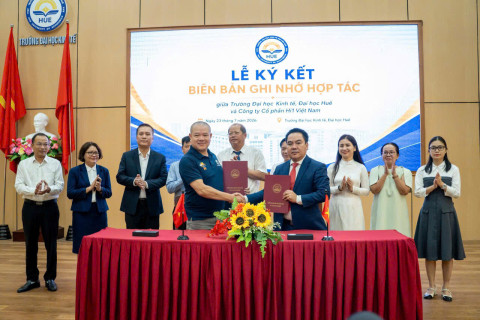
Hi1 and the digital brand ambassador mission: bringing millions of Vietnamese products onto digital platforms with 10,000 Hue students
As millions of OCOP products, local specialty goods and Vietnamese heritage brands continue to struggle to establish a meaningful presence in the digital marketplace, a groundbreaking new cooperation model has just been launched in Hue.
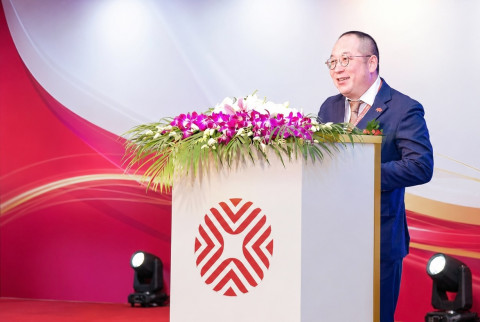
VCBC Chairman Steve Bui: Incentives have run their course — Vietnam enters an institutional race to attract the next generation of FDI
VCBC Chairman Steve Bui analyzes Vietnam's next-generation FDI strategy, stressing that the country must now compete on institutional quality, innovation, and stronger linkages between foreign and domestic enterprises.

Vietnamese Journalism in the Age of AI: How can reporters survive in the profession?
Few professions have faced a transformation as profound as journalism is experiencing today.
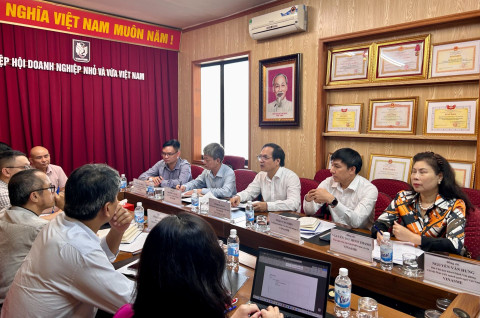
Businesses under pressure: Capital and talent shortages threaten competitiveness
The Vietnam Institute of Economics and World Affairs (VIEWA) recently held a working session with the Vietnam Association of Small and Medium Enterprises (VINASME) as part of a policy research and business support initiative.
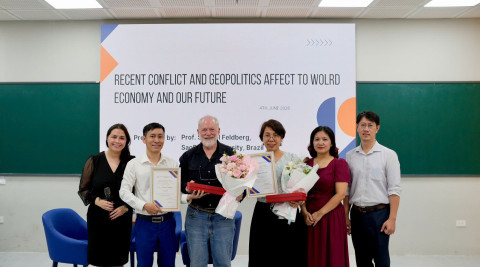
Dr. Samuel Feldberg warns of risks that could reshape the global economic order and shares strategic advice for Vietnamese businesses
Geopolitical tensions, technological transformation, trade fragmentation, and financial uncertainty are reshaping the global economy at an unprecedented pace.
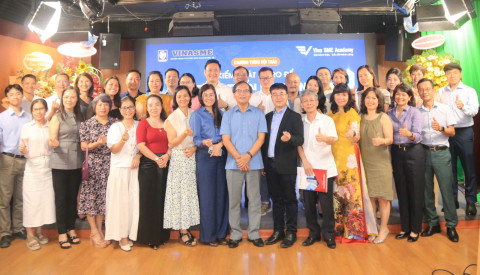
VINASME organizes training program on risk control for sustainable business development amid uncertainty
In the context of a rapidly changing economy, increasing competition, and accelerating digital transformation, risk management capability has become a critical factor determining the resilience and sustainable growth of businesses, particularly SMEs.
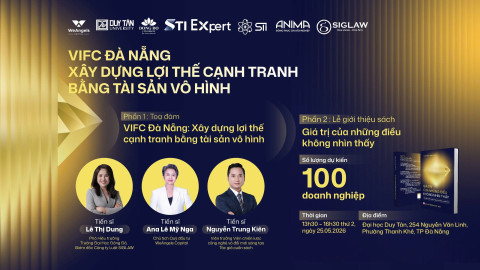
Vietnam’s International Financial Center looks beyond tax incentives to compete
What makes a city an international financial center? Is it skyscrapers, massive capital flows, or generous tax incentives?

CEO Nguyễn Tất Tùng: only by anchoring in culture and preserving national identity can Vietnamese entrepreneurs reach the world
In a setting imbued with the rich cultural essence of Kinh Bắc, the 15th anniversary celebration of Dragon Travel was far more than a typical corporate event.