

What truly defines corporate value in a rapidly evolving digital era?
- Business
- 00:36 18/03/2026
DNHN - In the digital age, corporate value is no longer confined to tangible assets but increasingly resides in brand equity, data, and knowledge - intangible assets that ultimately determine competitive strength.
The book “The Value of the Invisible” (Vietnamse name: “Giá trị của những điều không nhìn thấy”) by Dr. Nguyen Trung Kien offers a fresh perspective on corporate valuation in the digital era.
If all factories were dismantled and every piece of machinery and tangible asset sold off, what would still enable a company to command a billion-dollar valuation? The answer may surprise many: it lies in “invisible” assets, often overlooked and insufficiently managed.
Dr. Nguyen Trung Kien’s book raises a fundamental question for Vietnam’s business community: are companies neglecting their most valuable assets simply because they do not appear in conventional financial metrics?
For decades, corporate value was measured by what could be seen and immediately quantified—factories, production lines, real estate, and capital. This approach was well-suited to the industrial economy, where physical assets played a central role in growth.
However, as the world transitions into a knowledge-based and digital economy, this logic is rapidly evolving. Many of the world’s leading technology companies own relatively few factories or large-scale tangible assets, yet achieve valuations in the hundreds of billions of dollars. Their value lies in what cannot be physically touched: algorithms, data, patents, user ecosystems, and market trust. In essence, it is brand, data, knowledge, reputation, and innovation capacity that drive value.

This is also the central theme explored in Dr. Nguyen Trung Kien’s book. It comes at a time when the global economy is undergoing a profound shift toward knowledge- and technology-driven models, with intangible assets accounting for an increasing share of corporate value—not only globally but also in Vietnam.
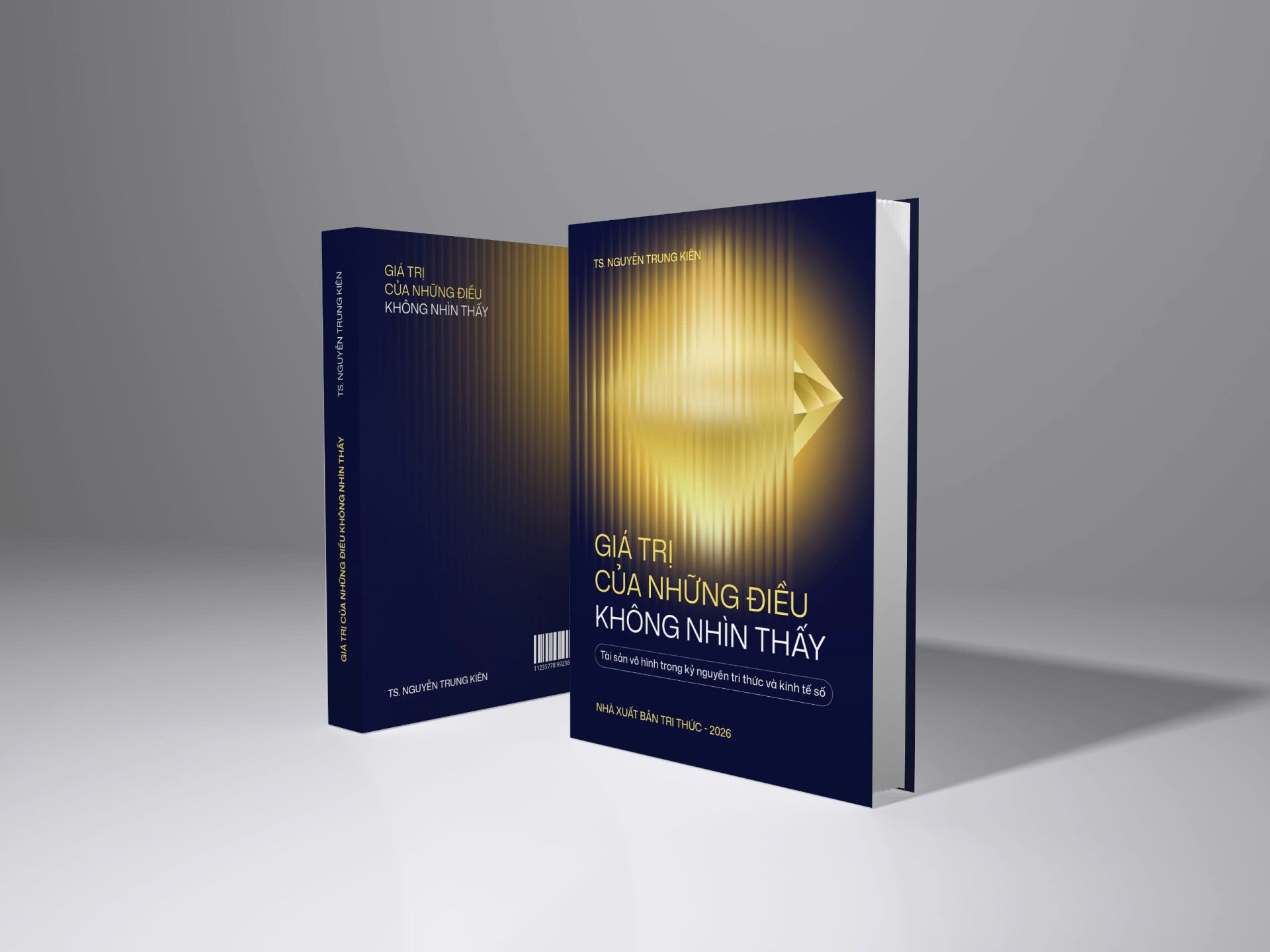
According to the author, focusing solely on tangible assets risks overlooking the largest portion of enterprise value. A brand built over years can generate a stronger competitive advantage than even the most advanced production line. A single invention or technology platform can open up entirely new markets. Customer data, though intangible can become a “gold mine” in the digital age.
Echoing this view, Dr. Nguyen The Tho, former Director General of the Market Surveillance Department at the State Securities Commission of Vietnam, noted that the rise of the digital economy is forcing both management and financial communities to rethink how businesses are valued.
“The transformation of the digital economy has rendered traditional valuation models insufficient to reflect a company’s true value. Sustainable corporate value lies not only in what can be immediately measured, but also in intangible assets, the ‘invisible’ factors that ultimately determine an organization’s strength and future,” he said.

Building on this reality, Dr. Nguyen Trung Kien’s book goes beyond highlighting the role of intangible assets. It also systematizes approaches to identifying and leveraging them. The author guides readers through multiple dimensions of intangible assets, including brand, intellectual property, data, organizational knowledge, and business ecosystems—factors that increasingly shape long-term competitiveness.
A distinctive feature of the book is its practical orientation. Rather than remaining purely theoretical, it introduces frameworks that enable businesses to quantify and manage these assets in real-world contexts. Brand valuation, intellectual property valuation, and data valuation models are presented as essential tools to help companies better understand their true assets.

From an international perspective, Dr. David Nguyen, Executive Chairman of VietCham Singapore and Regulus Investment and Capital Holdings, emphasized that a proper understanding of intangible assets is crucial for Vietnamese companies seeking deeper integration into the global market.
He noted: “The Value of the Invisible is a rigorous work that provides an actionable roadmap for businesses to transform knowledge and intangible assets into sustainable cash flow in the digital era.”
As Vietnam accelerates digital transformation and innovation, intangible assets are no longer a theoretical concept, they are directly linked to increasingly common business activities such as capital raising, mergers and acquisitions (M&A), international listings, and nation branding.
Many Vietnamese companies possess substantial intellectual value that remains under-recognized. Strong brands, long-developed customer data systems, and unique technologies are often not fully reflected in corporate valuation practices.
For this reason, Dr. Nguyen Trung Kien’s book serves not only as an important wake-up call but also as a practical guide, helping entrepreneurs plan, assess, and accurately value their intangible assets in the knowledge economy. It is widely regarded as a “strategic mindset roadmap” for modern business leaders navigating a volatile digital landscape.
Ultimately, the book’s greatest contribution may lie in a simple but powerful realization: what appears invisible may in fact form the foundation of the most sustainable value.
By Dr Nguyễn Thúy Lan Vietnamese Version: https://doanhnghiephoinhap.vn/dieu-gi-tao-nen-gia-tri-that-cua-doanh-nghiep-trong-ky-nguyen-so-day-bien-dong-129224.html |
Related news
- Vietnam businesses face global test: reform at home, earn trust abroad
- Vietnam firms warned: transform within, build trust abroad or fall behind
- VCBC Chairman Steve Bui: Incentives have run their course — Vietnam enters an institutional race to attract the next generation of FDI
- Vietnamese Journalism in the Age of AI: How can reporters survive in the profession?
- Dr. Samuel Feldberg warns of risks that could reshape the global economic order and shares strategic advice for Vietnamese businesses
- VINASME organizes training program on risk control for sustainable business development amid uncertainty
- Vietnam’s International Financial Center looks beyond tax incentives to compete
- Expert Lại Thiên Phong: Localizing digital transformation – a new growth driver for Vietnam
- Are Vietnamese firms overlooking their most valuable “gold mine”?
- Iran Conflict and the “Double Shock” to the Global and Vietnamese Economies
- After 8 years and trillions sent abroad, are uST investors caught in a risky no-exit situation?
- When Cryptocurrency leaves the "Grey Zone": How are Vietnamese investors seeking profits?
- When the tech unicorn dream is undermined by reckless fundraising structures
- From New Year messages of World Leaders to the “new rules” of the Global economy in 2026
- Connecting Leaders, Shaping the Future: Strategic Leadership Planning Meeting – CorporateConnections Hanoi A
- Sunlight - Unilever Vietnam Recognized for Outstanding Contributions to the National Initiative Supporting Women Entrepreneurs
- Deputy Prime Minister Nguyễn Chí Dũng: “The country’s major challenges weigh heavily on my mind — and we must resolve them together.
- Unitsky String Technologies signs cooperation agreements with three Vietnamese partners, opening a new direction for smart mobility and sustainable development
- When artists do business – livelihood is no poetry!
- Before the D‑day to abolish flat‑rate tax: Fear of technology and costs leave small traders struggling to adapt
Đọc thêm Business
Vietnam businesses face global test: reform at home, earn trust abroad
Vietnamese companies must transform their leadership, teams and cultural outlook — then build trusted international networks — or risk losing ground to better-prepared global rivals.
Vietnam firms warned: transform within, build trust abroad or fall behind
Vietnamese companies must transform their leadership, teams and cultural outlook — then build trusted international networks — or risk losing ground to better-prepared global rivals.
Hi1 and the digital brand ambassador mission: bringing millions of Vietnamese products onto digital platforms with 10,000 Hue students
As millions of OCOP products, local specialty goods and Vietnamese heritage brands continue to struggle to establish a meaningful presence in the digital marketplace, a groundbreaking new cooperation model has just been launched in Hue.
VCBC Chairman Steve Bui: Incentives have run their course — Vietnam enters an institutional race to attract the next generation of FDI
VCBC Chairman Steve Bui analyzes Vietnam's next-generation FDI strategy, stressing that the country must now compete on institutional quality, innovation, and stronger linkages between foreign and domestic enterprises.
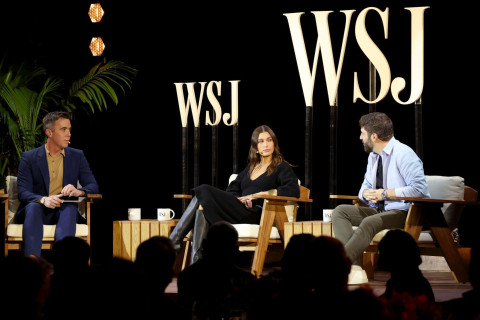
Vietnamese Journalism in the Age of AI: How can reporters survive in the profession?
Few professions have faced a transformation as profound as journalism is experiencing today.

Businesses under pressure: Capital and talent shortages threaten competitiveness
The Vietnam Institute of Economics and World Affairs (VIEWA) recently held a working session with the Vietnam Association of Small and Medium Enterprises (VINASME) as part of a policy research and business support initiative.
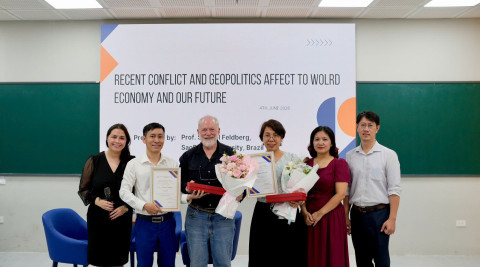
Dr. Samuel Feldberg warns of risks that could reshape the global economic order and shares strategic advice for Vietnamese businesses
Geopolitical tensions, technological transformation, trade fragmentation, and financial uncertainty are reshaping the global economy at an unprecedented pace.
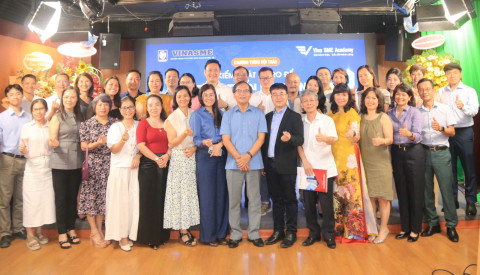
VINASME organizes training program on risk control for sustainable business development amid uncertainty
In the context of a rapidly changing economy, increasing competition, and accelerating digital transformation, risk management capability has become a critical factor determining the resilience and sustainable growth of businesses, particularly SMEs.
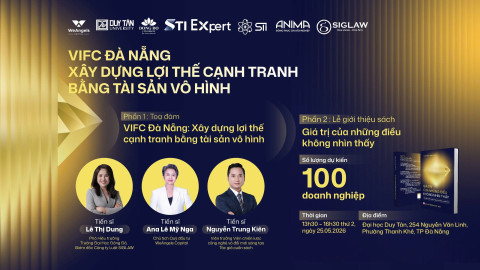
Vietnam’s International Financial Center looks beyond tax incentives to compete
What makes a city an international financial center? Is it skyscrapers, massive capital flows, or generous tax incentives?
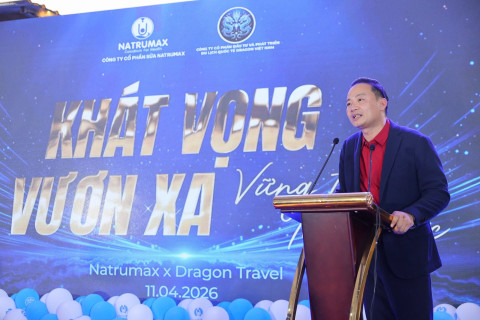
CEO Nguyễn Tất Tùng: only by anchoring in culture and preserving national identity can Vietnamese entrepreneurs reach the world
In a setting imbued with the rich cultural essence of Kinh Bắc, the 15th anniversary celebration of Dragon Travel was far more than a typical corporate event.