

How do mobilize and focus resources for green growth in Vietnam?
- Business
- 16:04 19/04/2022
DNHN - How to mobilize and gather resources for green growth in Vietnam is a very important question at this time. This is also a topic discussed at the Vietnam Development Bridge Forum 2022 (Vietnam Connect) recently held in Ho Chi Minh City.
Strong commitment to net zero emissions by 2050 at the United Nations Climate Change Summit (COP 26) and the Socio-Economic Development and Recovery Program approved by the Government promulgated on January 30, 2022, also affirms the determination to develop a "green economy, circular economy associated with sustainable development".
Three key breakthroughs in institutions, human resources, and infrastructure are required to accomplish these goals, with an emphasis on innovation, research, and technological development.
This lays the groundwork for Vietnam to utilize resources effectively, strengthen its management and coordination capabilities in finance and technology, and promote the community's, business sector's, and international organizations' participation in the implementation of sustainable development goals.
According to calculations by the Ministry of Planning and Investment and the World Bank, to implement the green growth strategy by 2030, Vietnam is expected to need about 30 billion USD, of which the State budget can only meet the maximum 30%, the remaining 70% comes from other sources, mainly the private sector.
With a commitment to reducing greenhouse gas emissions, analysts believe that Vietnam will reap numerous benefits in terms of investor attraction. Indeed, as part of COP26 events, financial institutions committed to investing billions of dollars in Vietnam's green growth initiatives and projects.
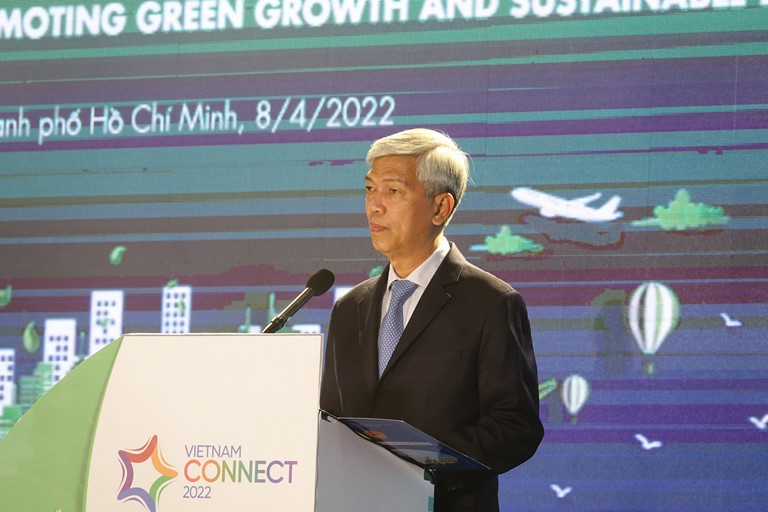
Speaking at the Forum, Dr Ta Dinh Thi, Member of the 15th National Assembly and Vice Chairman of the National Assembly's Committee for Science, Technology and Environment, stated that in the National Assembly's resolutions on socio-economic development in the 2021-2025 period, the views and cross-cutting goals of the Party and State are to ensure fast and sustainable economic growth and to restructure the economy in association with renovating the growth model in the direction of ensuring macro stability.
According to Mr Alan Cany - President of the European Business Association in Vietnam, green finance is everywhere and the challenge is how to get the project funded.
"To solve this problem, I think the first is the perspective of policies and decrees; the second is the cooperation mechanism between foreign investors and domestic enterprises: One side brings technology, the other brings technology. infrastructure and understanding the local situation," he said.
To continue on the path toward economic recovery, rapid growth, and sustainable development, the leader of Ho Chi Minh City's People's Committee stated that the city will adopt numerous measures concurrently in the next months.
Accordingly, the city will focus on effectively implementing 51 programs and projects in 3 breakthrough programs and one key program (including a breakthrough program on city management innovation; development of city infrastructure; a breakthrough program on human resource development and city culture; key program on development of start-ups and innovation).
The city continues to innovate its growth model to accelerate and sustainably build the city's economy through strong research, application of science, technology, and innovation, as well as increased workforce productivity. Develop the city into a regional and international financial centre by implementing the project.
Located in a key area for the production of rice, aquatic products and fruit trees in the region, with 70% of the population living on agriculture, Mr Huynh Minh Tuan, Vice Chairman of Dong Thap Provincial People's Committee, said 10 years ago, the province saw the need to restructure agriculture.
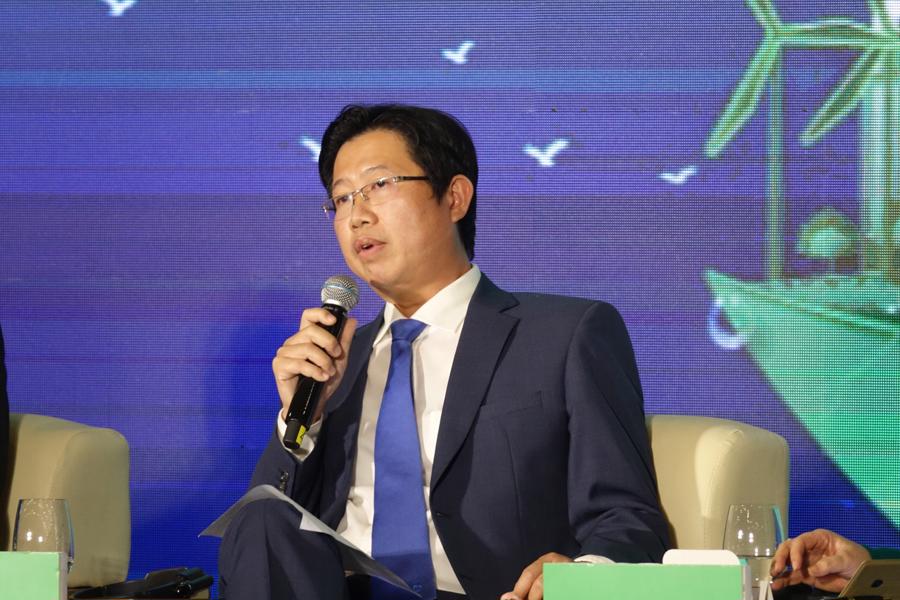
Therefore, Dong Thap province has issued a plan to restructure the agricultural sector methodically. Thereby, increasing the value of agricultural production, at the same time, reducing greenhouse gas emissions. People also reduce the use of pesticides and fertilizers in production, then produce clean, high-quality products, meeting the needs and current consumer trends in the market.
As one of seven provinces in the Mekong Delta bordering the sea, the marine economy is identified as one of the five growth engines of Bac Lieu province.
MMsCao Xuan Thu Van, Vice Chairman of the Bac Lieu Provincial People's Committee, stated emphatically that the province has set its route toward being a clean energy centre.
The province puts each offshore wind energy pole first, completing the arduous tasks first, before moving to the mainland, because people will be fearful of using land onshore. Bac Lieu recently completed eight wind energy projects with a combined capacity of almost 500 MW.
“When it comes to digital transformation, or green growth, sustainable development, the first thing to consider is that 70% of Bac Lieu's population are farmers. Do they agree and understand the local development strategy?", the leader of Bac Lieu province explained. Because of resources for development, green growth depends largely, up to 70% on the private sector, but the object of impact on 70% is farmers.
Therefore, "must change thinking systematically, not only leaders but also people understand this policy, thereby creating a ripple effect for people to support", Ms Van revealed.
There are also many advantages to developing comprehensive agriculture, the leaders of Bac Lieu province are also concerned: Are there conflicts in salt production, shrimp farming, and electricity production?
"To solve this problem, the only way is to change technology," the leader of Bac Lieu province emphasized. Accordingly, traditional shrimp farming becomes a centre of high-tech production, using less water, and causing less environmental pollution, so that other industries can benefit. At this time, people produce rice and shrimp without using antibiotics. Enterprises make large investments and spend more resources to invest in hi-tech shrimp farming.
Vietnamese goal in this period is to achieve an average 5-year GDP growth rate of about 6.5 - 7%, the digital economy to reach about 20% of GDP; the rate of trained workers with degrees and certificates is 28-30%; 100% of establishments causing serious environmental pollution are completely treated; the rate of collection and treatment of urban solid waste must meet standards and regulations at 90%; forest coverage rate is not lower than 42%.
According to the deputy of the National AssAssembly accomplish the National Assembly's objectives, the demand for "Resource convergence" and transition to a model of "Green growth" in the context of safe adaptation, flexibility, and control The success of the Covid-19 epidemic is critical for long-term remedies aimed at increasing the country's economic resilience and sustainable growth.
Vietnam also quickly identified green growth as the way to sustainable development and has made strenuous political commitments to implementing the sustainable development goals.
The policy on "Green growth" is reflected in the National Green Growth Strategy for the period 2011 - 2020 and a vision to 2050 in Decision No. 1393/QD-TTG dated September 25, 2012, by the Prime Minister. The Government and the National Green Growth Action Plan for the period 2014 - 2020 in Decision No. 403/QD-TTG dated March 20, 2014.
Green growth, in particular, is defined as growth that is based on the process of changing the growth model, restructuring the economy to capitalize on comparative advantages, increasing the economy's efficiency and competitiveness through advanced technology research and application, development of modern infrastructure systems to efficiently use natural resources, reduce greenhouse gas emissions, adapt to climate change, and contribute to poverty alleviation.
Lâm Nghi
Related news
- Vietnam businesses face global test: reform at home, earn trust abroad
- Vietnam firms warned: transform within, build trust abroad or fall behind
- VCBC Chairman Steve Bui: Incentives have run their course — Vietnam enters an institutional race to attract the next generation of FDI
- Vietnamese Journalism in the Age of AI: How can reporters survive in the profession?
- Dr. Samuel Feldberg warns of risks that could reshape the global economic order and shares strategic advice for Vietnamese businesses
- VINASME organizes training program on risk control for sustainable business development amid uncertainty
- Vietnam’s International Financial Center looks beyond tax incentives to compete
- Expert Lại Thiên Phong: Localizing digital transformation – a new growth driver for Vietnam
- Are Vietnamese firms overlooking their most valuable “gold mine”?
- Iran Conflict and the “Double Shock” to the Global and Vietnamese Economies
- After 8 years and trillions sent abroad, are uST investors caught in a risky no-exit situation?
- When Cryptocurrency leaves the "Grey Zone": How are Vietnamese investors seeking profits?
- When the tech unicorn dream is undermined by reckless fundraising structures
- From New Year messages of World Leaders to the “new rules” of the Global economy in 2026
- Connecting Leaders, Shaping the Future: Strategic Leadership Planning Meeting – CorporateConnections Hanoi A
- Sunlight - Unilever Vietnam Recognized for Outstanding Contributions to the National Initiative Supporting Women Entrepreneurs
- Deputy Prime Minister Nguyễn Chí Dũng: “The country’s major challenges weigh heavily on my mind — and we must resolve them together.
- Unitsky String Technologies signs cooperation agreements with three Vietnamese partners, opening a new direction for smart mobility and sustainable development
- When artists do business – livelihood is no poetry!
- Before the D‑day to abolish flat‑rate tax: Fear of technology and costs leave small traders struggling to adapt
Đọc thêm Business

Vietnam businesses face global test: reform at home, earn trust abroad
Vietnamese companies must transform their leadership, teams and cultural outlook — then build trusted international networks — or risk losing ground to better-prepared global rivals.
Vietnam firms warned: transform within, build trust abroad or fall behind
Vietnamese companies must transform their leadership, teams and cultural outlook — then build trusted international networks — or risk losing ground to better-prepared global rivals.
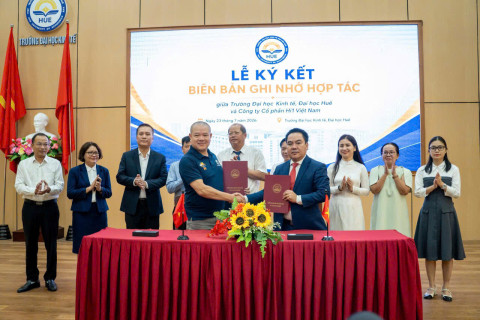
Hi1 and the digital brand ambassador mission: bringing millions of Vietnamese products onto digital platforms with 10,000 Hue students
As millions of OCOP products, local specialty goods and Vietnamese heritage brands continue to struggle to establish a meaningful presence in the digital marketplace, a groundbreaking new cooperation model has just been launched in Hue.
VCBC Chairman Steve Bui: Incentives have run their course — Vietnam enters an institutional race to attract the next generation of FDI
VCBC Chairman Steve Bui analyzes Vietnam's next-generation FDI strategy, stressing that the country must now compete on institutional quality, innovation, and stronger linkages between foreign and domestic enterprises.

Vietnamese Journalism in the Age of AI: How can reporters survive in the profession?
Few professions have faced a transformation as profound as journalism is experiencing today.
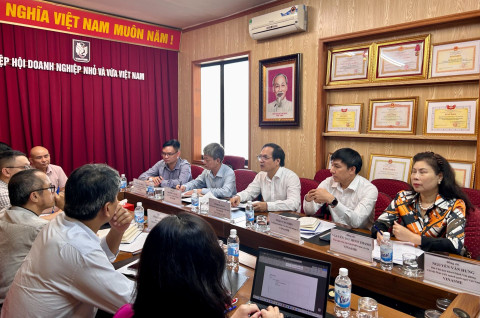
Businesses under pressure: Capital and talent shortages threaten competitiveness
The Vietnam Institute of Economics and World Affairs (VIEWA) recently held a working session with the Vietnam Association of Small and Medium Enterprises (VINASME) as part of a policy research and business support initiative.
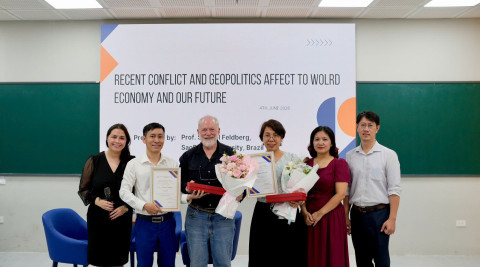
Dr. Samuel Feldberg warns of risks that could reshape the global economic order and shares strategic advice for Vietnamese businesses
Geopolitical tensions, technological transformation, trade fragmentation, and financial uncertainty are reshaping the global economy at an unprecedented pace.
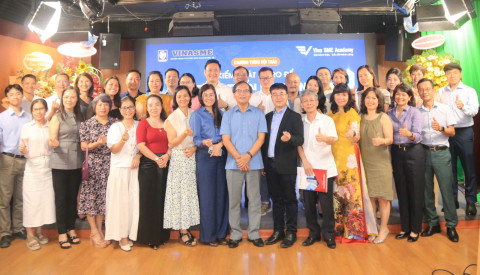
VINASME organizes training program on risk control for sustainable business development amid uncertainty
In the context of a rapidly changing economy, increasing competition, and accelerating digital transformation, risk management capability has become a critical factor determining the resilience and sustainable growth of businesses, particularly SMEs.
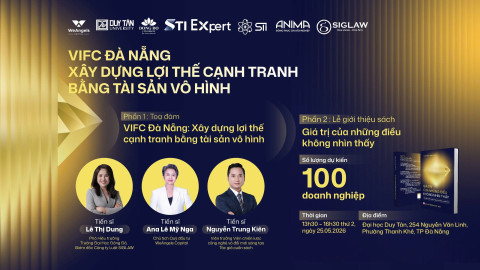
Vietnam’s International Financial Center looks beyond tax incentives to compete
What makes a city an international financial center? Is it skyscrapers, massive capital flows, or generous tax incentives?

CEO Nguyễn Tất Tùng: only by anchoring in culture and preserving national identity can Vietnamese entrepreneurs reach the world
In a setting imbued with the rich cultural essence of Kinh Bắc, the 15th anniversary celebration of Dragon Travel was far more than a typical corporate event.