DNHN - European business confidence in Vietnam’s investment environment continued to rise at the start of 2022, according to the website Fibre2Fashion.com.
Illustrative image
The website cited the business climate index (BCI) from the European Chamber of Commerce in Vietnam (EuroCham) conducted by YouGov as showing that for the first quarter of 2022, the index climbed to 73 points, once again reaching its highest point after the fourth wave of the pandemic.
This is a 12-point increase compared to the fourth quarter of 2021, in addition to nearly 58 points of growth compared to the third quarter, with business leaders now more upbeat after the relaxation of Vietnam’s pandemic-related restrictions and the continued acceleration of its economic development, EuroCham Vietnam said in a press release.
European business leaders are generally showing increasingly improving attitudes towards the prospective growth of Vietnam’s economy as well.
More than two-thirds of respondents now believe that the Vietnam ese economy is more likely to stabilise and improve in the second quarter of 2022, compared to 58 percent who held this view in the fourth quarter of 2021.
European business stakeholders also indicated ambitious second quarter projections for their companies, especially when compared to projections made for the first quarter.
Nearly 66 per cent of respondents are expecting increased revenue for the second quarter of the year, compared to 52 percent three months earlier. Likewise, more than 46 percent of respondents are forecasting headcount increases for next quarter. The BCI is a regular barometer of European business leaders and investors. This research was first conducted in 2013 and has been carried out by YouGov since 2020.
Vietnamese companies must transform their leadership, teams and cultural outlook — then build trusted international networks — or risk losing ground to better-prepared global rivals.
Vietnamese companies must transform their leadership, teams and cultural outlook — then build trusted international networks — or risk losing ground to better-prepared global rivals.
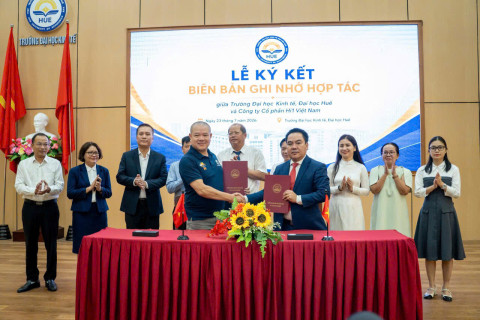
As millions of OCOP products, local specialty goods and Vietnamese heritage brands continue to struggle to establish a meaningful presence in the digital marketplace, a groundbreaking new cooperation model has just been launched in Hue.
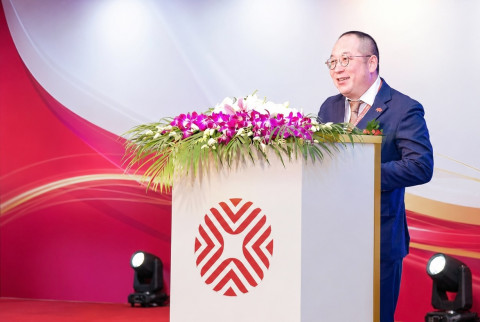
VCBC Chairman Steve Bui analyzes Vietnam's next-generation FDI strategy, stressing that the country must now compete on institutional quality, innovation, and stronger linkages between foreign and domestic enterprises.
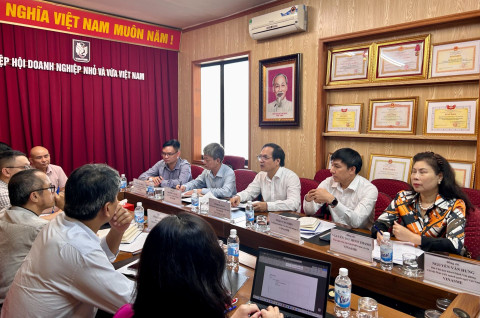
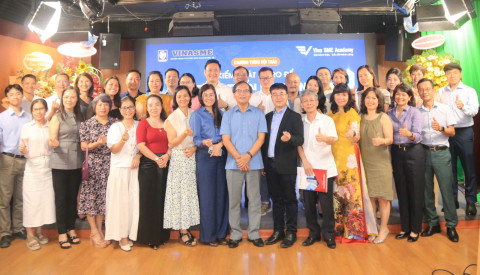
The Vietnam Institute of Economics and World Affairs (VIEWA) recently held a working session with the Vietnam Association of Small and Medium Enterprises (VINASME) as part of a policy research and business support initiative.
Geopolitical tensions, technological transformation, trade fragmentation, and financial uncertainty are reshaping the global economy at an unprecedented pace.
In the context of a rapidly changing economy, increasing competition, and accelerating digital transformation, risk management capability has become a critical factor determining the resilience and sustainable growth of businesses, particularly SMEs.
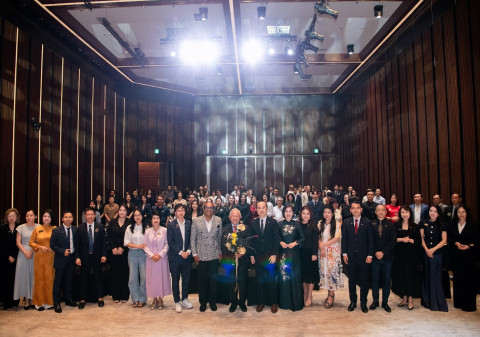
In a setting imbued with the rich cultural essence of Kinh Bắc, the 15th anniversary celebration of Dragon Travel was far more than a typical corporate event.