

Enterprises urged to make preparations to take opportunities from RCEP
- Business
- 10:17 21/04/2022
DNHN - Experts urged enterprises to make preparations to be able to take opportunities arising from the Regional Comprehensive Economic Partnership (RCEP).
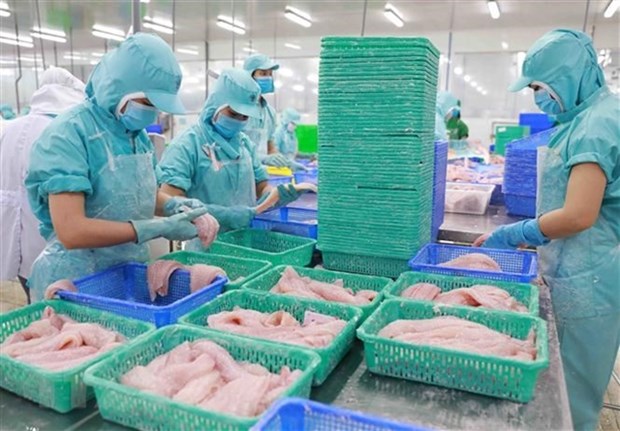
Experts urged enterprises to make preparations to be able to take opportunities arising from the Regional Comprehensive Economic Partnership (RCEP).
Nguyen Anh Duong from the Central Institute for Economic Management (CIEM) spoke at a conference about the world’s largest trade deal on April 19, saying that enterprises needed a strategy to improve their export capacity not only in terms of price but also in quality to meet new requirements in RCEP markets.
“Most Vietnamese enterprises do not have a habit of making preparations for future policy changes,” Duong said, adding only when the regulations were in force, would enterprises find a way to meet them.
“The story is not simply producing and selling what we have but to develop business plans based on the understanding of the market, regulations and tastes,” he said.
Duong said the Government should also increase support for enterprises in some aspects that they are unable to do on their own.
For example, in 2012-2013, Vietnam was among the first economies to receive fruit preservation technology transfer from Japan, which paved the way for Vietnamese fruits to enter the Japanese market. It was clear that the Government-level exchange to establish trust between the two sides was important to achieve this success, he added.
RCEP was not only a trade and investment agreement but also a bridge to link Vietnam with the regional production network and supply chain, Duong said.
RCEP opened a new chapter in the cooperation of Vietnam with the region, which would help increase exports, and increase revenue for the economy with the reduction of tariff and non-tariff barriers to facilitate trade.
In the context that Asia was recovering quite quickly after the COVID-19 pandemic, RCEP would help Vietnam to reduce the risk of “getting out of tune” with the economic recovery process.
Nguyen Thi Thu Trang, Director of the WTO and Integration Centre under the Vietnam Chamber of Commerce and Industry (VCCI), said that in the long-term, RCEP would establish a new supply chain in the region and Vietnam would become an important link, which would bring large opportunities for export expansion.
In addition, when the supply chain was established, there would be less risk for the impositions of trade defence measures, she said.
RCEP, a mega trade deal among 15 Asia-Pacific countries, took effect at the beginning of this year and was paving the way for the creation of the world’s largest free trade area with a market altogether accounting for 30 percent of the world’s population and nearly 30 percent of global GDP.
Currently, 64 percent of tariff lines have been removed, which would be increased to at least 90 percent in the next 15-20 years.
The long roadmap for tariff liberation would give time for enterprises to make preparations and take opportunities arising from the trade deal, Trang said.
A recent report by the World Bank revealed that Vietnam was forecast to enjoy the highest trade and income gains among members of RCEP.
The average trade-weighted tariff imposed by Vietnam declined from 0.8 percent to 0.2 percent while the tariffs faced by the country were reduced from 0.6 percent to 0.1 percent between 2000 and 2035.
In the most optimistic scenario, where all benefits were applied, Vietnam had the highest gains of all RCEP member countries, newswire Vietnam Briefing cited the report as saying. Vietnam’s income levels increased by 4.9 percent relative to the baseline, higher than other countries, where the income level increased by 2.5 percent.
Trade also increased the most in this scenario, with exports expanding by 11.4 percent and imports by 9.2 percent, relative to the baseline.
All RCEP member countries would see increases in exports and imports. Vietnam’s exports were expected to expand by 11.4 percent and imports by 9.2 percent.
According to the WB’s report, RCEP also provides an opportunity to promote growth and support recovery after the COVID-19 pandemic.
The WB report said that the simplification of procedures such as customs and rules of origin would help reduce bureaucracy, allowing more small and medium enterprises (SMEs) to participate. These enterprises account for 98 percent of the total number of enterprises in Vietnam, contributing 40 percent of GDP. Thus, RCEP would offer a chance for Vietnamese SMEs to enhance the value chain.
Vietnam's economic growth will come from a deeper and more inclusive commitment through RCEP intra-regional trade, common rules of origin and greater openness to goods and services in accessing markets, especially the Chinese market, it said.
Source VNA
Related news
- Vietnam businesses face global test: reform at home, earn trust abroad
- Vietnam firms warned: transform within, build trust abroad or fall behind
- VCBC Chairman Steve Bui: Incentives have run their course — Vietnam enters an institutional race to attract the next generation of FDI
- Vietnamese Journalism in the Age of AI: How can reporters survive in the profession?
- Dr. Samuel Feldberg warns of risks that could reshape the global economic order and shares strategic advice for Vietnamese businesses
- VINASME organizes training program on risk control for sustainable business development amid uncertainty
- Vietnam’s International Financial Center looks beyond tax incentives to compete
- Expert Lại Thiên Phong: Localizing digital transformation – a new growth driver for Vietnam
- Are Vietnamese firms overlooking their most valuable “gold mine”?
- Iran Conflict and the “Double Shock” to the Global and Vietnamese Economies
- After 8 years and trillions sent abroad, are uST investors caught in a risky no-exit situation?
- When Cryptocurrency leaves the "Grey Zone": How are Vietnamese investors seeking profits?
- When the tech unicorn dream is undermined by reckless fundraising structures
- From New Year messages of World Leaders to the “new rules” of the Global economy in 2026
- Connecting Leaders, Shaping the Future: Strategic Leadership Planning Meeting – CorporateConnections Hanoi A
- Sunlight - Unilever Vietnam Recognized for Outstanding Contributions to the National Initiative Supporting Women Entrepreneurs
- Deputy Prime Minister Nguyễn Chí Dũng: “The country’s major challenges weigh heavily on my mind — and we must resolve them together.
- Unitsky String Technologies signs cooperation agreements with three Vietnamese partners, opening a new direction for smart mobility and sustainable development
- When artists do business – livelihood is no poetry!
- Before the D‑day to abolish flat‑rate tax: Fear of technology and costs leave small traders struggling to adapt
Đọc thêm Business

Vietnam businesses face global test: reform at home, earn trust abroad
Vietnamese companies must transform their leadership, teams and cultural outlook — then build trusted international networks — or risk losing ground to better-prepared global rivals.
Vietnam firms warned: transform within, build trust abroad or fall behind
Vietnamese companies must transform their leadership, teams and cultural outlook — then build trusted international networks — or risk losing ground to better-prepared global rivals.
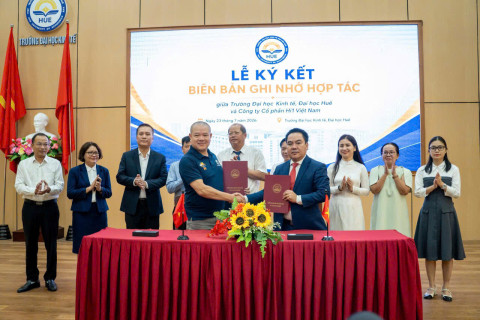
Hi1 and the digital brand ambassador mission: bringing millions of Vietnamese products onto digital platforms with 10,000 Hue students
As millions of OCOP products, local specialty goods and Vietnamese heritage brands continue to struggle to establish a meaningful presence in the digital marketplace, a groundbreaking new cooperation model has just been launched in Hue.
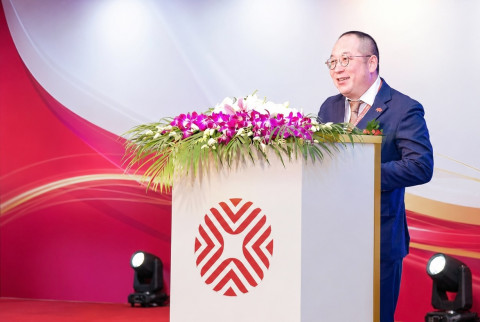
VCBC Chairman Steve Bui: Incentives have run their course — Vietnam enters an institutional race to attract the next generation of FDI
VCBC Chairman Steve Bui analyzes Vietnam's next-generation FDI strategy, stressing that the country must now compete on institutional quality, innovation, and stronger linkages between foreign and domestic enterprises.
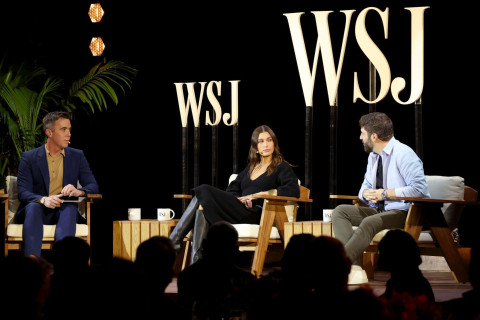
Vietnamese Journalism in the Age of AI: How can reporters survive in the profession?
Few professions have faced a transformation as profound as journalism is experiencing today.
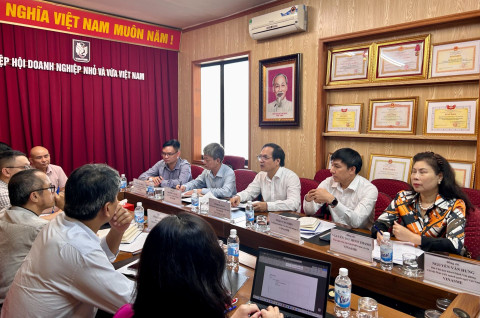
Businesses under pressure: Capital and talent shortages threaten competitiveness
The Vietnam Institute of Economics and World Affairs (VIEWA) recently held a working session with the Vietnam Association of Small and Medium Enterprises (VINASME) as part of a policy research and business support initiative.
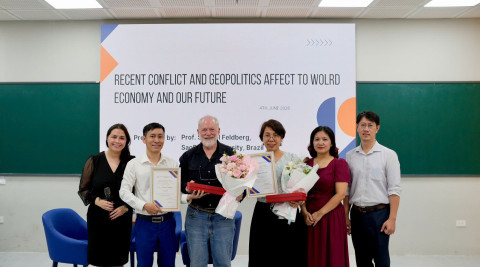
Dr. Samuel Feldberg warns of risks that could reshape the global economic order and shares strategic advice for Vietnamese businesses
Geopolitical tensions, technological transformation, trade fragmentation, and financial uncertainty are reshaping the global economy at an unprecedented pace.
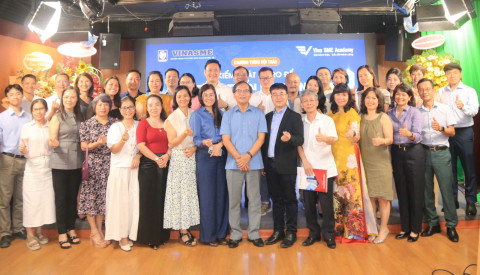
VINASME organizes training program on risk control for sustainable business development amid uncertainty
In the context of a rapidly changing economy, increasing competition, and accelerating digital transformation, risk management capability has become a critical factor determining the resilience and sustainable growth of businesses, particularly SMEs.
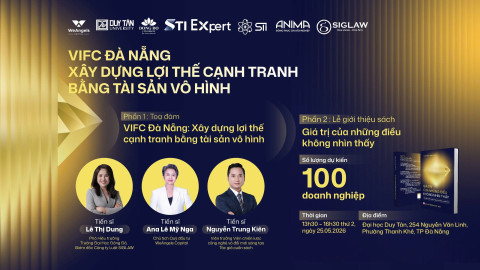
Vietnam’s International Financial Center looks beyond tax incentives to compete
What makes a city an international financial center? Is it skyscrapers, massive capital flows, or generous tax incentives?

CEO Nguyễn Tất Tùng: only by anchoring in culture and preserving national identity can Vietnamese entrepreneurs reach the world
In a setting imbued with the rich cultural essence of Kinh Bắc, the 15th anniversary celebration of Dragon Travel was far more than a typical corporate event.