

Enterprises promote post-production recycling
- Business
- 09:55 08/04/2022
DNHN - In the circular economy associated with green growth that Vietnam is aiming for, by-products and waste in the production process are considered renewable resources.

According to Mr. Tran Tuan Duong, CEO of Hoa Phat Group, the production of millions of tons of steel at its factory in Dung Quat generates a huge amount of heat. In order to not waste this source of heat, Hoa Phat invested in a plant with a capacity of up to 240MW to convert this huge amount of residual heat into input material for power generation. By doing that, Hoa Phat has been self-supplied up to 80 percent of the electricity needed for steel production and only needs to buy the remaining 20 percent. In addition, the company also promotes the recycling of blast furnace slag into construction materials. Fine blast furnace slag powder is a by-product of the production of iron and steel by closed blast furnace technology. Thanks to extremely fast cooling by high-pressure water, blast furnace slag is a very good active mineral additive for cement and concrete that has been used for a long time in the world, as well as in Vietnam. Producing blast furnace slag products not only helps Hoa Phat protect the environment but also creates a stable source of income for the unit.
Similarly, Mr. Fausto Tazzi, General Director of La Vie Co., Ltd., said that almost all of La Vie's product packaging is now 100 percent recyclable. Not only that, in early 2021, La Vie used water bottles made from recycled plastic (rPET) that meets food safety standards. The representative of this unit also affirmed that it always encourages domestic enterprises to invest in rPET production and is willing to buy qualified products to make product packaging for his company. Previously, in 2019, La Vie and Nestlé Vietnam joined hands with leading companies in the field of consumer goods and packaging to found the Packaging Recycling Organization Vietnam (PRO Vietnam).
There are no official statistics on the number of businesses that recycle waste in the production process, but according to Assoc. Prof. – Dr. Phung Chi Sy, Vietnam Association for Conservation of Nature and Environment, there are changes in thinking about waste management in many enterprises. Many enterprises have considered waste as a resource, an input material for a new production process. In agriculture, coir, straw, and rice husk discharged from agricultural production activities have become raw materials for making straw mushrooms and carpets. In industrial production, lots of product packaging made of paper and wood has been collected and recycled to create an extra life cycle for waste.
The polluters must pay
Vietnam is among the 20 countries with the highest amount of waste globally. Vietnam is ranked fourth in the world for discharging plastic waste into the environment, estimated at 1.8 million tons per year. However, the country is the world's second-largest importer of plastic scrap.
Not only plastic, but Vietnam also imports an average of about 10 million tons of scraps of all kinds every year. Especially in 2019, Vietnam had to import more than 18 million tons of scraps, including iron, steel, paper, and plastic. How ironic it is when Vietnam has to import waste for recycling and reuse, but domestically, an abundant source of recyclable materials is wasted and thrown away. Not to mention that it costs lots of money to treat this amount of waste.
To overcome the above shortcoming, the Law on Environmental Protection 2020, which took effect from January 1, 2022, has introduced regulations on the extended producer responsibility (EPR) to the disposal stage within a product life cycle. This means that manufacturers and importers must be responsible for recycling and treating waste in the correct proportions and specifications. This regulation is a solution to increase the domestic recycling rate and reduce the scrap import rate, thereby reducing plastic waste in the environment.
Agreeing with this regulation, Mr. Fausto Tazzi added that, to have an actually effective EPR mechanism, it is necessary to build a logistics chain for after-use packaging with the participation of all relevant parties, including manufacturers, retailers, consumers, waste collectors, and recyclers. Once this chain is well controlled, the quality of waste will be ensured. Thereby, after-use packaging can become a high-value raw material, which will continue to return to the production cycle instead of being discharged into the environment. Authorities need to create an equal environment for all parties in the EPR model, and these are necessary conditions for the EPR system to operate properly.
From the perspective of a management unit, Mr. Phan Tuan Hung, Director of the Legal Department under the Ministry of Natural Resources and Environment, assessed that EPR is an environmental policy that follows the principle of "polluters pay". This approach is effective in sharing the financial burden or part of the responsibility for solid waste management of local authorities with producers and importers. Although a few businesses have participated, with some pioneering units, it shows that everything is changing for the better.
According to the Ministry of Natural Resources and Environment, businesses can collect and recycle waste by themselves, hire, or authorize an intermediary to recycle waste. In case the manufacturers do not recycle waste by themselves, they must contribute a part of the cost to the environmental protection fund. If the EPR mechanism is implemented correctly, fully, and following requirements, Vietnam can completely ensure the circulation of resources between input materials and output wastes in production activities.
Related news
- Vietnamese exporters face green standards hurdle in EU market
- Vietnam Police Sports Association Teams Up with 90,000-Strong Business Network to Boost Athletics
- Vietnam Foodexpo to host largest edition with over 500 businesses
- Vietnam seeks innovation-led growth amid shifting global economic landscape
- Vietnam PM proposes four initiatives to drive economic growth
- Autumn Economic Forum seeks new growth engines in AI era
- Vietnam Demands Results from Diplomacy
- HCMC pushes open innovation towards commercial gains
- Vietnam Emerges as a Standout Destination for Autumn Travel
- 2026 Autumn Economic Forum promoted on Seoul screens
- Margin lending drives HSC earnings as brokerage revenue tumbles
- Bepharco appoints 2002-born executive as CEO
- Vietnam financial center eyes November 2026 launch
- Vietnam targets 20 internationally certified hospitals in medical tourism push
- Vietnam sets sights on double-digit growth as APEC 2027 preparations gather pace
- Vietnam businesses face global test: reform at home, earn trust abroad
- Vietnam firms warned: transform within, build trust abroad or fall behind
- VCBC Chairman Steve Bui: Incentives have run their course — Vietnam enters an institutional race to attract the next generation of FDI
- Vietnamese Journalism in the Age of AI: How can reporters survive in the profession?
- Dr. Samuel Feldberg warns of risks that could reshape the global economic order and shares strategic advice for Vietnamese businesses
Đọc thêm Business
Vietnamese exporters face green standards hurdle in EU market
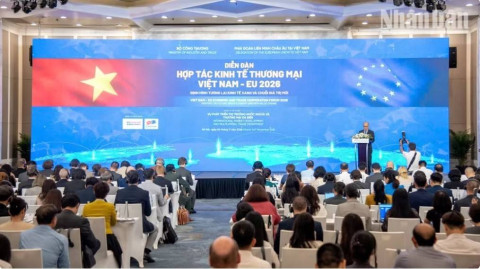
The Vietnam-EU Economic and Trade Cooperation Forum 2026 opened in Hanoi on Nov. 4 as bilateral ties entered a new phase. Beyond EVFTA opportunities, emissions cuts, supply chain transparency and technology transfer are becoming essential to Vietname

Asiago PDO Cheese and French Charcuterie Showcased in Hanoi: Bringing the Best of European Culinary Heritage to Vietnam
Industry representatives engage in discussions at the B2B Networking Event on October 30.
Vietnam seeks innovation-led growth amid shifting global economic landscape
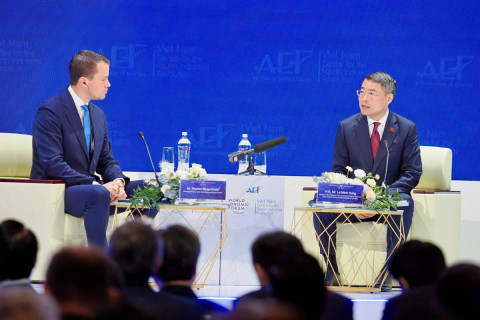
Prime Minister of Vietnam Le Minh Hung has outlined Vietnam's strategy to strengthen economic resilience, accelerate innovation and enhance the competitiveness of domestic enterprises as global supply chains undergo significant restructuring.
Vietnam PM proposes four initiatives to drive economic growth
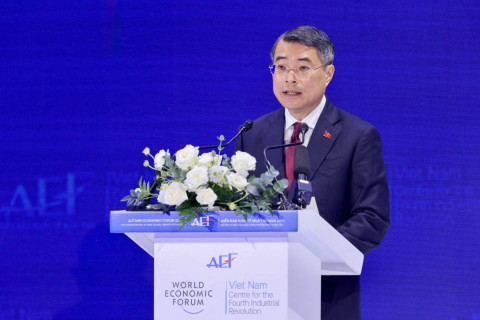
Prime Minister Le Minh Hung has proposed four areas of cooperation with international partners to boost innovation, develop high-tech talent, test emerging technologies and attract long-term investment.
Sacombank names banking veteran Nguyen Xuan Ai Quoc as deputy chief — with profits tipped to surge 111%
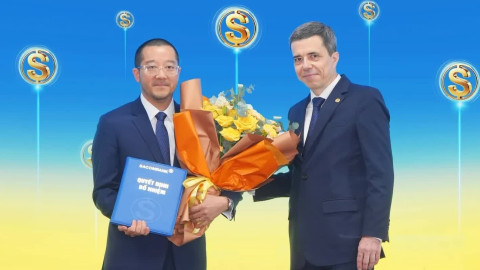
The seasoned financier, a son of late film star Tham Thuy Hang, joins as the Vietnamese lender targets rapid growth and a major debt recovery.
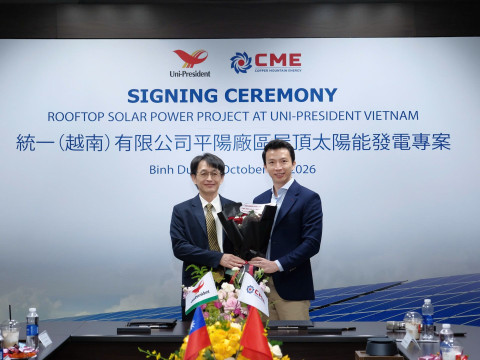
CME Solar Partners with Uni-President Vietnam to Deploy a 6,601 kWp Rooftop Solar Project
The 6,601 kWp rooftop solar project is expected to supply 8,656 MWh of clean electricity per year to Uni-President Vietnam, helping the company optimize energy costs and reduce CO₂ emissions.
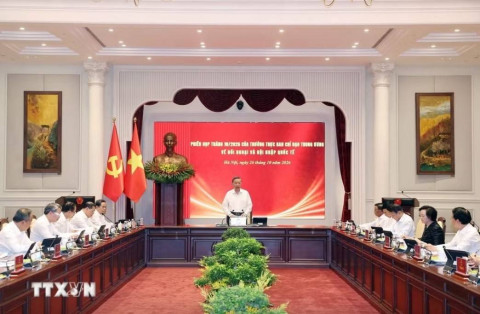
Vietnam Demands Results from Diplomacy
Top leaders of Vietnam order international pledges turned into jobs, productive capacity and markets—with institutions held to account for delivery.
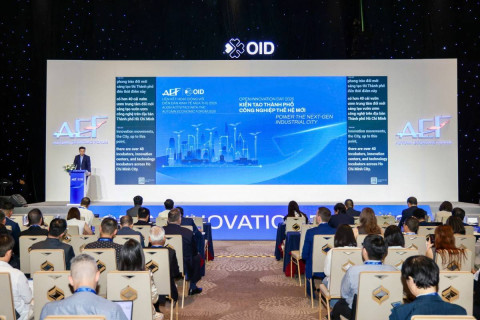
HCMC pushes open innovation towards commercial gains
Ho Chi Minh City is seeking to turn research and technology partnerships into measurable gains for businesses as it builds a next-generation industrial ecosystem.
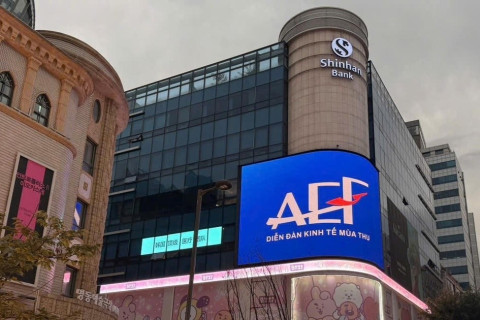
2026 Autumn Economic Forum promoted on Seoul screens
Ho Chi Minh City (HCMC) is taking Vietnamese economic ambitions abroad, using one of Seoul’s most prominent commercial districts to court investors and build international attention for the flagship autumn economic forum.

Khanh Hoa targets 23.7 million tourists in 2026
Khanh Hoa expects more than 23.7 million visitors and VND80.2 trillion in tourism revenue in 2026, increases of 44.8% and 19.7% year-on-year, respectively.