

Vietnam urges Trump to speed up reciprocal trade deal
- Business
- 15:11 18/11/2026
Both sides have held seven formal negotiation rounds and agreed on most of the core content, but no signing date has been set.
Prime Minister Le Minh Hung has urged U.S. President Donald Trump to step up talks to finalize a reciprocal trade agreement as soon as possible.
The request was made on the evening of November 17 in Manila, on the sidelines of the ASEAN-U.S. Special Summit.
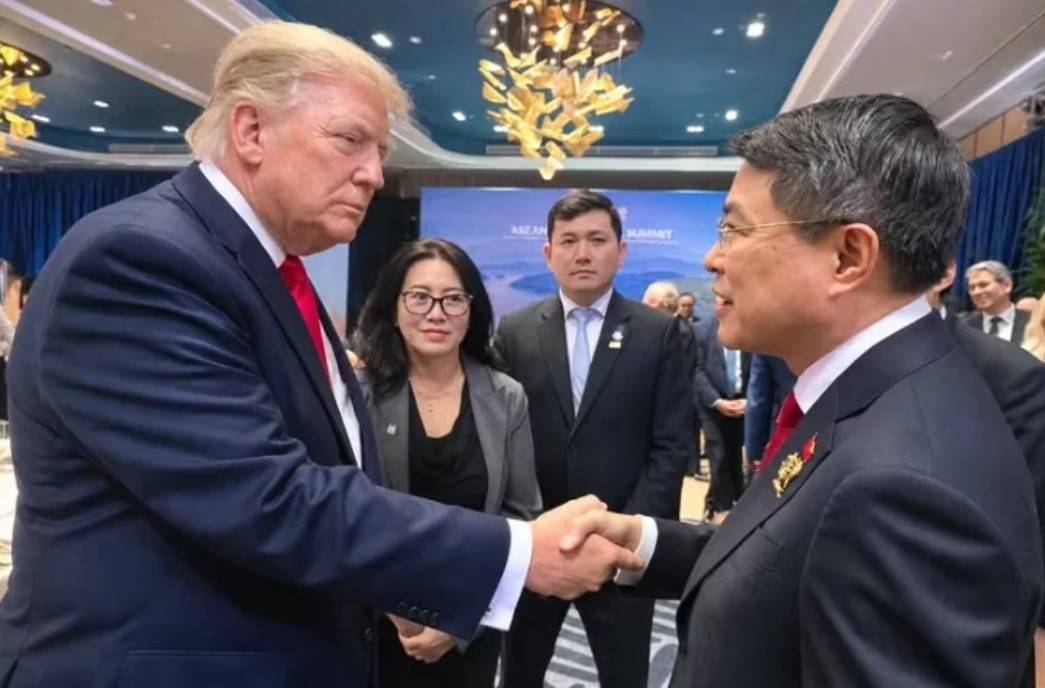
President Trump acknowledged the proposal and asked relevant U.S. agencies to continue studying the matter and talking with Vietnam, according to the Vietnamese government. No date has been announced for signing.
Most of the deal agreed
The talks did not begin in Manila. Since late April 2025, the two countries have held multiple rounds at technical and ministerial levels, covering tariffs, rules of origin, customs, agriculture, non-tariff measures, digital trade, services and investment, intellectual property, supply chains and sustainable development.
The Ministry of Industry and Trade said on October 7, 2026 that the sides had completed seven official negotiation rounds, along with numerous ministerial and technical discussions. Nearly all aspects have been essentially finalized, with a few minor issues needing technical clarification before signing, it said.
In October 2025, the two countries announced a framework for a reciprocal, fair and balanced trade agreement. The Office of the U.S. Trade Representative (USTR) currently lists Vietnam among partners that have a framework in place but have yet to conclude a comprehensive deal.
According to the ministry, the reciprocal tariff the U.S. applies to Vietnamese goods was cut from 46% to 20% in August 2025, while other issues remain under negotiation to build a more stable trade framework.
Businesses seek stability
A timely conclusion matters directly to businesses, as the U.S. is one of Vietnam’s most important export markets, while Vietnam is also importing more machinery, technology and goods from the U.S.
For exporters, a clearer framework could reduce uncertainty over tariffs, rules of origin and market access. However, commitments on market opening, digital trade, intellectual property and non-tariff measures will also require Vietnamese firms to adapt.
Trade at the core of ties
In Manila, Prime Minister Le Minh Hung stressed a constructive spirit and balanced benefits for both sides. Vietnam, he said, aims for a stable economic and trade relationship that harmonizes interests and matches the Comprehensive Strategic Partnership between the two countries.
The meeting took place as ASEAN-U.S. cooperation expands to the digital economy, artificial intelligence, critical minerals and supply chains. The U.S. is ASEAN’s second-largest partner in both two-way trade and foreign direct investment inflows.
At the special summit, the Prime Minister proposed that both sides prioritize a balanced, sustainable and mutually beneficial economic and trade relationship, and make the digital economy, AI and cybersecurity new areas of cooperation.
Although most of the content has been settled and talks are nearing completion, no final document has been signed or officially announced. Businesses should therefore keep watching developments on tariffs, rules of origin and market access, and not treat terms under negotiation as commitments already in effect.
Business & Integration - Vietnamese version: Việt Nam thúc đẩy hoàn tất Hiệp định thương mại đối ứng với Mỹ; reported by Linh Tran
Related news
- Vietnam–UAE CEPA: Tariff Gains Yet to Translate into Market Share
- Vietnam urges Trump to speed up reciprocal trade deal
- AgriS and its chairwoman to receive First-class Labor Orders
- Mr. To Lam at FrancoTech 2026: Francophone cooperation must move from potential to concrete action
- Mandarin orange, mandarin ambitions
- Vietravel Airlines Reinforces Its Board as It Pushes Into Southern China
- Vietnam’s spice exports on track to hit $2.4 billion in 2026
- Vietnam ranks third in Southeast Asia in digital, AI competitiveness
- Better data key to unlocking SME credit
- VINASME calls for data-driven lending to improve SME access to credit
- Vietnam Makes It 10 Straight as Khanh Hoa Drives Golf Tourism Momentum
- Nine banks plan subsidiaries at Vietnam’s international financial center
- Ho Chi Minh City: A Story in Every Rhythm
- A democratic congress could reshape U.S. foreign policy, but President Donald Trump still holds the keys
- Vietnamese exporters face green standards hurdle in EU market
- Vietnam Police Sports Association Teams Up with 90,000-Strong Business Network to Boost Athletics
- Vietnam Foodexpo to host largest edition with over 500 businesses
- Vietnam seeks innovation-led growth amid shifting global economic landscape
- Vietnam PM proposes four initiatives to drive economic growth
- Vietnam Demands Results from Diplomacy
Đọc thêm Business
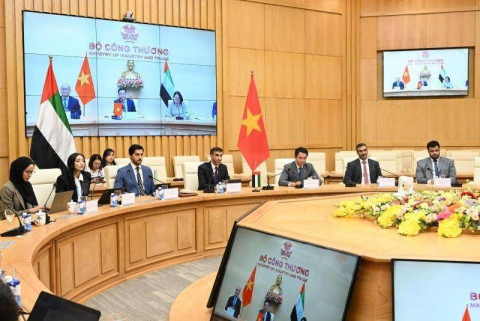
Vietnam–UAE CEPA: Tariff Gains Yet to Translate into Market Share
Nine months into the CEPA, Vietnamese goods enjoy major tariff advantages in the UAE yet hold under 1% of its import market. The greatest potential lies in using the incentives, meeting rules of origin and building distribution networks.

Vietnam’s spice exports on track to hit $2.4 billion in 2026
Exports of black pepper, cinnamon and star anise are all posting solid growth, putting Vietnam’s spice industry on course for a turnover of $2.4 billion in 2026.

Vietnam exports $120,000 worth of specialty coffee to US
A company in Vietnam's Central Highlands province of Dak Lak has exported more than 3.4 tons of specialty coffee to the U.S., marking a step toward higher-value exports as the country seeks to move beyond its traditional reliance on raw coffee beans.

Over $480 million pledged at COP31 to accelerate methane emissions reductions
More than $480 million in new climate financing has been announced at COP31 to accelerate efforts to reduce methane emissions and other powerful climate pollutants.
Vietnam raises foreign commercial borrowing ceiling to 10 billion USD for 2026
The Vietnamese Government has raised the ceiling for medium- and long-term foreign commercial borrowing by enterprises and credit institutions to 10 billion USD in 2026.
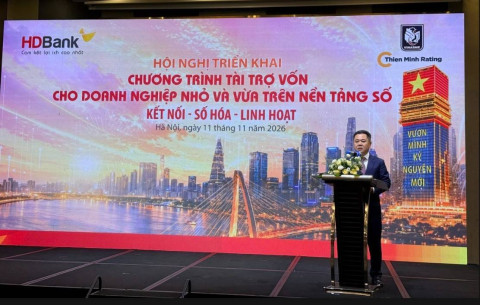
Better data key to unlocking SME credit
Transparent financial data and standardized credit profiles could help small and medium-sized enterprises access bank financing, while enabling lenders to assess repayment capacity without relaxing credit standards.
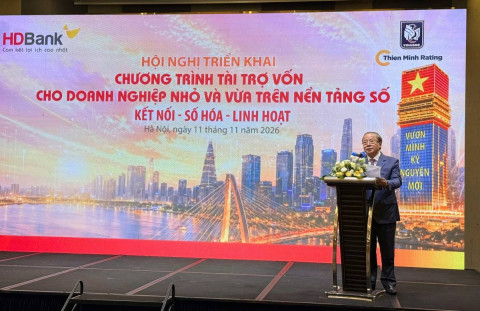
VINASME calls for data-driven lending to improve SME access to credit
Business capacity, cash flow and repayment ability should play a greater role in credit assessment, alongside collateral, VINASME Chairman Nguyen Van Than told a conference in Hanoi on November 11.
Nine banks plan subsidiaries at Vietnam’s international financial center
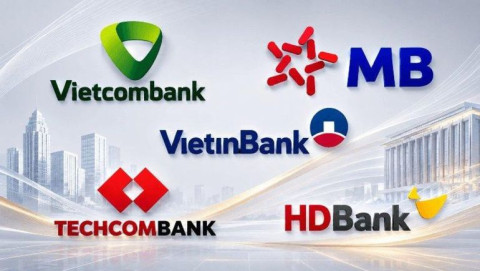
Nine Vietnamese banks are moving to set up wholly owned subsidiaries at the Vietnam International Financial Center (VIFC), but must meet licensing requirements before they can begin operations.

Ho Chi Minh City seminar to examine green energy and industrial cost savings
Rooftop solar, direct power purchase agreements and energy storage will be the focus of a November 25 seminar in Ho Chi Minh City, with discussions centering on investment efficiency and cost optimization for industrial enterprises.

Polish food firms seek Vietnamese partners at HCMC event
Polish food companies showcased their products and met Vietnamese buyers in HCMC on Nov. 10, seeking partnerships to expand their presence in the local market.