

Vietnam–UAE CEPA: Tariff Gains Yet to Translate into Market Share
- Business
- 15:19 18/11/2026
Nine months into the CEPA, Vietnamese goods enjoy major tariff advantages in the UAE yet hold under 1% of its import market. The greatest potential lies in using the incentives, meeting rules of origin and building distribution networks.
The Vietnam–UAE CEPA, Vietnam’s first free trade agreement with an Arab nation, took effect on February 3, 2026. After more than nine months of implementation, the tariff benefits are increasingly clear, yet a substantial gap remains between market openness and the actual share held by Vietnamese goods.
The issue was the focus of a conference held in Hanoi on November 17 by the Ministry of Industry and Trade and the UAE Embassy to promote the agreement. The key challenge, participants said, is turning commitments on paper into concrete commercial contracts and investment projects.
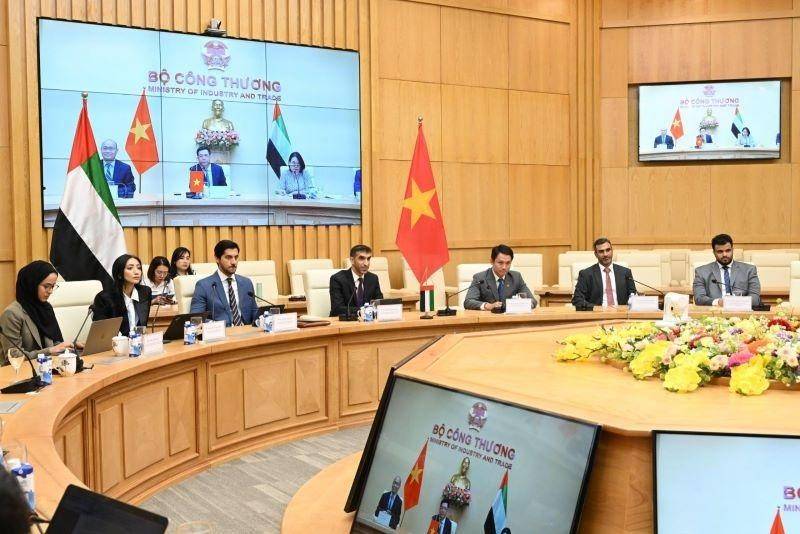
74.2% of tariff lines eliminated upon entry into force
Under the CEPA, the UAE will phase out tariffs on goods equivalent to approximately 99% of the value of Vietnam’s exports. By tariff lines, the UAE will open its market to about 94.9% of Vietnamese goods. Of these, 74.2% were eliminated immediately when the agreement took effect, rising to approximately 89.2% after five years.
The UAE Ministry of Economy and Tourism said more than 95% of eligible goods from both countries will benefit from immediate tariff elimination or phased preferential access, provided they meet the CEPA rules of origin.
The terms are a significant advantage for Vietnamese cashews, pepper, tea, seafood, timber, wood products and textiles, which currently face a Most-Favored-Nation (MFN) tariff of around 5% in the UAE.
Vietnam is also opening its market to UAE goods. Tariffs on petroleum (currently 10%) and LPG (currently 5%) will be cut to 0%, as will those on a wide range of chemical and pharmaceutical products. For Vietnamese businesses, the CEPA therefore offers not only export growth but also access to energy, raw materials and production inputs from the UAE at more competitive costs.
Vietnamese goods hold less than 1% market share
The disparity between the scale of the UAE market and the presence of Vietnamese goods highlights the agreement’s potential. According to the General Department of Vietnam Customs, two-way trade reached about $6.55 billion in 2025, up 1.5% year on year. Vietnam’s exports accounted for around $5.9 billion, while imports stood at about $640 million.
With the UAE’s total import demand at around $618–619 billion, Vietnamese products account for less than 1% of the market.
In the first nine months of 2026, two-way trade reached approximately $5.7 billion, up 17.8% year on year. However, the structure shifted: Vietnam’s exports to the UAE fell 4.9% to about $4.1 billion, while imports from the UAE surged 73.1% to around $1.5 billion.
Key exports remain concentrated in mobile phones and components, computers and electronic products, footwear and textiles, suggesting that CEPA incentives do not automatically help new product categories gain market share.
Tariff incentives depend on rules of origin
Ngo Chung Khanh, Deputy Director of the Department of Multilateral Trade Policy under the Ministry of Industry and Trade, said the CEPA gives Vietnamese goods tariff advantages, a more stable policy environment, streamlined procedures and deeper access to the Middle East.
However, to enjoy preferential tariffs, businesses must comply with the agreement’s rules of origin and procedural requirements. For many food and agricultural products, technical standards, quality requirements and Halal certification are also essential prerequisites for entering the UAE market.
The UAE also serves as a logistics and re-export hub for the Middle East. Access to importers and distribution networks there could open the way for Vietnamese goods to reach the Gulf Cooperation Council (GCC) countries, the wider Middle East and parts of Africa.
UAE Ambassador to Vietnam Bader Almatrooshi noted that the CEPA negotiations lasted only 14 months, demonstrating both countries’ determination to drive a significant shift in trade and investment. He said the UAE Embassy will continue to coordinate with the Ministry of Industry and Trade and other Vietnamese agencies to foster business connections.
The CEPA has established a favorable tariff framework, but its success will not be measured by the number of tariff lines reduced. A more meaningful gauge will be the number of contracts signed, the growth in market share of Vietnamese goods, the number of investment projects launched and how effectively businesses use the agreement’s incentives.
Business & Integration - Vietnamese version: CEPA mở thêm dư địa xuất khẩu cho hàng Việt tại thị trường UAE; reported by Linh Tran
Related news
- Vietnam–UAE CEPA: Tariff Gains Yet to Translate into Market Share
- Vietnam urges Trump to speed up reciprocal trade deal
- AgriS and its chairwoman to receive First-class Labor Orders
- Mr. To Lam at FrancoTech 2026: Francophone cooperation must move from potential to concrete action
- Mandarin orange, mandarin ambitions
- Vietravel Airlines Reinforces Its Board as It Pushes Into Southern China
- Vietnam’s spice exports on track to hit $2.4 billion in 2026
- Vietnam ranks third in Southeast Asia in digital, AI competitiveness
- Better data key to unlocking SME credit
- VINASME calls for data-driven lending to improve SME access to credit
- Vietnam Makes It 10 Straight as Khanh Hoa Drives Golf Tourism Momentum
- Nine banks plan subsidiaries at Vietnam’s international financial center
- Ho Chi Minh City: A Story in Every Rhythm
- A democratic congress could reshape U.S. foreign policy, but President Donald Trump still holds the keys
- Vietnamese exporters face green standards hurdle in EU market
- Vietnam Police Sports Association Teams Up with 90,000-Strong Business Network to Boost Athletics
- Vietnam Foodexpo to host largest edition with over 500 businesses
- Vietnam seeks innovation-led growth amid shifting global economic landscape
- Vietnam PM proposes four initiatives to drive economic growth
- Vietnam Demands Results from Diplomacy
Đọc thêm Business
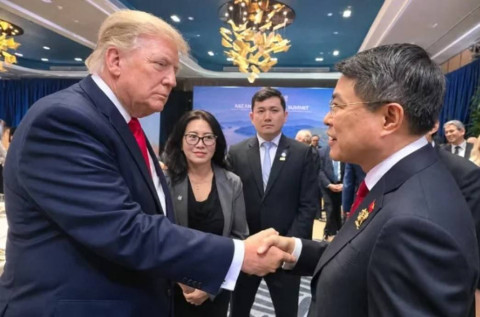
Vietnam urges Trump to speed up reciprocal trade deal
Both sides have held seven formal negotiation rounds and agreed on most of the core content, but no signing date has been set.

Vietnam’s spice exports on track to hit $2.4 billion in 2026
Exports of black pepper, cinnamon and star anise are all posting solid growth, putting Vietnam’s spice industry on course for a turnover of $2.4 billion in 2026.

Vietnam exports $120,000 worth of specialty coffee to US
A company in Vietnam's Central Highlands province of Dak Lak has exported more than 3.4 tons of specialty coffee to the U.S., marking a step toward higher-value exports as the country seeks to move beyond its traditional reliance on raw coffee beans.

Over $480 million pledged at COP31 to accelerate methane emissions reductions
More than $480 million in new climate financing has been announced at COP31 to accelerate efforts to reduce methane emissions and other powerful climate pollutants.
Vietnam raises foreign commercial borrowing ceiling to 10 billion USD for 2026
The Vietnamese Government has raised the ceiling for medium- and long-term foreign commercial borrowing by enterprises and credit institutions to 10 billion USD in 2026.
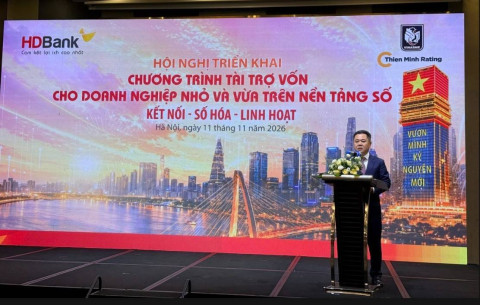
Better data key to unlocking SME credit
Transparent financial data and standardized credit profiles could help small and medium-sized enterprises access bank financing, while enabling lenders to assess repayment capacity without relaxing credit standards.
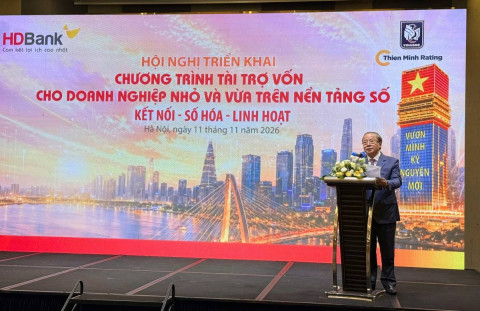
VINASME calls for data-driven lending to improve SME access to credit
Business capacity, cash flow and repayment ability should play a greater role in credit assessment, alongside collateral, VINASME Chairman Nguyen Van Than told a conference in Hanoi on November 11.

Nine banks plan subsidiaries at Vietnam’s international financial center
Nine Vietnamese banks are moving to set up wholly owned subsidiaries at the Vietnam International Financial Center (VIFC), but must meet licensing requirements before they can begin operations.
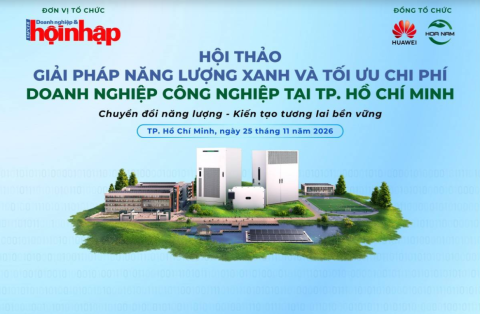
Ho Chi Minh City seminar to examine green energy and industrial cost savings
Rooftop solar, direct power purchase agreements and energy storage will be the focus of a November 25 seminar in Ho Chi Minh City, with discussions centering on investment efficiency and cost optimization for industrial enterprises.
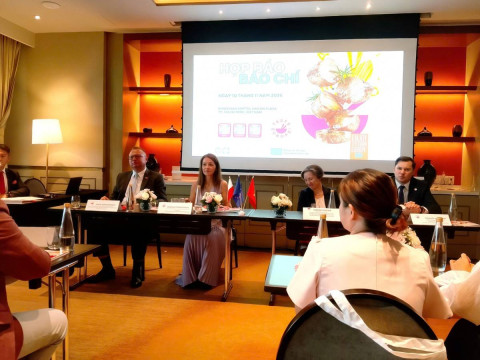
Polish food firms seek Vietnamese partners at HCMC event
Polish food companies showcased their products and met Vietnamese buyers in HCMC on Nov. 10, seeking partnerships to expand their presence in the local market.