

National Assembly of Vietnam passes SME Development Law
- Enterprise
- 16:08 20/11/2026
The law sets out support on tax, credit, land and public procurement, and takes effect on July 1, 2027.
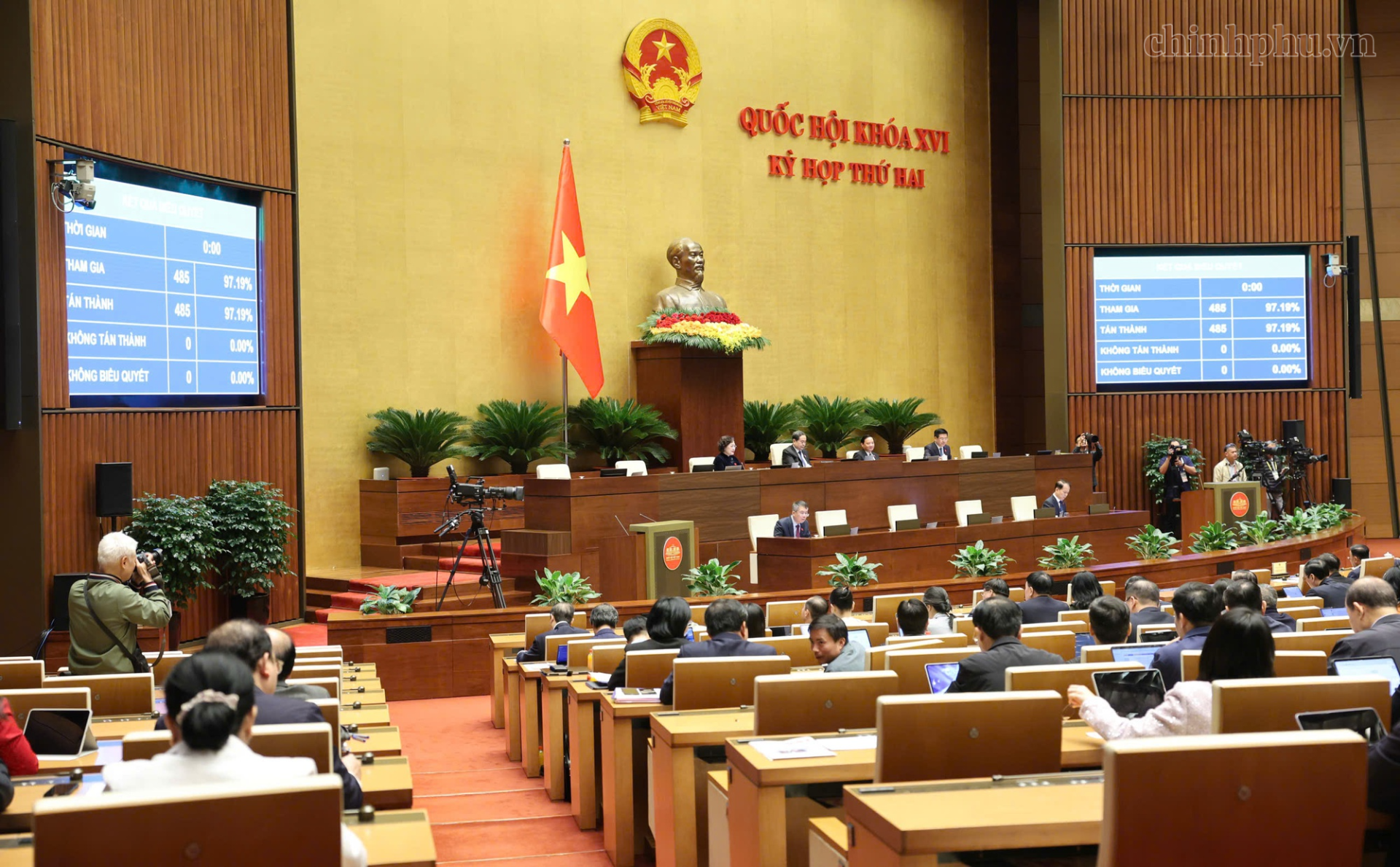
The National Assembly of Vietnam on the morning of November 20 passed the Law on Small and Medium-Sized Enterprise Development, with 100% of participating deputies voting in favor. The law sets out a package of support policies for different groups of businesses, covering taxation, credit, production premises, trade promotion, digital transformation and innovation.
Under the law, small and medium-sized enterprises (SMEs) comprise micro, small and medium-sized enterprises that employ an average of no more than 300 people in the previous year and meet one of two criteria: total capital of no more than VND150 billion or total revenue of no more than VND400 billion.
Wider access to capital, lower costs for production space
On taxation, micro and small enterprises will pay corporate income tax at a rate lower than the standard rate. SMEs will also be exempt from corporate income tax during their start-up period, in line with the corporate income tax law.
Enterprises with annual revenue of up to VND10 billion, or a threshold adjusted by the Government, may choose their tax calculation method as regulated. Micro-enterprises in particular will enjoy simplified accounting and tax-related administrative procedures.
On credit, the State encourages lenders to diversify their funding methods and to consider loans based on an enterprise's business plan, repayment capacity, revenue, cash flow and transaction data.
Encouraged forms of financing include loans, factoring, financial leasing, trade finance and supply chain finance. Eligible collateral includes movable assets, future assets, intellectual property rights, receivables and inventory.
Notably, SMEs will receive a land rental reduction of at least 30% for the first five years from the date they sign a lease with the developer of an industrial park, cluster or incubation center, as regulated.
For industrial parks, clusters and incubation centers established after the law takes effect, provincial authorities will decide the land area set aside for SMEs to lease or sublease, based on actual conditions and budget balance, ensuring an average of 20 hectares or 5% of the land area as regulated.
SMEs will also get priority in leasing idle or unused public land and buildings in their localities.
More opportunities in public procurement
Another highlight is the priority given to SMEs in state-funded procurement.
Specifically, construction, goods and mixed supply-construction packages worth up to VND20 billion will be reserved for SMEs. If no enterprise meets the requirements after the selection process, the bidding law will apply.
Agencies and organizations must also allocate at least 20% of the total value of state-funded packages in their annual contractor selection plans to SMEs, excluding international bidding packages. Cases falling short of this ratio will be handled in accordance with Government regulations.
Businesses will also receive support in trade promotion, building distribution systems and retail chains, e-commerce, and connecting with large corporations, state-owned enterprises and foreign-invested enterprises.
In science, technology and digital transformation, the law provides partial support for consulting costs and for the use of science, technology and innovation services. The State will fund free digital platforms and shared accounting software for micro and small enterprises, as prescribed by the Government.
Household businesses converting to enterprises to get 36 months of support
The law introduces specific policies for SMEs converted from household or individual businesses, aimed at cutting costs and procedures in their early operations.
Under these policies, a business registration certificate will be issued within one working day of the registration authority receiving a complete and valid dossier. Such enterprises will also be exempt from business registration fees and fees for the first publication of registration information.
For 36 months from the date of initial registration, the enterprise will apply the simplified tax declaration and payment mechanism, accounting regime and reporting forms of micro-enterprises. It will also receive support for accounting service costs, as well as free guidance and warnings on legal compliance.
Other measures include free use of digital platforms and shared accounting software, and support for the cost of digital solutions for management, operations and e-commerce.
Notably, the enterprise will enjoy a 12-month reduction, from the date of initial registration, in the employer's contributions to unemployment insurance and occupational accident and disease insurance. The reduction will be funded from the surplus of the respective insurance funds.
For micro-enterprises converted from household businesses into single-member limited liability companies owned by individuals, the law states that a company chairperson or chief accountant is not required under prescribed conditions.
Priority for innovative and sustainable start-ups
Beyond addressing immediate difficulties, the law also broadens support for new business models.
For innovative start-ups, the law provides tax exemptions and reductions on income from innovative start-up activities, as well as tax exemptions on certain income items.
It also supports businesses that contribute capital to innovative start-ups in accordance with the law.
These start-ups will additionally receive support for testing, inspection and certification costs, for the use of equipment at incubation and innovation centers, and for access to venture capital.
For sustainable businesses, support focuses on interest rates on loans for green and circular economy projects, and on the costs of greenhouse gas inventories, energy audits, environmental certification and digital transformation tied to the green transition.
SMEs participating in value chains and expanding abroad will likewise be supported with testing, inspection and certification costs, brand building, partner networking and strategies for entering foreign markets.
The law also prioritizes businesses owned by women, people with disabilities and ethnic minorities; businesses that employ large numbers of workers from these groups; and those operating in border areas, islands, mountainous regions and areas with difficult socio-economic conditions.
The Law on Small and Medium-Sized Enterprise Development will take effect on July 1, 2027. However, the criteria for identifying SMEs eligible for tax policies will apply from the 2027 tax year.
Business & Integration - Vietnamese version: Doanh nghiệp nhỏ và vừa được giảm tiền thuê đất, mở rộng cơ hội tiếp cận vốn và thị trường; reported by Linh Anh
Related news
- Buon Ma Thuot Coffee Festival 2027 targets 1.3 million visitors
- National Assembly of Vietnam passes SME Development Law
- AgriS receives First-Class Labor Medal
- VINASME opens Southern Representative Office to build SME competitiveness
- Vietnam takes APEC baton from China, eyes ‘new era of self-reliance’ for 2027
- Vietnam–UAE CEPA: Tariff Gains Yet to Translate into Market Share
- Vietnam urges Trump to speed up reciprocal trade deal
- AgriS and its chairwoman to receive First-class Labor Orders
- Mr. To Lam at FrancoTech 2026: Francophone cooperation must move from potential to concrete action
- Mandarin orange, mandarin ambitions
- Vietravel Airlines Reinforces Its Board as It Pushes Into Southern China
- Vietnam’s spice exports on track to hit $2.4 billion in 2026
- Vietnam ranks third in Southeast Asia in digital, AI competitiveness
- Better data key to unlocking SME credit
- VINASME calls for data-driven lending to improve SME access to credit
- Vietnam Makes It 10 Straight as Khanh Hoa Drives Golf Tourism Momentum
- Nine banks plan subsidiaries at Vietnam’s international financial center
- Ho Chi Minh City: A Story in Every Rhythm
- A democratic congress could reshape U.S. foreign policy, but President Donald Trump still holds the keys
- Vietnamese exporters face green standards hurdle in EU market
Đọc thêm Enterprise

Stavian Group Named Among Vietnam’s 100 Best Places to Work in 2026
Stavian Group earns a spot among Vietnam’s 100 Best Places to Work in 2026, gains ACCA recognition and secures top business performance rankings.

AgriS and its chairwoman to receive First-class Labor Orders
Sugar major’s shift to an integrated agricultural ecosystem recognized by the State

Stavian ED Breaks Ground on Nearly VND 197 Billion Power Infrastructure Project in Phu Tho
The 110 kV Lap Thach 4 Substation and Connecting Transmission Line Project aims to enhance power supply capacity, meet businesses’ production needs, and lay the foundation for industrial development in Phu Tho Province.

A democratic congress could reshape U.S. foreign policy, but President Donald Trump still holds the keys
Democrats take control of Congress, potentially reshaping Trump's foreign policy on China, Russia, Iran, NATO, and global trade through 2028.
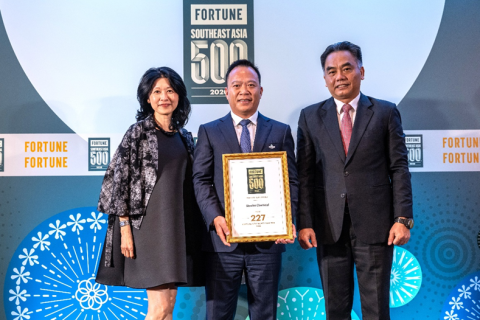
Stavian Chemical marks second consecutive year on the Fortune Southeast Asia 500 list
Participating in the Fortune Southeast Asia 500 Summit 2026 as a Partner Sponsor, Stavian Group continued to strengthen its presence at one of the region's leading business and economic forums.

Vietnam Foodexpo to host largest edition with over 500 businesses
Vietnam Foodexpo 2026 will bring together more than 500 Vietnamese and international businesses in Ho Chi Minh City from Nov. 11 to 14 for its largest edition yet.

Margin lending drives HSC earnings as brokerage revenue tumbles
For investors, HSC’s nine-month results point to resilient earnings but a more concentrated revenue mix, with strong margin-lending growth offsetting double-digit declines in securities brokerage revenue and keeping profit broadly stable.

DatVietVAC secures HoSE listing approval as first-half profit climbs
The producer behind the “Say Hi” entertainment franchise plans to list 111.4 million DVV shares in early November at an expected reference price of VND 54,800.

List of Vietnam’s 25 Best Workplaces 2025
Great Place To Work® has officially announced the 25 companies featured in the Best Workplaces in Vietnam™ 2025 ranking.
The ambitions of major enterprises in 2025
Major enterprises such as Dabaco, FPT, and KBC have set ambitious plans for 2025, demonstrating flexibility and sharpness in their business strategies.