

Vietnam’s FDI attraction policy pays off
- Business
- 10:42 28/03/2022
DNHN - Despite adverse COVID-19 impacts on the global economy, Vietnam’s selective investment attraction policy with priority to high-quality projects has proved effective, according to experts.

Despite adverse COVID-19 impacts on the global economy, Vietnam’s selective investment attraction policy with priority to high-quality projects has proved effective, according to experts.
This year is forecast a good year for foreign direct investment (FDI) attraction, as Vietnam is securing its image as a safe, attractive and promising destination for foreign investors.
Do Nhat Hoang, head of the Foreign Investment Agency under the Ministry of Planning and Investment, said that thanks to the policy, the FDI poured into sectors with high risk of environmental pollution and using outdated technologies such as weaving and dyeing has decreased, while FDI flows to high-quality projects using green and renewable energy have increased.
Notably, Danish LEGO Group has announced a plan to construct a 44-hectare factory in Binh Duong at a cost of over 1 billion USD in the southern province of Binh Duong. Work on the project will start in the second half of 2022 and the factory is scheduled to become operational in 2024. This will be LEGO's first carbon-neutral factory that has a solar energy system, ensuring that it will not cause environmental pollution or release dust and waste.
Singapore has been the largest investor in Vietnam with over 1.7 billion USD, followed by the Republic of Korea with over 1.4 billion USD, as well as China and Japan.
Experts held that Vietnam will enjoy a fruitful year in FDI attraction thanks to its efforts in administrative reform, the fast recovery of the global supply chain and the increased consumption power.
External relations activities have also supported the country’s FDI attraction. During the Europe trip of Prime Minister Pham Minh Chinh in late 2021, total value of deals signed hit 30 billion USD.
Nakajima Takeo, Chief Representative of the Japan External Trade Organisation (JETRO) in Hanoi held that recently, Japanese FDI flow to Vietnam has been adjusted with higher number of projects in retail and service sectors to serve the domestic market and for export, thus making full use of free trade agreements that Vietnam has signed.
Along with Japanese firms, investors from Europe, the RoK and the US have shown interest in the Vietnamese market, which showed their confidence in the safe, attractive and promising destination of Vietnam.
Vice Chairman of the Vietnam Association of Foreign Invested Enterprises (VAFIE) Nguyen Van Toan held that Vietnam’s strengths of favourable geographic location, improving business and investment environment and better infrastructure system have made it attractive among foreign investors.
He advised localities to further develop the quality of human resources to become ready for FDI projects with high technologies from developed countries. They should also offer better policies to encourage foreign investors, while strengthening the connections between FDI firms and local enterprises, thus enhancing the value and efficiency of FDI projects in Vietnam.
Related news
#high-quality project

Avoiding cost overruns in the implementation of North-South high-speed railway
The North-South High-Speed Railway project is gaining significant attention from both the Government and the public, with promises to improve transport infrastructure and foster economic development.

Completion of the pre-feasibility study report for the North-South high-speed railway project
The 350km/h North-South high-speed railway project is urgently finalizing its pre-feasibility study report. The goal is to present it to the National Assembly for review.
Đọc thêm Business
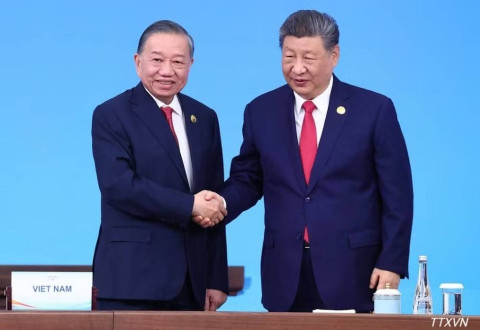
Vietnam takes APEC baton from China, eyes ‘new era of self-reliance’ for 2027
Hanoi unveils theme and three priorities as it prepares to host the forum for the third time, with leaders’ week set for Phu Quoc

VIFC-HCMC courts international capital at Singapore FinTech Festival
At a Singapore workshop, the city’s new financial center outlined four priority product groups and signed a letter of intent with SLEI to broaden Vietnamese businesses’ access to long-term capital.

Vietnam tops ASEAN consumer sentiment despite rising cost concerns
Vietnamese consumers remain the most optimistic in ASEAN with an ACSI score of 63, but rising living costs and gaps in long-term financial security are making them more cautious, savings-minded and investment-oriented
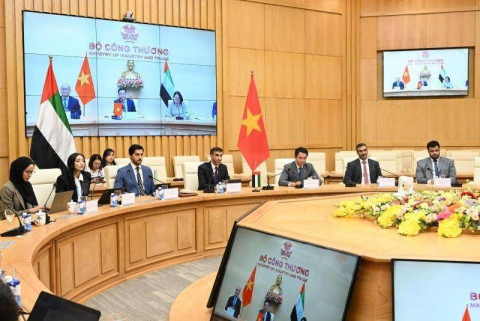
Vietnam–UAE CEPA: Tariff Gains Yet to Translate into Market Share
Nine months into the CEPA, Vietnamese goods enjoy major tariff advantages in the UAE yet hold under 1% of its import market. The greatest potential lies in using the incentives, meeting rules of origin and building distribution networks.

Vietnam urges Trump to speed up reciprocal trade deal
Both sides have held seven formal negotiation rounds and agreed on most of the core content, but no signing date has been set.

Vietnam’s spice exports on track to hit $2.4 billion in 2026
Exports of black pepper, cinnamon and star anise are all posting solid growth, putting Vietnam’s spice industry on course for a turnover of $2.4 billion in 2026.

Vietnam exports $120,000 worth of specialty coffee to US
A company in Vietnam's Central Highlands province of Dak Lak has exported more than 3.4 tons of specialty coffee to the U.S., marking a step toward higher-value exports as the country seeks to move beyond its traditional reliance on raw coffee beans.

Over $480 million pledged at COP31 to accelerate methane emissions reductions
More than $480 million in new climate financing has been announced at COP31 to accelerate efforts to reduce methane emissions and other powerful climate pollutants.
Vietnam raises foreign commercial borrowing ceiling to 10 billion USD for 2026
The Vietnamese Government has raised the ceiling for medium- and long-term foreign commercial borrowing by enterprises and credit institutions to 10 billion USD in 2026.
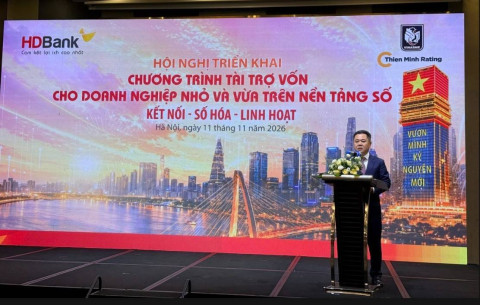
Better data key to unlocking SME credit
Transparent financial data and standardized credit profiles could help small and medium-sized enterprises access bank financing, while enabling lenders to assess repayment capacity without relaxing credit standards.