

US tariff proposal puts Vietnamese exporters on alert: 35% is a ceiling, not a verdict
- Business
- 09:56 26/11/2026
As the USTR unveils its Section 301 findings and proposed measures for 14 economies, Vietnamese exporters must weigh the risks now when planning production, negotiating contracts and organizing supply chains for 2027.
US tariff policy continues to demand proactive adaptation from Vietnamese export businesses. Although the proposal is not yet in effect, it is one of the key factors companies need to factor into their 2027 plans, and the 35% rate it contains is not a final decision.
What the USTR proposed
On November 25, 2026, the Office of the US Trade Representative (USTR) announced the results of its investigation under Section 301 of the US Trade Act of 1974, which examined structural overcapacity and production in manufacturing industries. The investigation was initiated on March 11, 2026, with an initial scope covering 16 economies. Vietnam is among the 14 economies for which conclusions and proposed measures were announced.
According to the Ministry of Industry and Trade, the USTR proposed a maximum additional tariff of 35% on goods imported from Vietnam. That rate could be lowered to 20% if Vietnam and the United States reach a reciprocal, fair and balanced trade agreement that addresses the issues raised in the investigation. The USTR also proposed considering how the new rate would interact with existing tariffs under Sections 301 and 232 of US law.
The proposal also includes a list of goods exempt from the measures, covering 2,121 items identified by 8-digit HS codes. For exporters, correctly identifying the HS code under the US tariff schedule is crucial to gauging the scope of impact. However, both the exemption list and the tax calculation mechanism may still change before a final decision is issued.
A step in the process, not the end of it
The Ministry of Industry and Trade stresses that the announcement of preliminary findings and a proposed maximum rate is one step in the handling of the case under US law. The 35% figure is only a proposal and has not been officially applied. The USTR will receive feedback, hold hearings and consult relevant parties before deciding the tariff rate, the method of application and the scope of exempted goods.
Vietnam moves to manage trade risks
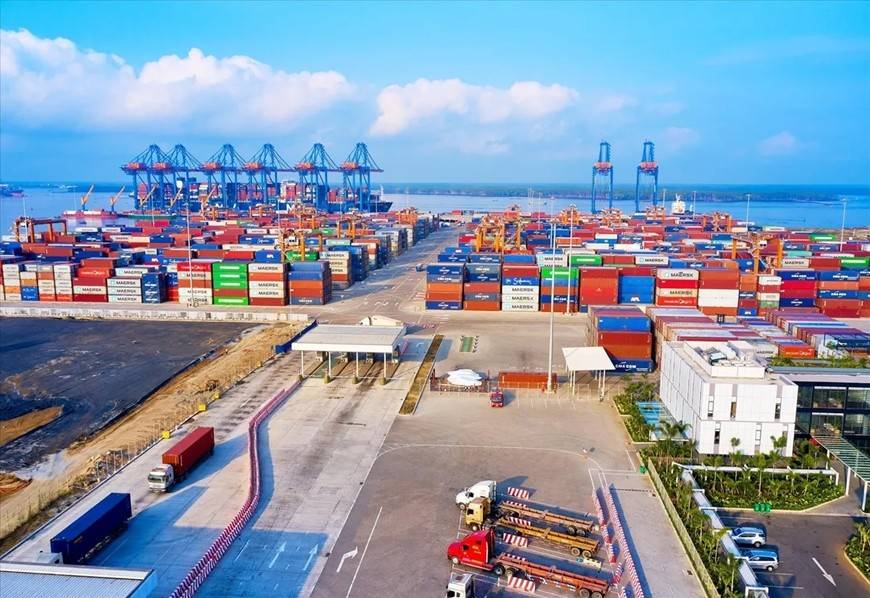
In parallel with negotiations on a reciprocal trade agreement with the United States, Vietnam is carrying out reforms to address issues of concern to the US side in trade investigations. On November 21, 2026, the Government issued a Resolution on the overall plan for managing trade surpluses and preventing risks in international trade for 2026-2030.
The plan seeks to manage bilateral trade surpluses in a proactive, sustainable and harmonious way, balancing export expansion with greater import capacity to serve production. Its key tasks include improving the quality and added value of exports, preventing the risk of overcapacity, and combating trade evasion, illegal transshipment and origin fraud. The plan also addresses controls on imported goods produced with forced labor.
For the business community, these directions mean stronger supply chain management, transparent origins of raw materials, and traceable information across the entire production and export process.
The Ministry of Industry and Trade says that the results of these reforms, together with progress in bilateral negotiations, will be important grounds for Washington to consider a rate below the proposed maximum. The ministry will coordinate with relevant ministries and agencies to participate fully in the next steps of the investigation, prepare counter-arguments, provide information and exchange views with US agencies. Vietnam and the United States are also working to conclude a reciprocal, fair and balanced trade agreement as soon as possible.
Timeline: deadlines businesses cannot miss
According to the USTR's official announcement, January 5, 2027 is the deadline to submit written comments, register to take part in the hearing and submit a summary of the presentation. The public hearing is expected to begin on January 25, 2027. The Ministry of Industry and Trade expects the final US decision as early as February 2027 and no later than March 11, 2027.
The period before the decision offers regulators, industry associations and businesses a window to gather information and clarify production characteristics, supply structures and trade practices.
What exporters should do now
In the short term, exporters need to review product catalogs, product codes, origin documents, production data and the clauses on tariff cost allocation in contracts with US partners. Financial planning is equally important: building different tax scenarios can help companies manage cash flow, price products and negotiate orders more proactively.
In the longer term, industries heavily dependent on the US market should diversify export markets, raise the share of domestic value added and strengthen their capacity to comply with international trade rules.
While tariff policy remains under consideration, businesses should closely follow official announcements from the authorities and avoid basing production and business decisions solely on the proposed maximum rate.
Related news
- Bamboo Airways grounded for good: Once-proud Vietnamese airline that boasted 47 jets and dreamed of a $4BN US float has no aircraft left flying, as debts, seized assets and unpaid wages pile up
- Vietnam, US near completion of reciprocal trade talks as tariff decision looms
- Britain and Vietnam vow to ease trade barriers
- Buon Ma Thuot Coffee Festival 2027 targets 1.3 million visitors
- National Assembly of Vietnam passes SME Development Law
- AgriS receives First-Class Labor Medal
- VINASME opens Southern Representative Office to build SME competitiveness
- Vietnam takes APEC baton from China, eyes ‘new era of self-reliance’ for 2027
- Vietnam–UAE CEPA: Tariff Gains Yet to Translate into Market Share
- Vietnam urges Trump to speed up reciprocal trade deal
- AgriS and its chairwoman to receive First-class Labor Orders
- Mr. To Lam at FrancoTech 2026: Francophone cooperation must move from potential to concrete action
- Mandarin orange, mandarin ambitions
- Vietravel Airlines Reinforces Its Board as It Pushes Into Southern China
- Vietnam’s spice exports on track to hit $2.4 billion in 2026
- Vietnam ranks third in Southeast Asia in digital, AI competitiveness
- Better data key to unlocking SME credit
- VINASME calls for data-driven lending to improve SME access to credit
- Nine banks plan subsidiaries at Vietnam’s international financial center
- Ho Chi Minh City: A Story in Every Rhythm
Đọc thêm Business
Vietnam, US near completion of reciprocal trade talks as tariff decision looms
USTR’s proposed tariff of up to 35% is only a procedural step and not yet in effect, Foreign Ministry says
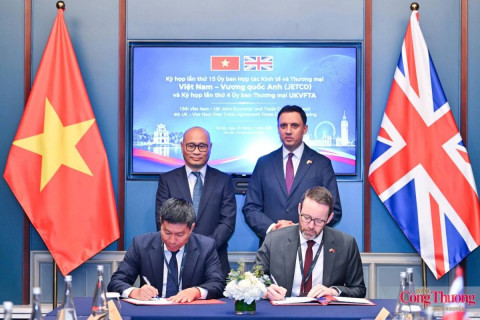
Britain and Vietnam vow to ease trade barriers
Talks in Hanoi cover market access, carbon rules and a new finance centre as both sides seek to make their free trade agreement work harder for business.

Securities Market Exhibition Showcases Vietnam to Global Investors
The State Securities Commission is hosting a two-day exhibition in Hanoi on November 26–27 to mark the securities industry's 30th anniversary and promote Vietnam's capital market to international investors.

Tuna exports to Israel up 12% but demand remains cautious
Vietnam outpaces the industry average in the first 10 months of 2026, yet volatile orders and pressure from Thailand and China weigh on prospects

VINASME opens Southern Representative Office to build SME competitiveness
The association is shifting from supporting businesses to developing their long-term capacity, backed by a shared digital platform and five breakthrough priorities for 2027–2032.
Vietnam takes APEC baton from China, eyes ‘new era of self-reliance’ for 2027
Hanoi unveils theme and three priorities as it prepares to host the forum for the third time, with leaders’ week set for Phu Quoc

VIFC-HCMC courts international capital at Singapore FinTech Festival
At a Singapore workshop, the city’s new financial center outlined four priority product groups and signed a letter of intent with SLEI to broaden Vietnamese businesses’ access to long-term capital.

Vietnam tops ASEAN consumer sentiment despite rising cost concerns
Vietnamese consumers remain the most optimistic in ASEAN with an ACSI score of 63, but rising living costs and gaps in long-term financial security are making them more cautious, savings-minded and investment-oriented
Vietnam–UAE CEPA: Tariff Gains Yet to Translate into Market Share
Nine months into the CEPA, Vietnamese goods enjoy major tariff advantages in the UAE yet hold under 1% of its import market. The greatest potential lies in using the incentives, meeting rules of origin and building distribution networks.
Vietnam urges Trump to speed up reciprocal trade deal
Both sides have held seven formal negotiation rounds and agreed on most of the core content, but no signing date has been set.