

Tuna exports to Israel up 12% but demand remains cautious
- Business
- 10:45 25/11/2026
Vietnam outpaces the industry average in the first 10 months of 2026, yet volatile orders and pressure from Thailand and China weigh on prospects
Vietnam's tuna exports to Israel regained momentum in the first 10 months of 2026 after a turbulent 2025. Shipments totaled more than US$34 million, up 12% year-on-year and more than double the 5% growth of the country's tuna industry as a whole. The result reflects domestic exporters' efforts to tap the market and win back orders.

Despite the positive year-to-date picture, Vietnam Customs data show monthly export performance remains volatile. Exports jumped 91% year-on-year in July 2026, but fell sharply by 35% in August, erasing the previous month's gains, and slipped a further 3% in September. In October, turnover rebounded to nearly US$4.6 million, up 19% year-on-year. These swings suggest Israeli importers are still buying cautiously, spreading purchases across small orders rather than committing to large-scale, long-term contracts.
Beyond customs figures, the Vietnam Association of Seafood Exporters and Producers (VASEP) highlighted intense competition in the Israeli market, citing UN Comtrade import data. In 2025, Israel's imports of processed and preserved tuna (HS code 160414) are estimated at nearly US$133 million, down about 33% from 2024. In this shrinking market, Thailand remains dominant with nearly 60% of imports, backed by its scale and industrial supply chain. Vietnam ranks second with a 10.8% market share, closely followed by China, putting direct pressure on prices and volumes.
VASEP cautioned that the 12% growth in the first 10 months of 2026 is not enough to conclude that consumption demand in Israel is expanding sustainably. Part of the increase may stem from temporary order shifts among international suppliers after a volatile 2025. To defend its position as the second-largest supplier and withstand pressure from Thailand and China, VASEP recommended that Vietnamese enterprises continue to optimize costs, upgrade the quality of deep processing and closely monitor market developments in the period ahead.
Related news
- Bamboo Airways grounded for good: Once-proud Vietnamese airline that boasted 47 jets and dreamed of a $4BN US float has no aircraft left flying, as debts, seized assets and unpaid wages pile up
- Vietnam, US near completion of reciprocal trade talks as tariff decision looms
- Britain and Vietnam vow to ease trade barriers
- Buon Ma Thuot Coffee Festival 2027 targets 1.3 million visitors
- National Assembly of Vietnam passes SME Development Law
- AgriS receives First-Class Labor Medal
- VINASME opens Southern Representative Office to build SME competitiveness
- Vietnam takes APEC baton from China, eyes ‘new era of self-reliance’ for 2027
- Vietnam–UAE CEPA: Tariff Gains Yet to Translate into Market Share
- Vietnam urges Trump to speed up reciprocal trade deal
- AgriS and its chairwoman to receive First-class Labor Orders
- Mr. To Lam at FrancoTech 2026: Francophone cooperation must move from potential to concrete action
- Mandarin orange, mandarin ambitions
- Vietravel Airlines Reinforces Its Board as It Pushes Into Southern China
- Vietnam’s spice exports on track to hit $2.4 billion in 2026
- Vietnam ranks third in Southeast Asia in digital, AI competitiveness
- Better data key to unlocking SME credit
- VINASME calls for data-driven lending to improve SME access to credit
- Nine banks plan subsidiaries at Vietnam’s international financial center
- Ho Chi Minh City: A Story in Every Rhythm
Đọc thêm Business

Vietnam, US near completion of reciprocal trade talks as tariff decision looms
USTR’s proposed tariff of up to 35% is only a procedural step and not yet in effect, Foreign Ministry says
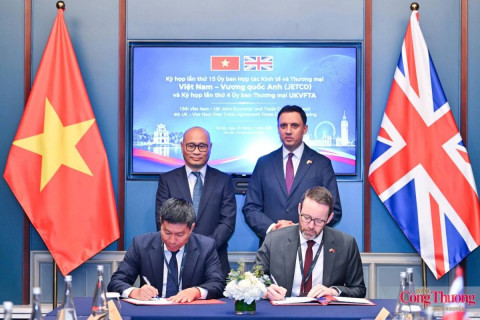
Britain and Vietnam vow to ease trade barriers
Talks in Hanoi cover market access, carbon rules and a new finance centre as both sides seek to make their free trade agreement work harder for business.

Securities Market Exhibition Showcases Vietnam to Global Investors
The State Securities Commission is hosting a two-day exhibition in Hanoi on November 26–27 to mark the securities industry's 30th anniversary and promote Vietnam's capital market to international investors.
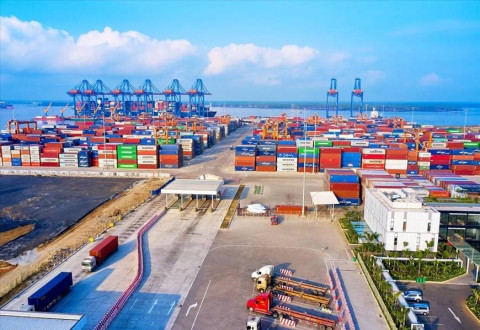
US tariff proposal puts Vietnamese exporters on alert: 35% is a ceiling, not a verdict
As the USTR unveils its Section 301 findings and proposed measures for 14 economies, Vietnamese exporters must weigh the risks now when planning production, negotiating contracts and organizing supply chains for 2027.

VINASME opens Southern Representative Office to build SME competitiveness
The association is shifting from supporting businesses to developing their long-term capacity, backed by a shared digital platform and five breakthrough priorities for 2027–2032.
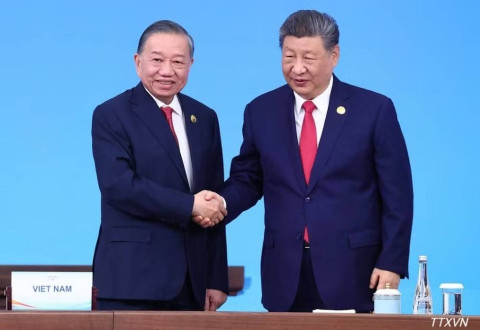
Vietnam takes APEC baton from China, eyes ‘new era of self-reliance’ for 2027
Hanoi unveils theme and three priorities as it prepares to host the forum for the third time, with leaders’ week set for Phu Quoc

VIFC-HCMC courts international capital at Singapore FinTech Festival
At a Singapore workshop, the city’s new financial center outlined four priority product groups and signed a letter of intent with SLEI to broaden Vietnamese businesses’ access to long-term capital.

Vietnam tops ASEAN consumer sentiment despite rising cost concerns
Vietnamese consumers remain the most optimistic in ASEAN with an ACSI score of 63, but rising living costs and gaps in long-term financial security are making them more cautious, savings-minded and investment-oriented
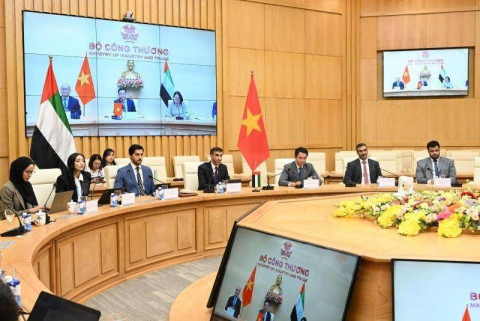
Vietnam–UAE CEPA: Tariff Gains Yet to Translate into Market Share
Nine months into the CEPA, Vietnamese goods enjoy major tariff advantages in the UAE yet hold under 1% of its import market. The greatest potential lies in using the incentives, meeting rules of origin and building distribution networks.
Vietnam urges Trump to speed up reciprocal trade deal
Both sides have held seven formal negotiation rounds and agreed on most of the core content, but no signing date has been set.