

Taxi titan's tumble: Bank seizes land as Mai Linh's empire crumbles, staff numbers plunge 98% and boss is swapped
- Brand
- 15:03 26/11/2026
Bank swoops on land owned by once-mighty taxi giant.
Loc Phat Vietnam Commercial Joint Stock Bank (LPBank, HOSE: LPB) has seized collateral from Mai Linh Hoi An Co., Ltd. to claw back the debts of Mai Linh Group Joint Stock Company - once one of Vietnam's best-known traditional taxi brands.
The seized assets include land use rights, and everything built on them, for a 707 m² plot in Bau Oc Ha village, Cam Ha commune, Hoi An city, Quang Nam province (as it was formerly known), now Hoi An Tay ward, Da Nang city.
LPBank says the loan relates to two credit limit agreements signed in February 2025 and March 2026. The land use rights were mortgaged as far back as the end of 2020.
On September 22nd, the bank announced it was recovering the entire debt. By October 2nd, it was demanding that Mai Linh Group and Mai Linh Hoi An Co., Ltd. voluntarily hand over the collateral.
But the two companies refused to budge. According to the bank's initial announcement, LPBank was poised to seize the assets on November 16th, 2026.
The dramatic move comes as Mai Linh Group faces mounting pressure on both its business and its finances.
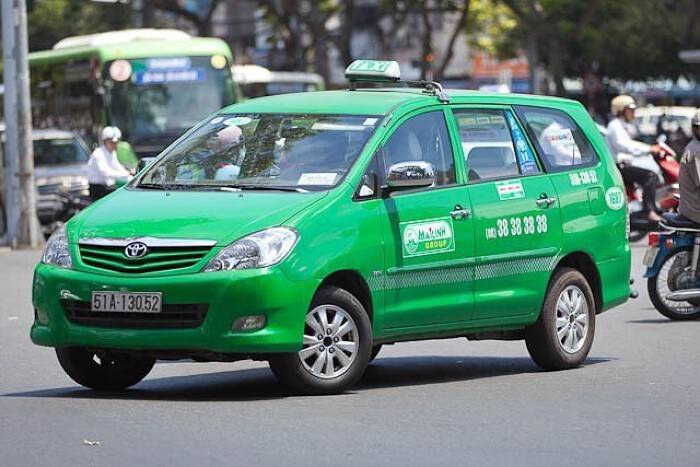
Founded in 1993 by businessman Ho Huy, Mai Linh built a sprawling taxi empire and became a household name in passenger transport. But the explosive rise of ride-hailing apps turned the industry upside down. With cheap, flexible fares and the ability to streamline operations at speed, the app-based rivals piled the pressure on traditional cab firms.
In truth, Mai Linh's troubles began much earlier. The company first slumped into the red in 2008. By 2017, auditors were openly doubting whether the group could keep going, with accumulated losses nearing 800 billion VND and short-term debt outstripping short-term assets. That year alone, its workforce shrank by almost 6,000 people - roughly 20 per cent.
Mai Linh fought back with a string of restructuring measures, merging operations across its three regions, slashing costs and branching out into logistics, insurance and other transport-related services.
Yet between 2018 and 2024, revenue slid below the trillion-VND mark while profits remained erratic. In 2021, the group plunged to a loss of more than 250 billion VND.
The firm also U-turned on its vehicle strategy. At the 2024 annual general meeting, Chairman Ho Huy was still wary of electric vehicles. By 2025, however, the company revealed plans to pour significantly more money into electric taxis in a bid to replace its ageing fleet, cut fuel bills and boost efficiency.
At its 2025 annual general meeting, Mai Linh set out three pillars for its turnaround: digital transformation, a better customer experience and internal restructuring.
At the end of 2024, it struck a deal with Green SM to invest in 3,999 VinFast electric vehicles to gradually phase out its old fleet.
The deal is seen as a seismic shift in strategy as the company scrambles to keep pace with the electric revolution in a market transformed beyond recognition.
But there is still no sign of a turnaround. Worse still, the company has fallen behind on paying its workers' social insurance. A July 2026 announcement from Ho Chi Minh City's Social Insurance agency revealed Mai Linh Group JSC still owed 27 months of contributions for 17 employees - a debt of more than 5 billion VND as of June 30th.
Earlier, on January 15th, the Ho Chi Minh City Tax Department announced a temporary travel ban on Mai Linh's legal representative over unpaid taxes. By the end of 2025, the group owed more than 6.38 billion VND in taxes, fines and late payment penalties.
And the company's latest business registration details point to startling changes in headcount and legal leadership.
Records on the National Business Registration Portal, updated in mid-November 2026, show the number of employees declared by the company plummeting from 5,500 to just 120 - a drop of around 98 per cent. No official explanation has been given.
The company has also changed its legal representative. Records dated November 17th show Ms. Tran Thi Diem Trang, born in 1971 and currently a Director, has taken over from Mr. Dong Ngoc Danh, born in 1979.
Mr. Danh had only held the post since May 2026, when he replaced Mr. Ho Huy, the Chairman of the Board of Directors.
Related news
- Bamboo Airways grounded for good: Once-proud Vietnamese airline that boasted 47 jets and dreamed of a $4BN US float has no aircraft left flying, as debts, seized assets and unpaid wages pile up
- Vietnam, US near completion of reciprocal trade talks as tariff decision looms
- Britain and Vietnam vow to ease trade barriers
- Buon Ma Thuot Coffee Festival 2027 targets 1.3 million visitors
- National Assembly of Vietnam passes SME Development Law
- AgriS receives First-Class Labor Medal
- VINASME opens Southern Representative Office to build SME competitiveness
- Vietnam takes APEC baton from China, eyes ‘new era of self-reliance’ for 2027
- Vietnam–UAE CEPA: Tariff Gains Yet to Translate into Market Share
- Vietnam urges Trump to speed up reciprocal trade deal
- AgriS and its chairwoman to receive First-class Labor Orders
- Mr. To Lam at FrancoTech 2026: Francophone cooperation must move from potential to concrete action
- Mandarin orange, mandarin ambitions
- Vietravel Airlines Reinforces Its Board as It Pushes Into Southern China
- Vietnam’s spice exports on track to hit $2.4 billion in 2026
- Vietnam ranks third in Southeast Asia in digital, AI competitiveness
- Better data key to unlocking SME credit
- VINASME calls for data-driven lending to improve SME access to credit
- Nine banks plan subsidiaries at Vietnam’s international financial center
- Ho Chi Minh City: A Story in Every Rhythm
Đọc thêm Brand
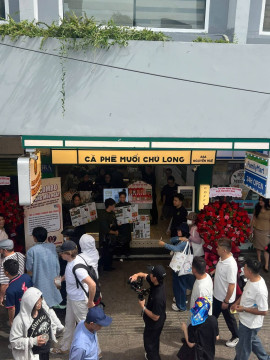
Chu Long Salted Coffee Reinvests in Nguyen Hue Flagship Amid F&B Consolidation
By reinvesting in a second outlet on Nguyen Hue Street, the affordable coffee chain is betting on a central location and local identity even as Vietnam’s F&B market sees outlet numbers fall 7.1%.
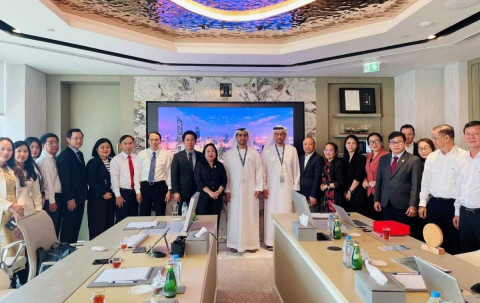
Buon Ma Thuot Coffee Festival 2027 targets 1.3 million visitors
Dak Lak approves plan for the 10th edition, aiming to attract investment in deep processing and boost specialty coffee
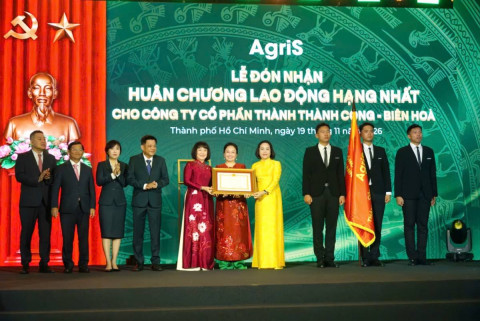
AgriS receives First-Class Labor Medal
Chairwoman Dang Huynh Uc My honored with Third-Class Labor Medal and named head of VINASME’s southern office
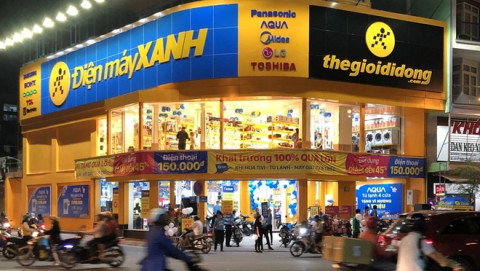
MWG revenue up 30% to VND167 trillion in 10 months
Mobile World Investment Corporation has achieved 90% of its 2026 revenue target, driven by Dien May Xanh, EraBlue's rapid expansion in Indonesia, and Bach Hoa Xanh's growth above the group average.

Inside Herbalife and the VFF's push to make sports science part of the everyday work of Vietnamese football
A Hanoi training session on nutrition and recovery drew strong reviews, and a long list of requests for what comes next

Mandarin orange, mandarin ambitions
A farmer in the Mekong Delta shows how to sell fruit, and the experience of growing it

Vietnam Makes It 10 Straight as Khanh Hoa Drives Golf Tourism Momentum
Ten straight. Vietnam’s grip on Asia’s top golf destination award is still intact—and Khanh Hoa is helping keep that run alive.
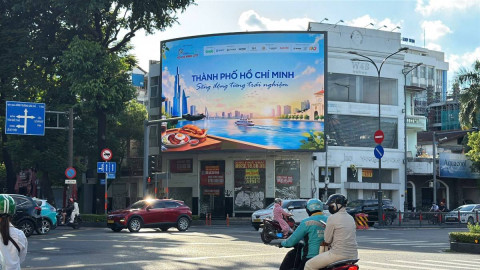
Ho Chi Minh City: A Story in Every Rhythm
Nearly two decades in the making, “Vibrant Ho Chi Minh City – Every Experience is Lively” captures that spirit—a destination story shaped as much by everyday encounters as by its changing skyline.

Vietnam Emerges as a Standout Destination for Autumn Travel
Ranked fourth on Lonely Planet’s list of 15 leading destinations for autumn 2026, Vietnam is drawing attention for its dramatic landscapes, distinct regional cultures and vibrant cities.
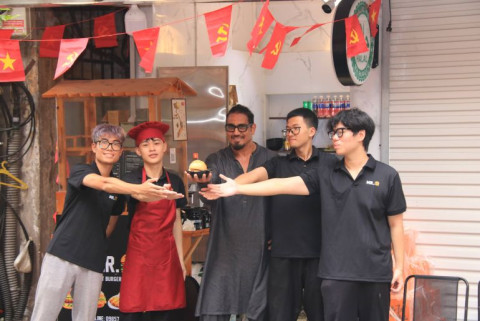
Hoàng Hải Anh and his young peers launch MR. Burgers – a Halal dining destination in Hanoi
At the age of 18, Hoàng Hải Anh (Haris) and his friends have introduced MR. Burgers, bringing the clean Halal food experience to visitors in Hanoi.