

Britain and Vietnam vow to ease trade barriers
- Business
- 09:21 27/11/2026
Talks in Hanoi cover market access, carbon rules and a new finance centre as both sides seek to make their free trade agreement work harder for business.
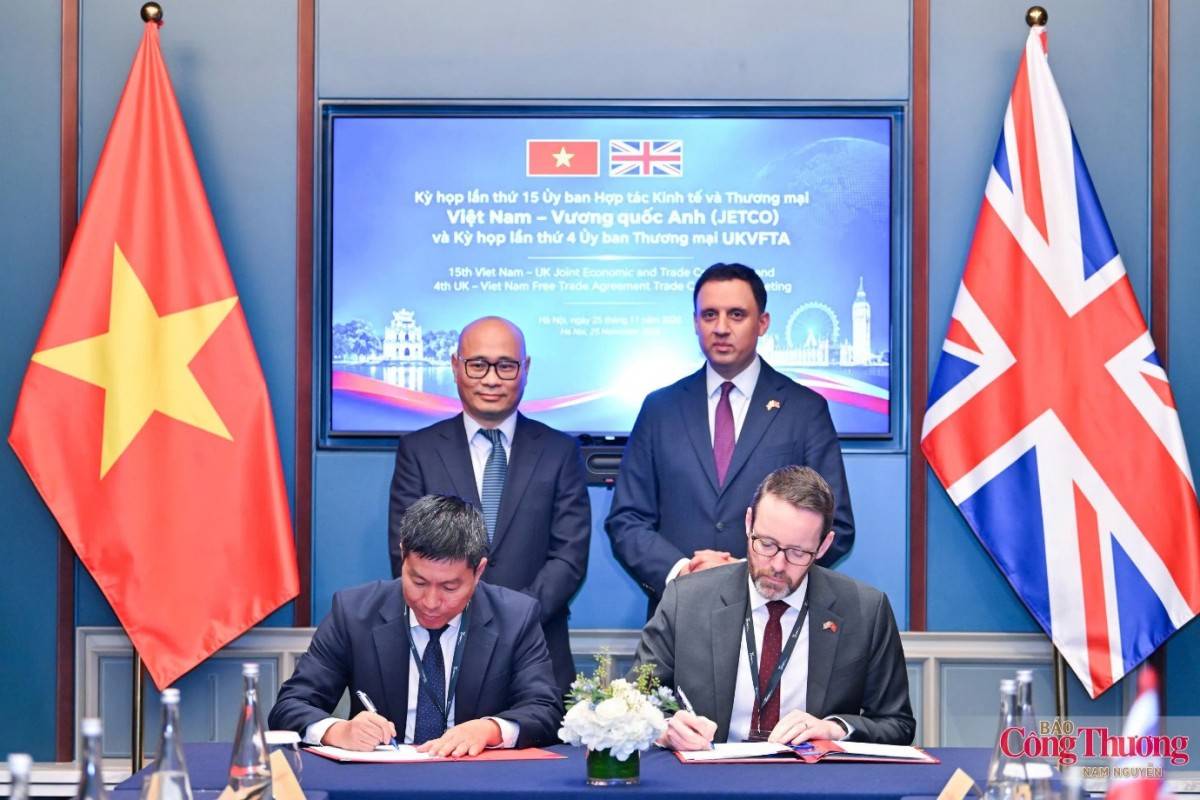
Britain and Vietnam pledged on Wednesday to deepen their trade ties as senior officials met in Hanoi for the 15th Joint Committee on Economic and Trade Cooperation (JETCO) and the fourth session of the Trade Committee under the UK-Vietnam Free Trade Agreement (UKVFTA). The talks were co-chaired by Luong Hoang Thai, Vietnam’s Deputy Minister of Industry and Trade, and Anas Sarwar, the UK’s Minister of State for Trade at the Department for Business, Innovation, Science and Trade.
Iain Frew, the British ambassador, joined officials from ministries, agencies and organisations on both sides.
Opening doors for business
Beyond reviewing the state of bilateral co-operation, the talks centred on the practical obstacles facing importers and exporters in both countries.
Mr Thai urged London to continue working with Hanoi to resolve barriers to market access for agricultural products and food. Trade measures on steel and the Carbon Border Adjustment Mechanism (CBAM) were also on the table.
The issues carry real weight for Vietnamese exporters, who face ever stricter product, environmental and carbon-emission standards in their overseas markets.
The British side responded positively to Vietnam’s requests. Both governments agreed to keep specialist agencies in contact and to step up technical co-operation in search of workable solutions that ease trade.
London, for its part, pressed Vietnam to open its market to beef, lamb and fresh apples.
Vietnamese officials said the authorities were processing the applications and carrying out the required pest-risk analyses. They urged both sides to maintain technical co-operation to speed up the procedures.
On healthcare and pharmaceuticals, the two sides discussed access to innovative medicines, drug reimbursement policies, patient support programmes and the protection of intellectual property.
Vietnam also said it would pass on British comments on its draft decree on the management of cosmetics to the relevant authorities for consideration.
Finance and commodities: a widening partnership
One promising area of shared interest is the development of the Vietnam International Finance Centre (VIFC).
Hanoi welcomed Britain’s expertise and appetite in banking, fintech, financial management and green finance, and encouraged British financial institutions and investors to explore opportunities in the centre.
During the visit, Mr Frew presented a handbook on Vietnam’s derivatives market to Tran Huu Linh, director of the Department of Domestic Market Management and Development at the Ministry of Industry and Trade. The document is intended as a reference for research into how a commodity exchange is organised and run, and builds on professional co-operation between the two countries since March this year.
For Vietnamese businesses, particularly in coffee, rice, rubber, pepper and cashew nuts, derivatives could offer protection against price swings, help firms plan production and manage input costs.
The meeting closed with Mr Thai and Mr Sarwar signing a joint statement. Both sides also witnessed the signing of a memorandum of co-operation on trade defence between the Trade Defence Department of Vietnam’s Ministry of Industry and Trade and its British counterpart.
Closer professional co-ordination, together with clearer work programmes and timetables, should allow both countries to turn the dialogue into practical results, easing difficulties for businesses and making the UKVFTA more effective.
Related news
- Bamboo Airways grounded for good: Once-proud Vietnamese airline that boasted 47 jets and dreamed of a $4BN US float has no aircraft left flying, as debts, seized assets and unpaid wages pile up
- Vietnam, US near completion of reciprocal trade talks as tariff decision looms
- Britain and Vietnam vow to ease trade barriers
- Buon Ma Thuot Coffee Festival 2027 targets 1.3 million visitors
- National Assembly of Vietnam passes SME Development Law
- AgriS receives First-Class Labor Medal
- VINASME opens Southern Representative Office to build SME competitiveness
- Vietnam takes APEC baton from China, eyes ‘new era of self-reliance’ for 2027
- Vietnam–UAE CEPA: Tariff Gains Yet to Translate into Market Share
- Vietnam urges Trump to speed up reciprocal trade deal
- AgriS and its chairwoman to receive First-class Labor Orders
- Mr. To Lam at FrancoTech 2026: Francophone cooperation must move from potential to concrete action
- Mandarin orange, mandarin ambitions
- Vietravel Airlines Reinforces Its Board as It Pushes Into Southern China
- Vietnam’s spice exports on track to hit $2.4 billion in 2026
- Vietnam ranks third in Southeast Asia in digital, AI competitiveness
- Better data key to unlocking SME credit
- VINASME calls for data-driven lending to improve SME access to credit
- Nine banks plan subsidiaries at Vietnam’s international financial center
- Ho Chi Minh City: A Story in Every Rhythm
Đọc thêm Business
Vietnam, US near completion of reciprocal trade talks as tariff decision looms
USTR’s proposed tariff of up to 35% is only a procedural step and not yet in effect, Foreign Ministry says

Securities Market Exhibition Showcases Vietnam to Global Investors
The State Securities Commission is hosting a two-day exhibition in Hanoi on November 26–27 to mark the securities industry's 30th anniversary and promote Vietnam's capital market to international investors.
US tariff proposal puts Vietnamese exporters on alert: 35% is a ceiling, not a verdict
As the USTR unveils its Section 301 findings and proposed measures for 14 economies, Vietnamese exporters must weigh the risks now when planning production, negotiating contracts and organizing supply chains for 2027.
Tuna exports to Israel up 12% but demand remains cautious
Vietnam outpaces the industry average in the first 10 months of 2026, yet volatile orders and pressure from Thailand and China weigh on prospects

VINASME opens Southern Representative Office to build SME competitiveness
The association is shifting from supporting businesses to developing their long-term capacity, backed by a shared digital platform and five breakthrough priorities for 2027–2032.
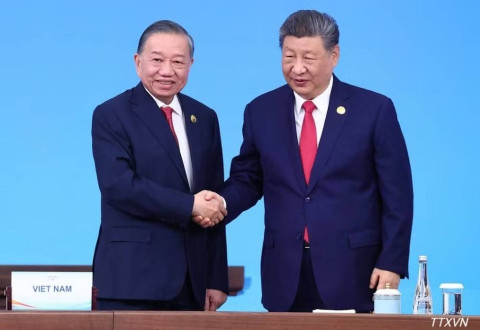
Vietnam takes APEC baton from China, eyes ‘new era of self-reliance’ for 2027
Hanoi unveils theme and three priorities as it prepares to host the forum for the third time, with leaders’ week set for Phu Quoc

VIFC-HCMC courts international capital at Singapore FinTech Festival
At a Singapore workshop, the city’s new financial center outlined four priority product groups and signed a letter of intent with SLEI to broaden Vietnamese businesses’ access to long-term capital.

Vietnam tops ASEAN consumer sentiment despite rising cost concerns
Vietnamese consumers remain the most optimistic in ASEAN with an ACSI score of 63, but rising living costs and gaps in long-term financial security are making them more cautious, savings-minded and investment-oriented
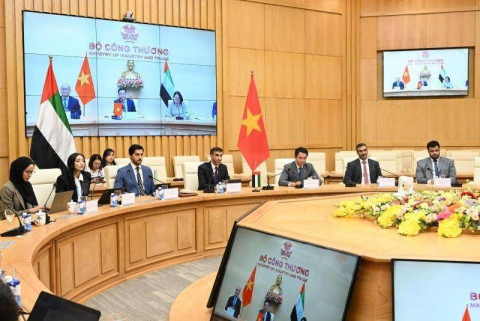
Vietnam–UAE CEPA: Tariff Gains Yet to Translate into Market Share
Nine months into the CEPA, Vietnamese goods enjoy major tariff advantages in the UAE yet hold under 1% of its import market. The greatest potential lies in using the incentives, meeting rules of origin and building distribution networks.
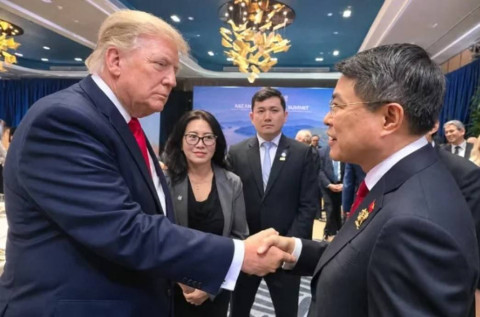
Vietnam urges Trump to speed up reciprocal trade deal
Both sides have held seven formal negotiation rounds and agreed on most of the core content, but no signing date has been set.