

Vietnamese firms face Halal, logistics hurdles in UAE push
- Business
- 17:25 23/10/2026
Vietnamese businesses seeking to enter the UAE and wider Middle East need stronger preparation in Halal compliance, market research and partner networks as logistics and information gaps weigh on exports, experts said.

The concerns were raised at an October 23 workshop in Ho Chi Minh City on the Vietnam-UAE Comprehensive Economic Partnership Agreement (CEPA), organized by the Investment and Trade Promotion Center (ITPC), and the Ministry of Industry and Trade's Import-Export Department.
Two-way trade reached about US$3.16 billion in the first half of 2026, up 0.2% year-on-year, according to the Ministry of Industry and Trade. Vietnam's exports, however, fell 16.4% to around US$2.4 billion, underscoring the challenge of maintaining and expanding market share.
Pham Binh An, former deputy director of the Ho Chi Minh City Institute for Development Research, said tariff preferences come with technical, quarantine and food-safety requirements. Exporters must identify the rules for each product group, prepare test results and technical documents, as well as ensurance of traceability, he added.
For Halal goods, compliance covers raw materials, production, warehousing and transport. Ingredients such as gelatin, collagen, enzymes, additives and flavorings must be checked for origin, while equipment, factory hygiene, storage and safeguards against cross-contamination also determine conformity.
Companies also need to distinguish between products that meet Halal requirements, those that have been certified and those whose certificates are recognized by the destination market. One certificate does not cover every country, so standards and accreditation must be reviewed whenever exporters expand beyond the UAE.
Nguyen Quang Huy, vice-president of the Vietnam National Start-up Association (ViNen), said CEPA, effective since February 2026, creates room to increase Vietnam-UAE trade. But bilateral turnover remains below potential as Vietnamese firms contend with regional volatility, higher logistics costs and limited market information.
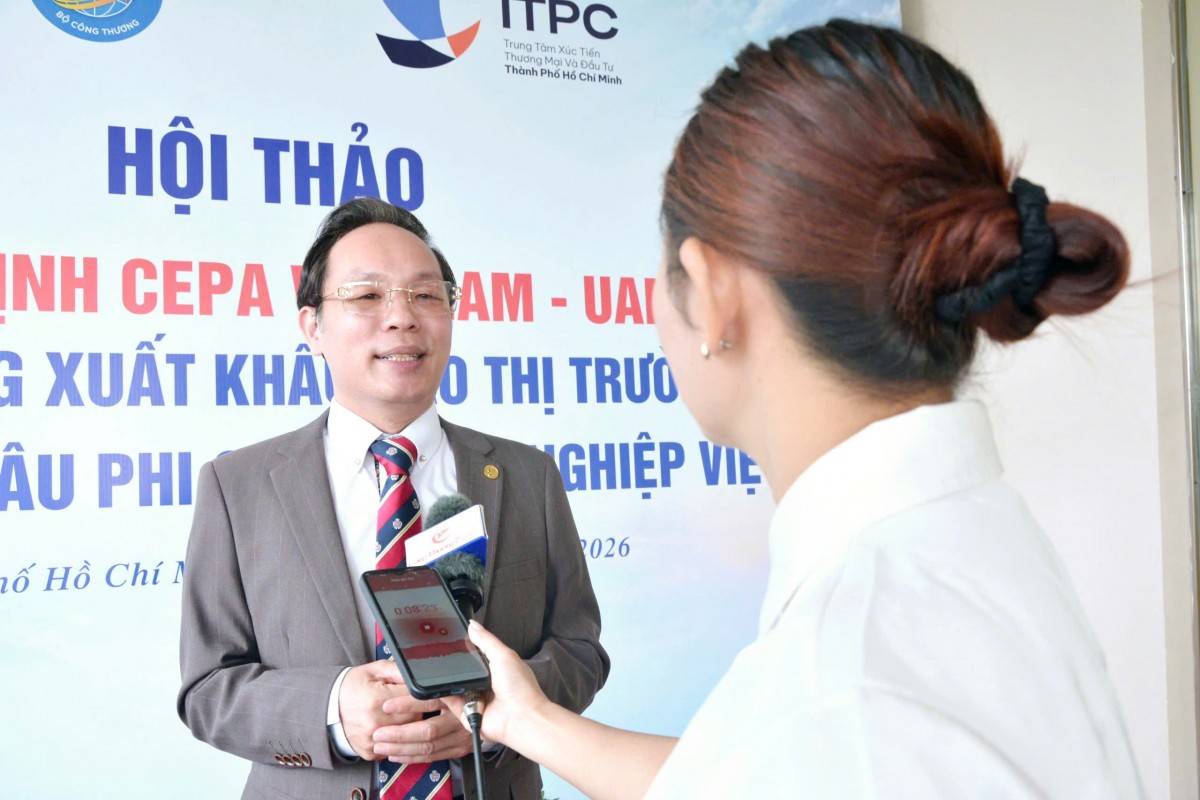
Halal standards are a major entry barrier, requiring exporters to improve product quality and secure recognized certification, Mr. Huy said. At the same time, the large Muslim consumer market offers considerable potential for Vietnamese goods.
To capture that demand, companies should deepen market research, identify partners early and tailor export strategies. ViNen and the Viet Que network in the UAE are connecting agencies, organizations and trading companies - particularly in Dubai - to promote Vietnamese products and help business expand across the Middle East.
Tran Ngoc Binh, heaad of the Import-Export Management Division for Region III under the Import-Export Department, warned that transport constraints and geopolitical risks could affect delivery times, freight costs and storage. These factors are especially important in contracts for fresh produce, seafood and food products.
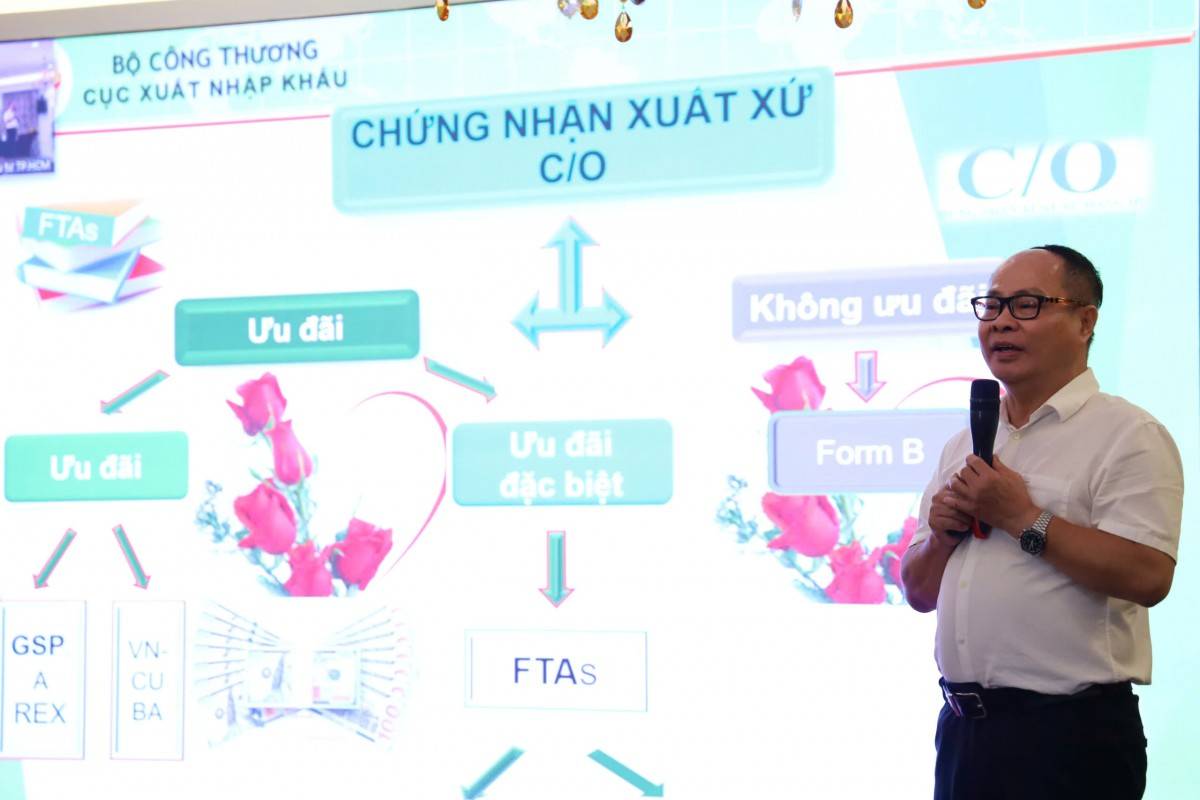
Besides monitoring shipping schedules, exporters should verify partners' legal status and capacity, then clearly set payment, quality, delivery and insurance terms. Contracts should assign responsibility for unexpected problems so tax savings are not eroded by added costs or disputes.
Speakers also called for sector-based business links and more consistent products, documentation and raw-material sourcing. Overseas Vietnamese networks, trade associations and local contacts can provide market intelligence, introduce buyers and connect partners, while online and in-person promotion by the Ministry and Vietnam Trade Office in the UAE can generate more business leads.
Tran Xuan Trang, head of ITPC Foreign Trade Development and Domestic Market Promotion Department, said support would focus on four groups: farm produce and processed food, textiles, footwear, consumer goods and furniture. Planned activities include training in Halal compliance, supply-chain management, trade agreements and market research.
ITPC also plans trade-matching programs and support for companies attending specialized fairs in Dubai and Cairo (Egypt). Businesses meeting importers should bring product profiles, samples and supply plans to lay the groundworks of negotiations after the events.
Proposal for financial support in the furtherance of promotion, training and partner matching should be detailed as Resolution 59/NQ-TW, issued by the Politburo on January 24, 2025, is implemented. Programs should clearly identify target businesses, eligibility conditions and support available.
For exporters, the immediate priority is to refine products, meet Halal standards and strengthen quality control. Stable supply and reliable partners will be essential to turn initial contracts into long-term orders.
Business & Integration - Vietnamese version: Hàng Việt vào thị trường Halal cần sự chuẩn bị và hỗ trợ nào? - Reported by Bich Lien & Thai Hung
Related news
- Vietnam financial center eyes November 2026 launch
- Vietnam targets 20 internationally certified hospitals in medical tourism push
- Vietnam sets sights on double-digit growth as APEC 2027 preparations gather pace
- Vietnam businesses face global test: reform at home, earn trust abroad
- Vietnam firms warned: transform within, build trust abroad or fall behind
- VCBC Chairman Steve Bui: Incentives have run their course — Vietnam enters an institutional race to attract the next generation of FDI
- Vietnamese Journalism in the Age of AI: How can reporters survive in the profession?
- Dr. Samuel Feldberg warns of risks that could reshape the global economic order and shares strategic advice for Vietnamese businesses
- VINASME organizes training program on risk control for sustainable business development amid uncertainty
- Vietnam’s International Financial Center looks beyond tax incentives to compete
- Expert Lại Thiên Phong: Localizing digital transformation – a new growth driver for Vietnam
- Are Vietnamese firms overlooking their most valuable “gold mine”?
- Iran Conflict and the “Double Shock” to the Global and Vietnamese Economies
- After 8 years and trillions sent abroad, are uST investors caught in a risky no-exit situation?
- When Cryptocurrency leaves the "Grey Zone": How are Vietnamese investors seeking profits?
- When the tech unicorn dream is undermined by reckless fundraising structures
- From New Year messages of World Leaders to the “new rules” of the Global economy in 2026
- Connecting Leaders, Shaping the Future: Strategic Leadership Planning Meeting – CorporateConnections Hanoi A
- Sunlight - Unilever Vietnam Recognized for Outstanding Contributions to the National Initiative Supporting Women Entrepreneurs
- Deputy Prime Minister Nguyễn Chí Dũng: “The country’s major challenges weigh heavily on my mind — and we must resolve them together.
Đọc thêm Business
Vietnam financial center eyes November 2026 launch
Vietnam is preparing to launch the first transactions at its International Financial Center in November 2026, with authorities reviewing eligible products and removing regulatory bottlenecks.

Vietnam targets 20 internationally certified hospitals in medical tourism push
A 2026-2030 plan would link healthcare and tourism services across eight destinations while safeguarding access for domestic patients.
Vietnam sets sights on double-digit growth as APEC 2027 preparations gather pace
Strong nine-month growth, rising investment and deeper financial integration are strengthening Vietnam’s outlook, while external risks and implementation challenges keep the policy focus firmly on resilience.

Vietnam businesses face global test: reform at home, earn trust abroad
Vietnamese companies must transform their leadership, teams and cultural outlook — then build trusted international networks — or risk losing ground to better-prepared global rivals.
Vietnam firms warned: transform within, build trust abroad or fall behind
Vietnamese companies must transform their leadership, teams and cultural outlook — then build trusted international networks — or risk losing ground to better-prepared global rivals.
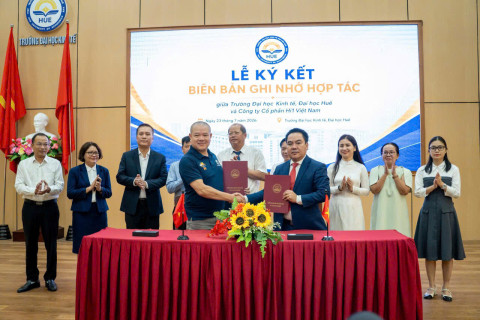
Hi1 and the digital brand ambassador mission: bringing millions of Vietnamese products onto digital platforms with 10,000 Hue students
As millions of OCOP products, local specialty goods and Vietnamese heritage brands continue to struggle to establish a meaningful presence in the digital marketplace, a groundbreaking new cooperation model has just been launched in Hue.
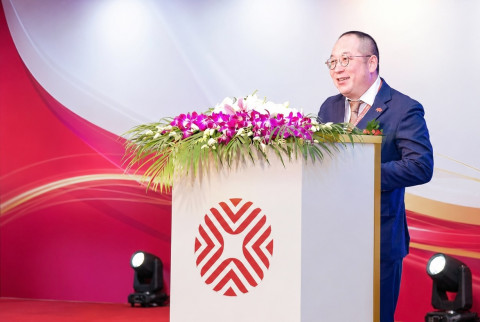
VCBC Chairman Steve Bui: Incentives have run their course — Vietnam enters an institutional race to attract the next generation of FDI
VCBC Chairman Steve Bui analyzes Vietnam's next-generation FDI strategy, stressing that the country must now compete on institutional quality, innovation, and stronger linkages between foreign and domestic enterprises.

Vietnamese Journalism in the Age of AI: How can reporters survive in the profession?
Few professions have faced a transformation as profound as journalism is experiencing today.
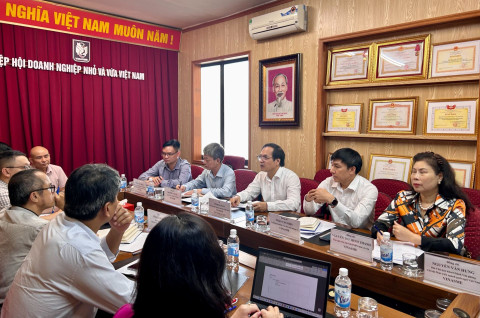
Businesses under pressure: Capital and talent shortages threaten competitiveness
The Vietnam Institute of Economics and World Affairs (VIEWA) recently held a working session with the Vietnam Association of Small and Medium Enterprises (VINASME) as part of a policy research and business support initiative.
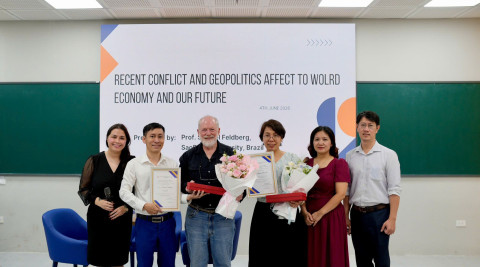
Dr. Samuel Feldberg warns of risks that could reshape the global economic order and shares strategic advice for Vietnamese businesses
Geopolitical tensions, technological transformation, trade fragmentation, and financial uncertainty are reshaping the global economy at an unprecedented pace.