

Vietnam targets 20 internationally certified hospitals in medical tourism push
- Business
- 08:46 23/10/2026
A 2026-2030 plan would link healthcare and tourism services across eight destinations while safeguarding access for domestic patients.
Vietnam is preparing to turn medical care into a tourism draw, with the Ministry of Health proposing an eight-locality program for 2026-2030 and a target of at least 20 hospitals meeting international quality standards.
The draft Medical Tourism Development Plan, now under ministry review, identifies Hanoi, Ho Chi Minh City, Haiphong, Quang Ninh, Da Nang, Hue, Khanh Hoa and An Giang, including the Phu Quoc Special Economic Zone, as the proposed destinations.

At the center of the plan is an effort to create medical tourism products that can compete regionally and gradually establish a Vietnamese brand in the global market. The ministry aims for at least 20 hospitals to secure international quality certification, including no fewer than five public hospitals.
Priority services would range from health check-ups, screening and early disease detection to dentistry, fertility support and specialized treatment. The portfolio would also include traditional medicine, rehabilitation, wellness-oriented care and service for elderly people.
Localities would be assessed not only on clinical expertise, infrastructure and service quality, but also on tourism assets, transport links, accommodation and market demand. The approach is designed to connect healthcare capacity with a wider eco-system of tourism, transport and support service.
For international patients, the draft calls for an end-to-end service process covering consultation, appointment scheduling, admission, treatment, payment, and post-treatment follow-up. Quality and pricing information would be published in multiple languages, while visa, accommodation, cross-border payment and insurance policies would be studied to ease the journey for patients and caregivers.
The rollout is structured into three stages. In 2026-2027, authorities would prepare implementation conditions and select suitable products and locations. The program is expected to launch in chosen localities in 2028, before effectively models are refined and selectively expanded in 2029-2030.
The ministry says expansion must remain anchored in clinical quality and patient safety. It also stresses that attracting overseas patients must not reduce treatment quality or make healthcare less accesible to people in Vietnam.
Business & Integration - Vietnamese version: Đề xuất phát triển du lịch y tế tại 8 địa phương; reported by Thien Phuong
Related news
- Vietnam financial center eyes November 2026 launch
- Vietnam targets 20 internationally certified hospitals in medical tourism push
- Vietnam sets sights on double-digit growth as APEC 2027 preparations gather pace
- Vietnam businesses face global test: reform at home, earn trust abroad
- Vietnam firms warned: transform within, build trust abroad or fall behind
- VCBC Chairman Steve Bui: Incentives have run their course — Vietnam enters an institutional race to attract the next generation of FDI
- Vietnamese Journalism in the Age of AI: How can reporters survive in the profession?
- Dr. Samuel Feldberg warns of risks that could reshape the global economic order and shares strategic advice for Vietnamese businesses
- VINASME organizes training program on risk control for sustainable business development amid uncertainty
- Vietnam’s International Financial Center looks beyond tax incentives to compete
- Expert Lại Thiên Phong: Localizing digital transformation – a new growth driver for Vietnam
- Are Vietnamese firms overlooking their most valuable “gold mine”?
- Iran Conflict and the “Double Shock” to the Global and Vietnamese Economies
- After 8 years and trillions sent abroad, are uST investors caught in a risky no-exit situation?
- When Cryptocurrency leaves the "Grey Zone": How are Vietnamese investors seeking profits?
- When the tech unicorn dream is undermined by reckless fundraising structures
- From New Year messages of World Leaders to the “new rules” of the Global economy in 2026
- Connecting Leaders, Shaping the Future: Strategic Leadership Planning Meeting – CorporateConnections Hanoi A
- Sunlight - Unilever Vietnam Recognized for Outstanding Contributions to the National Initiative Supporting Women Entrepreneurs
- Deputy Prime Minister Nguyễn Chí Dũng: “The country’s major challenges weigh heavily on my mind — and we must resolve them together.
Đọc thêm Business
Vietnamese firms face Halal, logistics hurdles in UAE push
Vietnamese businesses seeking to enter the UAE and wider Middle East need stronger preparation in Halal compliance, market research and partner networks as logistics and information gaps weigh on exports, experts said.
Vietnam financial center eyes November 2026 launch
Vietnam is preparing to launch the first transactions at its International Financial Center in November 2026, with authorities reviewing eligible products and removing regulatory bottlenecks.
Vietnam sets sights on double-digit growth as APEC 2027 preparations gather pace
Strong nine-month growth, rising investment and deeper financial integration are strengthening Vietnam’s outlook, while external risks and implementation challenges keep the policy focus firmly on resilience.

Vietnam businesses face global test: reform at home, earn trust abroad
Vietnamese companies must transform their leadership, teams and cultural outlook — then build trusted international networks — or risk losing ground to better-prepared global rivals.
Vietnam firms warned: transform within, build trust abroad or fall behind
Vietnamese companies must transform their leadership, teams and cultural outlook — then build trusted international networks — or risk losing ground to better-prepared global rivals.
Hi1 and the digital brand ambassador mission: bringing millions of Vietnamese products onto digital platforms with 10,000 Hue students
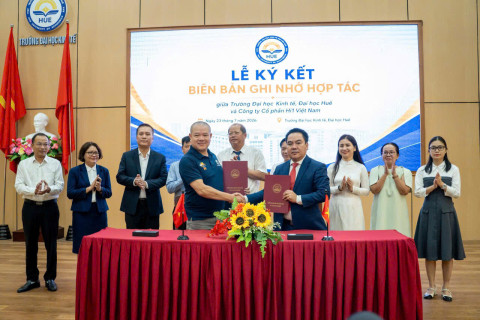
As millions of OCOP products, local specialty goods and Vietnamese heritage brands continue to struggle to establish a meaningful presence in the digital marketplace, a groundbreaking new cooperation model has just been launched in Hue.
VCBC Chairman Steve Bui: Incentives have run their course — Vietnam enters an institutional race to attract the next generation of FDI
VCBC Chairman Steve Bui analyzes Vietnam's next-generation FDI strategy, stressing that the country must now compete on institutional quality, innovation, and stronger linkages between foreign and domestic enterprises.

Vietnamese Journalism in the Age of AI: How can reporters survive in the profession?
Few professions have faced a transformation as profound as journalism is experiencing today.
Businesses under pressure: Capital and talent shortages threaten competitiveness
The Vietnam Institute of Economics and World Affairs (VIEWA) recently held a working session with the Vietnam Association of Small and Medium Enterprises (VINASME) as part of a policy research and business support initiative.
Dr. Samuel Feldberg warns of risks that could reshape the global economic order and shares strategic advice for Vietnamese businesses
Geopolitical tensions, technological transformation, trade fragmentation, and financial uncertainty are reshaping the global economy at an unprecedented pace.