

Vietnam sets sights on double-digit growth as APEC 2027 preparations gather pace
- Business
- 14:58 22/10/2026
Strong nine-month growth, rising investment and deeper financial integration are strengthening Vietnam’s outlook, while external risks and implementation challenges keep the policy focus firmly on resilience.
Vietnam used the 33rd APEC Finance Ministers' Meeting (FMM 2026), held on October 20-21, to set out an ambitious economic agenda built around high growth, macroeconomic stability and preparations for its APEC host year in 2027.
Growth momentum meets price pressures
Speaking at the meeting, Minister of Finance Ngo Van Tuan said Vietnam's GDP expanded 9.01 per cent in the first nine months of 2026, while the consumer price index rose 4.52 per cent, according to information released by the Ministry of Finance on October 20.
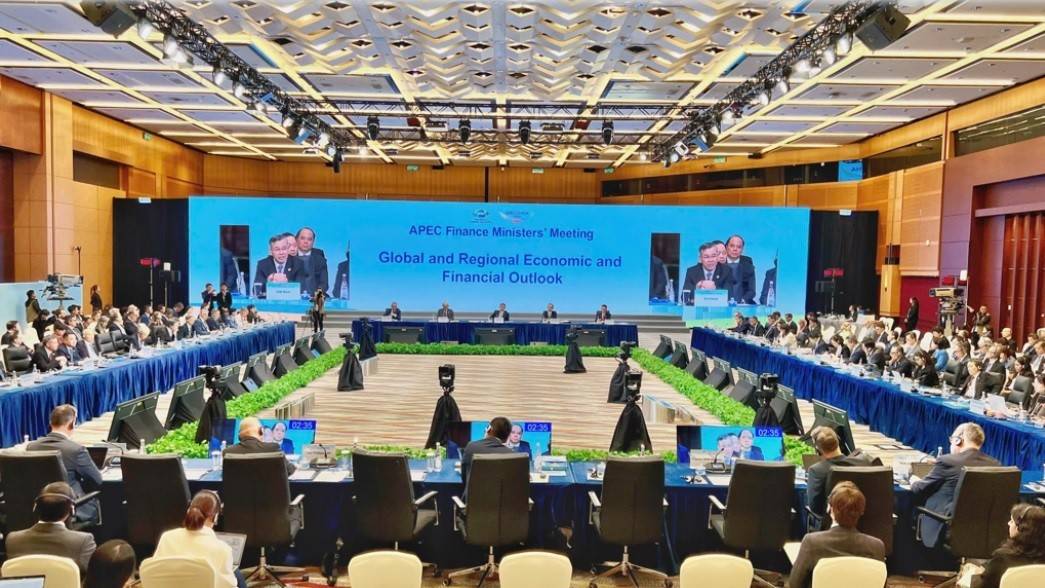
The figures underline the central policy challenge: sustaining momentum without allowing price pressures to undermine stability. Vietnam is targeting double-digit growth in 2027, supported by a growth model increasingly anchored in science, technology and institutional reform.
Minister Tuan attributed the recent performance to the coordination of focused expansionary fiscal policy, flexible monetary policy and reforms aimed at improving the operating environment. For business, however, rapid headline growth does not remove the practical constraints of accessing capital, forecasting costs and expanding into markets by a volatile global economy.
Policy support will therefore need to be matched by fiscal discipline, efficient investment and stronger risk controls if growth is to remain durable.
Investment and market status lift the outlook
Investment remains a central driver. Data cited by the Ministry of Finance at FMM 2026 put registered foreign direct investment accounts at US$50.36 billion. Development investment accounts for about 40 per cent of the budget structure, while public debt remains at around 35-36 per cent of GDP.
Vietnam's integration story has also gained momentum. FTSE Russell confirmed that the country's stock market would move from frontier to secondary emerging-market status from September 21, 2026. The World Bank, meanwhile, confirmed Vietnam's classification as an upper-middle-income economy from July 2026.
Both milestones strengthen Vietnam's standing in the international financial system, but neither guarantees an immediate surge in capital. Market access, transparency, corporate governance and operational efficiency will continue to shape investor decisions.
APEC diplomacy moves into focus
On the sidelines of FMM 2026, Minister Ngo Van Tuan held bilateral meetings with Chinese Finance Minister Lan Fo'an and US Under Secretary of the Treasury for International Affairs Erin Browne, placing early consultations for APEC 2027 alongside broader economic cooperation.
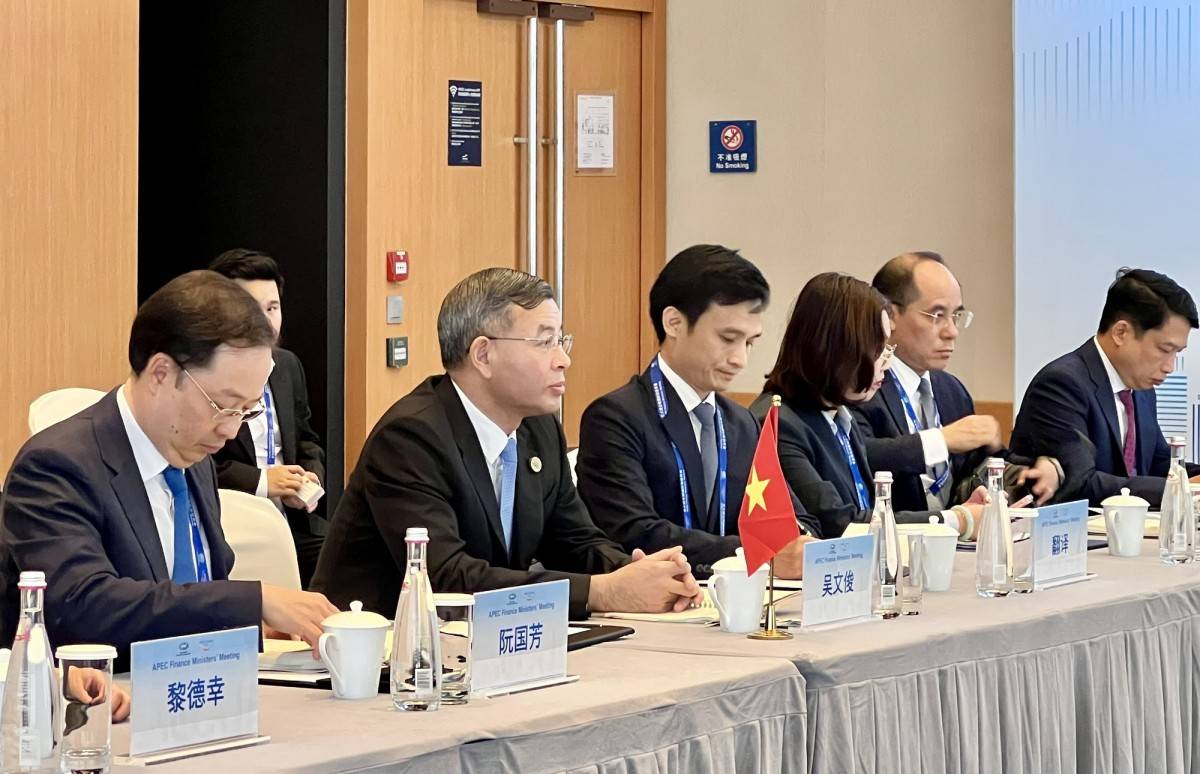
In discussion with China, Vietnam proposed an exchange of experience on organizing and coordinating APEC Year 2027. The two sides also considered priorities for the APEC Finance Ministers' Process, expected to build on the Incheon Action Plan and maintain continuity across the wider agenda.
With the United States, Vietnam sought consultations on priority themes for 2027 and advanced several bilateral issues. These included technical negotiations on a protocol amending the bilateral tax agreement, experience-sharing on technology screening for FDI projects, and US support for negotiations on a reciprocal, fair and balanced trade agreement.
According to the Vietnamese Government Online Portal, the US side welcomed Vietnam's proposed priorities and expressed readiness to help translate them into a detailed action plan.
The consultations show that hosting APEC is about more than conference logistics. It gives Vietnam a platform for policy exchange and for deeper financial and trade engagement with major partners. At this stage, however, the discussions should not be read as completed agreements or formal commitments.
External risks test resilience
The global and regional outlook was a major focus in FMM 2026. Information released by the Ministry of Finance put global economic growth at a projected 3.1 per cent in 2026 and 3.4 per cent in 2027.
Investment in artificial intelligence and developments in energy markets could provide support. Geopolitical tensions, high interest rates and the technology gap, however, remain significant sources of uncertainty.
International financial institutions also highlighted the risk of supply-chain and energy-transport disruption arising from conflict in the Middle East, as well as the implications of El Nino for food security. Factors discussed at the meeting could add to price pressures and lift regional inflation to 4.2 per cent. That figure is a conference forecast and should not be treated as the recorded inflation rate of any individual economy.
For Vietnam, the transmissions channels are clear: energy and transport cuts, input prices, and weaker demand in export markets. The pursuit of high growth will therefore depend on the capacity to absorb external shocks, diversify markets and strengthen business reliance.
From host-year ambition to practical outcomes
Preparations for APEC 2027 were under way well before FMM 2026. In June, a Ministry of Finance delegation attended the APEC Senior Finance Officials' Meeting in Chengdu, China, where it exchanged views with the APEC Secretariat and partners on policy priorities, technical support and the organization of the Finance Ministers' Process.
The APEC finance agenda spans fiscal policy for households and human-capital investment, financing for digital infrastructure, and broader access to financial services - issues closely aligned with the development needs of regional economies.
For Vietnam, the host year creates an opportunity to bring practical business concerns into policy dialogue, widen connections witjh investors and promote cooperation in finance, technology and infrastructure.
The measure of success will be whether broad priorities become credible cooperation initiatives and tagible results. With double-digit growth targeted for 2027, Vietnam must connect external economic engagement with domestic reform, better investment performance and a stronger foundation for long-term expansion.
Bao Ngan
Related news
- Vietnam Makes It 10 Straight as Khanh Hoa Drives Golf Tourism Momentum
- Nine banks plan subsidiaries at Vietnam’s international financial center
- Ho Chi Minh City: A Story in Every Rhythm
- A democratic congress could reshape U.S. foreign policy, but President Donald Trump still holds the keys
- Vietnamese exporters face green standards hurdle in EU market
- Vietnam Police Sports Association Teams Up with 90,000-Strong Business Network to Boost Athletics
- Vietnam Foodexpo to host largest edition with over 500 businesses
- Vietnam seeks innovation-led growth amid shifting global economic landscape
- Vietnam PM proposes four initiatives to drive economic growth
- Autumn Economic Forum seeks new growth engines in AI era
- Vietnam Demands Results from Diplomacy
- HCMC pushes open innovation towards commercial gains
- Vietnam Emerges as a Standout Destination for Autumn Travel
- 2026 Autumn Economic Forum promoted on Seoul screens
- Margin lending drives HSC earnings as brokerage revenue tumbles
- Bepharco appoints 2002-born executive as CEO
- Vietnam financial center eyes November 2026 launch
- Vietnam targets 20 internationally certified hospitals in medical tourism push
- Vietnam sets sights on double-digit growth as APEC 2027 preparations gather pace
- Vietnam businesses face global test: reform at home, earn trust abroad
Đọc thêm Business
Nine banks plan subsidiaries at Vietnam’s international financial center
Nine Vietnamese banks are moving to set up wholly owned subsidiaries at the Vietnam International Financial Center (VIFC), but must meet licensing requirements before they can begin operations.

Ho Chi Minh City seminar to examine green energy and industrial cost savings
Rooftop solar, direct power purchase agreements and energy storage will be the focus of a November 25 seminar in Ho Chi Minh City, with discussions centering on investment efficiency and cost optimization for industrial enterprises.

Polish food firms seek Vietnamese partners at HCMC event
Polish food companies showcased their products and met Vietnamese buyers in HCMC on Nov. 10, seeking partnerships to expand their presence in the local market.
Vietnamese exporters face green standards hurdle in EU market
The Vietnam-EU Economic and Trade Cooperation Forum 2026 opened in Hanoi on Nov. 4 as bilateral ties entered a new phase. Beyond EVFTA opportunities, emissions cuts, supply chain transparency and technology transfer are becoming essential to Vietname

Asiago PDO Cheese and French Charcuterie Showcased in Hanoi: Bringing the Best of European Culinary Heritage to Vietnam
Industry representatives engage in discussions at the B2B Networking Event on October 30.
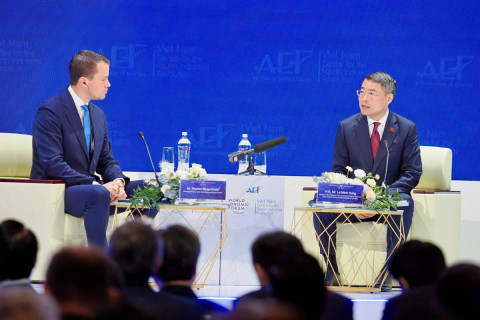
Vietnam seeks innovation-led growth amid shifting global economic landscape
Prime Minister of Vietnam Le Minh Hung has outlined Vietnam's strategy to strengthen economic resilience, accelerate innovation and enhance the competitiveness of domestic enterprises as global supply chains undergo significant restructuring.
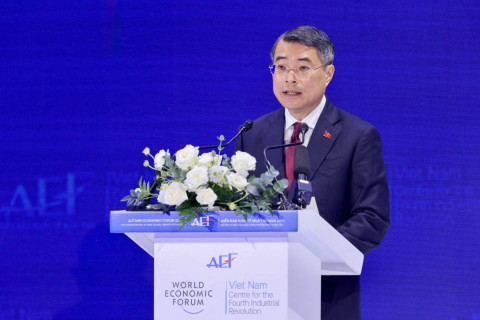
Vietnam PM proposes four initiatives to drive economic growth
Prime Minister Le Minh Hung has proposed four areas of cooperation with international partners to boost innovation, develop high-tech talent, test emerging technologies and attract long-term investment.

Sacombank names banking veteran Nguyen Xuan Ai Quoc as deputy chief — with profits tipped to surge 111%
The seasoned financier, a son of late film star Tham Thuy Hang, joins as the Vietnamese lender targets rapid growth and a major debt recovery.
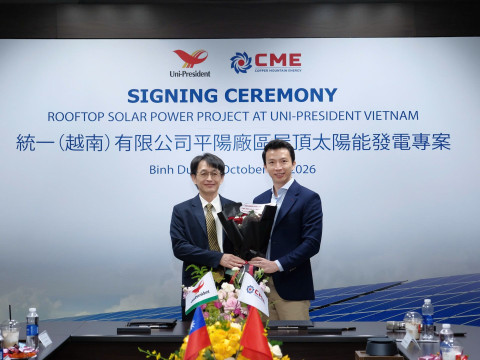
CME Solar Partners with Uni-President Vietnam to Deploy a 6,601 kWp Rooftop Solar Project
The 6,601 kWp rooftop solar project is expected to supply 8,656 MWh of clean electricity per year to Uni-President Vietnam, helping the company optimize energy costs and reduce CO₂ emissions.
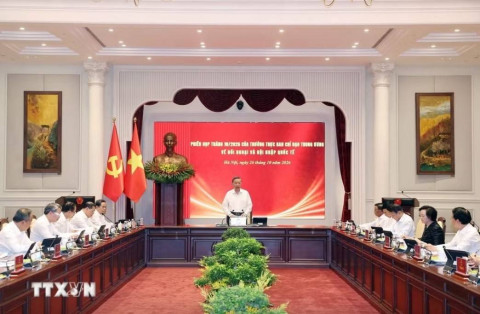
Vietnam Demands Results from Diplomacy
Top leaders of Vietnam order international pledges turned into jobs, productive capacity and markets—with institutions held to account for delivery.