

From Indigenous Values to Far-Reaching Aspirations: Vietnamese Women Entrepreneurs
- Entrepreneur
- 21:05 22/10/2026
From specialty rice fields to the silk looms of Nam Cao, Vietnamese women are turning inherited knowledge into enduring livelihoods—and carrying the memory of place into new markets.
In Vietnam, a grain of rice and a filament of silk can hold an entire landscape. One speaks of alluvial fields, patient seasons, and hands bent close to the earth; the other of mulberry gardens, humming looms, and skills passed quietly from mother to daughter. For the women building enterprises around these inheritances, heritage is not something sealed behind glass. It is living material - cultivated, woven, traded and entrusted to the future. Their businesses begin with what the country has long known, then ask how those values might travel further without losing the place from which they come.
A grain of rice, a map of home
To Duong Thanh Thao, Director of Ong Tho Rice, rice is never merely the white grain set at the center of a Vietnamese meal. Each variety bears the imprint of its growing region: the character of the soil, the turn of the seasons, the discipline of safe cultivation, and the labor of farmers who know their fields by heart.
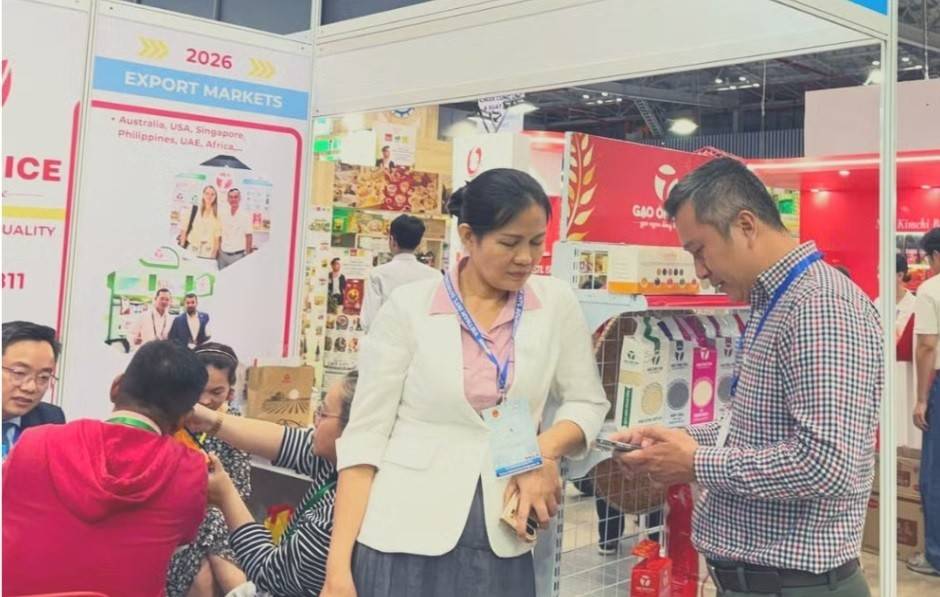
By developing Vietnamese specialty rice, the company is shaping a traceable supply chain through direct relationships with producing regions and a fair regard for farmers' interests. Its rice has reached the Philippines, the United States, Australia and Japan. On distant shelves and tables, those grains make a quiet case for Vietnamese agriculture: when provenance and quality are honored, a familiar food can become an eloquent ambassador.
The journey, then, is larger than the passage of a brand across borders. It is an attempt to let every grain tells its full story - from the grower's toil and the standards demanded by the market to the confidence of the family that finally lifts the lid of the rice pot.
Thao has chosen to carry that story on four principles, "Let integrity be the foundation, courage the armor, continuously cultivate knowledge to reach further, and determination the driving force. With these four elements, we will surely reap proud achievements for our lives", she shared.
The language of that of enterprise, but its cadence belongs equally to the field: prepare the ground, withstand uncertain weather, learn from each season, and wait for the harvest. For Vietnamese businesses looking outward, earned trust may be the most enduring crop of all.
Where the loom still sings
If Duong Thanh Thao's story rises from the rice fields, then Luong Thanh Hanh's begins with the measured music of the loom. In Nam Cao, where silk threads have long passed through practiced fingers, she has entrusted her ambitions to one of Vietnam's most delicate inheritances.
For more than 12 years, the founder and director of Hanhsilk and President of the Nam Cao Silk Cooperative has worked toward a purpose at one cultural and practical: to return vitality to a traditional weaving craft and ensure that the women and families who sustain it can continue to live by their skills.
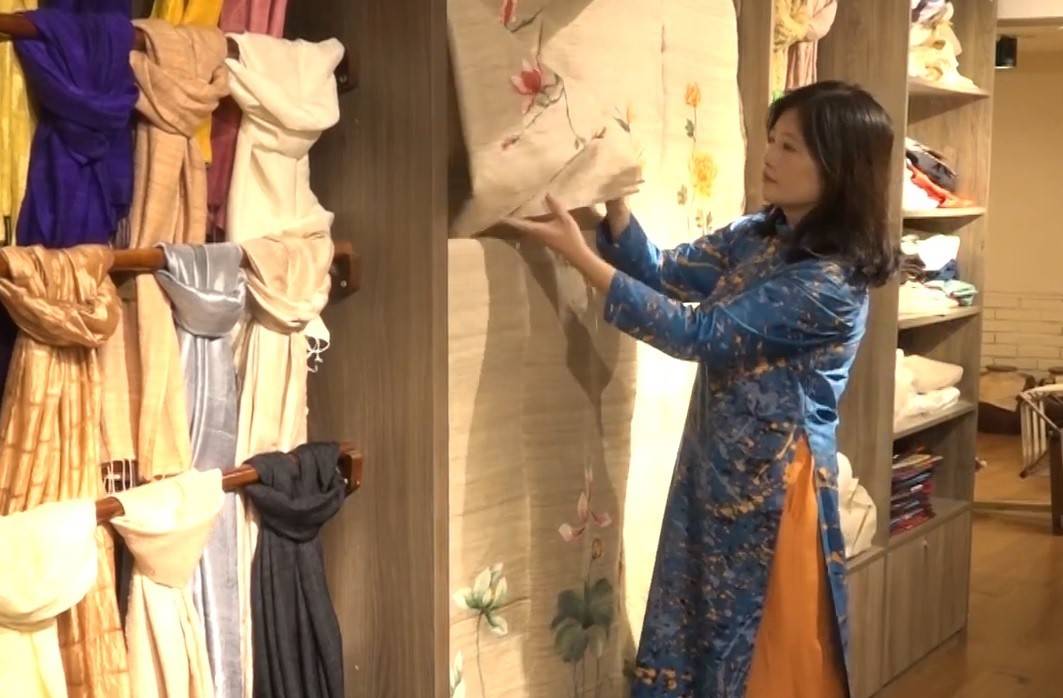
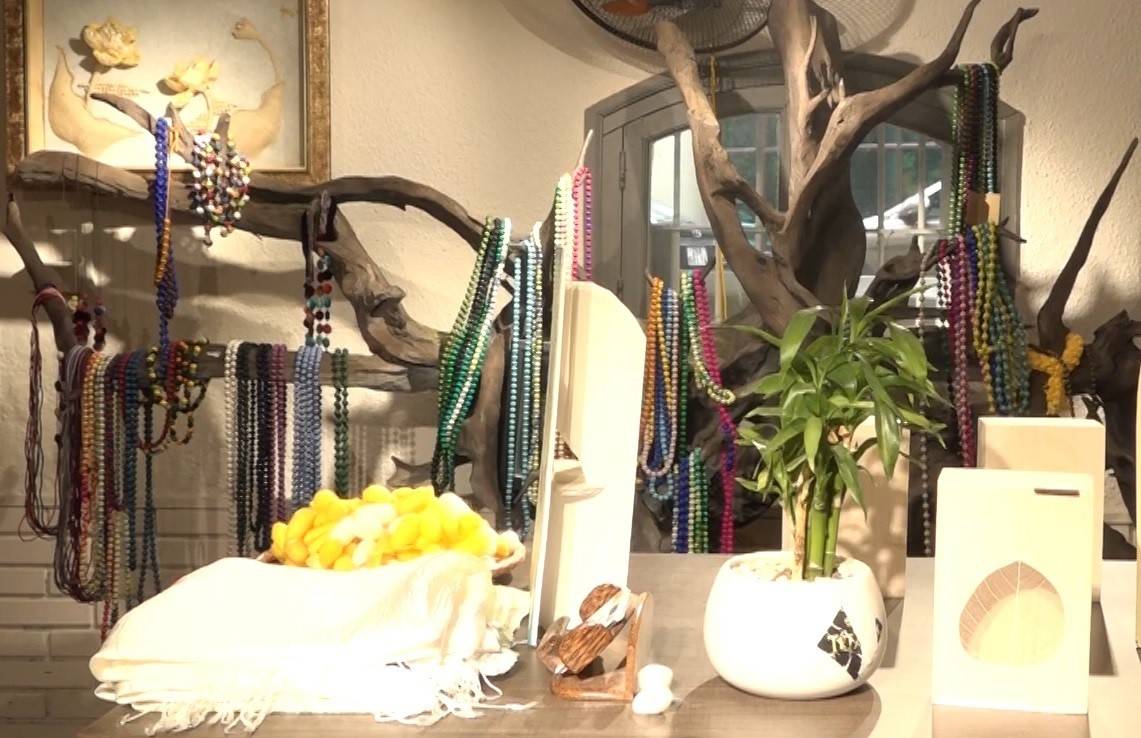
The measure of that revival is found not only in the sheen of finished silk, but in the life gathered around it. The cooperative supports more than 250 member households, provide income for nearly 1,000 families, and helps maintain approximately 700 hectares of mulberry cultivation. From Nam Cao, its craft network now reaches villages in Bao Loc (Lam Dong) and Mekong Delta. More than 10,000 international visitors from over 50 countries have come close enough to hear the looms and see cloth emerge thread by thread.
Such figures reveal the living anatomy of heritage: mulberry plots, reeling rooms, household incomes, remembered gestures, and visitors willing to pause before a loom. When craft is thoughfully joined with markets, tourism, and the desire for meaningful cultural encounters, preservation ceases to be an elegy. It becomes daily work, and daily bread.
In 2023, Nam Cao silk weaving was recognized as a National Intangible Cultural Heritage. The title gives the craft a place in the nation's cultural record. For Hanh, however, its truest archive remains human - the women who have carried the knowledge of silk in their hands and memory from one generation to next. Working with women's communities in many localities, Hanh has learned that talent is seldom the scarce resource. What is scarce is the opening through which talent may enter the world. "What they need sometimes is just opportunity, connections and confidence to develop those values", she said.
Her observation reaches far beyond one cooperative. Across rural Vietnam, women command intimate stores of knowledge: how a material behaves, when a crop is ready, which gesture produces a proper finish, how a household and a workshop may be kept in motion together. Joined with markets, management expertise, and supportive networks, that knowledge can anchor resilient local economies without severing them from the culture ground.
Giving inherited skill a future
Rice and silk appear to belong to different realms - one humble and one sustaining, the other fine and luminous. Yet the women behind these ventures share the same instinct. They look closely at what has always been near, recognize its neglected worth, and fashion from it products, brands, and livelihoods capable of meeting at present.
Nguyen Thi Thu Ha, an impact investment advisor at the Rabo Foundation, has watched Vietnamese women step into business with growing assurance. Many starts small, close to the household and the resources immediately around them, yet bring an eagerness to learn and to set new knowledge to work in both enterprise and family life.
Thus, women's entrepreneurship in Vietnam has many doorways. It may begin beside a field, within a weaving room, at a family table, or in the recognition that an inherited skill deserves a wider market. Capital is not always plentiful and the road outward is rarely clear, but experience, ingenuity and community ties provide a sturdy first frame.
Resolve alone, however, cannot take any enterprise from village to global markets. Lasting success requires a supportive environment. That support must be practical: management skills, capital, digital capacity, market access, and tools to meet sustainable production standards.
Building on this need, Prime Ministerial Decision No. 2415/QĐ-TTg issued October 31, 2025, established the Project to Support Women's Entrepreneurship for 2026-2035. Specifically, by 2030, it aims to train 50,000 women business owners, help 12,500 women-owned household businesses become enterprises, and raise women's shares of ownership and managerial roles in businesses and cooperative enterprises to 30%. To turn these targets into practice, the project also aims to connect 50,000 women-owned enterprises, cooperatives, and household businesses with preferential capital, start-up funding, and innovation support, while promoting sustainable, green, and digital development.
Ultimately, these measures matter when a workshop can buy equipment, a cooperative secure a market, a household business become an enterprise, or a local product cross a border carrying its origins.
What one woman's work set on motion
The journeys of Duong Thanh Thao and Luong Thanh Hanh are distinct, yet both keep enterprise close to community. One seeks to give Vietnamese agriculture a stronger voice while honoring the people who cultivate it; the other keeps an old loom turning and livelihoods gathered around it. In eaach story, success is measured not only by what leaves the business, but by what remains and grows in the place that made it possible.
The romance of rice fields and silk looms should not obscure the rigor required to sustain them. Enduring enterprises still depends on sound management, financial stability, reliable markets, and the agility to respond to cahnging technology, production standards, and consumer expectations. Heritage survives not through sentiment alone, but through competence renewed each day.
Even so, these women illuminate a hopeful course. When women gain to power to shape enterprises of their own, communities gain new resources; when those business endure, they carry forward more than income. They carry knowledge, creativity, and the indigenous values through which Vietnam recognizes itself.
A woman's aspiration is rarely hers alone. It may contain the hope that farmers can live more securely from the rice they cultivate, that artisans can support their families through a craft learned at an elder's side, and that a younger generation will still know the sound of the loom, the feel of true silk, and the worth of grain grown close to home.
When such aspiration are met with knowledge, thoughful policy, and equal opportunity, one woman's success can be a threshold for many others.The rice continues its journey, the silk runs through its loom. Neither remain unchanged, yet each retains the memory of the hands and places that gave it form. In that delicate balance between inheritance and invention lies the promise of a more sustainable - and more deeply rooted - economy.
Business & Integration - Vietnamese version: Từ giá trị bản địa đến khát vọng vươn xa của nữ doanh nhân Việt - reported by Tran Linh
Related news
- Vietnam financial center eyes November 2026 launch
- Vietnam targets 20 internationally certified hospitals in medical tourism push
- Vietnam sets sights on double-digit growth as APEC 2027 preparations gather pace
- Vietnam businesses face global test: reform at home, earn trust abroad
- Vietnam firms warned: transform within, build trust abroad or fall behind
- VCBC Chairman Steve Bui: Incentives have run their course — Vietnam enters an institutional race to attract the next generation of FDI
- Vietnamese Journalism in the Age of AI: How can reporters survive in the profession?
- Dr. Samuel Feldberg warns of risks that could reshape the global economic order and shares strategic advice for Vietnamese businesses
- VINASME organizes training program on risk control for sustainable business development amid uncertainty
- Vietnam’s International Financial Center looks beyond tax incentives to compete
- Expert Lại Thiên Phong: Localizing digital transformation – a new growth driver for Vietnam
- Are Vietnamese firms overlooking their most valuable “gold mine”?
- Iran Conflict and the “Double Shock” to the Global and Vietnamese Economies
- After 8 years and trillions sent abroad, are uST investors caught in a risky no-exit situation?
- When Cryptocurrency leaves the "Grey Zone": How are Vietnamese investors seeking profits?
- When the tech unicorn dream is undermined by reckless fundraising structures
- From New Year messages of World Leaders to the “new rules” of the Global economy in 2026
- Connecting Leaders, Shaping the Future: Strategic Leadership Planning Meeting – CorporateConnections Hanoi A
- Sunlight - Unilever Vietnam Recognized for Outstanding Contributions to the National Initiative Supporting Women Entrepreneurs
- Deputy Prime Minister Nguyễn Chí Dũng: “The country’s major challenges weigh heavily on my mind — and we must resolve them together.
Đọc thêm Entrepreneur
Sunlight - Unilever Vietnam Recognized for Outstanding Contributions to the National Initiative Supporting Women Entrepreneurs
On 30 November 2025, at the review conference of Project 939 and the launch of Project 2415, Unilever Vietnam and its brand Sunlight were honored with a Certificate of Merit from the Presidium of the Vietnam Women’s Union (VWU).

The Entrepreneur calls on the government to resolve Vietnam’s critical logistics bottlenecks
Nguyễn Thị Bích Thủy, CEO of Trang Huy Logistics, spoke on behalf of many Vietnamese logistics enterprises.

Billionaire Bezos teaches Vietnamese entrepreneurs: “Don’t do business, be obsessed with customers”
Ranked the world’s fourth-richest person (Forbes, August 2025) with an estimated fortune of $241 billion, billionaire Jeff Bezos created the Amazon legend.
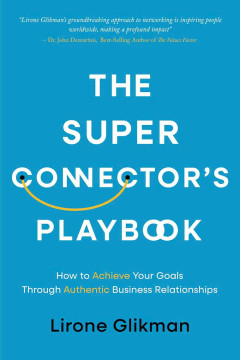
The Super Connector’s Playbook: The art of building soft power in the age of connection
In an era where technology is merely a tool, speed is no longer the ultimate edge, and attention has become the scarcest asset. Extraordinary success belongs not to those who are the smartest, but to those who are the most trusted.
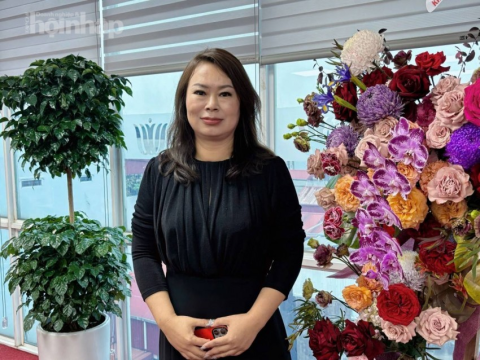
The move of a Chinese businesswoman into Vietnam’s snack market
Recognizing Vietnam’s market potential, Chinese entrepreneur Liu Gengyan aims to develop a professional and distinctive snack store chain in the country.

Who are the two mysterious female tycoons holding 52 million HQC shares?
Two female tycoons have emerged as major shareholders of Hoang Quan Consulting-Trading-Service Real Estate Corporation (HQC), holding a combined 52 million shares, with investments totaling hundreds of billions of VND.

Young entrepreneur Lisa Phan: When you dream and act, nothing is impossible
Lisa Phan believes that a company’s success comes not only from good products and services but also from the way people treat one another.

Chopin: The magical piano – Touching the heart and emotions of the audience
THE YEAR 2024 MARKED THE RETURN OF PIANIST NGUYỄN VIỆT TRUNG WITH A SERIES OF REMARKABLE PERFORMANCES.
Request to thoroughly resolve real estate issues and avoid "criminalization"
The National Assembly requests a thorough resolution of real estate projects entangled with legal issues, avoiding the "criminalization" of economic and civil relations, and clarifying "no legalization of violations."
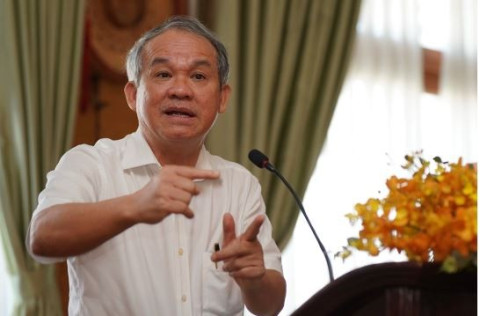
‘'Bầu Đức'’ and the banana revolution at Hoang Anh Gia Lai
Amid economic challenges, Hoang Anh Gia Lai (HAGL) has staged a strong comeback under the leadership of "Bầu Đức", thanks to banana cultivation.