

Prolonged Russia-Ukraine tensions undermine Vietnam's economic recovery and progress, according to the expert Nguyen Bich Lam
- Business
- 19:22 26/05/2022
DNHN - The disruption of the global supply chain brought on by the COVID-19 epidemic and the Russia-Ukraine situation is having a significant influence on the availability of raw materials and industrial supplies. Dr Nguyen Bich Lam, an economic expert and former Director-General of the General Statistics Office, spoke on this topic.

According to the expert, Nguyen Bich Lam, both Russia and Ukraine are longstanding and significant trading partners of Vietnam in the Eurasian area. Russia was first in terms of trade volume, while Ukraine ranked sixth.
The total import and export turnover between Vietnam, Russia, and Ukraine in 2021 was approximately 7.6 billion USD, accounting for 1.2% of the country's total import and export turnover; the import and export turnover between Vietnam and Russia reached 7.14 billion USD in 2021, up 25.9% from 2020, ranking 21st among Russia's most important trading partners. Vietnam is Russia's biggest ASEAN economic partner and the sixth-largest among APEC economies.
Vietnam's export turnover to Russia will reach 4.89 billion USD in 2021, an increase of 20.9% over 2020; Vietnam's import turnover from Russia reached 2.25 billion USD, an increase of 38.3%; Vietnam has a trade surplus with Russia of 2.64 billion USD.
Vietnam exports mostly mobile phones and components to Russia, as well as computers, electrical devices and components, and textiles. These three commodity groupings account for around 57% of export turnover to Russia, making them the most vulnerable shortly.
Furthermore, agricultural and fisheries products account for approximately 15.8 per cent of total export turnover; this is the product category that would be impacted, despite Russia not being a significant market for these goods.
I believe Vietnam sells a limited quantity of commodities to the Russian and Ukrainian markets, but there is some spillover to the Eurasian Union, the market with which Vietnam has an FTA. Because of this, the stoppage of business will also affect other key markets.
Sir, how will problems in the global supply chain, especially in Russia and Ukraine, affect Vietnam's economy?
Our country's economy is very open, participating in many multilateral and bilateral trade agreements and is deeply integrated into the global economy; The economy will be impacted both directly and indirectly when the world economy declines and inflation is high; when the world economy declines and inflation is high, especially with the economic decline of important partners with Vietnam, the economy will be impacted both directly and indirectly. The momentum of our nation's economic recovery and growth remained strong.
The Russia-Ukraine problem will get worse because the COVID-19 pandemic hasn't been fixed yet. This has disrupted the global supply chain.
In addition, disruptions in the global supply chain have an effect on Vietnam's export volume, particularly the export volume of electrical and electronic items, for which Russia and Ukraine are key suppliers. Materials such as nickel and palladium are required for the production of electronic device components; thus, any limitation or interruption in the supply of Russian commodities may disrupt the electronic device production chain.
The Russia-Ukraine conflict and the ban will delay the supply of imported and exported commodities from Vietnam to Russia, raise transportation expenses, and increase costs. Also, as the ruble goes down in value, Vietnamese exporters will lose money and foreign currency.
In addition, Russia's exclusion from the Society for Worldwide Interbank Financial Telecommunication (SWIFT) system has had some effects on the economic and commercial activity of Vietnam. In the short term, this will not have a significant impact on Vietnam's exports, but in the long run, it will affect the psyche and commercial transactions of businesses and consumers that have investment and trade operations with Russia. The South also experiences some effects.
How has the Russia-Ukraine situation heightened inflationary pressure on the Vietnamese economy?
Specialist Nguyen Bich Lam: The Russia-Ukraine situation is one of the primary causes of the global surge in commodity prices. Russia and Ukraine's production output and export market share of some raw resources and products for production and consumption, such as petroleum, gas, wheat, aluminium, nickel, and maize, are quite high. Therefore, if the tension remains, it might cause issues in the supply of these raw materials and fuels shortly, impeding our nation's economic recovery and progress.
For instance, in recent years, our nation's trade imbalance for petroleum goods has been over 6 billion US dollars. When the price of gasoline grows, so will the trade imbalance for this commodity.
Only domestic petroleum goods increased 48.84 per cent over the same period last year, adding 1.76 percentage points to the first four months of 2022's average inflation rate of 2.1 per cent.This year, the domestic gas price changed based on the price of gasoline and the global gas price. Over the last four months, the average gas price has climbed by 24.6%, resulting in a 0.36 percentage point increase in the total CPI.
In addition to the cost of gasoline and diesel, agricultural items like food, cotton, animal feed, fertilizer, industrial metals, and construction iron and steel will exert significant pressure on our nation's inflation-control efforts this year.
This year's inflationary pressure in our nation is significantly influenced by imported inflation and cost-push inflation. In the first quarter of 2022, the import price of iron and steel grew by 43.87 per cent, the price of gasoline by 40.44 per cent, and the price of animal feed and raw materials by 27.73 per cent.
How does the Russia-Ukraine situation affect the investment of Russia and its associated partners in Vietnam? Also, how will this affect foreign travel to Vietnam?
According to expert Nguyen Bich Lam, Russia has several direct investment projects in Vietnam, mostly in the oil, gas, and power industries. For instance, the Long Phu 1 thermal power project, with Russia's Power Machines (PM) as the general contractor, was delayed by two years due to the company's inclusion on the US embargo list. In the same way, a memorandum of understanding was signed for the Vinh Phong offshore wind power project by Zarubezhneft JSC of Russia and DEME Concessions of Belgium. This project will start in April 2021.
Additionally, foreign tourism to Vietnam will be impacted, resulting in a sluggish recovery. Due to the falling value of the ruble and high inflation, the Russian economy is going through a hard time right now. This will affect where Russians choose to travel.
In general, our economy cannot escape the effects of the Russia-Ukraine conflict. Vietnam will have to find a way to deal with the long-term effects of the United States, the West, and many other countries taking steps to stop the spread of the virus, as well as the immediate effects, like the rise in the price of gasoline and other essential goods.
Could you provide me with any alternatives to assist the business community in preventing risks and maintaining and promoting exports in the present challenging environment?
Expert Nguyen Bich Lam: Vietnam needs a plan to create economic institutions and increase the population's resilience and self-reliance in light of the increasing frequency and intensity of global uncertainties. economy.
Specifically, it is vital to design an energy security policy to secure sufficient energy for socioeconomic growth and to maximize the use of renewable energy and energy that is clean and ecologically benign. The plan for socioeconomic development needs to include more ideas and ways to improve independence, resilience, and risk management.

The government, business associations, and the business community must acquire a thorough understanding of the US embargo law and conduct an immediate discussion with the US partner to avoid sanctions when violating the embargo measures against the US. with Russia; concurrently, the government should direct ministries and branches to continue administrative reform, implement solutions to facilitate trade activities, and provide assistance to remove obstacles for Russian businesses.
To eliminate payment issues created by banks, the State Bank must immediately guide import-and export-engaged businesses on forms of payment and precautions against payment risks before contract signing. Russia is not permitted to participate in the SWIFT international payment system.
Also, the State Bank must look into developing payment channels with Russian banks and businesses, as well as non-embargoed ways, to help domestic companies keep doing legal business with a Russian partner.
examine the potential of doing business in rubles; limit the use of foreign currencies to minimize exchange rate swings; implement ways of clearing in rubles; or engage in bartering with Russia to restrict cross-country money transfers. bank.
The Ministry of Industry and Trade analyzes and periodically updates political and diplomatic tensions and changes in the economic, trade, and investment policies of foreign nations and sends pertinent information to other ministries.
In addition, the Ministry of Industry and Trade continuously analyzes supply and demand changes for sensitive strategic commodities, implements suitable management solutions expeditiously, capitalizes on pricing opportunities for production and export, and assures customer supply and demand. encourage the successful exploitation of FTAs concluded with nations and territories, particularly FTAs with the Eurasian Economic Union and Asia-Pacific area countries.
Furthermore, expanding import and export markets, ensuring a smooth flow of imported and exported commodities, and promoting economic cooperation and interconnection are all priorities.
In response to the Russia-Ukraine conflict, the business community must diversify markets and supply and payment currencies; aggressively engage with partners on cargo transportation plans and business procedures, and reevaluate company practices. Also, contracts and legal papers should be looked over to make sure that the right steps will be taken in case of a conflict.
Exporting businesses should pay close attention to how payment risk protection measures are put into place when they sign contracts and carry them out.
I believe it is vital in the present environment to promptly modify policies and remedies when difficulties develop. It is not required to release medium and long-term plans for 2 or 5 years, but policies and solutions must be pragmatic, clear, and relevant to real-world needs.
Thuy Hien
Related news
- Vietnamese exporters face green standards hurdle in EU market
- Vietnam Police Sports Association Teams Up with 90,000-Strong Business Network to Boost Athletics
- Vietnam Foodexpo to host largest edition with over 500 businesses
- Vietnam seeks innovation-led growth amid shifting global economic landscape
- Vietnam PM proposes four initiatives to drive economic growth
- Autumn Economic Forum seeks new growth engines in AI era
- Vietnam Demands Results from Diplomacy
- HCMC pushes open innovation towards commercial gains
- Vietnam Emerges as a Standout Destination for Autumn Travel
- 2026 Autumn Economic Forum promoted on Seoul screens
- Margin lending drives HSC earnings as brokerage revenue tumbles
- Bepharco appoints 2002-born executive as CEO
- Vietnam financial center eyes November 2026 launch
- Vietnam targets 20 internationally certified hospitals in medical tourism push
- Vietnam sets sights on double-digit growth as APEC 2027 preparations gather pace
- Vietnam businesses face global test: reform at home, earn trust abroad
- Vietnam firms warned: transform within, build trust abroad or fall behind
- VCBC Chairman Steve Bui: Incentives have run their course — Vietnam enters an institutional race to attract the next generation of FDI
- Vietnamese Journalism in the Age of AI: How can reporters survive in the profession?
- Dr. Samuel Feldberg warns of risks that could reshape the global economic order and shares strategic advice for Vietnamese businesses
Đọc thêm Business
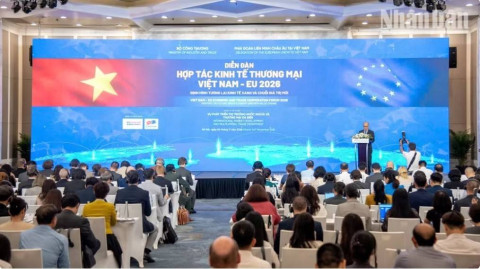
Vietnamese exporters face green standards hurdle in EU market
The Vietnam-EU Economic and Trade Cooperation Forum 2026 opened in Hanoi on Nov. 4 as bilateral ties entered a new phase. Beyond EVFTA opportunities, emissions cuts, supply chain transparency and technology transfer are becoming essential to Vietname
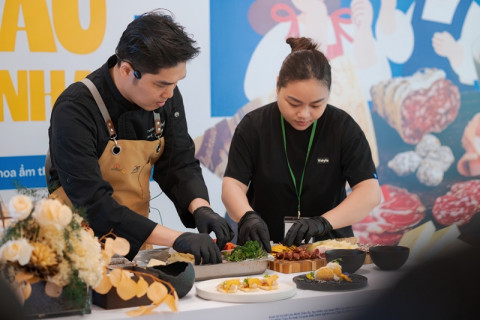
Asiago PDO Cheese and French Charcuterie Showcased in Hanoi: Bringing the Best of European Culinary Heritage to Vietnam
Industry representatives engage in discussions at the B2B Networking Event on October 30.
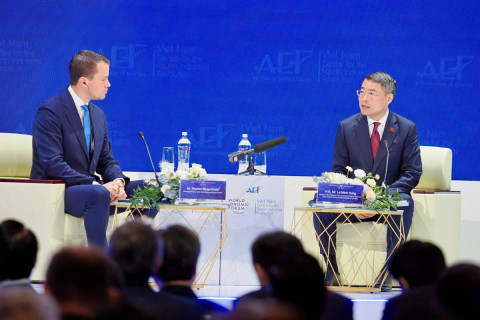
Vietnam seeks innovation-led growth amid shifting global economic landscape
Prime Minister of Vietnam Le Minh Hung has outlined Vietnam's strategy to strengthen economic resilience, accelerate innovation and enhance the competitiveness of domestic enterprises as global supply chains undergo significant restructuring.
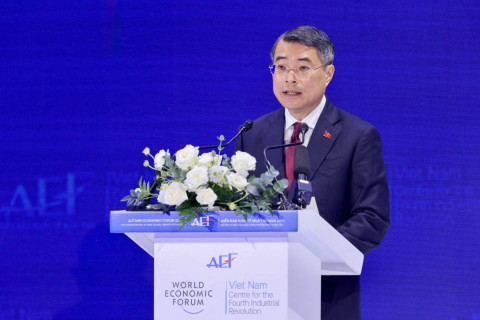
Vietnam PM proposes four initiatives to drive economic growth
Prime Minister Le Minh Hung has proposed four areas of cooperation with international partners to boost innovation, develop high-tech talent, test emerging technologies and attract long-term investment.
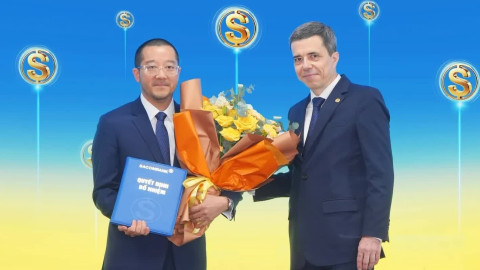
Sacombank names banking veteran Nguyen Xuan Ai Quoc as deputy chief — with profits tipped to surge 111%
The seasoned financier, a son of late film star Tham Thuy Hang, joins as the Vietnamese lender targets rapid growth and a major debt recovery.
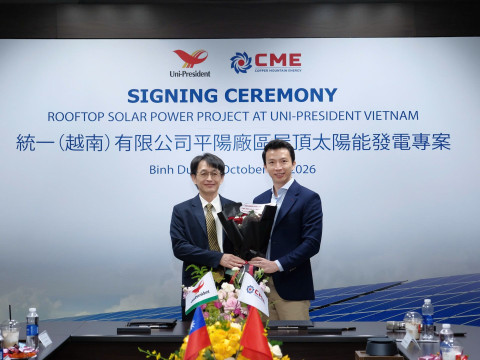
CME Solar Partners with Uni-President Vietnam to Deploy a 6,601 kWp Rooftop Solar Project
The 6,601 kWp rooftop solar project is expected to supply 8,656 MWh of clean electricity per year to Uni-President Vietnam, helping the company optimize energy costs and reduce CO₂ emissions.
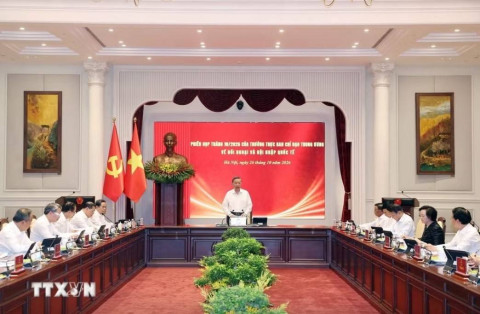
Vietnam Demands Results from Diplomacy
Top leaders of Vietnam order international pledges turned into jobs, productive capacity and markets—with institutions held to account for delivery.
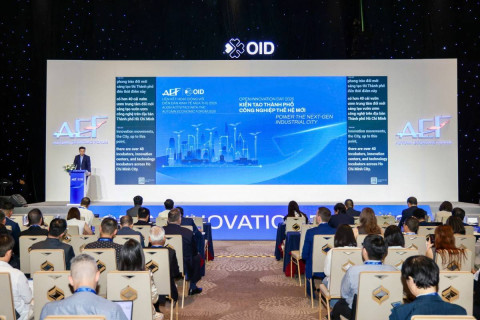
HCMC pushes open innovation towards commercial gains
Ho Chi Minh City is seeking to turn research and technology partnerships into measurable gains for businesses as it builds a next-generation industrial ecosystem.
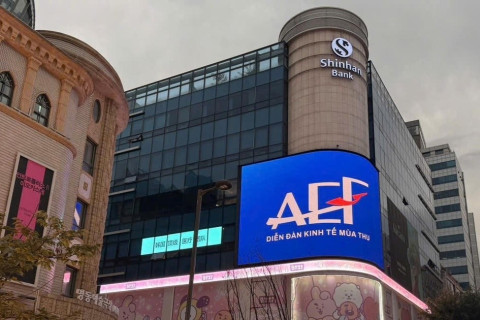
2026 Autumn Economic Forum promoted on Seoul screens
Ho Chi Minh City (HCMC) is taking Vietnamese economic ambitions abroad, using one of Seoul’s most prominent commercial districts to court investors and build international attention for the flagship autumn economic forum.

Khanh Hoa targets 23.7 million tourists in 2026
Khanh Hoa expects more than 23.7 million visitors and VND80.2 trillion in tourism revenue in 2026, increases of 44.8% and 19.7% year-on-year, respectively.