

What are the reasons why carriers don't participate in 4G and 5G frequency auctions?
- Business
- 23:02 05/06/2023
DNHN - When the Law on Radio Frequency goes into effect, operators who want to provide customers with good frequency bands will be required to participate in a public and transparent auction.

On May 15, May 25, and June 2, 2023, the Ministry of Information and Communications held an auction of the 2300MHz band, including three blocks of the A1 (2300-2330 MHz), A2 (2330-2360 MHz), and A3 (2360-2390 MHz) bands, according to a Ministry of Information and Communications source. On the contrary, by the end of the deadline for applying for registration to participate in the auction of each block A1, A2, and A3, no business had applied and paid the registration deposit. Consequently, the frequency use rights auctions for the A1, A2, and A3 band blocks are unsuccessful.
Previously, on February 24, 2023, the Ministry of Information and Communications issued and made public a plan to hold an auction for the right to use the 2300MHz band.
The ministry also confirmed that four carriers, namely Viettel, VNPT, MobiFone, and Vietnamobile, have submitted documents to participate in the 2300-2400MHz band auction. By the provisions of Decree 88/2021/ND-CP, only businesses that have been certified by the Ministry of Information and Communications as eligible to participate in the auction may submit their dossiers.
Previously, state agencies approved the licensing of frequencies for businesses, followed by auditions to obtain frequencies. The band's license is essentially free for businesses. By the Ministry of Finance's regulations, carriers are required to pay the band fee annually. Even the management agency at the time talked extensively about the need to collect franchise fees from carriers.
However, the rules have changed now that the Law on Radio Frequency has taken effect, and operators who want to provide customers with good frequency bands must participate in a transparent and public auction.
According to the Department of Radio Frequency's announcement, the starting price for the auction of 3 band blocks of 2300-2400 MHz frequency is 17,394 billion VND. The A1 (2300 – 2330 Mhz), A2 (2330 – 2360 Mhz), and A3 (2360 – 2390 Mhz) band blocks start at VND 5,798 billion and have a shelf life of 15 years. With a starting price of VND 5,798 billion per band block and a shelf life of 15 years, each carrier will theoretically pay at least VND 386 billion per year in frequency fees.
The leader of a network operator stated that businesses could not afford the price. Due to the saturation of the telecommunications industry, operators are under intense competitive pressure from cross-border platforms and telecommunications over-the-top (OTT) services, while digital services have not been able to generate the anticipated revenue. In contrast, the difficult global economy slows the growth of carrier revenues. In addition to the amount mentioned above, if you win the auction, the network operator must invest a small amount to establish a service delivery network...
According to analysts, a nationwide mobile network requires an initial investment of several billion dollars from investors. Because traditional telecommunications services such as voice and SMS are declining and 5G revenue will be divided in the future, it will be necessary to invest a substantial amount of capital.
Phuong Ly (t/h)
Related news
- Vietnam businesses face global test: reform at home, earn trust abroad
- Vietnam firms warned: transform within, build trust abroad or fall behind
- VCBC Chairman Steve Bui: Incentives have run their course — Vietnam enters an institutional race to attract the next generation of FDI
- Vietnamese Journalism in the Age of AI: How can reporters survive in the profession?
- Dr. Samuel Feldberg warns of risks that could reshape the global economic order and shares strategic advice for Vietnamese businesses
- VINASME organizes training program on risk control for sustainable business development amid uncertainty
- Vietnam’s International Financial Center looks beyond tax incentives to compete
- Expert Lại Thiên Phong: Localizing digital transformation – a new growth driver for Vietnam
- Are Vietnamese firms overlooking their most valuable “gold mine”?
- Iran Conflict and the “Double Shock” to the Global and Vietnamese Economies
- After 8 years and trillions sent abroad, are uST investors caught in a risky no-exit situation?
- When Cryptocurrency leaves the "Grey Zone": How are Vietnamese investors seeking profits?
- When the tech unicorn dream is undermined by reckless fundraising structures
- From New Year messages of World Leaders to the “new rules” of the Global economy in 2026
- Connecting Leaders, Shaping the Future: Strategic Leadership Planning Meeting – CorporateConnections Hanoi A
- Sunlight - Unilever Vietnam Recognized for Outstanding Contributions to the National Initiative Supporting Women Entrepreneurs
- Deputy Prime Minister Nguyễn Chí Dũng: “The country’s major challenges weigh heavily on my mind — and we must resolve them together.
- Unitsky String Technologies signs cooperation agreements with three Vietnamese partners, opening a new direction for smart mobility and sustainable development
- When artists do business – livelihood is no poetry!
- Before the D‑day to abolish flat‑rate tax: Fear of technology and costs leave small traders struggling to adapt
Đọc thêm Business
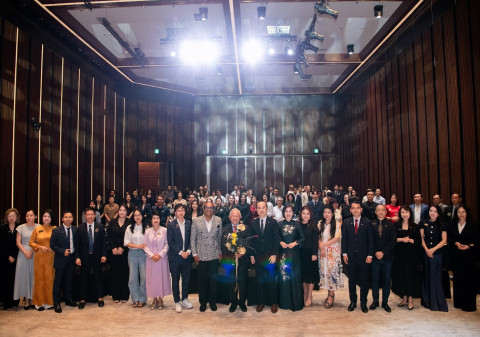
Vietnam businesses face global test: reform at home, earn trust abroad
Vietnamese companies must transform their leadership, teams and cultural outlook — then build trusted international networks — or risk losing ground to better-prepared global rivals.
Vietnam firms warned: transform within, build trust abroad or fall behind
Vietnamese companies must transform their leadership, teams and cultural outlook — then build trusted international networks — or risk losing ground to better-prepared global rivals.
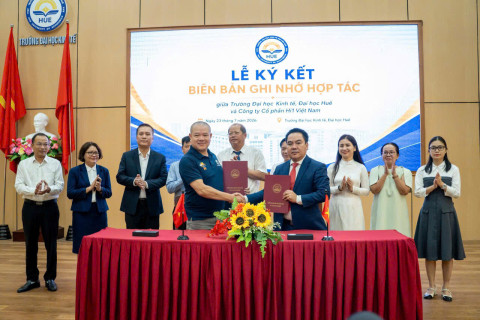
Hi1 and the digital brand ambassador mission: bringing millions of Vietnamese products onto digital platforms with 10,000 Hue students
As millions of OCOP products, local specialty goods and Vietnamese heritage brands continue to struggle to establish a meaningful presence in the digital marketplace, a groundbreaking new cooperation model has just been launched in Hue.
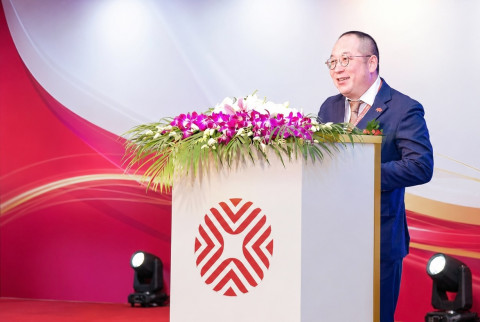
VCBC Chairman Steve Bui: Incentives have run their course — Vietnam enters an institutional race to attract the next generation of FDI
VCBC Chairman Steve Bui analyzes Vietnam's next-generation FDI strategy, stressing that the country must now compete on institutional quality, innovation, and stronger linkages between foreign and domestic enterprises.

Vietnamese Journalism in the Age of AI: How can reporters survive in the profession?
Few professions have faced a transformation as profound as journalism is experiencing today.
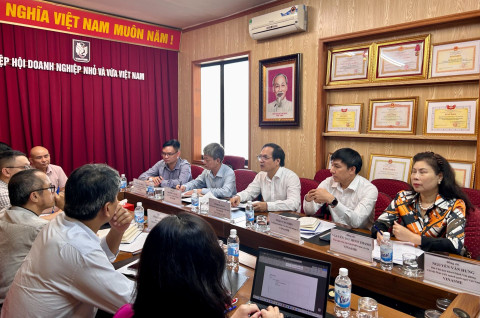
Businesses under pressure: Capital and talent shortages threaten competitiveness
The Vietnam Institute of Economics and World Affairs (VIEWA) recently held a working session with the Vietnam Association of Small and Medium Enterprises (VINASME) as part of a policy research and business support initiative.
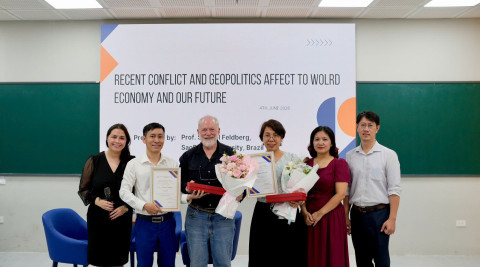
Dr. Samuel Feldberg warns of risks that could reshape the global economic order and shares strategic advice for Vietnamese businesses
Geopolitical tensions, technological transformation, trade fragmentation, and financial uncertainty are reshaping the global economy at an unprecedented pace.
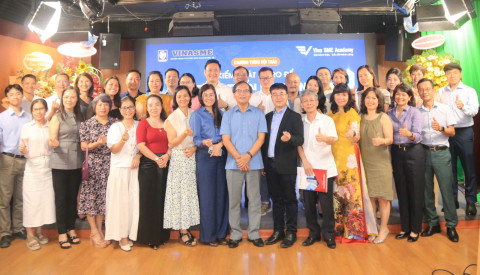
VINASME organizes training program on risk control for sustainable business development amid uncertainty
In the context of a rapidly changing economy, increasing competition, and accelerating digital transformation, risk management capability has become a critical factor determining the resilience and sustainable growth of businesses, particularly SMEs.
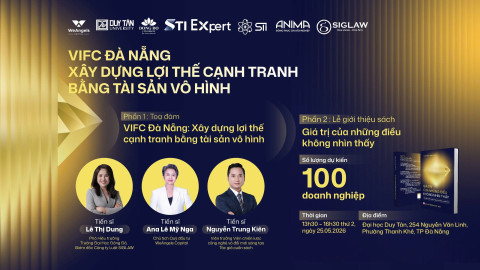
Vietnam’s International Financial Center looks beyond tax incentives to compete
What makes a city an international financial center? Is it skyscrapers, massive capital flows, or generous tax incentives?
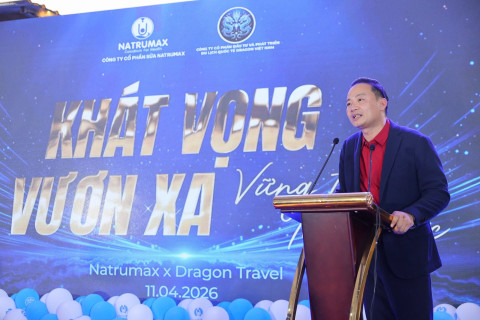
CEO Nguyễn Tất Tùng: only by anchoring in culture and preserving national identity can Vietnamese entrepreneurs reach the world
In a setting imbued with the rich cultural essence of Kinh Bắc, the 15th anniversary celebration of Dragon Travel was far more than a typical corporate event.