

Vietnamese organic agricultural products are exported to more than 180 nations and territories.
- Business
- 01:20 24/07/2023
DNHN - Vietnam's organic agricultural product export turnover is over 335 million USD/year, present in over 180 countries and territories. Organic agriculture in Vietnam is becoming an important part of modern agriculture.
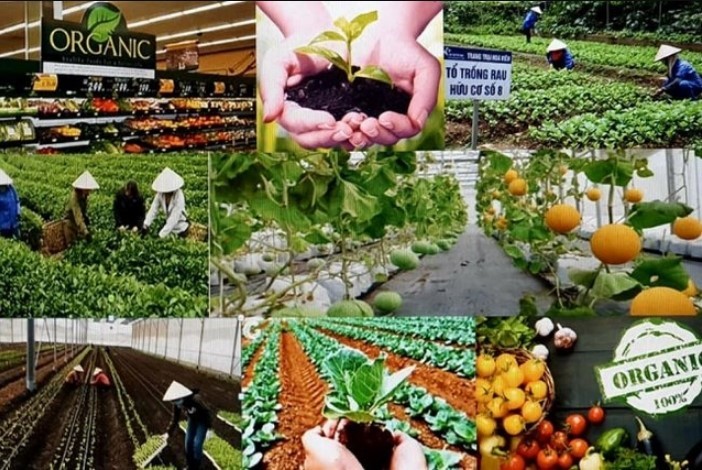
Organic agriculture is becoming an integral part of modern agriculture in Vietnam, and the rapid growth of this industry has attracted the attention of international markets. After more than three years of implementing the Organic Agriculture Development Project, the production of organic agricultural products has increased dramatically, and exports of organic agricultural products from Vietnam have expanded rapidly to hundreds of countries and territories worldwide.
With an annual export value of organic agricultural products that exceed $335 million and a presence in more than 180 countries and territories, Europe is regarded as a significant primary import market. This indicates that the international market accepts and trusts the quality of Vietnamese organic products.
Vietnam's organic agriculture has expanded rapidly to meet production and export demands, with over 17,000 producers, 555 processors, and 60 exporters. In addition, by 2022, over 160 Vietnamese businesses will have 200 organic products certified by the United States Department of Agriculture. This demonstrates the organic agriculture industry's dedication to international quality and standards.
Some international markets have seen a slight decline in the consumption of organic products over the past year, but experts say this is only temporary due to inflation and international conflicts. This has been demonstrated in many markets, particularly Germany, which is the second-largest organic market in the world after the United States. In Germany, organic food sales have doubled over the past decade and are projected to reach nearly 16 billion euros by 2021.
The implementation of the Organic Agriculture Development Scheme in Vietnam has yielded remarkable results. The area of organic farmland has increased to more than 63,000 hectares, the area of organic aquaculture is more than 100,000 hectares, and the area of organic agriculture harvested naturally is greater than 12,000 hectares. However, organic farmers continue to face the challenge of increasing the price of organic produce relative to conventional produce. The production of organic agriculture requires a great deal of effort and financial investment, but the benefits to human health and the environment justify the cost.
Currently, only 26% of consumers prefer organic products, whereas 86% prefer products that are visually appealing and tasty. This demonstrates the need for increased consumer awareness and understanding of the benefits and value of organic agricultural products.
For organic products to continue to grow and dominate the international market, Vietnam's organic agriculture industry must continue to prioritize enhancing product quality, upholding international standards, and satisfying consumer demands. In addition, educating and increasing consumer awareness of the value of organic agricultural products is crucial to the promotion of the sustainable development of Vietnam's organic agriculture industry on the international stage.
Huu Uong
Related news
- Vietnam businesses face global test: reform at home, earn trust abroad
- Vietnam firms warned: transform within, build trust abroad or fall behind
- VCBC Chairman Steve Bui: Incentives have run their course — Vietnam enters an institutional race to attract the next generation of FDI
- Vietnamese Journalism in the Age of AI: How can reporters survive in the profession?
- Dr. Samuel Feldberg warns of risks that could reshape the global economic order and shares strategic advice for Vietnamese businesses
- VINASME organizes training program on risk control for sustainable business development amid uncertainty
- Vietnam’s International Financial Center looks beyond tax incentives to compete
- Expert Lại Thiên Phong: Localizing digital transformation – a new growth driver for Vietnam
- Are Vietnamese firms overlooking their most valuable “gold mine”?
- Iran Conflict and the “Double Shock” to the Global and Vietnamese Economies
- After 8 years and trillions sent abroad, are uST investors caught in a risky no-exit situation?
- When Cryptocurrency leaves the "Grey Zone": How are Vietnamese investors seeking profits?
- When the tech unicorn dream is undermined by reckless fundraising structures
- From New Year messages of World Leaders to the “new rules” of the Global economy in 2026
- Connecting Leaders, Shaping the Future: Strategic Leadership Planning Meeting – CorporateConnections Hanoi A
- Sunlight - Unilever Vietnam Recognized for Outstanding Contributions to the National Initiative Supporting Women Entrepreneurs
- Deputy Prime Minister Nguyễn Chí Dũng: “The country’s major challenges weigh heavily on my mind — and we must resolve them together.
- Unitsky String Technologies signs cooperation agreements with three Vietnamese partners, opening a new direction for smart mobility and sustainable development
- When artists do business – livelihood is no poetry!
- Before the D‑day to abolish flat‑rate tax: Fear of technology and costs leave small traders struggling to adapt
Đọc thêm Business
Vietnam businesses face global test: reform at home, earn trust abroad
Vietnamese companies must transform their leadership, teams and cultural outlook — then build trusted international networks — or risk losing ground to better-prepared global rivals.
Vietnam firms warned: transform within, build trust abroad or fall behind
Vietnamese companies must transform their leadership, teams and cultural outlook — then build trusted international networks — or risk losing ground to better-prepared global rivals.
Hi1 and the digital brand ambassador mission: bringing millions of Vietnamese products onto digital platforms with 10,000 Hue students
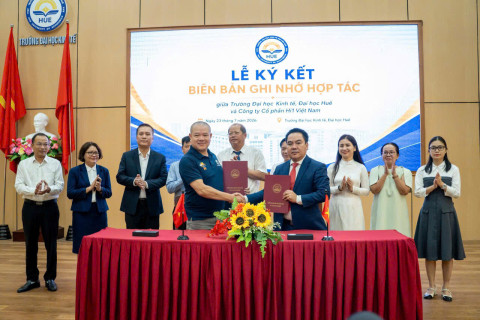
As millions of OCOP products, local specialty goods and Vietnamese heritage brands continue to struggle to establish a meaningful presence in the digital marketplace, a groundbreaking new cooperation model has just been launched in Hue.
VCBC Chairman Steve Bui: Incentives have run their course — Vietnam enters an institutional race to attract the next generation of FDI
VCBC Chairman Steve Bui analyzes Vietnam's next-generation FDI strategy, stressing that the country must now compete on institutional quality, innovation, and stronger linkages between foreign and domestic enterprises.

Vietnamese Journalism in the Age of AI: How can reporters survive in the profession?
Few professions have faced a transformation as profound as journalism is experiencing today.
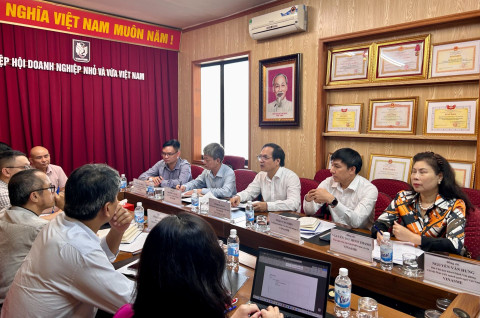
Businesses under pressure: Capital and talent shortages threaten competitiveness
The Vietnam Institute of Economics and World Affairs (VIEWA) recently held a working session with the Vietnam Association of Small and Medium Enterprises (VINASME) as part of a policy research and business support initiative.
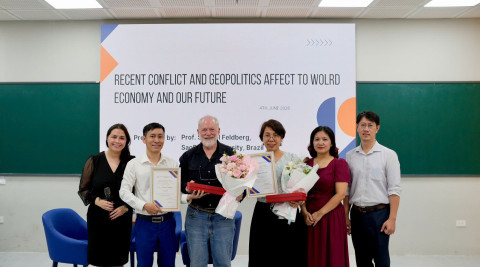
Dr. Samuel Feldberg warns of risks that could reshape the global economic order and shares strategic advice for Vietnamese businesses
Geopolitical tensions, technological transformation, trade fragmentation, and financial uncertainty are reshaping the global economy at an unprecedented pace.
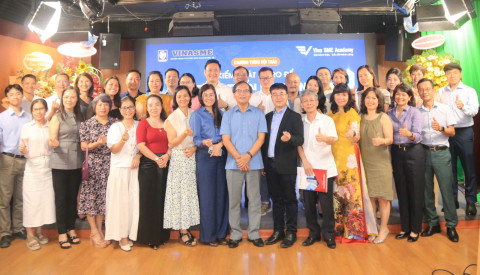
VINASME organizes training program on risk control for sustainable business development amid uncertainty
In the context of a rapidly changing economy, increasing competition, and accelerating digital transformation, risk management capability has become a critical factor determining the resilience and sustainable growth of businesses, particularly SMEs.
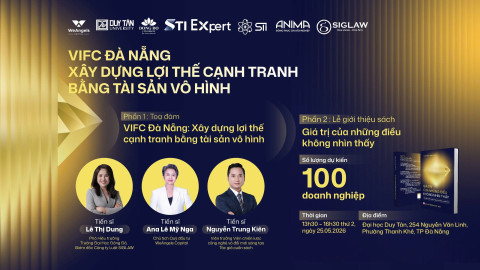
Vietnam’s International Financial Center looks beyond tax incentives to compete
What makes a city an international financial center? Is it skyscrapers, massive capital flows, or generous tax incentives?
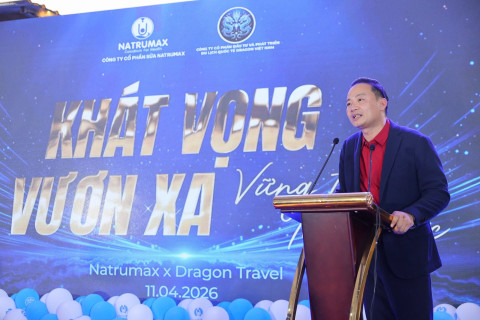
CEO Nguyễn Tất Tùng: only by anchoring in culture and preserving national identity can Vietnamese entrepreneurs reach the world
In a setting imbued with the rich cultural essence of Kinh Bắc, the 15th anniversary celebration of Dragon Travel was far more than a typical corporate event.