

Put strategies into place to maintain market stability throughout the year, balance supply and demand, and accommodate the Lunar New Year.
- Business
- 02:55 06/11/2023
DNHN - The Ministry of Industry and Trade sets out proposals for relevant units, from central to local levels and businesses, to quickly implement specific plans for the production, business, and supply of goods.
Implementing strategies to stabilize the commodity market and balance supply and demand by the end of 2023 and the Lunar New Year of the Dragon in 2024 is quickly rising to the top of the priority list, according to fresh information from the Ministry of Industry and Trade. The first nine months of 2023 saw a significant increase in total retail sales of goods, rising by 9.7% over the same period the previous year and hitting the average level of the time before the COVID-19 pandemic. Concurrently, there was a 3.16% increase in the consumer price index compared to the same period in 2021; however, this still kept it below the target limit of less than 4% set by the National Assembly.
The Ministry of Industry and Trade has, nevertheless, also issued a warning about possible difficulties, such as unanticipated changes in the global commodity market. Many regions' political instability, the rising cost of basic goods like food and energy, the impact of exchange rates, and high-interest rates are just a few of the variables that can lead to issues. detrimental effect on the home market in particular as well as the economy in general.

The Ministry of Industry and Trade lays out recommendations for pertinent entities, from local to central levels, and businesses, with a clear understanding of the existing state of affairs, to promptly execute particular plans on production and business. commerce and the provision of goods. As a result, the government's significant macroeconomic goals for 2024 will be more easily implemented and the commodity market will remain stable in an unstable environment.
As a result, the supply and demand of goods—especially necessities, in-demand items, and goods with volatile prices—are tracked and assessed by the Departments of Industry and Trade of the provinces and centrally administered cities. lately to proactively plan or suggest to the authorities actions to guarantee market stability, maintain the proper balance between supply and demand, and avoid shortages or disruptions in the flow of goods, which would lead to an increase in supply and demand. Price increases around Lunar New Year's and year-end.
At the same time, proactively advise the Provincial People's Committee on strategies for stockpiling and reserving necessities for Tet; Implement legal measures to stabilize the market; Work with the banking sector to assist companies that manufacture and supply necessary Tet goods, and establish links between them and local credit institutions so they can obtain loans at favorable interest rates and reserve goods. maintain market stability before, during, and following the Lunar New Year.
The Department of Agriculture and Rural Development, functional units, and the Department of Industry and Trade work together to monitor production conditions, weather patterns, epidemics, production capacity, and sources of goods supply. proactively have plans or propose plans to guarantee supply and stabilize the market for essential agricultural products and foods at the end of the year and the Lunar New Year of Giap Thin 2024. agricultural products and essential foods for the market at the end of the year and Lunar New Year.
Concurrently, oversee the coordination with pertinent Departments, Boards, and branches to arrange events that link distribution companies and necessary food suppliers, establishing a supply of goods to stabilize the Tet market; Collaborate with communities to carry out trade promotion initiatives that link supply and demand to encourage the consumption of healthy food items and regional specialties that together provide a Tet supply. Encourage the implementation of the "Vietnamese people prioritize using Vietnamese goods" campaign, which aims to lower prices, increase consumer demand, and bring Vietnamese goods to rural areas, industrial zones, and clusters through the use of fairs and promotion initiatives.
In addition, plan sales trips to isolated, rural, and remote locations; get reliable sources for policy goods; support goods; necessary consumer goods; and goods for Tet that can be ordered in advance and delivered on time. sufficient for people living in rural, mountainous, isolated, and island areas, with a focus on providing goods to areas devastated by natural disasters in adequate quantities and at fair prices, all with a guarantee of quality.

There is a mechanism to prioritize and create conditions for businesses participating in the Stabilisation Programme to expand their goods distribution networks to densely populated areas, industrial parks, suburban districts, remote areas, and regional areas. Businesses are urged to implement consumer stimulation programs and domestic trade promotion activities. islands... to improve middle-class and lower-class people's access to reasonably priced goods...
Groups, corporations, and businesses that manufacture and trade necessary products, services, and goods for Tet should proactively make plans to manufacture and supply goods for the holiday; To maintain stable production and guarantee the supply of goods to the market, it is necessary to reserve supplies, raw materials, and fuel appropriately, cut costs, and give priority to the use of materials produced domestically. market that can compete with imported goods and offers fair prices, high quality, and attractive designs; Enforce national reserves and circulation reserve laws strictly to ensure that the market has enough supplies available when it needs them.
Production units that make goods for Tet consumption have strategies in place to reduce the amount of production that is used in the run-up to Tet, which could cause psychological instability in the market; these units also closely monitor sales in the distribution system, helping to prevent shortages and artificial price increases brought on by agents and distributors who speculate and raise prices.
To have a relevant assessment of the supply and demand of commodities, particularly essential food products, agricultural materials, and energy in the late 2023 period and the Lunar New Year of Giap Thin 2024, units under the Ministry of Industry and Trade and the Domestic Market Department closely monitor market developments and prices of essential goods. They also collaborate with other ministries, branches, localities, and units under the Ministry of Industry and Trade to proactively have plans or proposals for the Government's Government measures to ensure an adequate supply of goods, stabilize the market, and meet the needs of production and life.
The Import-Export Department keeps up its support for businesses looking to expand their export business, particularly for agricultural products that are ready for harvest at the end of the year. It closely monitors the import and export situation and works with relevant units to take reasonable and timely operational measures to prioritize keeping essential goods available for the domestic market during Tet and year-end. Chinese New Year.
P.V (t/h)
Related news
- Vietnam Foodexpo to host largest edition with over 500 businesses
- Vietnam seeks innovation-led growth amid shifting global economic landscape
- Vietnam PM proposes four initiatives to drive economic growth
- Autumn Economic Forum seeks new growth engines in AI era
- Vietnam Demands Results from Diplomacy
- HCMC pushes open innovation towards commercial gains
- Vietnam Emerges as a Standout Destination for Autumn Travel
- 2026 Autumn Economic Forum promoted on Seoul screens
- Margin lending drives HSC earnings as brokerage revenue tumbles
- Bepharco appoints 2002-born executive as CEO
- Vietnam financial center eyes November 2026 launch
- Vietnam targets 20 internationally certified hospitals in medical tourism push
- Vietnam sets sights on double-digit growth as APEC 2027 preparations gather pace
- Vietnam businesses face global test: reform at home, earn trust abroad
- Vietnam firms warned: transform within, build trust abroad or fall behind
- VCBC Chairman Steve Bui: Incentives have run their course — Vietnam enters an institutional race to attract the next generation of FDI
- Vietnamese Journalism in the Age of AI: How can reporters survive in the profession?
- Dr. Samuel Feldberg warns of risks that could reshape the global economic order and shares strategic advice for Vietnamese businesses
- VINASME organizes training program on risk control for sustainable business development amid uncertainty
- Vietnam’s International Financial Center looks beyond tax incentives to compete
Đọc thêm Business
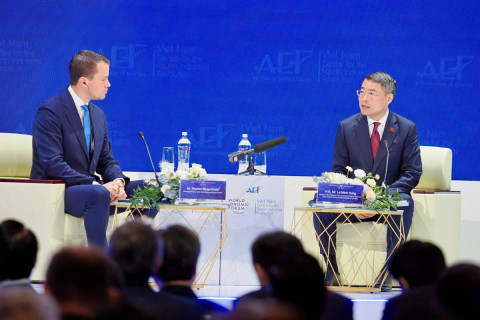
Vietnam seeks innovation-led growth amid shifting global economic landscape
Prime Minister of Vietnam Le Minh Hung has outlined Vietnam's strategy to strengthen economic resilience, accelerate innovation and enhance the competitiveness of domestic enterprises as global supply chains undergo significant restructuring.
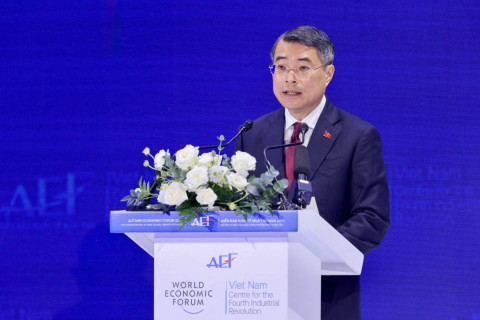
Vietnam PM proposes four initiatives to drive economic growth
Prime Minister Le Minh Hung has proposed four areas of cooperation with international partners to boost innovation, develop high-tech talent, test emerging technologies and attract long-term investment.

Sacombank names banking veteran Nguyen Xuan Ai Quoc as deputy chief — with profits tipped to surge 111%
The seasoned financier, a son of late film star Tham Thuy Hang, joins as the Vietnamese lender targets rapid growth and a major debt recovery.
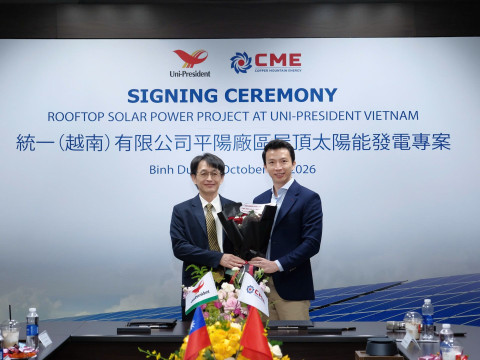
CME Solar Partners with Uni-President Vietnam to Deploy a 6,601 kWp Rooftop Solar Project
The 6,601 kWp rooftop solar project is expected to supply 8,656 MWh of clean electricity per year to Uni-President Vietnam, helping the company optimize energy costs and reduce CO₂ emissions.
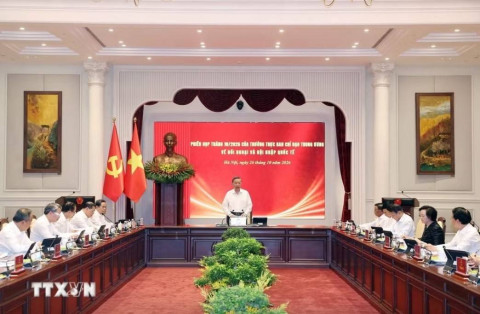
Vietnam Demands Results from Diplomacy
Top leaders of Vietnam order international pledges turned into jobs, productive capacity and markets—with institutions held to account for delivery.
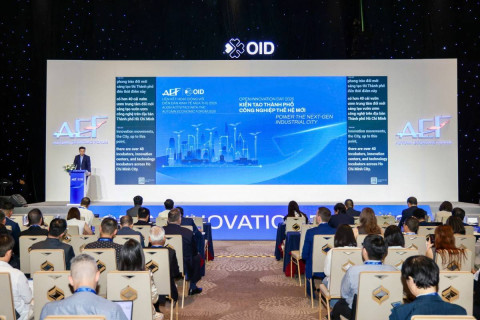
HCMC pushes open innovation towards commercial gains
Ho Chi Minh City is seeking to turn research and technology partnerships into measurable gains for businesses as it builds a next-generation industrial ecosystem.
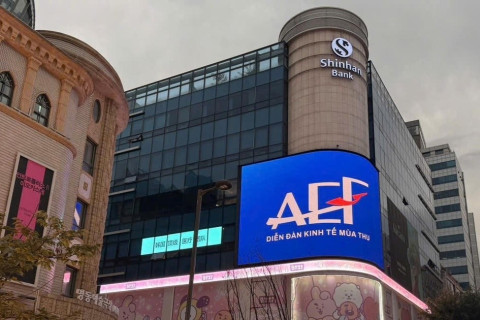
2026 Autumn Economic Forum promoted on Seoul screens
Ho Chi Minh City (HCMC) is taking Vietnamese economic ambitions abroad, using one of Seoul’s most prominent commercial districts to court investors and build international attention for the flagship autumn economic forum.

Khanh Hoa targets 23.7 million tourists in 2026
Khanh Hoa expects more than 23.7 million visitors and VND80.2 trillion in tourism revenue in 2026, increases of 44.8% and 19.7% year-on-year, respectively.
Vietnamese firms face Halal, logistics hurdles in UAE push
Vietnamese businesses seeking to enter the UAE and wider Middle East need stronger preparation in Halal compliance, market research and partner networks as logistics and information gaps weigh on exports, experts said.
Vietnam financial center eyes November 2026 launch
Vietnam is preparing to launch the first transactions at its International Financial Center in November 2026, with authorities reviewing eligible products and removing regulatory bottlenecks.