

Phu Tho: Focus on improving the quality of human resources for digital transformation
- Digital
- 23:38 12/07/2022
DNHN - For successful digital transformation, together with institutions and technology, one of the important solutions is to build and improve the quality of human resources. Therefore, Phu Tho province is entering the digital transformation process with intertwined advantages and challenges. This is an urgent requirement for each level, each branch, each locality, and each unit in the province.
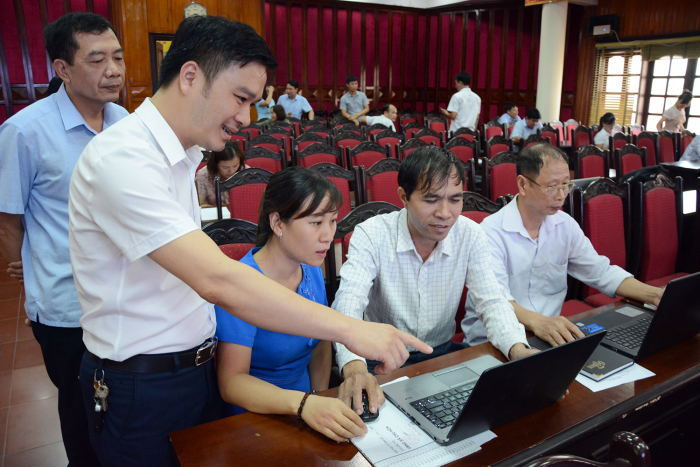
Identifying human resources is important, in recent years, the Department of Information and Communications of Phu Tho province has coordinated with other departments, branches and localities to organize conferences and working programs on digital transformation; training on building e-government, digital transformation, deploying online public services at levels 3 and 4 for staff of modern one-stop-shop and one-stop-shop at district and commune levels. Strengthening propaganda on the mass media, helping people and the whole society to raise awareness and understand more deeply the purpose, meaning and goals of digital transformation. At the same time, guide people to use online public services to solve administrative procedures and access and exploit digital services to serve the essential needs of life.
Thereby, gradually changing thinking and strongly promoting the role of the leader in directing and operating on digital transformation at localities and units; promptly update knowledge, improve IT application skills for officials, civil servants, public employees and people from the province to the grassroots, meeting the requirements of building e-government - digital government.
According to the data of the Provincial Statistics Office, in 2021 Phu Tho had 70% of the trained workforce, of which 28% of the trained workers have degrees and training certificates; 85% of the population has a smartphone. The whole province currently has 100% of provincial-level cadres and civil servants who are proficient in using computers for professional and administrative work; 100% of departments, agencies and sectors arrange staff in charge of information technology (IT). Public servants in departments and branches are trained, guided, exploited and used shared software systems; standard training in IT skills and advanced training in cyber information security. This is an important human resource for the digital transformation process of the province with 3 pillars: digital government, digital economy and digital society.
To overcome these shortcomings, over the past time, the Department of Information and Communications has advised the province to issue guiding documents, and organize and implement digital transformation tasks in a substantive, effective, and efficient manner. which focuses on propaganda, training and training on digital transformation.
To overcome these shortcomings, over the past time, the Department of Information and Communications has advised the province to issue guiding documents, and organize and implement digital transformation tasks in a substantive, effective, and efficient manner, which focuses on propaganda, and training and training on digital transformation.
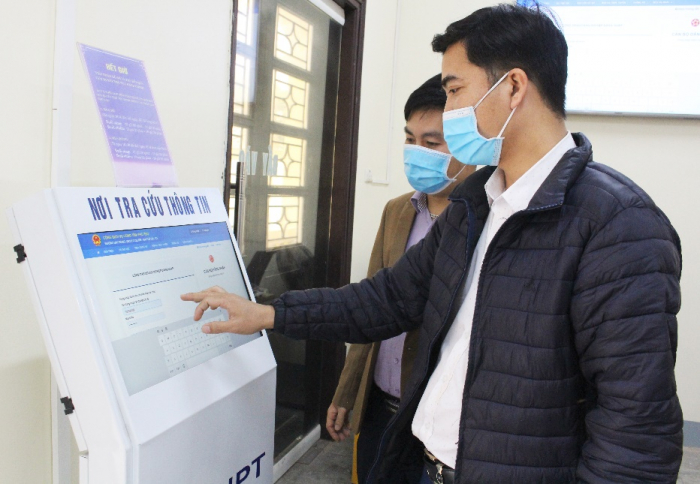
Mr Le Quang Thang - Deputy Director of Phu Tho Department of Information and Communications said: Digital transformation is a new task and an indispensable requirement in the current context. Therefore, as soon as we embarked on the digital transformation process in the province, we determined that we must focus on promoting propaganda, training and training to raise awareness, change habits, create consensus and ensure the participation of the whole political system, people and businesses in digital transformation; especially in the use of intelligent means to interact with the government, forming an e-citizen class.
In localities, units and enterprises in the province, the construction and improvement of the quality of human resources to meet the development requirements of the digital economy and digital society have also been strongly implemented and achieved many positive results. In 2021, the province will have over 800,000 people trained in basic digital skills. Many professional staffs of units, enterprises and cooperatives have been trained in knowledge, guided on the use of codes, barcodes, electronic stamps to authenticate goods, application of QR codes for traceability, product origin, goods and product quality control. These activities, contribute to the successful implementation of the digital transformation goal set by the province.
In the coming time, Phu Tho province will continue to focus on developing digital human resources, creating an important link to successfully build a digital government, digital economy and digital society. The focus is on organizing training courses on knowledge about digital transformation, IT application, and improving state management knowledge and skills based on digital transformation for leaders from the province to the commune level. Promote propaganda, dissemination, training and introduction of basic knowledge about digital transformation and digital skills for the contingent of cadres, civil servants, public employees, employees in state agencies and the people, meeting the requirements of implementing digital transformation tasks. Striving from 2021 to 2025, there will be over 3,400 officials, civil servants and public employees at all levels being trained in Informatics; from now until the end of 2025, ensure universalization of fibre optic broadband Internet services, 5G mobile network services and over 80% of the population have electronic payment accounts.
PV
Related news
- Vietnam businesses face global test: reform at home, earn trust abroad
- Vietnam firms warned: transform within, build trust abroad or fall behind
- VCBC Chairman Steve Bui: Incentives have run their course — Vietnam enters an institutional race to attract the next generation of FDI
- Vietnamese Journalism in the Age of AI: How can reporters survive in the profession?
- Dr. Samuel Feldberg warns of risks that could reshape the global economic order and shares strategic advice for Vietnamese businesses
- VINASME organizes training program on risk control for sustainable business development amid uncertainty
- Vietnam’s International Financial Center looks beyond tax incentives to compete
- Expert Lại Thiên Phong: Localizing digital transformation – a new growth driver for Vietnam
- Are Vietnamese firms overlooking their most valuable “gold mine”?
- Iran Conflict and the “Double Shock” to the Global and Vietnamese Economies
- After 8 years and trillions sent abroad, are uST investors caught in a risky no-exit situation?
- When Cryptocurrency leaves the "Grey Zone": How are Vietnamese investors seeking profits?
- When the tech unicorn dream is undermined by reckless fundraising structures
- From New Year messages of World Leaders to the “new rules” of the Global economy in 2026
- Connecting Leaders, Shaping the Future: Strategic Leadership Planning Meeting – CorporateConnections Hanoi A
- Sunlight - Unilever Vietnam Recognized for Outstanding Contributions to the National Initiative Supporting Women Entrepreneurs
- Deputy Prime Minister Nguyễn Chí Dũng: “The country’s major challenges weigh heavily on my mind — and we must resolve them together.
- Unitsky String Technologies signs cooperation agreements with three Vietnamese partners, opening a new direction for smart mobility and sustainable development
- When artists do business – livelihood is no poetry!
- Before the D‑day to abolish flat‑rate tax: Fear of technology and costs leave small traders struggling to adapt
Đọc thêm Digital

Cybersecurity talent & digital entrepreneurs: Vietnam racing to fill a 700,000-person workforce gap
The “Student Cybersecurity Festival & Final Round of the 2025 Vietnam Cybersecurity Student Competition” (CSCV 2025), held on November 15 in Hanoi, became a major focal point for the technology community.

"Digital technicians" must not be forgotten if Vietnam aims to meet its strategic goals
Vietnam is facing a serious shortage of skilled technical operators. Without retaining its “digital technicians,” the ambition to become an AI hub may never materialize.

Prime Minister: Vietnam aims to become a regional logistics hub
At the 2025 FIATA World Congress in Hanoi, Prime Minister Pham Minh Chinh emphasized logistics as one of Vietnam’s key growth drivers, highlighting major infrastructure investments and commitments to attract global investors.

VietLeap AI Accelerator launches: A strategic springboard for Vietnam’s AI startups
The program is expected to select 10 to 15 high-growth potential AI startups with clear funding needs.

Vietnam advances cybersecurity law to boost digital sovereignty and business resilience
In a significant step towards strengthening Vietnam’s digital defenses, the National Assembly Standing Committee convened on September 23 to review the draft revised Cybersecurity Law.

Vietnam embraces digital tools to modernize public administration
Across Vietnam, local governments are turning to digital platforms, QR codes, and AI-powered assistants to modernize public services—making them faster, more transparent, and more accessible to citizens.

Administrative procedures for establishing the national technology exchange reduced to one application set
Deputy Prime Minister Nguyen Hoa Binh has just signed Decision No. 2108/QD-TTg approving the plan to streamline internal administrative procedures within the state administrative system under the management of the Ministry of Science and Technology.

Government’s plan to implement Law on Digital Technology Industry approved
The Government has approved a plan to implement the Law on Digital Technology Industry (the Law) scheduled to take effect from January 1, 2026, according to a report from the Government News.

Shark Nguyễn Hòa Bình: Hanoi will become the capital of startup innovation.
Recently, in Hanoi, the seminar “Formulating City People’s Council Resolutions to Promote Science and Technology Development in Connection with the Implementation of Politburo Resolution No. 57-NQ/TW and the Capital Law No. 39/2024/QH15” was held.

Da Nang proposes semiconductor cooperation with Oregon (USA)
Leaders of Da Nang City have proposed that Oregon (USA) and the city explore cooperation opportunities in priority sectors such as semiconductor technology, logistics, and the development of Free Trade Zone (FTZ) infrastructure.