

Industrial Revolution 4.0's impact on the growth of tourism firms in Can Tho
- Digital
- 14:44 14/07/2022
DNHN - The 4.0 Industry has offered development potential for all economic and social spheres in general, as well as the tourist industry in particular. Tourism firms in Can Tho City must modernise, be proactive, and define particular directions to adapt to the fourth industrial revolution.

Tourist is referred to as a "smokeless business" since it not only generates significant revenue for countries across the world in general, and Vietnam in particular, but it also contributes significantly to the growth of tourism industries and other employment. Can Tho city, in particular, a new site rich in tourist potential in the Mekong Delta area, has made significant growth and achieved exceptional tourism successes.
From 2010 to 2019, Vietnam's overall tourist earnings climbed dramatically, rising from VND 96 trillion in 2010 to VND 755 trillion in 2019. (VNAT, 2022). More than 18 million international visitors and 85 million local tourists have visited Vietnam (including 43.5 million staying guests). Tourist earnings totalled VND 726 trillion, a 17.1 per cent increase over the same time in 2018 (GSO, 2020).
The number of foreign and domestic visitors visiting Can Tho City is steadily rising. Can Tho attract 880,522 tourists in 2010, including 716,417 domestic visitors and 163,835 overseas visitors? By 2019, there were 8,869,065 tourists, with 409,023 international visitors staying and 2,597,692 local visitors staying.

Can Tho has set greater targets for the tourist business in the aftermath of the Covid-19 epidemic. Can Tho tourism require considerable changes in the supply chain of housing sites, service quality, human resources, visitor expectations...
Currently, the application of 4.0 accomplishments to the tourist sector is critical and urgent to respond quickly to all elements of the tourism business. Industrial revolution 4.0 has impacted several difficulties and possibilities for travel companies and tour operators. As a result, the goal of this research is to identify the benefits and drawbacks of tourist enterprises in Can Tho City and to provide some solutions for them to grow sustainably in the period of the Fourth Industrial Revolution.
The impact of the Fourth Industrial Revolution on tourist firms in Can Tho
The tourism business in Can Tho City has been greatly impacted by the Covid-19 pandemic. Can Tho City has pushed the use of information technology in tourist marketing and promotion to repair and grow the province's tourism sector? The Industrial Revolution 4.0 supports almost all operations in businesses, from management and administration to business and development.
Furthermore, industry 4.0 assists organisations in lowering operational expenses, reaching more prospective clients, and developing sustainably. The growth of the Internet links things, connects people, and erases all geographical distances. People may readily access and learn about all of Can Tho's exceptional tourist sites as long as they have an Internet connection, tourism services are delivered more swiftly and flexibly, and information and statistics are conveniently accessible. is constantly and widely updated.

Can Tho tourist firms can simply link tours and routes, increasing visitor numbers and tourism company performance, transforming tourism into an industry with a machine that runs nonstop and at full capacity. This is a significant push to generate travel demand among all people, as well as a perfect chance to increase the tourist business.
Furthermore, with the 4.0 revolution sweeping the globe, the usage of communication apps such as Facebook, Viber, or Zalo... allows for nearly immediate engagement. This enables guests to remain in touch with family and loved ones, do business, or save special moments during their vacation to Can Tho City.

With the introduction of virtual reality technology, tourist enterprises in Can Tho will be able to advertise more comprehensive tourism locations. Customers will have completely new on-site experiences thanks to virtual reality technology that is coupled with 360-degree visuals and realistic sound. The use of images, 3D and 4D movies to reconstruct events, historical and cultural sites, and natural heritage sites and put them on the internet or show them at tourist attractions, thanks to the Fourth Industrial Revolution, will make it easier for people all over the world (including tourists) to discover, understand, love, and enjoy learning about the tourism resources of each locality and country.
Previously, enterprises in Can Tho City had to advertise on television, in newspapers, leaflets, brochures, maps, and present tours and rates per tour calendar to promote and grow tourist sites. This is time-consuming and costly, yet it has not yielded the greatest outcomes. Currently, smart websites (such as Web30s, Smart Live Chart, and Smart Marketing Tool) and virtual switchboards are used (all of this software run in a cloud computing environment). May Tho tourist firms can link, collaborate, share problems and gains, sell items to a large number of clients, stabilise pricing, cut prices, and even give stunning discounts on travel services by purchasing and selling things online.
Previously, businesses struggled to collect feedback from travellers; now, everything is done online via the Internet. Tourists may fully self-check-in, in check out, make automatic payments, and provide comments on their trip experiences over the Internet. All concerns will be received and resolved online, saving both businesses and customers time.
Industry 4.0 not only cuts expenses but also improves the quality of tourism services provided by Can Tho enterprises. Users may actively build their tour or quickly connect with travel agents with just one click or a simple code scan on the mobile application. As a result, visitor impressions and satisfaction will skyrocket.
However, tourist firms in Can Tho confront several obstacles as a result of the influence of the fourth industrial revolution, in which products and services are strengthened with the potential to add value. Some Industry 4.0 obstacles to tourist development in Can Tho include: the system of machinery, equipment, human resources, infrastructure, and scientific and technical data is insufficient to satisfy the requirements of tourism development in Can Tho during the period of industrial revolution 4.0.
The potential to use the Internet in the growth of travel enterprises, in particular, is still in its infancy. Because the 4.0 revolution has transformed the requirements and expectations of today's tourists, Can Tho tourism firms must study and understand their behaviours and tastes. They have higher expectations of Can Tho tourist firms in terms of service quality, ease, and speed of application platforms.
The delay in adopting "key" technological solutions in the 4.0 technology era to tourism is a competitive disadvantage for Can Tho tourist firms. Many components of human resources must be addressed, including education level, soft skills, and capacity to communicate in other languages. As low-skilled human resources are progressively replaced by robots, automation creates an overstock of employees and widens societal divides.
Some industrial revolution 4.0 options for tourism enterprises in Can Tho
1. Encourage the growth of internet tourism and the completion of travel agency websites so that they may provide timely information to visitors and save time looking for and accessing material. Focus on online booking and payment for tours on websites, as well as constructing websites in a variety of languages such as English, Chinese, Japanese, and French...
2. Developing human resources to suit the demands of the digital era and future markets, improving foreign language skills for employees, and creating a professional environment "digital culture" for them to understand the value of Industry 4.0 for tourism.
3. To reach more prospective clients, it is vital to provide travel services that closely reflect the current technology and e-commerce trends. Furthermore, tourist enterprises must establish a reputation and credibility for tourism brands to get access to a larger market for sustainable development and profit growth.
4. It is required to develop high-quality, distinctive tourism items for Can Tho tourism, as well as a channel to promote brands and sell online to reach tourists. Increase product advertising on social media to better reach and connect with customers, particularly for river and ecotourism items.
5. Use digital payment for visits instead of cash, avoiding physical touch while paying, especially given the difficult evolution of the Covid-19 pandemic. Using Big Data and AI technologies in conjunction with marketing management tactics. At the same time, collaborate with companies that provide other services, such as restaurants, transportation, hotels, and banking, to create convenience for clients and serve them swiftly and consistently, regardless of the time of day or night.

The use of information technology in the tourist sector is a must in the integration and development process. Tourism firms in Can Tho City must understand the tourism trend in the age of Industry 4.0 to expand their prospects for growth and increase their competitiveness with other tourist destinations. Simultaneously, contributes to Can Tho tourism being commensurate with its existing tourist potential and becoming a tourism centre for the whole Mekong Delta area.
MSc. Pham Quang Trieu
Related news
- Vietnam Police Sports Association Teams Up with 90,000-Strong Business Network to Boost Athletics
- Vietnam Foodexpo to host largest edition with over 500 businesses
- Vietnam seeks innovation-led growth amid shifting global economic landscape
- Vietnam PM proposes four initiatives to drive economic growth
- Autumn Economic Forum seeks new growth engines in AI era
- Vietnam Demands Results from Diplomacy
- HCMC pushes open innovation towards commercial gains
- Vietnam Emerges as a Standout Destination for Autumn Travel
- 2026 Autumn Economic Forum promoted on Seoul screens
- Margin lending drives HSC earnings as brokerage revenue tumbles
- Bepharco appoints 2002-born executive as CEO
- Vietnam financial center eyes November 2026 launch
- Vietnam targets 20 internationally certified hospitals in medical tourism push
- Vietnam sets sights on double-digit growth as APEC 2027 preparations gather pace
- Vietnam businesses face global test: reform at home, earn trust abroad
- Vietnam firms warned: transform within, build trust abroad or fall behind
- VCBC Chairman Steve Bui: Incentives have run their course — Vietnam enters an institutional race to attract the next generation of FDI
- Vietnamese Journalism in the Age of AI: How can reporters survive in the profession?
- Dr. Samuel Feldberg warns of risks that could reshape the global economic order and shares strategic advice for Vietnamese businesses
- VINASME organizes training program on risk control for sustainable business development amid uncertainty
Đọc thêm Digital
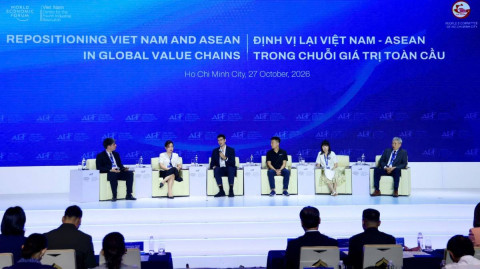
Autumn Economic Forum seeks new growth engines in AI era
HCMC is seeking new growth drivers through cooperation on talent, institutions and data as artificial intelligence transforms economies and global value chains.
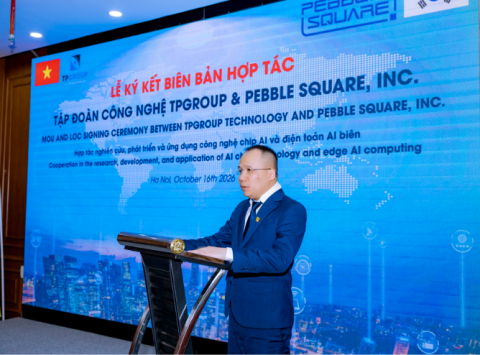
Vietnam–Korea Tech Partnership: Edge Ai marks a new step forward for Vietnamese technology
On October 16, 2026, TPGroup Technology Corporation and South Korea’s Pebble Square, Inc. signed a Memorandum of Understanding (MoU) on research, development and application of artificial intelligence (AI) chip technology and edge AI computing.
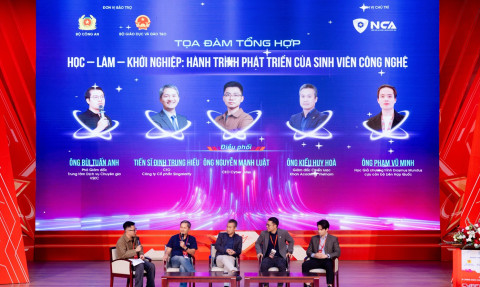
Cybersecurity talent & digital entrepreneurs: Vietnam racing to fill a 700,000-person workforce gap
The “Student Cybersecurity Festival & Final Round of the 2025 Vietnam Cybersecurity Student Competition” (CSCV 2025), held on November 15 in Hanoi, became a major focal point for the technology community.

"Digital technicians" must not be forgotten if Vietnam aims to meet its strategic goals
Vietnam is facing a serious shortage of skilled technical operators. Without retaining its “digital technicians,” the ambition to become an AI hub may never materialize.
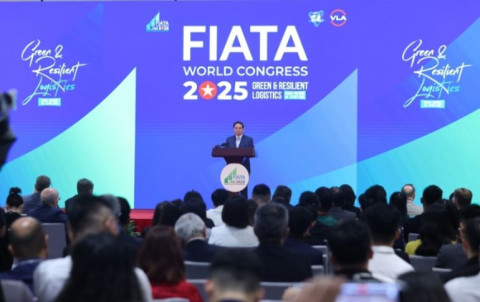
Prime Minister: Vietnam aims to become a regional logistics hub
At the 2025 FIATA World Congress in Hanoi, Prime Minister Pham Minh Chinh emphasized logistics as one of Vietnam’s key growth drivers, highlighting major infrastructure investments and commitments to attract global investors.
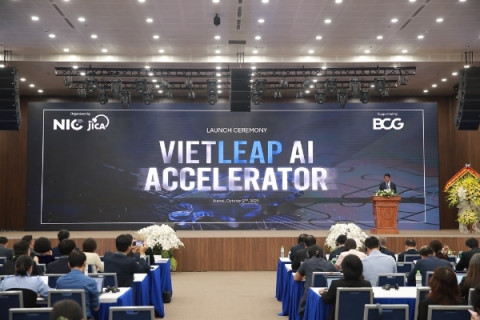
VietLeap AI Accelerator launches: A strategic springboard for Vietnam’s AI startups
The program is expected to select 10 to 15 high-growth potential AI startups with clear funding needs.

Vietnam advances cybersecurity law to boost digital sovereignty and business resilience
In a significant step towards strengthening Vietnam’s digital defenses, the National Assembly Standing Committee convened on September 23 to review the draft revised Cybersecurity Law.

Vietnam embraces digital tools to modernize public administration
Across Vietnam, local governments are turning to digital platforms, QR codes, and AI-powered assistants to modernize public services—making them faster, more transparent, and more accessible to citizens.

Administrative procedures for establishing the national technology exchange reduced to one application set
Deputy Prime Minister Nguyen Hoa Binh has just signed Decision No. 2108/QD-TTg approving the plan to streamline internal administrative procedures within the state administrative system under the management of the Ministry of Science and Technology.

Government’s plan to implement Law on Digital Technology Industry approved
The Government has approved a plan to implement the Law on Digital Technology Industry (the Law) scheduled to take effect from January 1, 2026, according to a report from the Government News.