

Capital is challenging to come by for businesses
- Business
- 20:38 26/08/2022
DNHN - According to economists, many enterprises will have difficulty mobilizing cash for manufacturing and operations in the sprint period of 2022.

According to Dr Dinh The Hien, an economic expert, raising capital from stocks is becoming more difficult as the stock market declines. The VN-Index climbed by 35.7% in 2021 but mobilized share capital was only 177 trillion dongs, accounting for 3% of capitalization, a relatively low level of mobilization.
The stock market in 2022 will continue to be badly and adversely influenced by market manipulation incidents involving some heads of various economic organizations; as a result, money mobilized through this channel will fall dramatically. Because commercial banks did not participate, capital mobilization through bonds fell dramatically.
This year, the government supports and corrects the issuing of subprime bonds, thus the number of issued bonds is projected to be almost likely will decline, hurting capital sources of production, business enterprises, and real estate. As a result, finding a capital mobilization channel or a sustainable capital mobilization solution is something that the business community is very interested in right now.
According to Mr Pham Ngoc Hung, Vice Chairman of the Ho Chi Minh City Business Association, the main issue for businesses in Ho Chi Minh City today is the capital. Small and medium-sized businesses are continually looking for bank cash. Almost many enterprises, however, are unable to gain access since all banks need collateral. During COVID-19's two years, most small and medium-sized firms lost money and had unsecured financial records, making it difficult to receive bank loans.
Many business opinions reflect that the state supports a 2% interest rate, but access to this policy is difficult for businesses. The reason for this is that banks do not want or dare to lend. Some bank branch directors discussed implementing the policy of interest rate support in the period 2009-2010, but some banks have yet to complete their settlement. As a result, even though the current 2% interest rate support package must be implemented, it must be done to ensure the bank's safety; bank loans without settlement will also face many risks.
Dr Dinh The Hien proposed various sustainable capital mobilization strategies, particularly for the real estate market, before the issues of enterprises. First, the requirement for commercial bank loan capital must be reduced progressively by lending to non-priority areas. Then, to enhance resources, increase equity. There is a financial institution that collaborates in the development of a real estate trust fund or a similar project; Fund - Company cooperation varies depending on the project; Individual investors are safer buying fund certificates than corporate bonds or signing a partnership agreement with a company.
When a firm confronts challenges in the production and business industries, it must re-evaluate its capital sources; developing value supply chains to lower the capital demands of enterprises. The model of a public joint stock corporation might also be beneficial. As a result, raising cash becomes easier. Standardization of corporate procedures and financial transparency can also aid with access to financing, with favourable interest rates from foreign banks in Vietnam ranging from 6-7%.
Access to bank financing is difficult for small and medium-sized businesses, and bond issuance is impossible. As a result, the capital solution for these businesses is centred on organizational model and production advantages rather than capital size. It is necessary to develop strategies at specific stages of development with reasonable investment divergence; to use outsourcing services and strengthen links, and cooperation, or to choose a joint stock company model and hire professional consultants to invite financial investment partners. Furthermore, grow the business in the 4.0 economy to establish a connected investment ecosystem and community.
Mr Huynh Minh Tuan, Director of FIDT Investment Consulting Joint Stock Company, also provided some answers from a business standpoint: enterprises must also pay attention to financial management and events. "Black swans," such as COVID-19, and uncertainties, such as the lack of a financial surplus in the previous two years, prompted a "crazy" rush to raise capital.
Businesses must have a professional profile to access the market and raise cash, IPO, or call for financing when necessary. Businesses must concentrate on satisfying clear and transparent regulatory norms, such as VND 120 billion in the capital, two years of continuous profitable operation, and a few other performance requirements.
In addition, organizations must create a growth-oriented company model. Currently, most firms prepare only to survive, missing out on the ideal time to acquire financing. Enterprises must also create ideal circumstances for collaboration, precise corporate goals, and appealing investment offerings.
PV (t/h)
Related news
- Vietnam Foodexpo to host largest edition with over 500 businesses
- Vietnam seeks innovation-led growth amid shifting global economic landscape
- Vietnam PM proposes four initiatives to drive economic growth
- Autumn Economic Forum seeks new growth engines in AI era
- Vietnam Demands Results from Diplomacy
- HCMC pushes open innovation towards commercial gains
- Vietnam Emerges as a Standout Destination for Autumn Travel
- 2026 Autumn Economic Forum promoted on Seoul screens
- Margin lending drives HSC earnings as brokerage revenue tumbles
- Bepharco appoints 2002-born executive as CEO
- Vietnam financial center eyes November 2026 launch
- Vietnam targets 20 internationally certified hospitals in medical tourism push
- Vietnam sets sights on double-digit growth as APEC 2027 preparations gather pace
- Vietnam businesses face global test: reform at home, earn trust abroad
- Vietnam firms warned: transform within, build trust abroad or fall behind
- VCBC Chairman Steve Bui: Incentives have run their course — Vietnam enters an institutional race to attract the next generation of FDI
- Vietnamese Journalism in the Age of AI: How can reporters survive in the profession?
- Dr. Samuel Feldberg warns of risks that could reshape the global economic order and shares strategic advice for Vietnamese businesses
- VINASME organizes training program on risk control for sustainable business development amid uncertainty
- Vietnam’s International Financial Center looks beyond tax incentives to compete
Đọc thêm Business

Asiago PDO Cheese and French Charcuterie Showcased in Hanoi: Bringing the Best of European Culinary Heritage to Vietnam
Industry representatives engage in discussions at the B2B Networking Event on October 30.
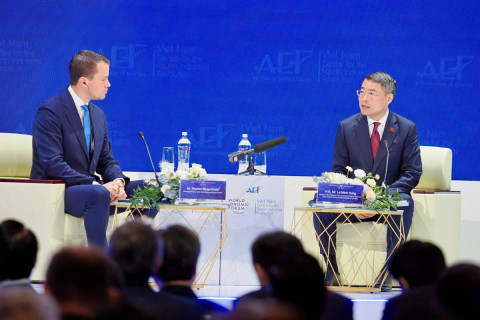
Vietnam seeks innovation-led growth amid shifting global economic landscape
Prime Minister of Vietnam Le Minh Hung has outlined Vietnam's strategy to strengthen economic resilience, accelerate innovation and enhance the competitiveness of domestic enterprises as global supply chains undergo significant restructuring.
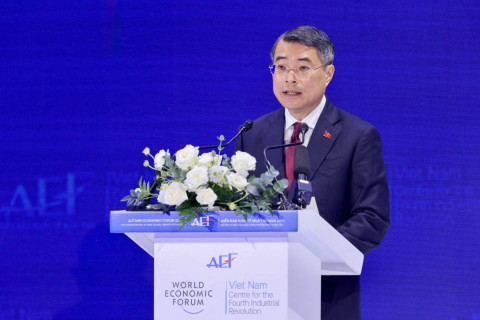
Vietnam PM proposes four initiatives to drive economic growth
Prime Minister Le Minh Hung has proposed four areas of cooperation with international partners to boost innovation, develop high-tech talent, test emerging technologies and attract long-term investment.

Sacombank names banking veteran Nguyen Xuan Ai Quoc as deputy chief — with profits tipped to surge 111%
The seasoned financier, a son of late film star Tham Thuy Hang, joins as the Vietnamese lender targets rapid growth and a major debt recovery.
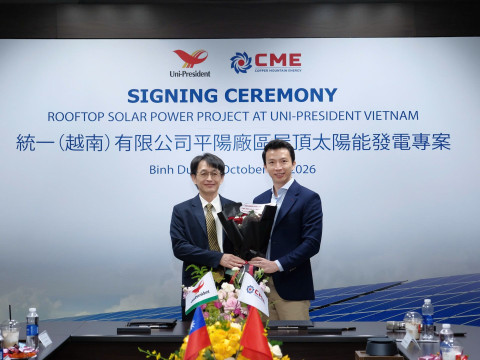
CME Solar Partners with Uni-President Vietnam to Deploy a 6,601 kWp Rooftop Solar Project
The 6,601 kWp rooftop solar project is expected to supply 8,656 MWh of clean electricity per year to Uni-President Vietnam, helping the company optimize energy costs and reduce CO₂ emissions.
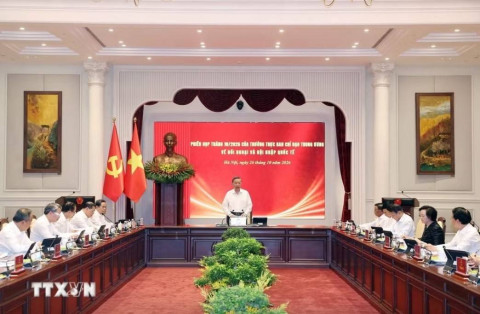
Vietnam Demands Results from Diplomacy
Top leaders of Vietnam order international pledges turned into jobs, productive capacity and markets—with institutions held to account for delivery.
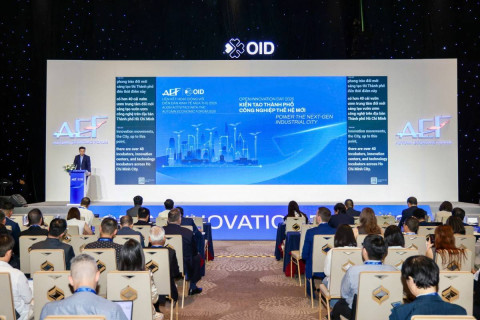
HCMC pushes open innovation towards commercial gains
Ho Chi Minh City is seeking to turn research and technology partnerships into measurable gains for businesses as it builds a next-generation industrial ecosystem.
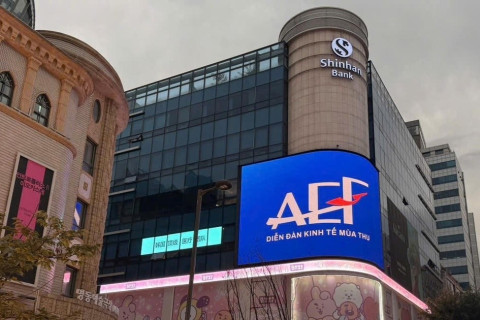
2026 Autumn Economic Forum promoted on Seoul screens
Ho Chi Minh City (HCMC) is taking Vietnamese economic ambitions abroad, using one of Seoul’s most prominent commercial districts to court investors and build international attention for the flagship autumn economic forum.

Khanh Hoa targets 23.7 million tourists in 2026
Khanh Hoa expects more than 23.7 million visitors and VND80.2 trillion in tourism revenue in 2026, increases of 44.8% and 19.7% year-on-year, respectively.

Vietnamese firms face Halal, logistics hurdles in UAE push
Vietnamese businesses seeking to enter the UAE and wider Middle East need stronger preparation in Halal compliance, market research and partner networks as logistics and information gaps weigh on exports, experts said.