

Will Vietnam's foreign exchange reserves reach 95 billion USD by the end of the year
- Business
- 00:41 13/05/2023
DNHN - Moody anticipates that Vietnam's foreign exchange reserves will recover by the end of the year and reach $95 billion as the SBV rebuilds its reserves.
Moody predicts that Vietnam's foreign exchange reserves, excluding gold, will recover to $95 billion by the end of this year as the State Bank rebuilds reserves.
An analyst in Singapore, Nishad Majumdar, stated, "The recent appreciation of the dong (VND), which reflects an improved external position, will allow the State Bank of Vietnam to rebuild. The forex buffer was depleted during last year's dollar rally.
According to the International Monetary Fund (IMF), Vietnam's foreign exchange reserves reached $88,3 billion in January of this year.

Even if exports decline, Mr. Majumdar estimates that the recovery of the tourism industry and the steady inflow of foreign direct investment will help increase national reserves. As the dollar's strength weakens, the dong has gained 6% over the past six months, in line with the uptrend of Asian currencies. A stronger VND will decrease the value of the government's external debt in domestic currency.
Governor Nguyen Thi Hong reported that the State Bank was closely monitoring the situation, combining monetary policy instruments with flexible management of the central exchange rate. The results indicate that the exchange rate is stable, as the SBV has purchased approximately 6 billion USD since the beginning of the year.
Credit increased by 2.75 percent as of April 25 compared to the end of 2022. Credit expansion was sluggish because, at the start of the year, it was not constrained by credit growth limits or liquidity conditions. The credit institution system has been improved. This indicates that the rate of capital absorption is low, for the following reasons: Due to the financial sector's weakness, some businesses need to borrow capital despite a lack of output, a decline in orders, and a corresponding decrease in demand and capital. Time impacted by the COVID-19 virus should not qualify for loans; Due primarily to legal factors, the increase in real estate credit was not as significant as in the past (real estate credit increased by 3.51%).
P.V (t/h)
Related news
- Vietnam Foodexpo to host largest edition with over 500 businesses
- Vietnam seeks innovation-led growth amid shifting global economic landscape
- Vietnam PM proposes four initiatives to drive economic growth
- Autumn Economic Forum seeks new growth engines in AI era
- Vietnam Demands Results from Diplomacy
- HCMC pushes open innovation towards commercial gains
- Vietnam Emerges as a Standout Destination for Autumn Travel
- 2026 Autumn Economic Forum promoted on Seoul screens
- Margin lending drives HSC earnings as brokerage revenue tumbles
- Bepharco appoints 2002-born executive as CEO
- Vietnam financial center eyes November 2026 launch
- Vietnam targets 20 internationally certified hospitals in medical tourism push
- Vietnam sets sights on double-digit growth as APEC 2027 preparations gather pace
- Vietnam businesses face global test: reform at home, earn trust abroad
- Vietnam firms warned: transform within, build trust abroad or fall behind
- VCBC Chairman Steve Bui: Incentives have run their course — Vietnam enters an institutional race to attract the next generation of FDI
- Vietnamese Journalism in the Age of AI: How can reporters survive in the profession?
- Dr. Samuel Feldberg warns of risks that could reshape the global economic order and shares strategic advice for Vietnamese businesses
- VINASME organizes training program on risk control for sustainable business development amid uncertainty
- Vietnam’s International Financial Center looks beyond tax incentives to compete
Đọc thêm Business

Asiago PDO Cheese and French Charcuterie Showcased in Hanoi: Bringing the Best of European Culinary Heritage to Vietnam
Industry representatives engage in discussions at the B2B Networking Event on October 30.
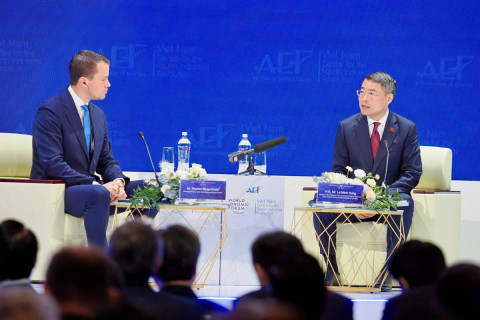
Vietnam seeks innovation-led growth amid shifting global economic landscape
Prime Minister of Vietnam Le Minh Hung has outlined Vietnam's strategy to strengthen economic resilience, accelerate innovation and enhance the competitiveness of domestic enterprises as global supply chains undergo significant restructuring.
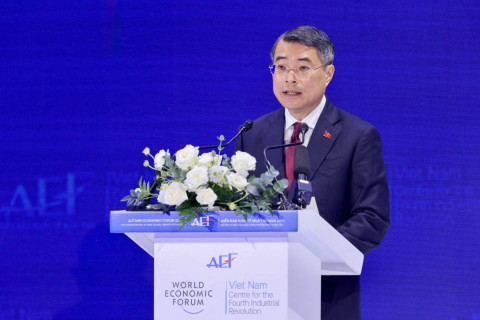
Vietnam PM proposes four initiatives to drive economic growth
Prime Minister Le Minh Hung has proposed four areas of cooperation with international partners to boost innovation, develop high-tech talent, test emerging technologies and attract long-term investment.

Sacombank names banking veteran Nguyen Xuan Ai Quoc as deputy chief — with profits tipped to surge 111%
The seasoned financier, a son of late film star Tham Thuy Hang, joins as the Vietnamese lender targets rapid growth and a major debt recovery.
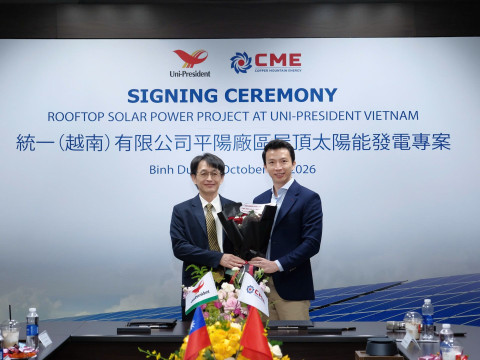
CME Solar Partners with Uni-President Vietnam to Deploy a 6,601 kWp Rooftop Solar Project
The 6,601 kWp rooftop solar project is expected to supply 8,656 MWh of clean electricity per year to Uni-President Vietnam, helping the company optimize energy costs and reduce CO₂ emissions.
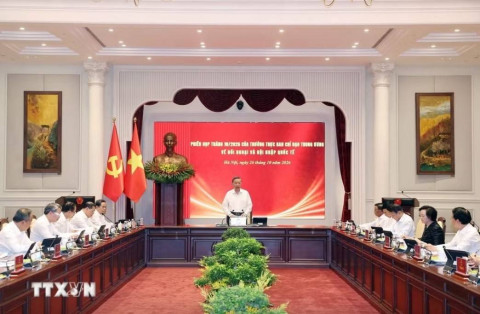
Vietnam Demands Results from Diplomacy
Top leaders of Vietnam order international pledges turned into jobs, productive capacity and markets—with institutions held to account for delivery.
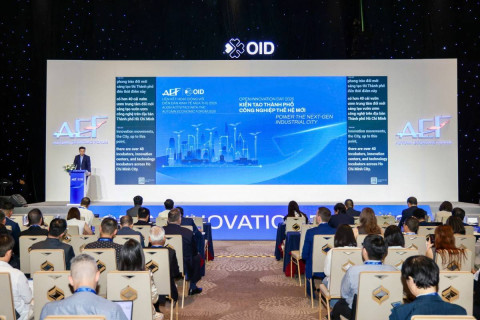
HCMC pushes open innovation towards commercial gains
Ho Chi Minh City is seeking to turn research and technology partnerships into measurable gains for businesses as it builds a next-generation industrial ecosystem.
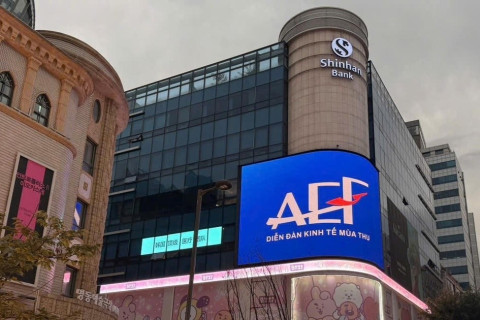
2026 Autumn Economic Forum promoted on Seoul screens
Ho Chi Minh City (HCMC) is taking Vietnamese economic ambitions abroad, using one of Seoul’s most prominent commercial districts to court investors and build international attention for the flagship autumn economic forum.

Khanh Hoa targets 23.7 million tourists in 2026
Khanh Hoa expects more than 23.7 million visitors and VND80.2 trillion in tourism revenue in 2026, increases of 44.8% and 19.7% year-on-year, respectively.
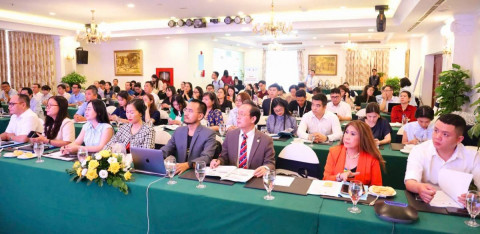
Vietnamese firms face Halal, logistics hurdles in UAE push
Vietnamese businesses seeking to enter the UAE and wider Middle East need stronger preparation in Halal compliance, market research and partner networks as logistics and information gaps weigh on exports, experts said.