

Vietnam: Quang Ninh will purchase electricity from China beginning at 00:00 on 24 May.
- Business
- 23:57 24/05/2023
DNHN - The People's Committee of Mong Cai City announced on May 22 that the city's electricity was cut off for approximately three hours in order to complete the connection and operation of the Mong Cai (Vietnam) - Dong Hung (China) 110Kv line, which serves
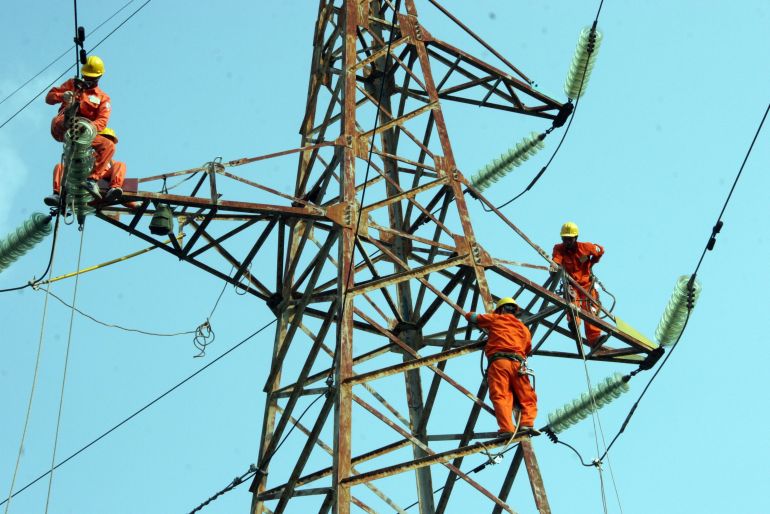
Electricity is expected to be switched from Tham Cau (China) to Vietnam at 0:00 on May 24. During the months of May, June, and July 2023, 110kV Mong Cai station in Mong Cai city and 110kV Quang Ha in Hai Ha district, Quang Ninh province, will receive electricity from China.
The agreement stipulates that China will supply Vietnam with electricity at a maximum capacity of 70 MW and 30 million kWh per month. During the months of May, June, and July 2023, 110kV Mong Cai station in Mong Cai city and 110kV Quang Ha in Hai Ha district, Quang Ninh province, will receive electricity from China.
Prior to that, from 2005 to 2016, Northern Power Corporation purchased electricity from China through the 110kV Tham Cau - Mong Cai transmission line.
Electricity of Vietnam (EVN) said it will increase electricity imports from Laos through the Nam Kong hydropower plant cluster, which is expected to begin commercial operation on May 22; and through the Nam San hydropower plant cluster, which was energised and connected to the national grid on May 22.
According to the Ministry of Industry and Trade, the global energy market has recently been extremely complex, and energy prices continue to be pushed to record highs; meanwhile, in our country, due to the impact of climate change and the El Nino phenomenon, which causes drought and prolonged water shortage, water flow to hydropower reservoirs in all three regions of the North, Central, and South regions was significantly lower than it was during the same time period many years ago. This has a significant impact on the power generation capacity of hydroelectric power plants (hydroelectric reservoirs in the North continue to have a low water return). As of May 11, 2023, all 12/12 lakes will have a negative impact on the power generation capacity of hydroelectric power plants. Large electricity in the Northern region has resulted in extremely low water flow to the lake, the lowest frequency of water in numerous lakes over the past century.
Particularly in April and early May, the water levels in the lakes are below 50% of the long-term average, and in some lakes, below 20% of the long-term average, resulting in a severe lack of water sources for hydropower reservoirs. In addition, the capacity and output of wind power plants decreased significantly due to the lack of wind, reaching only 5.6% of the installed capacity of the plants.
In particular, from the end of April until now, the country has experienced a significant increase in electricity demand due to temperatures that have been above average for many years. .5% over the same period in May 2022; the maximum consumption capacity reached 44,600 MW, the highest since the beginning of the year and up 8.5% in comparison to the same period in May 2022), resulting in the risk of power shortage.
Ngoc Phi (TH)
Related news
- Vietnam businesses face global test: reform at home, earn trust abroad
- Vietnam firms warned: transform within, build trust abroad or fall behind
- VCBC Chairman Steve Bui: Incentives have run their course — Vietnam enters an institutional race to attract the next generation of FDI
- Vietnamese Journalism in the Age of AI: How can reporters survive in the profession?
- Dr. Samuel Feldberg warns of risks that could reshape the global economic order and shares strategic advice for Vietnamese businesses
- VINASME organizes training program on risk control for sustainable business development amid uncertainty
- Vietnam’s International Financial Center looks beyond tax incentives to compete
- Expert Lại Thiên Phong: Localizing digital transformation – a new growth driver for Vietnam
- Are Vietnamese firms overlooking their most valuable “gold mine”?
- Iran Conflict and the “Double Shock” to the Global and Vietnamese Economies
- After 8 years and trillions sent abroad, are uST investors caught in a risky no-exit situation?
- When Cryptocurrency leaves the "Grey Zone": How are Vietnamese investors seeking profits?
- When the tech unicorn dream is undermined by reckless fundraising structures
- From New Year messages of World Leaders to the “new rules” of the Global economy in 2026
- Connecting Leaders, Shaping the Future: Strategic Leadership Planning Meeting – CorporateConnections Hanoi A
- Sunlight - Unilever Vietnam Recognized for Outstanding Contributions to the National Initiative Supporting Women Entrepreneurs
- Deputy Prime Minister Nguyễn Chí Dũng: “The country’s major challenges weigh heavily on my mind — and we must resolve them together.
- Unitsky String Technologies signs cooperation agreements with three Vietnamese partners, opening a new direction for smart mobility and sustainable development
- When artists do business – livelihood is no poetry!
- Before the D‑day to abolish flat‑rate tax: Fear of technology and costs leave small traders struggling to adapt
Đọc thêm Business

Vietnam businesses face global test: reform at home, earn trust abroad
Vietnamese companies must transform their leadership, teams and cultural outlook — then build trusted international networks — or risk losing ground to better-prepared global rivals.
Vietnam firms warned: transform within, build trust abroad or fall behind
Vietnamese companies must transform their leadership, teams and cultural outlook — then build trusted international networks — or risk losing ground to better-prepared global rivals.
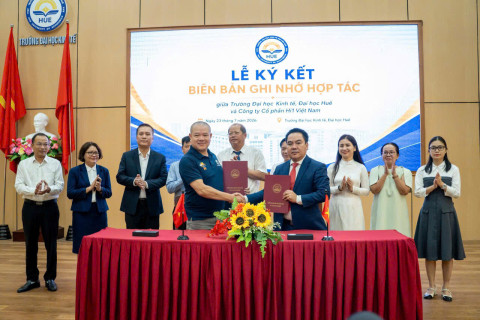
Hi1 and the digital brand ambassador mission: bringing millions of Vietnamese products onto digital platforms with 10,000 Hue students
As millions of OCOP products, local specialty goods and Vietnamese heritage brands continue to struggle to establish a meaningful presence in the digital marketplace, a groundbreaking new cooperation model has just been launched in Hue.
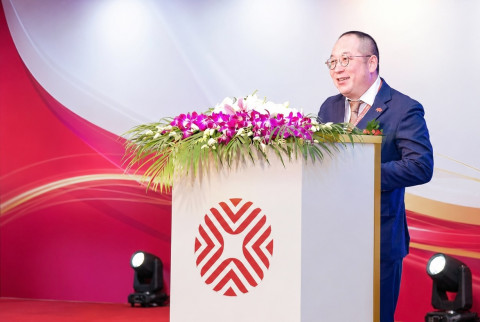
VCBC Chairman Steve Bui: Incentives have run their course — Vietnam enters an institutional race to attract the next generation of FDI
VCBC Chairman Steve Bui analyzes Vietnam's next-generation FDI strategy, stressing that the country must now compete on institutional quality, innovation, and stronger linkages between foreign and domestic enterprises.

Vietnamese Journalism in the Age of AI: How can reporters survive in the profession?
Few professions have faced a transformation as profound as journalism is experiencing today.
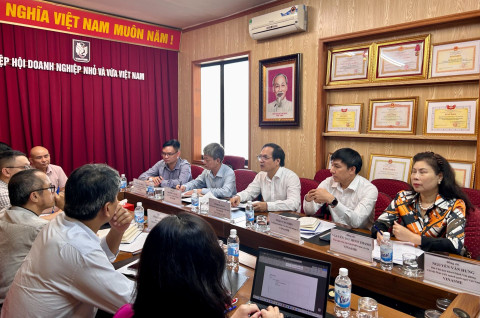
Businesses under pressure: Capital and talent shortages threaten competitiveness
The Vietnam Institute of Economics and World Affairs (VIEWA) recently held a working session with the Vietnam Association of Small and Medium Enterprises (VINASME) as part of a policy research and business support initiative.

Dr. Samuel Feldberg warns of risks that could reshape the global economic order and shares strategic advice for Vietnamese businesses
Geopolitical tensions, technological transformation, trade fragmentation, and financial uncertainty are reshaping the global economy at an unprecedented pace.
VINASME organizes training program on risk control for sustainable business development amid uncertainty
In the context of a rapidly changing economy, increasing competition, and accelerating digital transformation, risk management capability has become a critical factor determining the resilience and sustainable growth of businesses, particularly SMEs.

Vietnam’s International Financial Center looks beyond tax incentives to compete
What makes a city an international financial center? Is it skyscrapers, massive capital flows, or generous tax incentives?

CEO Nguyễn Tất Tùng: only by anchoring in culture and preserving national identity can Vietnamese entrepreneurs reach the world
In a setting imbued with the rich cultural essence of Kinh Bắc, the 15th anniversary celebration of Dragon Travel was far more than a typical corporate event.