

Strategies to help small and medium-sized businesses expand their export business
- Business
- 23:30 01/11/2023
DNHN - Vietnamese small and medium-sized export businesses continue to struggle with finding clients, getting funding, and satisfying import market demands. They are also less competitive...
According to Economy, Ms. Tran Thi Thanh Tam, Director of the Centre for Supporting Small and Medium-sized Enterprises (Federation of Vietnam Chamber of Commerce and Industry (VCCI)) stated at the recent conference "Solutions to promote import-export growth for Vietnamese small and medium-sized enterprises" that Vietnam has enormous potential and opportunities to develop export activities when it deeply integrates into the global economy and signs numerous new generation trade agreements, along with the development of the 4.0 industrial revolution, the digital transformation process, and the strong development trend of e-commerce...
In actuality, Vietnamese export businesses still face numerous obstacles in the form of competitiveness, product quality, and legal requirements that must be met in both import and export markets.

In addition, there are challenges in acquiring clients, breaking into untapped markets, and obtaining funding for investments in factories, machinery, equipment, and technological innovation to raise output and quality. Product quality satisfies export and import demand.
Furthermore, the export growth of Vietnam's small and medium-sized businesses has reached a high speed, but Mr Nguyen Van Hoi, Director of the Institute of Industry and Trade Strategy and Policy Research stated that it is not truly sustainable in the medium and long term. Stable growth in exports can be impacted by a multitude of potential risks.
However, small and medium-sized businesses' export competitiveness is still low and is only gradually improving, particularly for manufactured and processed goods. The requirements are not met by the innovation content of exported products. Small firms do not have a systematic business plan aimed at taking advantage of comparative advantages in international trade, and they are weak in management and strategy.
According to Ms. Tam, "finding customers" and "access to credit" are two crucial problems that must be fixed to support export growth for small and medium-sized businesses. Enhancing the capabilities of small and medium-sized import-export businesses, creating top-notch human resources to fulfil the demands of technological innovation, production and business procedures, and price chain participation are also critical. worldwide norm.
As per Mr Hoi's assertion, it is imperative to fortify corporate strategic management, proficiently execute the establishment and modification of production and business strategies linked to the demands of export markets, and guarantee sustainable development.
Create market development plans as soon as possible for small and medium-sized businesses for every product, making sure that benefits are highlighted and that agreements made in bilateral, regional, and multilateral free trade agreements—especially those about newer generations of FTAs—are carried out effectively.
Improve value and export competitiveness by strengthening small and medium-sized businesses' identity, brand, and product quality through research and application of cutting-edge technology and techniques.
To identify important and prospective markets for the export products of small and medium-sized businesses, marketing and export promotion initiatives must be supported by market segmentation research. This will help in the identification of import partners. intended password
However, to meet the demands of technological innovation, production, and business processes, as well as to participate in the global value chain with a variety of high-quality products, small and medium-sized businesses should concentrate on developing high-quality human resources. The superior, worldwide calibre of service.
In terms of credit and financial policies, mechanisms and regulations are required to make good use of low-interest loans and loans under preferential arrangements to significantly boost investment capital for the development of export-oriented businesses. modest and middling. For small and medium-sized businesses, investing in technological innovation is a necessary investment that requires research and additional mechanisms to support loan interest rates.
TH
Related news
- Buon Ma Thuot Coffee Festival 2027 targets 1.3 million visitors
- National Assembly of Vietnam passes SME Development Law
- AgriS receives First-Class Labor Medal
- VINASME opens Southern Representative Office to build SME competitiveness
- Vietnam takes APEC baton from China, eyes ‘new era of self-reliance’ for 2027
- Vietnam–UAE CEPA: Tariff Gains Yet to Translate into Market Share
- Vietnam urges Trump to speed up reciprocal trade deal
- AgriS and its chairwoman to receive First-class Labor Orders
- Mr. To Lam at FrancoTech 2026: Francophone cooperation must move from potential to concrete action
- Mandarin orange, mandarin ambitions
- Vietravel Airlines Reinforces Its Board as It Pushes Into Southern China
- Vietnam’s spice exports on track to hit $2.4 billion in 2026
- Vietnam ranks third in Southeast Asia in digital, AI competitiveness
- Better data key to unlocking SME credit
- VINASME calls for data-driven lending to improve SME access to credit
- Vietnam Makes It 10 Straight as Khanh Hoa Drives Golf Tourism Momentum
- Nine banks plan subsidiaries at Vietnam’s international financial center
- Ho Chi Minh City: A Story in Every Rhythm
- A democratic congress could reshape U.S. foreign policy, but President Donald Trump still holds the keys
- Vietnamese exporters face green standards hurdle in EU market
Đọc thêm Business

VINASME opens Southern Representative Office to build SME competitiveness
The association is shifting from supporting businesses to developing their long-term capacity, backed by a shared digital platform and five breakthrough priorities for 2027–2032.
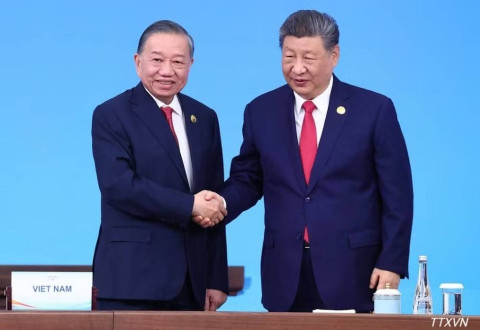
Vietnam takes APEC baton from China, eyes ‘new era of self-reliance’ for 2027
Hanoi unveils theme and three priorities as it prepares to host the forum for the third time, with leaders’ week set for Phu Quoc

VIFC-HCMC courts international capital at Singapore FinTech Festival
At a Singapore workshop, the city’s new financial center outlined four priority product groups and signed a letter of intent with SLEI to broaden Vietnamese businesses’ access to long-term capital.

Vietnam tops ASEAN consumer sentiment despite rising cost concerns
Vietnamese consumers remain the most optimistic in ASEAN with an ACSI score of 63, but rising living costs and gaps in long-term financial security are making them more cautious, savings-minded and investment-oriented
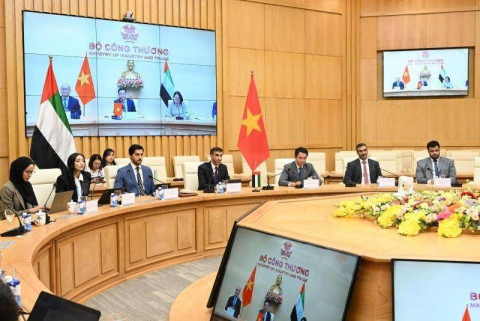
Vietnam–UAE CEPA: Tariff Gains Yet to Translate into Market Share
Nine months into the CEPA, Vietnamese goods enjoy major tariff advantages in the UAE yet hold under 1% of its import market. The greatest potential lies in using the incentives, meeting rules of origin and building distribution networks.
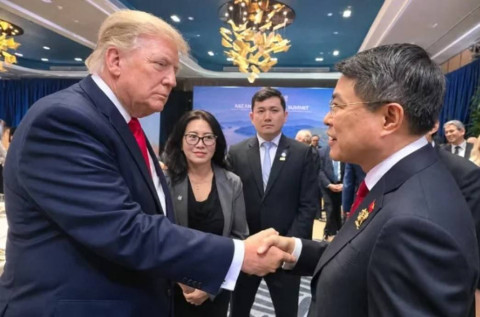
Vietnam urges Trump to speed up reciprocal trade deal
Both sides have held seven formal negotiation rounds and agreed on most of the core content, but no signing date has been set.

Vietnam’s spice exports on track to hit $2.4 billion in 2026
Exports of black pepper, cinnamon and star anise are all posting solid growth, putting Vietnam’s spice industry on course for a turnover of $2.4 billion in 2026.

Vietnam exports $120,000 worth of specialty coffee to US
A company in Vietnam's Central Highlands province of Dak Lak has exported more than 3.4 tons of specialty coffee to the U.S., marking a step toward higher-value exports as the country seeks to move beyond its traditional reliance on raw coffee beans.

Over $480 million pledged at COP31 to accelerate methane emissions reductions
More than $480 million in new climate financing has been announced at COP31 to accelerate efforts to reduce methane emissions and other powerful climate pollutants.
Vietnam raises foreign commercial borrowing ceiling to 10 billion USD for 2026
The Vietnamese Government has raised the ceiling for medium- and long-term foreign commercial borrowing by enterprises and credit institutions to 10 billion USD in 2026.