

Opportunities and challenges of Vietnam's bamboo industry when integrating
- 135
- Business
- 22:29 21/08/2022
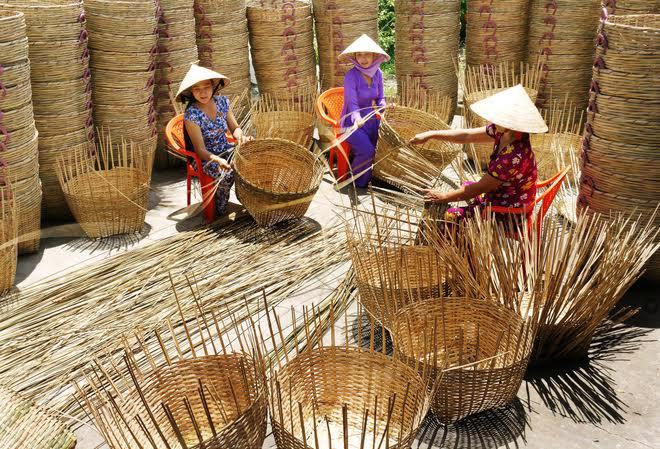
DNHN - Despite having 1.6 million hectares of bamboo area, Vietnam's bamboo products are still weak when competing with competitors in terms of quality, product design and technology, and poor technology compared to other countries and export value is less than 400 million USD, accounting for 3% of the global bamboo trade.
The story of the output of bamboo is "heated" at the Workshop "The role of raw bamboo in the development of bamboo product value chains in Vietnam", coordinated by the Ministry of Agriculture and Rural Development with the Vietnam Confederation of Trade and Industry (VCCI) held on August 4, 2022.
Developing the bamboo industry along the value chain
Deputy Minister of Agriculture and Rural Development Tran Thanh Nam said: that Vietnam has a very large bamboo area, up to 1,592,205 hectares, distributed in most provinces across the country, including 37/63 provinces that cover an area of over 10,000 hectares. Vietnam's bamboo resources are very rich and diverse, with hundreds of species, of which several high-economic species such as bamboo, bamboo poles, bamboo poles, octopus, bamboo shoots, bamboo thorns, etc.
"The total bamboo reserve of the country is estimated at 6.5 billion trees, annually exploiting 500-600 million trees (equivalent to about 2.5-3.0 million tons), for an export value of 300-400 million USD/year".
Presenting the Project on Sustainable and Comprehensive Development of Clam/Bamboo Value Chain in Vietnam (SCBV), Dr Phan Van Thang, an expert from the Non-timber Forest Products Research Center, said that the SCBV project was implemented from April 2018 to April 2023, with the main funding from the EU (accounting for 70% of the project's capital).
As a result of the project's implementation, to date, over 12,000 small-scale farmers in the bamboo chain have improved their capacity to apply appropriate production techniques and implement sustainability standards (FSC).
Currently, two FSC certificates for bamboo have been issued to groups of households in Thanh Hoa and Nghe An. In which, FSC certificate for an area of 2,400 ha for Luong trees of 545 households in 4 communes: Thanh Xuan, Phu Xuan, Phu Son, and Phu Le, Quan Hoa district, Thanh Hoa. FSC certificate for Lung tree with an area of 938 ha for a group of 212 households in 2 communes Dong Van and Thong Thu, Que Phong district, Nghe An province.
The project also successfully supported 11 pilot linkage models to grow bamboo along the value chain. In 2021, groups of preliminary processing groups buy bamboo materials for small-scale producers in Thanh Hoa and Nghe An growing area at a price 40% higher than selling to traders. This also drives up the selling price of bamboo material in Thanh Hoa and Nghe An to increase by 20-30% on average compared to previous years.
Vietnamese bamboo only accounts for 3% of the global bamboo trade
Ms Nguyen Thi Thanh Huyen, the SCBV Project Coordinator, said that the total global trade of bamboo products will reach 57.86 billion USD in 2021. It is forecasted that by 2028, the global bamboo market size will reach 82.90 USD. Currently, China is the world's largest exporter of bamboo products, accounting for 67% of the global bamboo trade value, while Vietnam ranks 6th in the world in terms of bamboo exports but only accounts for 3% of the total value of global bamboo trade.
“The competitor that Vietnam's bamboo industry faces is China. Currently, this country is dominating the global bamboo products market, not only in terms of output but also in terms of technical capacity and quality. Therefore, to compete with Chinese bamboo products, the quality of Vietnamese bamboo products needs to be equal to or better than those of China and the price must be appropriate," emphasized Ms Huyen.
According to Mr Pham Quoc Khanh, Head of the Campaign Committee to establish the Vietnam Bamboo Association, currently, the export market for bamboo products, mainly bamboo handicrafts, is to Japan, the EU, and the United States, but there is a shortage of high-value industrial bamboo products.
Meanwhile, up to 65% of bamboo materials are not processed and are only used for purposes of low economic value such as construction bamboo, disposable chopsticks, etc. In addition, the marketing activities of the bamboo industry are still very poor, lack of coordination among actors in the value chain.
Pointing out the difficulties in developing the bamboo industry, Ms Nguyen Thi Hoang Yen, Deputy Director of the Department of Economic Cooperation and Rural Development, emphasized, that there are very few good sources of bamboo seeds and there are signs of similar decline. serious bamboo. Bamboo forest area is shrinking, the farming level is low, and the production scale is fragmented and small. Meanwhile, there is a lack of policies to support the development and production of the bamboo industry.
Pointing out the difficulties in developing the bamboo industry, Ms Nguyen Thi Hoang Yen, Deputy Director of the Department of Economic Cooperation and Rural Development, emphasized, that there are very few good sources of bamboo seeds and there are signs of a serious decline in bamboo varieties. Bamboo forest area is shrinking, the farming level is low, and the production scale is fragmented and small. Meanwhile, there is a lack of policies to support the development and production of the bamboo industry.
Therefore, according to Ms Yen's recommendation, it is necessary to diversify products made from bamboo; build concentrated bamboo growing material areas with certificates for export; establish cooperatives and cooperative groups to grow bamboo to build a chain of links between people, cooperatives and businesses. For the consumer market, it is necessary to strengthen trade promotion, negotiate to open the world market for bamboo products; organize marketing and promotion of bamboo products capable of replacing wood products and other materials.
The export value of Vietnamese bamboo has only reached 348 million USD, not commensurate with the potential of Vietnam's bamboo. Currently, Vietnam's exports of bamboo products account for only 3% of the total global bamboo trade. With Vietnam's bamboo area ranked 4th in the world, we can fully achieve the goal of capturing 10% of the global bamboo trade in the next 10 years.
For the bamboo industry to develop faster, it is necessary to set up a Bamboo Research and Conservation Center, develop bamboo varieties with high economic value, and create a large nursery for planting within a large area; training and technical support for growers following the sustainable management model with FSC certification, etc.
It is proposed that the State adopt policies to support farmers and businesses to have priority in accessing preferential loans from banks and credit institutions, with more preferential interest rates. The Ministry of Agriculture and Rural Development should take the lead to issue separate policies for the bamboo industry. Proposing the Ministry of Home Affairs to support the establishment of the Vietnam Bamboo Association soon to develop a strategy for the development of the bamboo industry.
Currently, the association between businesses and bamboo farmers is facing many difficulties, and it is difficult for farmers to keep their commitments in terms of output, the delivery time of materials, and product quality. While, it is difficult for the company to bind the responsibility of farmers, and must bear all risks. Most of the leaders of the bamboo growing group are people in the group who are honoured, are direct workers, and lack group management skills.
Therefore, it is suggested that the authorities at all levels pay attention to training in construction and management skills for group leaders, and open regular technical training courses for bamboo farmers. Hope the Government, and the Ministry of Agriculture and Rural Development have policies to support bamboo farmers; there is a clear mechanism to bind the responsibilities associated with the interests of farmers when participating in association with enterprises.
PV
Related news
- VCBC Chairman Steve Bui: Incentives have run their course — Vietnam enters an institutional race to attract the next generation of FDI
- Vietnamese Journalism in the Age of AI: How can reporters survive in the profession?
- Dr. Samuel Feldberg warns of risks that could reshape the global economic order and shares strategic advice for Vietnamese businesses
- VINASME organizes training program on risk control for sustainable business development amid uncertainty
- Vietnam’s International Financial Center looks beyond tax incentives to compete
- Expert Lại Thiên Phong: Localizing digital transformation – a new growth driver for Vietnam
- Are Vietnamese firms overlooking their most valuable “gold mine”?
- Iran Conflict and the “Double Shock” to the Global and Vietnamese Economies
- After 8 years and trillions sent abroad, are uST investors caught in a risky no-exit situation?
- When Cryptocurrency leaves the "Grey Zone": How are Vietnamese investors seeking profits?
- When the tech unicorn dream is undermined by reckless fundraising structures
- From New Year messages of World Leaders to the “new rules” of the Global economy in 2026
- Connecting Leaders, Shaping the Future: Strategic Leadership Planning Meeting – CorporateConnections Hanoi A
- Sunlight - Unilever Vietnam Recognized for Outstanding Contributions to the National Initiative Supporting Women Entrepreneurs
- Deputy Prime Minister Nguyễn Chí Dũng: “The country’s major challenges weigh heavily on my mind — and we must resolve them together.
- Unitsky String Technologies signs cooperation agreements with three Vietnamese partners, opening a new direction for smart mobility and sustainable development
- When artists do business – livelihood is no poetry!
- Before the D‑day to abolish flat‑rate tax: Fear of technology and costs leave small traders struggling to adapt
- Vietnamese enterprises at a crossroads: the impact of a potential US–China deal
- "Digital technicians" must not be forgotten if Vietnam aims to meet its strategic goals
Đọc thêm Business
Hi1 and the digital brand ambassador mission: bringing millions of Vietnamese products onto digital platforms with 10,000 Hue students
As millions of OCOP products, local specialty goods and Vietnamese heritage brands continue to struggle to establish a meaningful presence in the digital marketplace, a groundbreaking new cooperation model has just been launched in Hue.
VCBC Chairman Steve Bui: Incentives have run their course — Vietnam enters an institutional race to attract the next generation of FDI
VCBC Chairman Steve Bui analyzes Vietnam's next-generation FDI strategy, stressing that the country must now compete on institutional quality, innovation, and stronger linkages between foreign and domestic enterprises.

Vietnamese Journalism in the Age of AI: How can reporters survive in the profession?
Few professions have faced a transformation as profound as journalism is experiencing today.
Businesses under pressure: Capital and talent shortages threaten competitiveness
The Vietnam Institute of Economics and World Affairs (VIEWA) recently held a working session with the Vietnam Association of Small and Medium Enterprises (VINASME) as part of a policy research and business support initiative.
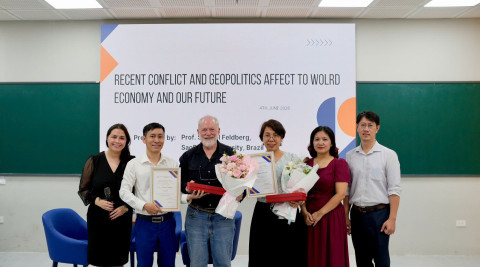
Dr. Samuel Feldberg warns of risks that could reshape the global economic order and shares strategic advice for Vietnamese businesses
Geopolitical tensions, technological transformation, trade fragmentation, and financial uncertainty are reshaping the global economy at an unprecedented pace.
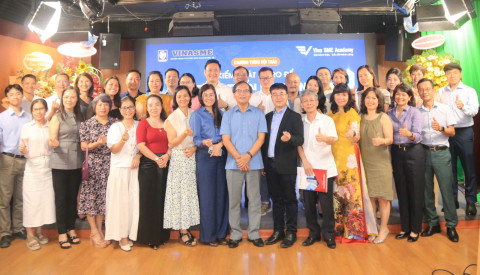
VINASME organizes training program on risk control for sustainable business development amid uncertainty
In the context of a rapidly changing economy, increasing competition, and accelerating digital transformation, risk management capability has become a critical factor determining the resilience and sustainable growth of businesses, particularly SMEs.
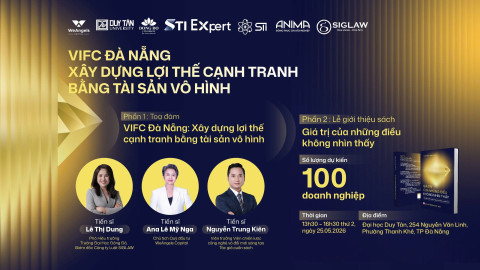
Vietnam’s International Financial Center looks beyond tax incentives to compete
What makes a city an international financial center? Is it skyscrapers, massive capital flows, or generous tax incentives?
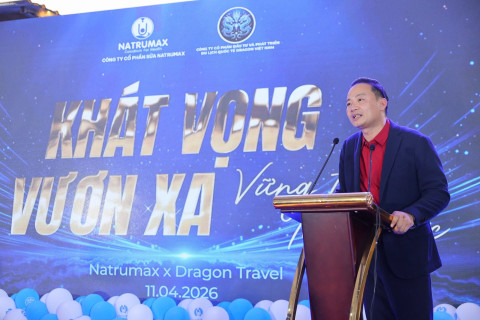
CEO Nguyễn Tất Tùng: only by anchoring in culture and preserving national identity can Vietnamese entrepreneurs reach the world
In a setting imbued with the rich cultural essence of Kinh Bắc, the 15th anniversary celebration of Dragon Travel was far more than a typical corporate event.
Expert Lại Thiên Phong: Localizing digital transformation – a new growth driver for Vietnam
On the morning of April 21, at the Ministry of Science and Technology, the Agency for Technology Entrepreneurship and Commercialization Development announced the 2026 innovation agenda aligned with the National Strategy for Startup and Innovation.
Building and accumulating intangible assets: a sustainable competitive advantage
In an intellectually vibrant afternoon of the business community, a seemingly old question was raised again in a way that made the entire audience rethink from the beginning.