

Cathay United Bank Rebrands in Vietnam with Digital Consumer Finance Offerings
- Digital
- 12:52 06/01/2024
DNHN - After 18 years of presence in Vietnam, Cathay United Bank (CUB) has provided financial services to Vietnamese corporate clients and Taiwanese-invested enterprises, including trade finance, cash management, cross-border payments, and more.
In addition, CUB has now expanded its services to offer financial solutions to individual customers in Vietnam. This expansion marks a significant transformation for CUB. Mr Benny Miao, Deputy General Manager of Cathay United Bank in charge of the Southeast Asia region, spoke with Vietnam Business Forum about CUB’s new strategy and rebranding.
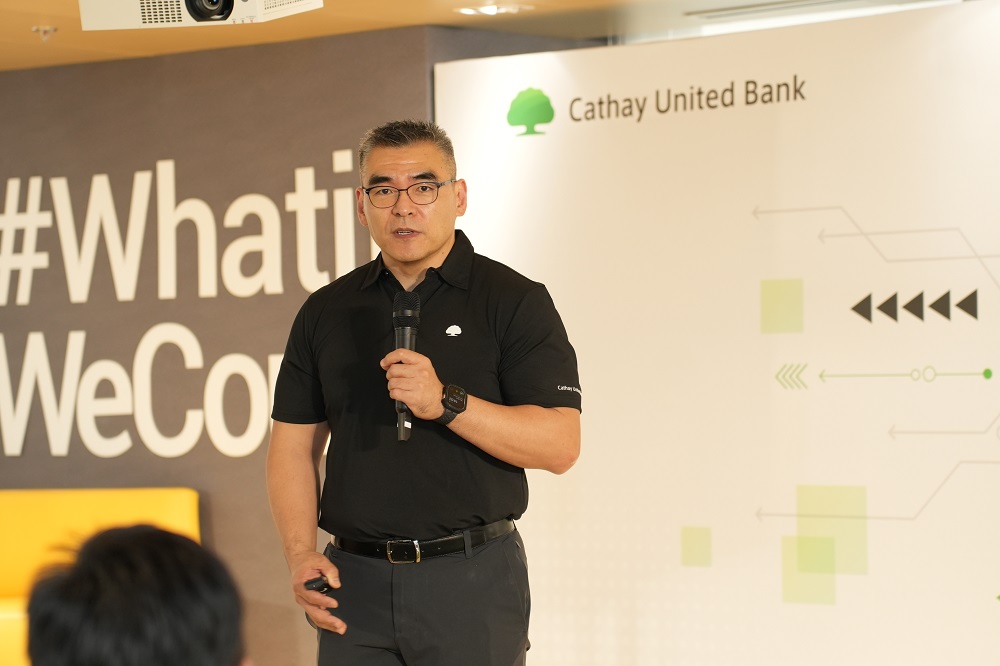
What chances and difficulties will CUB have when it rebrands in Vietnam, Mr Miao? After eighteen years of business, why did CUB decide to rename the Vietnamese market?
Vietnam has consistently been a significant market for international investment organisations. Taiwanese businesses have always made significant investments in Southeast Asian nations, particularly Vietnam. As CUB's commercial presence in Vietnam grows stronger, we wish to service more clients more effectively and proactively.
Vietnam also benefits from many preferential tariff regimes and free trade agreements, which draw significant amounts of international investment. Due to the "China+1" strategy and the New Southbound Policy, Taiwanese businesses have been gradually moving their production and manufacturing to Vietnam. Taiwanese banks now prioritise doing business with these Taiwanese enterprises.
The surge in foreign investment from nations and regions including Singapore, Hong Kong, Japan, and South Korea has caused labour and land costs—which were previously seen to be rather low—to progressively rise in recent years. The Vietnamese government also anticipates the growth of high-value sectors to draw foreign investment. Furthermore, new rules could be published at any time, and existing local restrictions might be altered. Taiwanese banks must so efficiently manage risks, adhere to legal requirements, and monitor policy changes to stay up to date on the most recent developments.
CUB's digital banking development is built on its in-house digital consumer finance platform and technology, which serves as the foundation for the rebranding approach. It is necessary to connect the loan, customer service, and debt collection models on this intricate system and platform. Apart from being efficient in mitigating risks, this model needs to possess exceptional adaptability. This will enable the bank to reproduce its model and tailor it to the requirements and laws of various markets in the future in other Southeast Asian nations.
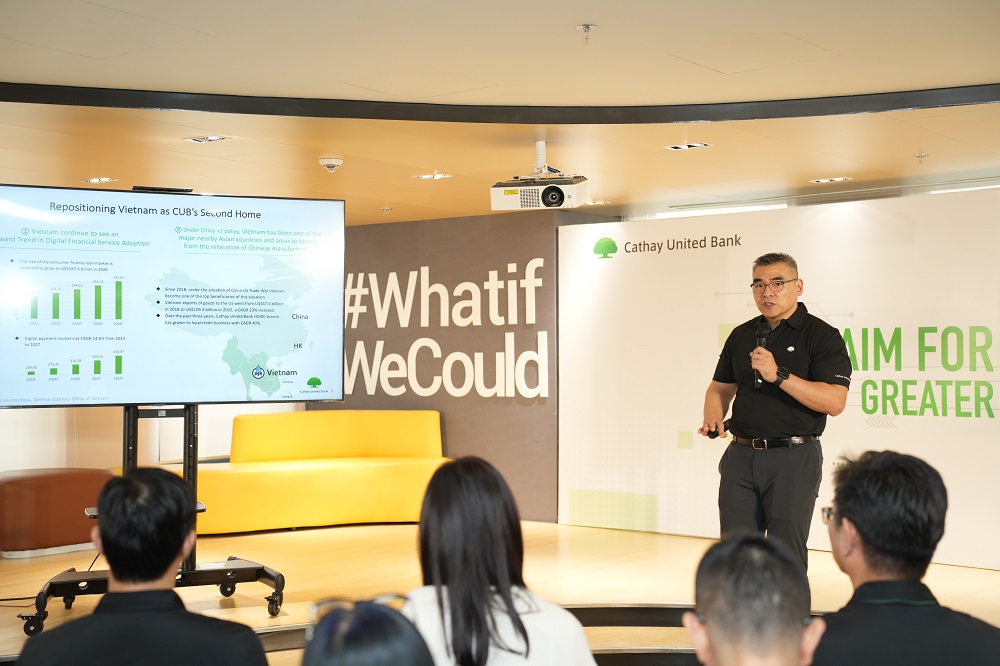
What do you think the primary objective of CUB's rebranding is?
By concentrating on digital consumer finance, we are adopting a different strategy than other Taiwanese banks in Southeast Asia. The bank will soon introduce many goods and services in Vietnam in addition to developing its own digital consumer finance platform and system. CUB wants to dominate Southeast Asian digital consumer finance markets as the top Taiwanese bank.
During the COVID epidemic, CUB gained experience. Within a few months, CUB developed an e-banking system that enables clients and consumers to remotely open online accounts, carry out cross-border online banking transactions, and oversee cash flow to preserve uninterrupted operations for enterprises.
What other plans does the bank have in addition to this growth to develop its customer base, gain market share, and raise money?
CUB has enhanced its cross-border support team to better serve consumers while also adhering to the trend of supply chain relocation. CUB has sustained its growth in attracting high-calibre clientele by seizing chances for prospective foreign direct investment (FDI).
Furthermore, CUB has extensive industry experience and a thorough awareness of the local market. CUB can offer comprehensive, customised services to Taiwanese businesses looking to expand internationally, invest locally in Southeast Asia, or set up factories. These services include professional advice and consultation on-site visits and early factory location selection, as well as trade finance and export credit insurance needs that require capital injection. It is noteworthy that Cathay Financial Holdings offers life and property insurance as well as "comprehensive financial services" to its clients, in addition to its subsidiaries and branches in Vietnam.
What part does CUB think the Vietnamese market plays in the company's operations?
We firmly believe that Vietnam will become our second home, and we intend to make it so. Vietnam plays a major role in our bank's profitability and is a key area for strategic expansion. We anticipate that Vietnam's contribution to our international business will rise as we invest there, giving us the chance to expand alongside the Vietnamese economy.
The constant influx of foreign capital into Vietnam is proof of the country's continued appeal to investors. Apart from Taiwanese enterprises, there are significant influxes of investments from Singapore, Hong Kong, Japan, and South Korea. Taiwanese businesses have been relocating to Vietnam to establish production and manufacturing facilities. The global supply chain is also being reorganised amid the US-China trade war, with many suppliers and original equipment manufacturers shifting from China to Southeast Asia. One of the most popular places for international businesses wishing to spread their risks is Vietnam. Our clients can choose from a variety of foreign financial services that we offer, such as cross-border payments, trade finance, cash management, and soon-to-be digital services. Our goal is to be the top resource for Taiwanese businesses seeking to reach Vietnamese clients and enter foreign markets.
Will CUB's objectives in Vietnam go beyond just boosting its business?
Together with Taiwan, CUB launched "The Elevated Tree" campaign to help and care for poor youngsters to further solidify our commitment to the Vietnamese market and community. Through this initiative, CUB provides care and support to students in the community. Our goal is to grow these young trees into strong, resilient individuals who can face any obstacles in the future. To maintain enthusiasm, CUB will keep making investments in the neighbourhood in the future. Concurrently, CUB assists recent graduates seeking master's degrees in Taiwan. After graduating, these students work for the CUB Group and go back to Vietnam. Through these initiatives, a positive feedback loop is established that allows students to give back to their home communities by using the knowledge and skills they acquired in Taiwan.
Thank you for this conversation!
Thu Hien
Related news
- Vietnam businesses face global test: reform at home, earn trust abroad
- Vietnam firms warned: transform within, build trust abroad or fall behind
- VCBC Chairman Steve Bui: Incentives have run their course — Vietnam enters an institutional race to attract the next generation of FDI
- Vietnamese Journalism in the Age of AI: How can reporters survive in the profession?
- Dr. Samuel Feldberg warns of risks that could reshape the global economic order and shares strategic advice for Vietnamese businesses
- VINASME organizes training program on risk control for sustainable business development amid uncertainty
- Vietnam’s International Financial Center looks beyond tax incentives to compete
- Expert Lại Thiên Phong: Localizing digital transformation – a new growth driver for Vietnam
- Are Vietnamese firms overlooking their most valuable “gold mine”?
- Iran Conflict and the “Double Shock” to the Global and Vietnamese Economies
- After 8 years and trillions sent abroad, are uST investors caught in a risky no-exit situation?
- When Cryptocurrency leaves the "Grey Zone": How are Vietnamese investors seeking profits?
- When the tech unicorn dream is undermined by reckless fundraising structures
- From New Year messages of World Leaders to the “new rules” of the Global economy in 2026
- Connecting Leaders, Shaping the Future: Strategic Leadership Planning Meeting – CorporateConnections Hanoi A
- Sunlight - Unilever Vietnam Recognized for Outstanding Contributions to the National Initiative Supporting Women Entrepreneurs
- Deputy Prime Minister Nguyễn Chí Dũng: “The country’s major challenges weigh heavily on my mind — and we must resolve them together.
- Unitsky String Technologies signs cooperation agreements with three Vietnamese partners, opening a new direction for smart mobility and sustainable development
- When artists do business – livelihood is no poetry!
- Before the D‑day to abolish flat‑rate tax: Fear of technology and costs leave small traders struggling to adapt
Đọc thêm Digital

Cybersecurity talent & digital entrepreneurs: Vietnam racing to fill a 700,000-person workforce gap
The “Student Cybersecurity Festival & Final Round of the 2025 Vietnam Cybersecurity Student Competition” (CSCV 2025), held on November 15 in Hanoi, became a major focal point for the technology community.
"Digital technicians" must not be forgotten if Vietnam aims to meet its strategic goals
Vietnam is facing a serious shortage of skilled technical operators. Without retaining its “digital technicians,” the ambition to become an AI hub may never materialize.

Prime Minister: Vietnam aims to become a regional logistics hub
At the 2025 FIATA World Congress in Hanoi, Prime Minister Pham Minh Chinh emphasized logistics as one of Vietnam’s key growth drivers, highlighting major infrastructure investments and commitments to attract global investors.

VietLeap AI Accelerator launches: A strategic springboard for Vietnam’s AI startups
The program is expected to select 10 to 15 high-growth potential AI startups with clear funding needs.
Vietnam advances cybersecurity law to boost digital sovereignty and business resilience
In a significant step towards strengthening Vietnam’s digital defenses, the National Assembly Standing Committee convened on September 23 to review the draft revised Cybersecurity Law.

Vietnam embraces digital tools to modernize public administration
Across Vietnam, local governments are turning to digital platforms, QR codes, and AI-powered assistants to modernize public services—making them faster, more transparent, and more accessible to citizens.

Administrative procedures for establishing the national technology exchange reduced to one application set
Deputy Prime Minister Nguyen Hoa Binh has just signed Decision No. 2108/QD-TTg approving the plan to streamline internal administrative procedures within the state administrative system under the management of the Ministry of Science and Technology.

Government’s plan to implement Law on Digital Technology Industry approved
The Government has approved a plan to implement the Law on Digital Technology Industry (the Law) scheduled to take effect from January 1, 2026, according to a report from the Government News.
Shark Nguyễn Hòa Bình: Hanoi will become the capital of startup innovation.
Recently, in Hanoi, the seminar “Formulating City People’s Council Resolutions to Promote Science and Technology Development in Connection with the Implementation of Politburo Resolution No. 57-NQ/TW and the Capital Law No. 39/2024/QH15” was held.
Da Nang proposes semiconductor cooperation with Oregon (USA)
Leaders of Da Nang City have proposed that Oregon (USA) and the city explore cooperation opportunities in priority sectors such as semiconductor technology, logistics, and the development of Free Trade Zone (FTZ) infrastructure.