

Larry Ellison’s lesson: Enduring success starts with fixing the market’s pain points
- Business
- 13:56 09/09/2025
DNHN - As of today, Larry Ellison has risen to become the world’s second-richest billionaire with a fortune of nearly $260 billion, surpassing familiar names such as Jeff Bezos and Warren Buffett.
Yet few know that the founder of Oracle came close to bankruptcy more than once before becoming one of the wealthiest men on the planet.
Close calls with bankruptcy and dramatic comebacks
In 1977, Ellison and two colleagues founded a small company called Software Development Laboratories, later renamed Oracle. From the start, Oracle took a risky path: building a relational database management system based on research that no one had yet commercialized. Obsessed with solving a critical pain point for businesses, a data problem no one had yet addressed, Ellison set out to create a system every company in the world would need.
He was willing to sign contracts with major clients even when the product was unfinished, forcing his team to work at full speed. Several times, the company teetered on the brink of bankruptcy because revenues couldn’t cover costs, but Ellison never wavered.
In 1990, Oracle nearly collapsed when it reported a loss of more than $36 million due to aggressive revenue recognition practices that drew market backlash. Clients revolted, shares plunged, and Oracle had to lay off 400 employees. Ellison later called this mass dismissal “the darkest day” of his career. Refusing to give in, he restructured aggressively, improved products, repositioned Oracle to compete head-on with IBM and Microsoft, and recruited driven talent to rebuild. That first severe test became the moment when Ellison’s leadership truly emerged. His grit allowed Oracle not just to survive but to rise to dominate the global database market.
Today, Oracle is no longer just a software company. It is a technology giant with tens of billions of dollars in annual revenue, providing data solutions, ERP, CRM, and cloud computing services to millions of businesses worldwide.
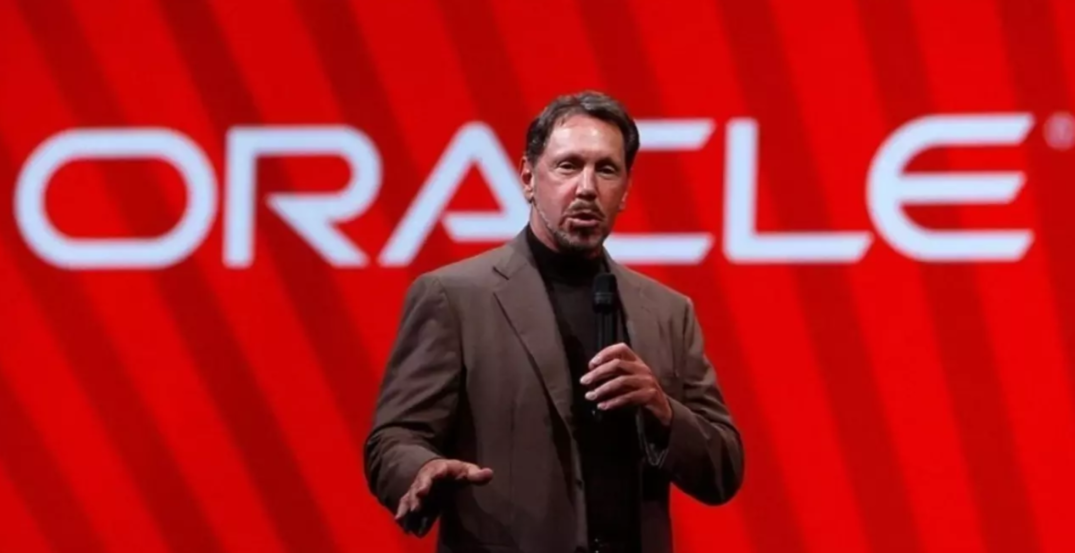
Larry Ellison’s strategy: why Oracle surged ahead in the age of data and AI
The core strategy that kept Oracle resilient and propelled it forward was unwavering focus on its primary product: the relational database management system (RDBMS). Ellison didn’t chase trends; he saw early that “data would become the oil of the 21st century,” long before the phrase became common.
He often signed multi-million-dollar contracts while products were still in development, forcing his team to evolve faster. This was not recklessness, but a deliberate “self-evolution” strategy: pushing his company to innovate continuously and stay competitive.
Over more than 40 years, Ellison built not just a technology company but an ecosystem of software, data, and cloud. He relentlessly pursued long-term vision and expanded Oracle through more than 100 acquisitions, including Sun Microsystems ($9.3 billion), NetSuite ($9.6 billion), and Cerner ($28 billion).
Recently, within just 24 hours, his fortune grew by nearly $30 billion thanks largely to Oracle’s stock surge during the AI and cloud boom. Behind that triumph, however, lies a journey marked by failures, near wipeouts, and fierce resilience, the story of a man who simply refused to give up.
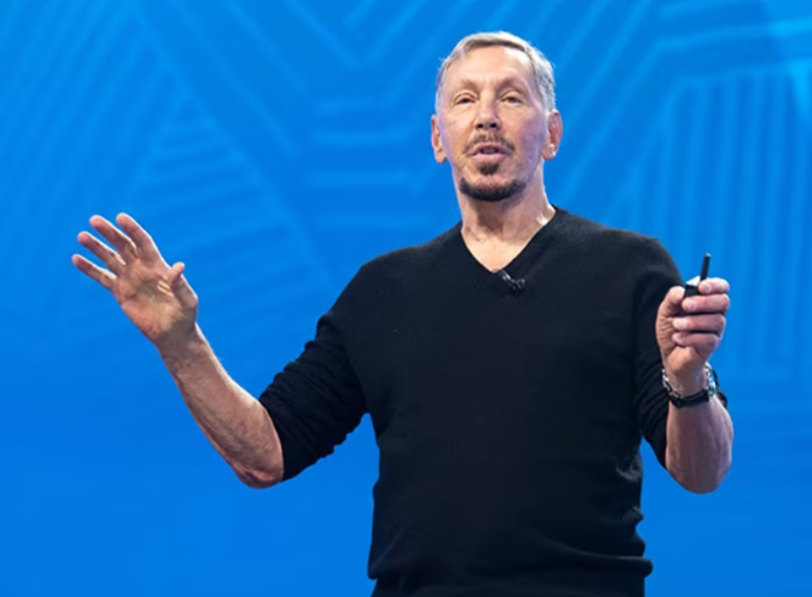
The formula for success and strategic lessons for Vietnamese entrepreneurs
Ellison’s formula for success is not just “risk and luck,” but a system of principles he has consistently practiced throughout his career.
He dared to take risks, but always with a calculated strategy. Many times, he signed contracts with big clients while products were still incomplete. This wasn’t just boldness; it was a way to create pressure so the team could not afford to fail. This strategy earned Oracle the trust of major clients early on, generating a “first-mover effect.” For Vietnamese businesses, this is a reminder that great opportunities don’t wait for perfect conditions; they come to those who take controlled risks and turn them into growth levers.
He stayed obsessed with the core product and long-term vision. While others chased short-term trends, Ellison believed data would become the new oil. By focusing on relational databases, Oracle built a sustainable competitive edge. For Vietnamese companies, the lesson is clear: don’t just sell what you have now, sell what the market of the future will demand. Find the big wave and ride it with conviction.
He turned failure into fuel for growth. When Oracle faced financial crisis and accounting scandals, Ellison used the adversity to restructure, streamline, and double down on core strengths. For Vietnamese entrepreneurs, the message is not to fear falling, but to treat failure as a stepping stone, one that propels you further if you rise with new wisdom.
Finally, Ellison built a personal brand that amplified his corporate brand. Unlike the quiet Warren Buffett or the discreet Jeff Bezos, Ellison cultivated a bold persona. From owning a superyacht worth hundreds of millions, to buying 98% of the Hawaiian island of Lānaʻi, to sponsoring elite yacht races like the America’s Cup, Ellison signaled a hunger for victory and a global stage presence.
For him, personal branding was not vanity but a strategic tool to project his company’s spirit, a crucial lesson for Vietnamese leaders in the digital age. A strong leader’s identity strengthens corporate identity, attracts talent, and inspires confidence.
From Ellison’s story comes a timeless compass for entrepreneurs: starting with nothing does not equal failure. Success comes from addressing the market’s true pain points, accepting risk with strategy, and turning setbacks into fuel. Sustainable success, as Ellison reminds us, always begins with solving the right problem.
Dr. Nguyễn Thúy Lan
Vietnamese version: Tỷ phú Larry Ellison: Thành công bền vững là phải giải quyết đúng nỗi đau thị trường
Related news
Đọc thêm Business
Vietnam businesses face global test: reform at home, earn trust abroad
Vietnamese companies must transform their leadership, teams and cultural outlook — then build trusted international networks — or risk losing ground to better-prepared global rivals.
Vietnam firms warned: transform within, build trust abroad or fall behind
Vietnamese companies must transform their leadership, teams and cultural outlook — then build trusted international networks — or risk losing ground to better-prepared global rivals.
Hi1 and the digital brand ambassador mission: bringing millions of Vietnamese products onto digital platforms with 10,000 Hue students
As millions of OCOP products, local specialty goods and Vietnamese heritage brands continue to struggle to establish a meaningful presence in the digital marketplace, a groundbreaking new cooperation model has just been launched in Hue.
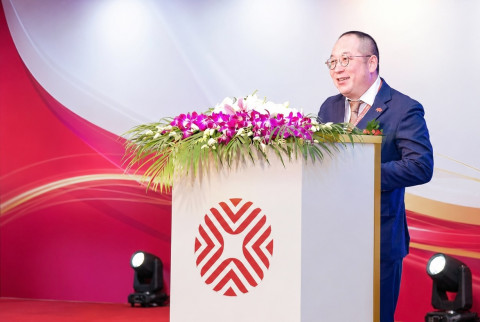
VCBC Chairman Steve Bui: Incentives have run their course — Vietnam enters an institutional race to attract the next generation of FDI
VCBC Chairman Steve Bui analyzes Vietnam's next-generation FDI strategy, stressing that the country must now compete on institutional quality, innovation, and stronger linkages between foreign and domestic enterprises.

Vietnamese Journalism in the Age of AI: How can reporters survive in the profession?
Few professions have faced a transformation as profound as journalism is experiencing today.

Businesses under pressure: Capital and talent shortages threaten competitiveness
The Vietnam Institute of Economics and World Affairs (VIEWA) recently held a working session with the Vietnam Association of Small and Medium Enterprises (VINASME) as part of a policy research and business support initiative.
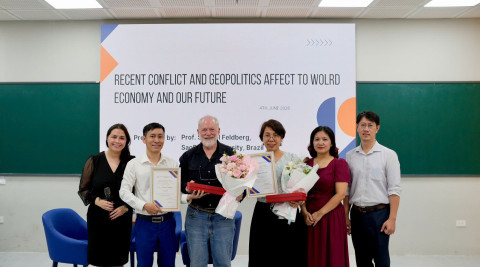
Dr. Samuel Feldberg warns of risks that could reshape the global economic order and shares strategic advice for Vietnamese businesses
Geopolitical tensions, technological transformation, trade fragmentation, and financial uncertainty are reshaping the global economy at an unprecedented pace.

VINASME organizes training program on risk control for sustainable business development amid uncertainty
In the context of a rapidly changing economy, increasing competition, and accelerating digital transformation, risk management capability has become a critical factor determining the resilience and sustainable growth of businesses, particularly SMEs.
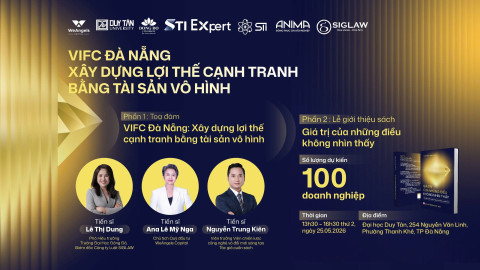
Vietnam’s International Financial Center looks beyond tax incentives to compete
What makes a city an international financial center? Is it skyscrapers, massive capital flows, or generous tax incentives?
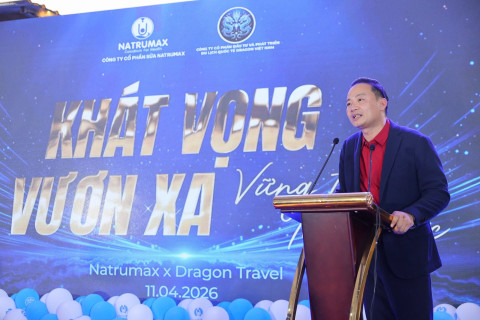
CEO Nguyễn Tất Tùng: only by anchoring in culture and preserving national identity can Vietnamese entrepreneurs reach the world
In a setting imbued with the rich cultural essence of Kinh Bắc, the 15th anniversary celebration of Dragon Travel was far more than a typical corporate event.