

Financial solutions for the global supply chain in Vietnam
- Business
- 16:10 01/04/2024
DNHN - The import and export of goods have played an important role in connecting Vietnam with the global economy. To ensure effective connectivity in the global supply chain, the application of financial solutions is essential.

Financial solutions play an important role
To facilitate global production and supply, Vietnam needs to increase investment in financial infrastructure. This includes developing banks, exchanges and other financial infrastructure to support trading, payment and security activities.
To enhance the competitiveness of businesses in the global supply chain, the government and financial institutions can provide financial support policies. This could include providing preferential capital, tax and interest rate reductions for businesses involved in export and import.
Vietnam can strengthen the development of its financial market to attract investment capital and create conditions for financial activities to develop. This can be achieved by expanding the stock market, developing the bond market and strengthening cooperation with international financial institutions.
To effectively implement financial solutions, Vietnam needs to invest in training and improving the financial capacity of staff and experts in this field. This helps to improve financial management knowledge and skills, thereby creating professionalism and reliability in financial operations.
Vietnam can strengthen cooperation with financial institutions and international partners to share experience, knowledge and financial resources. This can be done by establishing links with international financial institutions, participating in international financial forums and conferences, and learning from countries with experience in developing global supply chains.
In summary, to enhance Vietnam’s competitiveness in the global supply chain, financial solutions play an important role. By investing in financial infrastructure, providing financial support for businesses, developing financial markets, training and improving financial capacity, building an effective financial management system and strengthening international cooperation, Vietnam can create a favourable financial environment that encourages the sustainable development of the global supply chain in the country.
A rather “difficult” problem for Vietnamese businesses
Experts say that building an effective financial management system is an important factor in ensuring the stability and sustainability of the global supply chain. This includes applying international financial management standards, improving accounting and financial reporting processes, and ensuring compliance with international financial regulations and rules.
Sharing about this issue, Mr Luu Van Dai - Director of Metal Heat Vietnam Joint Stock Company, a unit specialising in heat treatment of automotive, motorcycle and machine parts, said that finding a way to participate in the global supply chain of large corporations is a problem that many Vietnamese mechanical businesses are “struggling” to find a solution for. Because businesses see a lot of opportunities but do not have capital, so they do not dare to invest and do not have the ability to invest.
According to Mr Dai, the products that businesses participate in the supply chain of large corporations must meet at least 2 criteria, which are quality and price. This requires businesses to have good technology and find the optimal production method to reduce production costs, thereby reducing product prices. China is a “kingdom of cheap prices”, but when it comes to products in the chain, even the prices that Japanese companies sell are very reasonable. This is more or less related to the technology that Japanese businesses are applying.
Mr Dai said that advanced technology will optimise production, and create product lines with good quality and reasonable prices. Accessing advanced technology in the world or studying advanced technology is not a difficult thing for Vietnamese businesses.
“But capital is the biggest problem that domestic mechanical businesses are very weak in” - Mr Dai affirmed and said that investing in new technology requires a lot of money, and a small business is very difficult to have enough financial potential to invest in modern technologies, start-up businesses are even more difficult in accessing this technology.
Nhan Ha Phan
Related news
- AgriS receives First-Class Labor Medal
- Vietnam takes APEC baton from China, eyes ‘new era of self-reliance’ for 2027
- Vietnam–UAE CEPA: Tariff Gains Yet to Translate into Market Share
- Vietnam urges Trump to speed up reciprocal trade deal
- AgriS and its chairwoman to receive First-class Labor Orders
- Mr. To Lam at FrancoTech 2026: Francophone cooperation must move from potential to concrete action
- Mandarin orange, mandarin ambitions
- Vietravel Airlines Reinforces Its Board as It Pushes Into Southern China
- Vietnam’s spice exports on track to hit $2.4 billion in 2026
- Vietnam ranks third in Southeast Asia in digital, AI competitiveness
- Better data key to unlocking SME credit
- VINASME calls for data-driven lending to improve SME access to credit
- Vietnam Makes It 10 Straight as Khanh Hoa Drives Golf Tourism Momentum
- Nine banks plan subsidiaries at Vietnam’s international financial center
- Ho Chi Minh City: A Story in Every Rhythm
- A democratic congress could reshape U.S. foreign policy, but President Donald Trump still holds the keys
- Vietnamese exporters face green standards hurdle in EU market
- Vietnam Police Sports Association Teams Up with 90,000-Strong Business Network to Boost Athletics
- Vietnam Foodexpo to host largest edition with over 500 businesses
- Vietnam seeks innovation-led growth amid shifting global economic landscape
Đọc thêm Business
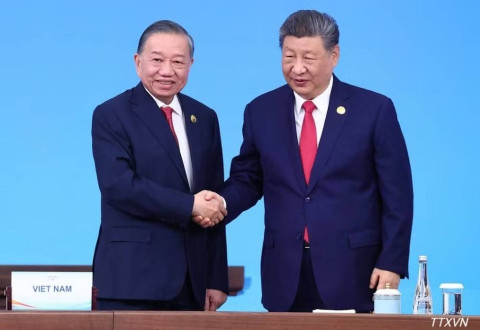
Vietnam takes APEC baton from China, eyes ‘new era of self-reliance’ for 2027
Hanoi unveils theme and three priorities as it prepares to host the forum for the third time, with leaders’ week set for Phu Quoc

VIFC-HCMC courts international capital at Singapore FinTech Festival
At a Singapore workshop, the city’s new financial center outlined four priority product groups and signed a letter of intent with SLEI to broaden Vietnamese businesses’ access to long-term capital.

Vietnam tops ASEAN consumer sentiment despite rising cost concerns
Vietnamese consumers remain the most optimistic in ASEAN with an ACSI score of 63, but rising living costs and gaps in long-term financial security are making them more cautious, savings-minded and investment-oriented
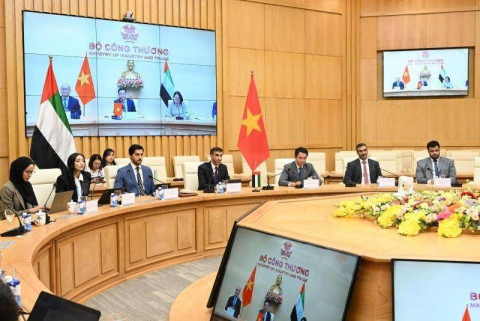
Vietnam–UAE CEPA: Tariff Gains Yet to Translate into Market Share
Nine months into the CEPA, Vietnamese goods enjoy major tariff advantages in the UAE yet hold under 1% of its import market. The greatest potential lies in using the incentives, meeting rules of origin and building distribution networks.
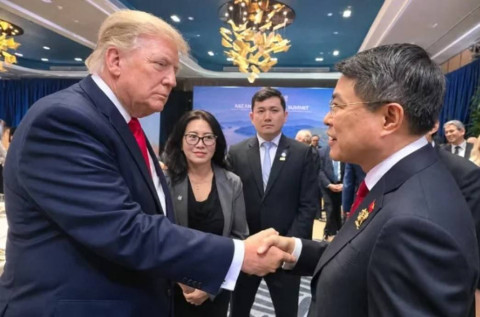
Vietnam urges Trump to speed up reciprocal trade deal
Both sides have held seven formal negotiation rounds and agreed on most of the core content, but no signing date has been set.

Vietnam’s spice exports on track to hit $2.4 billion in 2026
Exports of black pepper, cinnamon and star anise are all posting solid growth, putting Vietnam’s spice industry on course for a turnover of $2.4 billion in 2026.

Vietnam exports $120,000 worth of specialty coffee to US
A company in Vietnam's Central Highlands province of Dak Lak has exported more than 3.4 tons of specialty coffee to the U.S., marking a step toward higher-value exports as the country seeks to move beyond its traditional reliance on raw coffee beans.

Over $480 million pledged at COP31 to accelerate methane emissions reductions
More than $480 million in new climate financing has been announced at COP31 to accelerate efforts to reduce methane emissions and other powerful climate pollutants.
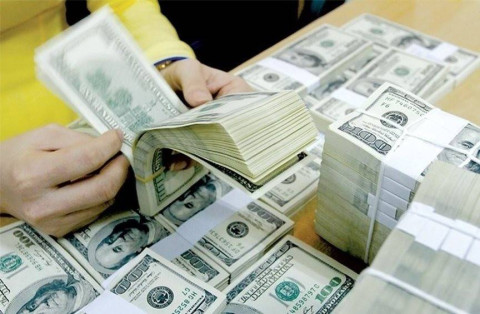
Vietnam raises foreign commercial borrowing ceiling to 10 billion USD for 2026
The Vietnamese Government has raised the ceiling for medium- and long-term foreign commercial borrowing by enterprises and credit institutions to 10 billion USD in 2026.
Better data key to unlocking SME credit
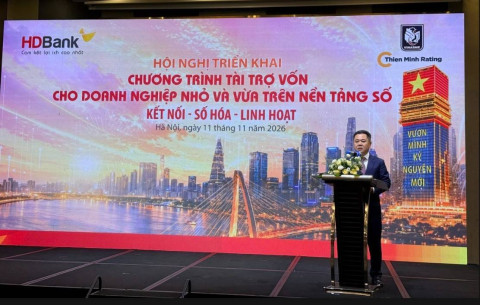
Transparent financial data and standardized credit profiles could help small and medium-sized enterprises access bank financing, while enabling lenders to assess repayment capacity without relaxing credit standards.