

Experts advise making Vietnam's stock market more appealing to international investors
- Business
- 22:31 06/09/2022
DNHN - Mr Matthew Smith - Research and analysis specialist - was asked a series of questions on the significance of upgrading the stock market in Vietnam and what action Vietnam should do to improve the stock market after many years of still standing. A veteran analyst with over 22 years of experience in the Asian market offered information on the demands of foreign investors as well as ideas to make Vietnam's stock market more appealing to foreign investors.

What does this signify for the Vietnamese capital market? What steps should Vietnam take to improve its stock market? Sir, what is your experience in the markets you have worked in?
Mr Matthew Smith: I am not a specialist in the stock market's information technology system, therefore I cannot judge the progress of installing the new trading system.
However, in general, when the trading system is enhanced, it has a direct and good influence on the economic element since it helps listed firms decrease expenses.
This implies that corporations will be able to obtain funds at a lesser cost on the market, which is certainly a plus. Of course, this is one of the reasons why Vietnam is frequently valued cheaper than other markets in the same region.
For example, despite Vietnam's higher profits growth estimates, the VN-Index is now trading at a forward P/E of 2023E of 9.7x, the lowest in Southeast Asia. In comparison, Thailand's SET index is trading at a forward P/E of 14.7x in 2023.
A low P/E ratio is a major disadvantage for publicly traded corporations. Assume a Vietnamese firm has a $20 million profit in 2023 and a P/E ratio of 10x, and it wants to raise an additional $50 million in stock at market value. To obtain cash, this firm will need to sell 25% of its stock at a P/E ratio of 10x.
In comparison, if a comparable business is trading at a P/E of 15x (the Thai market's value), it only has to sell 16.7% of its existing shares. circulation to raise the same amount of money This is why stock values may affect the economy.
In truth, the Vietnamese market is now undervalued in the context of a bear market in the second quarter of 2022, with the causes of the market downturn unrelated to the stock market's trading mechanism. However, across the full cycle, Vietnam tends to trade at lower values than other Southeast Asian economies.
If the stock market's operating mechanisms are enhanced, such as enabling same-day settlement and eliminating margin restrictions, the Vietnamese market will be able to attract a sustained rise in capital inflows, consequently increasing liquidity, decreasing the bid-ask spread, and increasing valuation.
As a securities industry research and analysis specialist whose customers include fund managers and foreign institutions, I can't help but note the market's concerns regarding the market's foreign ownership restriction.
Concerns regarding the rate of ownership limit should dissipate rapidly, as this will help our firm. However, I understand the concern about the possibility of foreigners controlling Vietnamese firms, which is understandable.
In reality, several other nations have enacted similar restrictions on foreign ownership. Thailand, for instance, is a prominent example, having been designated as a frontier market in the 1980s. Thailand maintains foreign ownership limitations while developing a solution that permits foreign money to own shares without fear of foreign investor control.
This approach is accomplished through a depository certificate without voting rights (NVDR), in which economic advantages (such as dividends or profit/loss) are delivered to the investor who purchases the NVDR while the exchange retains ownership of the underlying shares. Most international institutions do not need enhanced oversight because corporate governance and the issuer of NVDR are stock exchange subsidiaries, which improves confidence.
As a result, the NVDR system works effectively for foreign investors in Thailand, and it helps to tackle the problem of undervaluation caused by the foreign ownership rate being filled. Furthermore, Thai authorities do not need to be concerned about foreign investors seizing control of critical businesses because NVDR holders do not have the same voting rights as shareholders. This is a win-win situation, and we expect to see it implemented fast in the Vietnamese market in the next few years.
Another request I have is for increased transparency in the publication of data on margin lending activity. Securities firms are nevertheless required to submit reports to the appropriate authorities daily to monitor market margin positions. Margin collection can cause stock price declines, as we observed in the second quarter of 2022.
Regularly, exchanges in Taiwan and even China update and publish very precise margin position data and loan balance data for individual stocks. A high degree of transparency is highly important for securities companies' risk management, as well as for individual and institutional investors in determining which stocks are being collateralized for margin loans - and which stocks are at risk of being sold off.
Because of the tremendous expansion and acceptance of margin lending as an investment, the margin industry will continue to expand. As a result, we believe that if the Vietnamese market can transparently release information for all market participants, rather than just a few elite investors, it will be a plus.
Is equitization of HOSE, in addition to the upgrading aim, the proper thing to do to foster a more transparent market? What has been your experience in other markets?
Mr Matthew Smith: When everything is in order, I am looking forward to the equitization of the Stock Exchange. Although exchanges do not require cash, becoming a public firm indicates that the market will become more disciplined, supporting improved efficiency and service innovation.
Listed exchanges such as Singapore (SGX), Malaysia (Bursa), the Philippines (Filipino Stock Exchange), and notably the Hong Kong Stock Exchange (HKX) are autonomous firms with predictable cash flow and dividend flows.
As a result, these businesses frequently trade at a premium to the market. This is an appealing business strategy, and I am confident that when the exchange is listed in Vietnam, it will generate a lot of market interest. This is a method that the Taiwanese market does not pursue - the TWSE remains an unlisted corporation, which is unsatisfactory for Taiwanese securities firms that control a considerable amount of TWSE shares.
Indeed, I predicted 20 years ago that the TWSE would eventually be listed, and that this would be a beneficial impetus for Taiwanese securities firms. This forecast, however, is incorrect because TWSE has had no intention of listing since the early 2000s. As a result, I believe Vietnam will be listed before Taiwan. And I believe that many investors will try to "fight" for shares when they go public. However, we do not see the listing happening anytime soon.
You previously stated that Vietnam shares parallel with Taiwan, particularly among individual investors who trade often in the market; how do you judge this trend?
Mr Matthew Smith: I've drawn numerous parallels between the Vietnamese market now and the Taiwanese market in the 1980s, but I don't want to get into too much detail. Individual investors in Taiwan were particularly engaged in stock trading at one point.
Investors that trade according to the buy and hold theory, that is, buying the TWSE index in 1985 and holding until the market high in early 1990, have x13 times the initial investment without using leverage.
We believe it is nearly hard for speculators who joined that era to do so. The stock market was like a huge casino back then, with some well-known "businesses" listed on paper but no income, staff, or even business.
Transaction value (VAT) in a few days equates to turnover in Japan and New York, not because the market size corresponds to the size of such "big" marketplaces, but because speculators regard investment length in "minutes."
The regulations for the Taiwanese stock market at the time were essentially non-existent, which is a stark contrast to the contemporary Vietnamese market.
Another distinction is that Vietnamese investors' understanding of this period is far superior to that of retail investors in Taiwan at the same time (ie in the 1980s). Vietnamese investors in 2022 are interested in global events; I was astonished and impressed when I received queries with a high degree of comprehension.
I continue to believe that the Vietnamese market is poised for a boom in the next 5-10 years, with Vietnamese private investors playing a key role. But I don't want to get into too much detail regarding the comparison with the Taiwanese market 35 years ago because times have changed dramatically.
Trung Hoang (record - According to Business Capital Flow)
Related news
- Vietnam Foodexpo to host largest edition with over 500 businesses
- Vietnam seeks innovation-led growth amid shifting global economic landscape
- Vietnam PM proposes four initiatives to drive economic growth
- Autumn Economic Forum seeks new growth engines in AI era
- Vietnam Demands Results from Diplomacy
- HCMC pushes open innovation towards commercial gains
- Vietnam Emerges as a Standout Destination for Autumn Travel
- 2026 Autumn Economic Forum promoted on Seoul screens
- Margin lending drives HSC earnings as brokerage revenue tumbles
- Bepharco appoints 2002-born executive as CEO
- Vietnam financial center eyes November 2026 launch
- Vietnam targets 20 internationally certified hospitals in medical tourism push
- Vietnam sets sights on double-digit growth as APEC 2027 preparations gather pace
- Vietnam businesses face global test: reform at home, earn trust abroad
- Vietnam firms warned: transform within, build trust abroad or fall behind
- VCBC Chairman Steve Bui: Incentives have run their course — Vietnam enters an institutional race to attract the next generation of FDI
- Vietnamese Journalism in the Age of AI: How can reporters survive in the profession?
- Dr. Samuel Feldberg warns of risks that could reshape the global economic order and shares strategic advice for Vietnamese businesses
- VINASME organizes training program on risk control for sustainable business development amid uncertainty
- Vietnam’s International Financial Center looks beyond tax incentives to compete
Đọc thêm Business

Asiago PDO Cheese and French Charcuterie Showcased in Hanoi: Bringing the Best of European Culinary Heritage to Vietnam
Industry representatives engage in discussions at the B2B Networking Event on October 30.
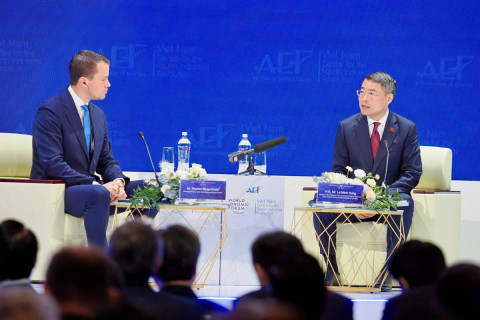
Vietnam seeks innovation-led growth amid shifting global economic landscape
Prime Minister of Vietnam Le Minh Hung has outlined Vietnam's strategy to strengthen economic resilience, accelerate innovation and enhance the competitiveness of domestic enterprises as global supply chains undergo significant restructuring.
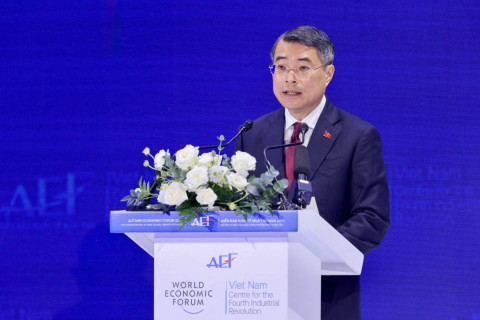
Vietnam PM proposes four initiatives to drive economic growth
Prime Minister Le Minh Hung has proposed four areas of cooperation with international partners to boost innovation, develop high-tech talent, test emerging technologies and attract long-term investment.
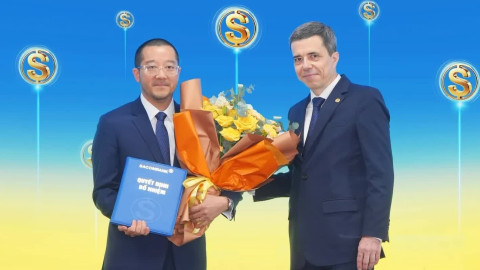
Sacombank names banking veteran Nguyen Xuan Ai Quoc as deputy chief — with profits tipped to surge 111%
The seasoned financier, a son of late film star Tham Thuy Hang, joins as the Vietnamese lender targets rapid growth and a major debt recovery.
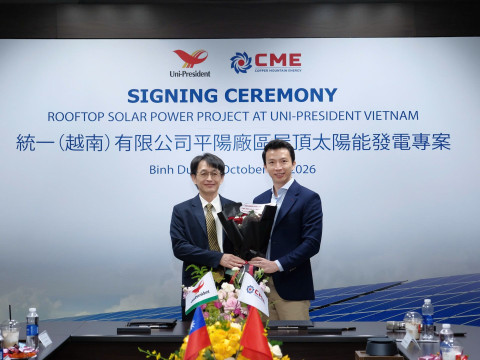
CME Solar Partners with Uni-President Vietnam to Deploy a 6,601 kWp Rooftop Solar Project
The 6,601 kWp rooftop solar project is expected to supply 8,656 MWh of clean electricity per year to Uni-President Vietnam, helping the company optimize energy costs and reduce CO₂ emissions.
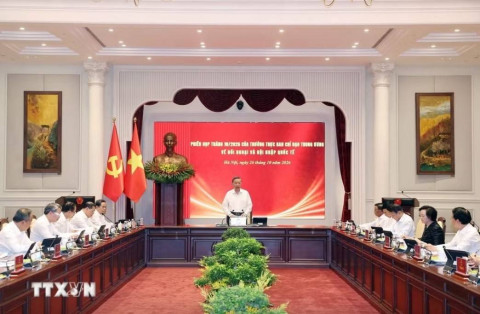
Vietnam Demands Results from Diplomacy
Top leaders of Vietnam order international pledges turned into jobs, productive capacity and markets—with institutions held to account for delivery.
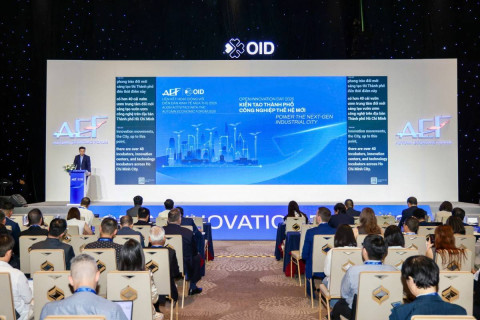
HCMC pushes open innovation towards commercial gains
Ho Chi Minh City is seeking to turn research and technology partnerships into measurable gains for businesses as it builds a next-generation industrial ecosystem.
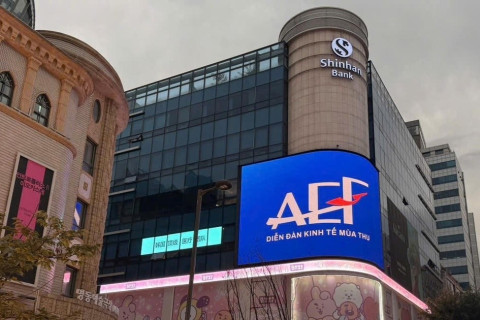
2026 Autumn Economic Forum promoted on Seoul screens
Ho Chi Minh City (HCMC) is taking Vietnamese economic ambitions abroad, using one of Seoul’s most prominent commercial districts to court investors and build international attention for the flagship autumn economic forum.

Khanh Hoa targets 23.7 million tourists in 2026
Khanh Hoa expects more than 23.7 million visitors and VND80.2 trillion in tourism revenue in 2026, increases of 44.8% and 19.7% year-on-year, respectively.

Vietnamese firms face Halal, logistics hurdles in UAE push
Vietnamese businesses seeking to enter the UAE and wider Middle East need stronger preparation in Halal compliance, market research and partner networks as logistics and information gaps weigh on exports, experts said.