

Submitting a draft resolution on piloting several development mechanisms in Ho Chi Minh City
- Business
- 23:45 22/04/2023
DNHN - The Government has just submitted to the National Assembly and the National Assembly Standing Committee a draft resolution on piloting several specific mechanisms and policies for the development of Ho Chi Minh City.

In its report, the government emphasized the need to develop this resolution and proposed its consideration and approval at a meeting - the fifth meeting in May - by the procedure.
According to the Government, after 10 years of implementing Resolution 16 of the 11th Politburo and 5 years of piloting Resolution 54 on the specific policies and mechanisms of Ho Chi Minh City, the economic size of the city has increased by 2.7 times. GRDP per capita doubled, reaching over 6,200 USD per person, and budget revenue accounted for 27% of the country's total revenue... According to the Government's assessment, however, the implementation of Resolution 54 "remains sluggish and inefficient," and there are numerous reasons why Ho Chi Minh City has not fully promoted mechanisms and policies.
Therefore, it is necessary to issue a new resolution to institutionalize the views, objectives, and development orientations outlined in the Politburo and National Assembly's resolutions regarding the development of Ho Chi Minh City.
According to the government's report, the objective is to develop exceptional mechanisms and policies for establishing an effective legal foundation, promoting potential and advantages, producing breakthroughs, and resolving issues. Ho Chi Minh City's socioeconomic development faces bottlenecks.
The Government submitted to the Standing Committee of the National Assembly and the National Assembly a draft Resolution of the National Assembly specifying the pilot of seven groups of specific mechanisms and policies on investment management; policy resources; urban management and environmental resources; attracting strategic investors; management of science, technology, and innovation; organization of the city's apparatus; organizational structure.
In particular, the draft resolution states that the People's Council of Ho Chi Minh City may allocate sources to increase local budget revenue for new programs, projects, and tasks after allocating sufficient local budget capital for programs and projects., new tasks after allocating sufficient local budget capital for programs and projects in the total medium-term public investment capital of the local budget.
The People's Council of Ho Chi Minh City decided to allocate public investment capital to support poverty reduction and job creation by delegating the allocation of public investment capital to the City People's Committee and entrusting the Social Policy Bank Ho Chi Minh City branch with making loans. Supporting poor, near-poor, and just-emerging-from-poverty households while creating jobs.
According to the report, the city is anticipated to be able to mobilize an additional 119,000 billion VND in revenue sources, in addition to the capital allocated by the Prime Minister in the medium-term public investment plan for 2021-2025, to finance significant projects. In addition to the projects assigned by the government in the medium-term public investment plan, there are urgent matters.
The proposed resolution also specifies the urban development pilot model in the direction of traffic development. Consequently, the city uses the local budget to implement independent public investment projects to implement compensation, support, and resettlement for investment projects near and at railway stations. Approved by the competent authority along Urban Railway Line 1 (Ben Thanh - Suoi Tien), Urban Railway No. 2 (Tham Luong - Ben Thanh), and the vicinity of intersections along Ring Road 3 in the city's territory to acquire land, embellish and develop urban areas, conduct on-site resettlement, create land for auction, and select investors for urban development projects.
According to the government's report, several countries in the region, including Singapore and Hong Kong, have successfully implemented this policy. To implement this policy, the proposed Resolution authorizes the city to use city funds to establish an independent public investment project to implement compensation, support, resettlement, and land recovery, and to auction land belonging to the city. adjacent areas as the basis for implementing urban development projects by planning approved by competent authorities.
Regarding the financial and budgetary mechanisms and policies, the proposed Resolution stipulates that the City People's Council shall decide whether to apply or adjust the rate or rates of fees not yet specified in the City Council's list of fees. accompanied by the fees Law, except court fees and court fees. The city budget is entitled to 100 percent of the additional revenue resulting from the adjustment of the above-mentioned fee and fee policy, which is not used to determine the percentage of revenues to be divided between the central budget and the city budget. City finances.
In addition, the City Council determines the city budget's estimation and allocation by the National Assembly's and Government's directives for budget restructuring, economic and social development, and key fields.
According to decentralization, the proposed resolution also permits the city to increase the total loan balance by no more than 120 percent of the city's budget revenues. According to Resolution No. 54 on specific mechanisms and policies for Ho Chi Minh City, the total loan balance cannot exceed 90% at this time. However, in the new period, the implementation of several projects, such as Metro No. 2, Metro No. 5, and projects to improve the drainage system... with the need to borrow VND 92,000 billion... will no longer guarantee the city's future after 2026. The loan limit for additional borrowing. The additional central budget has a target for the city budget of no more than 70% of the increase in central budget revenues from revenues divided between the central budget and the city budget relative to the estimate assigned by the Prime Minister.
The proposed resolution allows Ho Chi Minh City to install the system on the rooftops of administrative offices, public service units, offices of agencies, and units identified as public property in the area. A solar power system that provides electricity for the headquarters operation. The law will be complied with regarding excess electricity caused by underuse.
Regarding mechanisms and policies for urban management and environmental resources, the draft Resolution stipulates that the City People's Council decides to change the purpose of using less than 500 hectares of rice land by the master plan and plan for land use under rice cultivation. 500 ha by existing master plans and land use plans approved by the appropriate authorities.
The City People's Committee may either approve the planning and arrangement of the social housing land fund in the commercial project by the current regulations or approve the planning and arrangement of the social housing land fund in an alternative location of equivalent size. Regarding this topic, the Government's report indicates that current law stipulates that investment projects to build commercial housing must allocate 20% of the total land area for social housing construction. However, some practical applications of this regulation are inappropriate, particularly for small-scale projects located on land with high commercial value. Therefore, the draft Resolution stipulating this policy is being piloted, empowering the City to plan the layout of social housing flexibly by the reality of the project while protecting the responsibilities of housing investors. The trading of social housing construction implementation responsibilities...
The draft resolution also specifies mechanisms and policies for attracting strategic investors to Ho Chi Minh City's priority industries.
TH
Related news
- AgriS receives First-Class Labor Medal
- Vietnam takes APEC baton from China, eyes ‘new era of self-reliance’ for 2027
- Vietnam–UAE CEPA: Tariff Gains Yet to Translate into Market Share
- Vietnam urges Trump to speed up reciprocal trade deal
- AgriS and its chairwoman to receive First-class Labor Orders
- Mr. To Lam at FrancoTech 2026: Francophone cooperation must move from potential to concrete action
- Mandarin orange, mandarin ambitions
- Vietravel Airlines Reinforces Its Board as It Pushes Into Southern China
- Vietnam’s spice exports on track to hit $2.4 billion in 2026
- Vietnam ranks third in Southeast Asia in digital, AI competitiveness
- Better data key to unlocking SME credit
- VINASME calls for data-driven lending to improve SME access to credit
- Vietnam Makes It 10 Straight as Khanh Hoa Drives Golf Tourism Momentum
- Nine banks plan subsidiaries at Vietnam’s international financial center
- Ho Chi Minh City: A Story in Every Rhythm
- A democratic congress could reshape U.S. foreign policy, but President Donald Trump still holds the keys
- Vietnamese exporters face green standards hurdle in EU market
- Vietnam Police Sports Association Teams Up with 90,000-Strong Business Network to Boost Athletics
- Vietnam Foodexpo to host largest edition with over 500 businesses
- Vietnam seeks innovation-led growth amid shifting global economic landscape
Đọc thêm Business
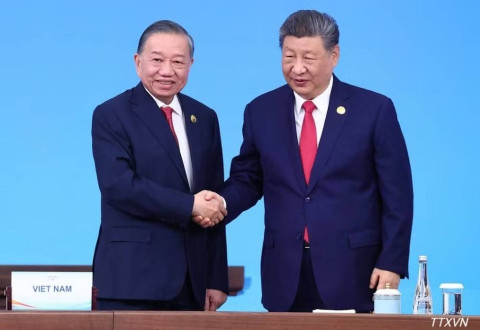
Vietnam takes APEC baton from China, eyes ‘new era of self-reliance’ for 2027
Hanoi unveils theme and three priorities as it prepares to host the forum for the third time, with leaders’ week set for Phu Quoc

VIFC-HCMC courts international capital at Singapore FinTech Festival
At a Singapore workshop, the city’s new financial center outlined four priority product groups and signed a letter of intent with SLEI to broaden Vietnamese businesses’ access to long-term capital.

Vietnam tops ASEAN consumer sentiment despite rising cost concerns
Vietnamese consumers remain the most optimistic in ASEAN with an ACSI score of 63, but rising living costs and gaps in long-term financial security are making them more cautious, savings-minded and investment-oriented
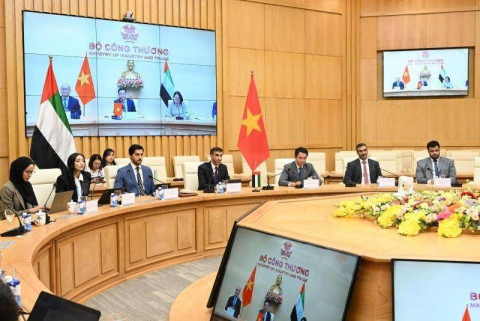
Vietnam–UAE CEPA: Tariff Gains Yet to Translate into Market Share
Nine months into the CEPA, Vietnamese goods enjoy major tariff advantages in the UAE yet hold under 1% of its import market. The greatest potential lies in using the incentives, meeting rules of origin and building distribution networks.
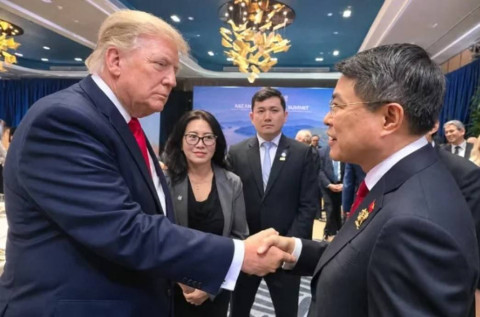
Vietnam urges Trump to speed up reciprocal trade deal
Both sides have held seven formal negotiation rounds and agreed on most of the core content, but no signing date has been set.

Vietnam’s spice exports on track to hit $2.4 billion in 2026
Exports of black pepper, cinnamon and star anise are all posting solid growth, putting Vietnam’s spice industry on course for a turnover of $2.4 billion in 2026.

Vietnam exports $120,000 worth of specialty coffee to US
A company in Vietnam's Central Highlands province of Dak Lak has exported more than 3.4 tons of specialty coffee to the U.S., marking a step toward higher-value exports as the country seeks to move beyond its traditional reliance on raw coffee beans.

Over $480 million pledged at COP31 to accelerate methane emissions reductions
More than $480 million in new climate financing has been announced at COP31 to accelerate efforts to reduce methane emissions and other powerful climate pollutants.
Vietnam raises foreign commercial borrowing ceiling to 10 billion USD for 2026
The Vietnamese Government has raised the ceiling for medium- and long-term foreign commercial borrowing by enterprises and credit institutions to 10 billion USD in 2026.
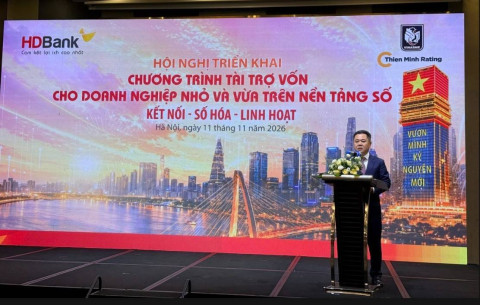
Better data key to unlocking SME credit
Transparent financial data and standardized credit profiles could help small and medium-sized enterprises access bank financing, while enabling lenders to assess repayment capacity without relaxing credit standards.